
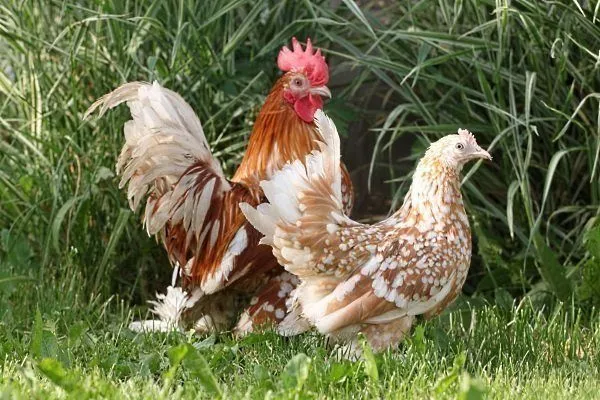
Millefleur chickens immediately impress farmers with their miniature size. These domestic birds are considered ornamental. These small hens have lush plumage. These beautiful feathered creatures regularly compete in shows and win prizes.
History of origin
Breeders have long worked to develop unusual crosses that would boast unique productivity characteristics and earn a worthy place among ornamental birds. Scientists sought to create a small-sized Millefleur chicken with beautiful feather color. There was one reason: not every poultry farmer had the space to raise standard-sized birds.
According to numerous historical references, Millefleurs appeared in Holland in the 16th century, and this period is also considered the beginning of the chicken's spread. As for the breeder's name, history conceals this fact; it is only known that he was a bird lover, not a scientist. However, the results of his work continue to amaze poultry farmers to this day.
Translated from French, "De mille fleurs" means "a thousand flowers," referring to the thousand multicolored hues that adorn the plumage of these ornamental birds. Dwarf millefleurs were a curiosity at the time. raising chickens at homeEvery poultry farmer wanted one. The cost of the birds was high, but that didn't stop almost anyone.
Characteristics and features of Millefleur chickens
Poultry farmers adore this breed, renowned for its low maintenance and high productivity. Millefleur chickens are not considered meat or egg producers; they are primarily used as ornamental poultry.
Appearance
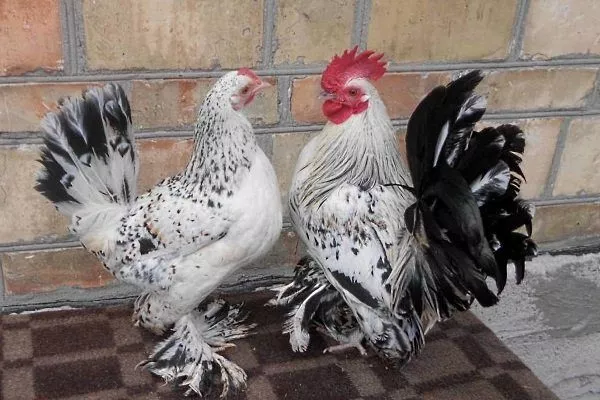
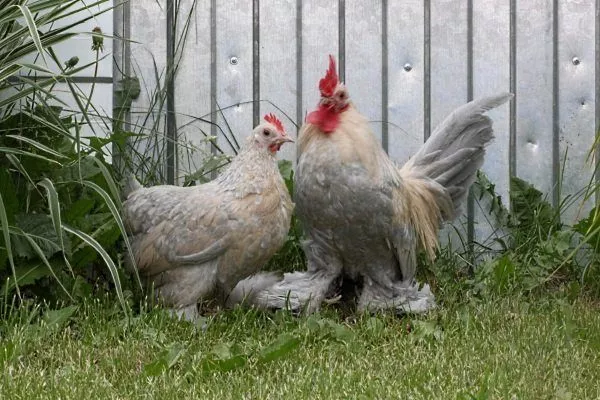
The main advantage of birds—their decorative value—is due to the diversity of their feather colors. In nature, birds can be found with a wide variety of pigmentation patterns: tricolor, black and white, white, black, porcelain, blue, and so on.
Besides their striking plumage, chickens have other unique characteristics: a proud posture, a small head, and feathers on their legs. Despite their diminutive size, they have dense plumage. Their aristocratic appearance is enhanced by their posture and unusual coloring.
Character
These birds are small, but their character is not characterized by timidity or overly sensitiveness. In nature, they are called "steadfast soldiers." Representatives of the Millefleur breed have a rather strong character. If necessary, these birds can defend themselves.
In general, these individuals are very calm and peaceful; they are not afraid of people and do not bother them. Representatives of this ornamental breed can be raised in your own yard.
Male Millefleurs are known for their distinctive behavior; they love laying hens and their chicks. They never harm them and always stand up for their family if an enemy starts to harass them.
Roosters begin to eat only after they invite females to the feeder.
Productivity
This breed is not considered a meat breed due to its small size. Poultry farmers claim that the meat is tender and juicy, but it is produced in very small quantities. The maximum weight of a rooster is 0.8 kg, and that of a hen is 0.5-0.6 kg. Despite its high cost, the meat is often purchased for upscale restaurants.
Varieties
| Name | Size | Color | Productivity |
|---|---|---|---|
| Blue | 0.8 kg | Blue with gold feathers | Decorative |
| Orange | 0.8 kg | Orange with black spots | Decorative |
| Brown | 0.8 kg | Brown with black spots | Decorative |
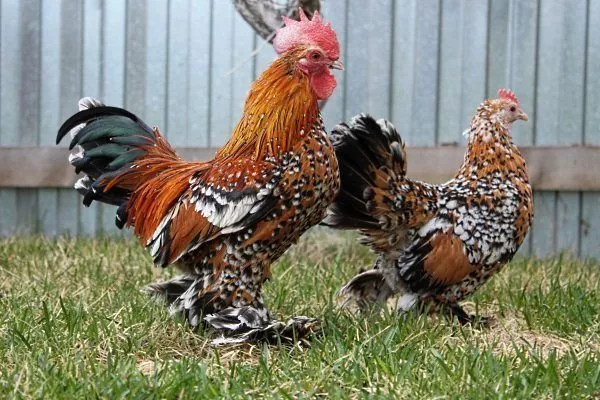
Nature has given humans three main varieties of Millefleur. The first-order Millefleur is blue, with golden feathers on its back. The second- and third-order Millefleur are orange or brown, with identical spots on both sides. The varieties are distinguished by the color of their tail feathers. Orange Millefleurs have an orange tail, while brown Millefleurs have a black tail.
The instinct of incubation
Maternal instinct is inherent in purebred breeds; crossbreeds and hybrids have lost it completely or partially. Millefleur females have proven to be an exception; they are excellent "mothers," and, as mentioned earlier, males are excellent "fathers."
The hen doesn't leave the nest even to drink or eat. The small size of the birds allows them to hatch no more than 10 eggs, so if you need to get more chicks, it's better to use an incubatorAfter the birth of the young, the female will raise both her own chicks and those from the incubator.
Poultry farmers use Millefleur hens to hatch pheasant eggs and other exclusive domestic birds. When a hen is incubating her eggs, she requires a more caloric diet, so be sure to provide waterers with clean, fresh water. How to make a waterer yourself is described in here.
Hens sit on their eggs during the warmer months; the Millefleur hen will stay in the nest and will sit on even just one egg. One of the birds' distinctive traits is their ability to sit on the nest three times in a single season.
The offspring are born healthy and strong. Chicks have excellent immunity from birth. The survival rate of the chicks is over 96%.
Poultry farmers are confident that keeping Millefleur laying hens is more profitable than raising regular chickens, as the income significantly exceeds the costs.
Sexual maturity and egg production
Despite their hens weighing less than 1 kg, they boast quite acceptable egg production. Over the course of one year, a hen can lay approximately 120 eggs, each weighing 30 g.
Despite such low meat and egg production, laying hens are popular with poultry farmers, and they are bred not for product, but for aesthetic pleasure.
How do they cope with the cold?
Another characteristic of these dwarf chickens is that they tolerate frost and cold better than all bantam chickens. However, if they wander through the snow, the thick feathers on their feet become wet and immediately freeze. These birds can easily stroll around the yard at 0 degrees Celsius, as long as there is no snow, mud, or ice.
To ensure consistent egg production during winter, your birds need a warm and cozy coop. The temperature in the coop should not drop below 17 degrees Celsius. The walls of the coop are insulated with special materials, such as ecowool. The material should have good thermal insulation properties and be resistant to water absorption. It's important to ensure that the walls of the coop are not susceptible to chewing by mice or rats, which will certainly try to get to your hens in the fall.
How to get rid of rats in a chicken coop, you will learn from this article.
Care Features
Dwarf birds are afraid of the cold, but Millefleur chickens thrive in northern regions. Poultry farmers believe the main challenge in keeping them is the need for high-quality food. While the birds don't require a large living area, the coop must be regularly cleaned and disinfected.
For treating Millefleur birds, it's best to use aerosol sprays. The bird's entire body should be sprayed; however, the spray should not be directed at the head. During the treatment, the birds should be removed from the coop for approximately 10 hours to prevent them from inhaling the chemicals.
- ✓ The temperature in the poultry house should be maintained at +15 to +24 degrees Celsius to ensure comfort and productivity.
- ✓ Humidity in the chicken coop should not exceed 60% to prevent respiratory diseases.
Requirements for the poultry house
For a single family, a 1 square meter coop is sufficient, with dimensions of 1.5 x 2 meters. Air temperature is particularly important; it should range from 15 degrees Celsius to 24 degrees Celsius. Higher temperatures will dehydrate Millefleur hens, requiring more water and laying fewer eggs.
Temperatures below +15 degrees will make the birds feel uncomfortable, they will spend energy on creating and maintaining heat, and egg production will decrease significantly.
Perches are essential in the coop, and they can be arranged like ladders. Millefleurs are able and enjoy flying, so perches can be placed at different heights; they will choose their own resting place.
The feathers on the legs should not be allowed to become dirty, as this will ruin the birds' decorative and well-groomed appearance. To achieve this, the coop must be kept clean at all times. The flooring should preferably be made of clay, covered with straw or hay. Dried leaves or sawdust can also be used.
We recommend reading the article about How to build a chicken coop yourself.
Artificial lighting and ventilation are installed in the poultry house. Chicken manure contains a small amount of ammonia, which is harmful to the birds' respiratory system. Fluorescent lamps serve as lighting. Ventilation is a supply and exhaust system, which can be supplemented with a fan.
A convector or infrared heater is used for heating. Feeders and waterers are essential in the poultry house; they must always be clean, otherwise the birds will refuse to eat. There are three types of containers: for water, for wet mash, and for dry food. Read on to learn how to make your own feeder. Here.
Millefleurs are susceptible to lice and other pests, so to ensure they can safely remove them, special ash trays are installed in the coop. Ash can be sprinkled on the floor—it's good for the chickens' paws.
Walking yard
Ornamental birds need access to the outdoors. For 10 hens and one rooster, a yard of 3-4 square meters is sufficient. Millefleur hens love to fly; they enjoy looking at unusual objects and interacting with other birds. To prevent them from flying away and eating your entire harvest, it's necessary to cover the coop with mesh.
It would be nice if the run were portable—it could be moved and relocated anywhere in the yard. To ensure comfortable walking for your hens, it should be placed on grass, sandstone, or gravel. If you place it anywhere else, your hens will quickly get their feet dirty.
Don't forget about the canopy; it plays a vital role when building a yard. It protects the chickens from bright sunlight and pouring rain. It also provides concealment from other wild birds and animals.
The chicken coop and run should be installed on elevated ground to prevent runoff from flooding the area. If this isn't possible, wood or other level material can be placed on the ground underneath the coop to protect it from water damage.
Diet
To prevent Millefleur chickens from becoming ill, it's important to ensure their normal and healthy growth. A balanced, high-quality diet is the key factor influencing their development. In summer, fresh greens are included in the diet. Chickens are fed a variety of mixed feeds and grain mixtures.
After the babies are born, they are given food compound feedKnotweed or nettles can be added to adult chickens' diet, but the greens should be mixed with grains first. Vegetables such as carrots and tomatoes should be included in the diet. Shrimp scraps are given to the birds once a week; they will nourish them and ensure proper growth.
Beneficial additives are essential: yeast, fish and bone meal, salt, and honey. These ingredients are mixed into the main dish.
Breeding
The main drawback of breeding crossbreeds or hybrids is that the offspring are not purebred, and their genetic traits become weaker with each generation. Poultry breeders have not observed anything similar in the offspring of Millefleur chickens, so the young can be bred independently.
When setting up a chicken coop, a farmer should consider nests for the hens to incubate their eggs. These can be made from simple boxes lined with straw or hay. It's important to note that both hens and cockerels participate in raising and caring for the chicks.
Caring for chickens
After birth, chicks are very sensitive to temperature fluctuations, so it's important to maintain a consistent temperature (between 28 and 31 degrees Celsius) for the first few days. For the first two days, the chicks are fed boiled eggs mixed with cooked millet. Then, low-fat cottage cheese is added to their diet to prevent it from getting stuck in their beaks.
At first, you can use chamomile tea instead of water, and add greens such as beet tops and plantain to their food. For 10 days, the chicks are fed a special compound feed, then gradually transition to adult chicken feed.
As for the amount of food that chickens eat, it is best to stick to the following schedule:
- 1 week – every 2 hours.
- 2nd week – 7 times a day.
- 3-4 weeks – 5 times.
- 5-6 weeks – 4 times.
In the following days, the chicks are fed three times a day. To ensure they are fully supplied with beneficial micronutrients, the diet consists of 70% grains and 30% wet mash consisting of bone and meat and bone meal, vegetables, and greens. If a poultry farmer doesn't have time to prepare their own mash, they can purchase special feeds appropriate for the chickens' age. Suitable feeds for young chickens include "Start" and "Fattening." For adults, "Finish" is a good option.
Advantages and disadvantages
Millefleur chickens, like other domestic birds, have their pros and cons, which must be taken into account when breeding birds.
Advantages of Millefleur:
- decorative direction – birds will always decorate the area;
- a large number of colors;
- frost resistance and adaptation to living in cold regions;
- birds do not need a huge coop;
- undemanding in care;
- excellent brooding instinct;
- strong immunity;
- expensive meat.
Disadvantages of the Millefleur breed:
- low meat productivity;
- low egg production;
- the feathers on the legs require constant care;
- need quality nutrition.
Watch the video below for an overview of the Millefleur chicken breed:
Diseases and prevention
Millefleur chickens only get sick due to poor care or the presence of pests in the coop. To prevent illness, it's important to take preventative measures and regularly clean the coop and run. The walls and perches are treated with lime every spring.
- Check your chickens weekly for external parasites.
- Treat the chicken coop monthly with a lime solution to disinfect it.
- Treat chickens' feet with birch tar every three months to prevent disease.
A small amount of ash is sprinkled on the floor of the aviaries, and containers of wood ash can also be placed. Ash baths help the birds avoid contact with parasites. The birds' paws should be treated with birch tar every few months.
Farmer reviews of the Millefleur breed
In fact, the individuals turned out to be undemanding in terms of both living conditions and food. The cockerels are very caring, and they truly love their offspring and the hens. This is very touching and sweet, a quality rarely seen in males.
The hens weigh about 600 grams, and the roosters 800 grams. Millefleurs are tame and sweet. Some descriptions say they shouldn't be released into the garden or vegetable garden, but I do. They don't dig or damage anything, and in the evening, like clockwork, they stand by the coop. It's impossible not to love them.
The decorative nature of the Millefleur chicken breed makes them popular among poultry farmers. Their calm disposition makes them so popular among pet owners.