
The Mechelen Cuckoo chicken breed is a meat hybrid; it has virtually no brooding instinct, making it challenging to breed. However, it is beloved by poultry farmers for its excellent meat quality and ease of care.
Historical information about the breed
The Mechelen Cuckoo is one of the oldest breeds of domesticated fowl. Its origin is Belgium. Its name varies in different languages, so the Mechelen Cuckoo has a variety of names, one of the most popular being Malines. In Russia, until 1917, it was known as the Coucou de Malines.
There is no reliable data on the origin of this breed, only that it was developed around the 19th century. The Brahma, Shanghai, Flemish, and Chinese chickens are considered their ancestors. In Belgium, the birds are a source of pride, and Malin meat is considered a very expensive and tasty delicacy.
Bird exterior
The Mechelen Cuckoo is a meat-producing bird. Males weigh 5 kg, females 4.5 kg. In the early 20th century, this breed was reintroduced in its homeland, but its appearance changed slightly. The first variant is characterized by a leaf-shaped crest.
In the early 20th century, the German army needed high-quality food, so breeders decided to cross the Malin with a Belgian fighting breed. The males are significantly larger than the Mechen Cuckoos. The Wächters gave the Malin a true triple comb.
Today, the descendants of the Mechen Cuckoos and Bruges Wächter are quite rare, and a single leaf-shaped comb is considered the standard. Numerous breeding studies demonstrate that experiments to improve this breed are still ongoing. Scientists have set the goal of creating a Malin that will weigh approximately 4 kg live at 10 weeks.
In terms of weight, Mehen cuckoos are similar to broilers, but they are superior to them in the following ways:
- absence of genetic diseases that lead to the death of birds;
- when breeding, the chicks retain the “parental” characteristics;
- there are no difficulties in working with the heart;
- savings in feed.
Some poultry historians claim that they were named Cuckoos not because of their plumage, but because of their lack of brooding instinct.
Standard
They are sturdy birds with strong legs. Due to their enormous body mass, they are not very maneuverable and cannot fly.
Characteristics of the Malin chicken breed:
- small head;
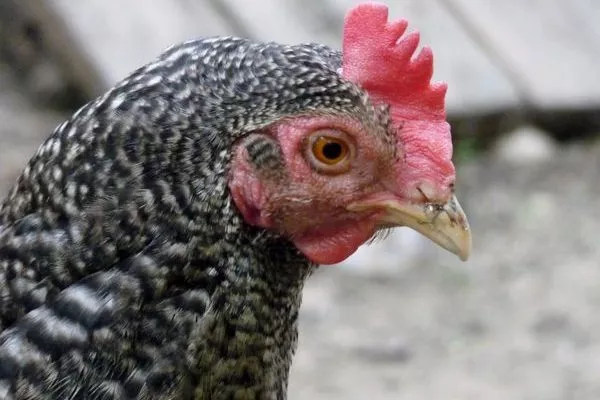
- leaf-shaped comb;
- eyes of orange or red tint;
- the earlobes and earring are red, not small, slightly elongated;
- small light beak;
- the neck is long and strong, vertical to the body;
- the mane of males is practically not developed;
- the back is straight and massive;
- the tail braids are poorly developed;
- the tail itself is not fluffy;
- the wings are small, the shoulder girdle of the hens is strong, the wings are pressed to the body, they are almost invisible behind the feathers;
- broad muscular chest;
- the belly is slightly convex, developed;
- paws are strong; thighs and shins are muscular;
- the tarsus is white-pink in color, but can also be dark gray, feathered only on one side;
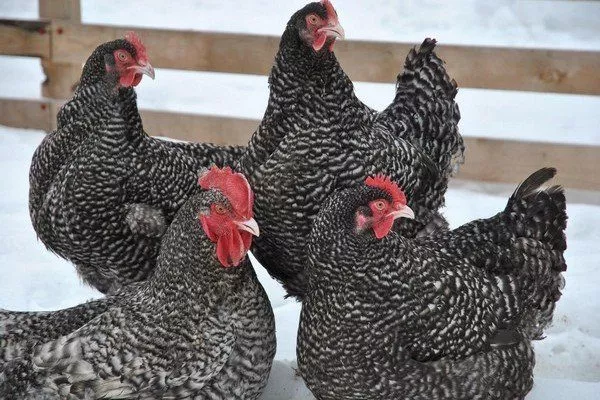
- The plumage is dense, most often with a variegated coloration.
Watch a video about what Mechelen Cuckoo chickens look like:
Breed colors:
- Cuckoo.
- Black.
- Hawkish.
- White.
- Lavender.
- Colombian.
- Silver.
- Golden.
Vices
Despite the fact that the breed is very rare in the Russian Federation, some characteristics still classify the birds as non-purebred:
- underdeveloped small breasts;
- white earlobes;
- narrow back;
- triangular body.
Another fault is a very light shade of feathers, but in fact, some colors are light in themselves.
In Belgium, they managed to breed the Mechelen dwarf cuckoo, but it is difficult to even find photographs of them because they are rare.
Characteristic features of the Mechelen cuckoo
This chicken breed produces a huge amount of meat, but isn't known for its high egg production. These birds are very friendly and won't cause you much trouble or waste your time.
Character
These hens are very peaceful and don't fight or compete with each other. Males occasionally engage in squabbles with other roosters, but this is extremely rare. These birds are known for their calm and peaceful nature; they walk around without much activity, so there's no need to worry about them escaping the outdoor yard.
Puberty and performance
Representatives of the Malin breed begin laying eggs Only by 7 months, but sexual maturity occurs much later – at 1 year. If nutrition and housing were poor, then puberty occurs later.
The eggs of yearling birds are collected and placed in an incubator; the hatchability of eggs is 95%, and the survival rate of chicks is 97%.
Despite their meat-eating nature, Mechelen cuckoos are also prolific egg-layers. A female lays 150 eggs per year, each weighing over 60 g. Their shells are light pink.
Productivity
Malin poultry meat is delicious and juicy. It has a fine texture and is served in the most upscale restaurants in Europe. Males gain weight quickly, weighing approximately 2.2 kg at four months. At four months, it weighs 3 kg.
Based on reviews from poultry farmers, it can be said that at the age of 9 months, a rooster weighs about 6 kg, but this is if it was raised for fattening, and not for breeding.
Maternal instinct
Almost all hybrids have lost their brooding instinct during breeding, and this breed is no exception. A novice breeder of these birds may struggle to keep up.
The first reason is that when crossing, an incorrectly selected pair can result in a large number of unfertilized eggs.
The second reason is a nearly complete loss of maternal instinct. Some hens happily sit on their brood, but then their mood changes and the hens leave. They'll do anything but sit on the nest. Therefore, you shouldn't risk entrusting such a responsible task to mother hens.
Pros and cons
The Malin chicken breed, just like other domestic birds, has a number of advantages and disadvantages that must be taken into account when breeding individuals.
Advantages:
- high productivity;
- beautiful appearance;
- large size of birds;
- calm disposition;
- undemanding in care;
- rapid weight gain.
Flaws:
- difficulty in breeding;
- almost lost maternal instinct;
- rare distribution in the Russian Federation.
How to care for the breed?
Hens need certain conditions, but in fact there is nothing complicated about it, you just need to build a chicken coop taking into account their size and needs.
Poultry house equipment
The main requirement is the construction of a large chicken coop. Birds are rarely kept in cages, and even then, only on poultry farms. Also, when raising birds behind wire, they should be trained to live like this from birth.
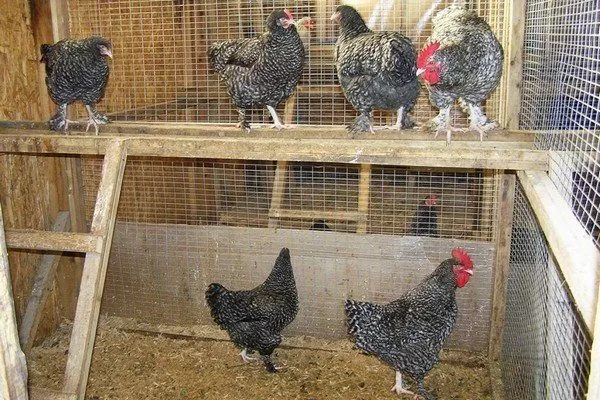
If you're setting up a coop just for Malinas, you shouldn't install perches, as their large mass prevents them from reaching them. These birds are kept exclusively on the floor.
This particular aspect of keeping Mechelen chickens requires poultry farmers to carefully select the bedding for the coop. It will need to be changed much more frequently than for other breeds. Weekly is ideal. Suitable materials include peat, straw, and hay. Make the bedding dense, and build the nests slightly higher than the floor so the chickens can easily climb into them without getting hurt. Read on to learn how to make your own chicken nests. Here.
Pay special attention to food and water containers. Fill the water bowls with clean, fresh water daily, and don't leave leftover food in the food containers, as this will spoil them.
Walking
Despite their sedentary nature and sedate nature, these breeds enjoy outdoor walks. Walking helps them build muscle mass and makes their meat much tastier. Consideration should be given to walks and a large, comfortable yard should be provided.
The area is fenced with mesh to prevent the birds from escaping. The height of the mesh should not exceed 1.2 meters, as the birds are flightless due to their small, tightly fitting wings. If you're comfortable letting the birds roam freely, you can do so. Chickens don't run away, and they're not particularly curious, so they won't venture into areas they shouldn't, and they won't damage your crops or greenery.
In Belgium, poultry farmers fearlessly let their birds roam freely.
Diet
Mechelen cuckoos are not picky about their diet; it is based on the needs of these meat-eating birds. One individual requires 150 g of food per day. Feed three times a day.
The basis of the menu is protein. If you buy ready-made feed mixes, choose broiler feed. Don't forget about mineral components and vitamins. You can feed layers with wet mash.
Add fresh greens to their diet. In summer, birds will find these vitamins themselves, but in winter they're essential. Don't feed cooked meat to chickens; only raw by-products are suitable, otherwise they'll develop stomach problems.
Light and temperature conditions, humidity
Meat-producing chickens don't require much lighting, as too much light affects egg production, not meat quality. Malinas require 10-12 hours of light per day. However, this rule only applies if the birds are kept separately from other chicken breeds.
The temperature in the chicken coop shouldn't drop below 12 to 14 degrees Celsius. At this temperature, the birds feel quite comfortable. The minimum temperature the birds can tolerate is 5 degrees Celsius, but this shouldn't be allowed to drop below this level, otherwise egg production will cease altogether.
Chicken droppings contain a small amount of ammonia, which is harmful not only to the respiratory system but also to the gastrointestinal tract of birds. To prevent this, regularly ventilate the room and remove the droppings.
Drafts and excess humidity have a negative impact on the condition of birds, as they can cause the development of many bacteria.
Molting and break in egg production
Seasonal molting is a common occurrence, and during this period, birds suffer from vitamin deficiencies. In some cases, cannibalism may occur, with birds pecking at other birds and sometimes even at themselves. All these behaviors can be prevented with proper nutrition and increased vitamin supplementation.
Molting season often begins in October or November and proceeds without difficulty. During this period, hens stop laying eggs, but then the process resumes.
Breeding
Young hens and males can be distinguished as early as one day old – roosters have a light spot on their backs, while hens do not. Weak and unhealthy chicks should be discarded immediately, otherwise they will lay poorly in the future.
- ✓ The optimal temperature in the incubator should be maintained at 37.5°C with 60% humidity for the first 18 days, then increased to 70%.
- ✓ To prevent cannibalism among chickens, it is necessary to provide sufficient space - at least 0.1 m² per head.
Caring for chickens
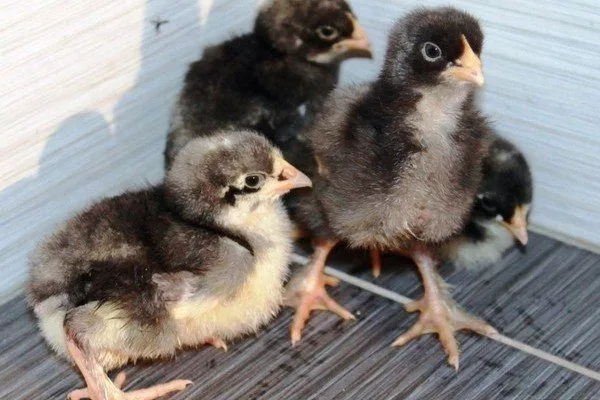
The chicks are born tiny—approximately 40-45 g. Their bodies are covered in a "fur coat" from the first days. The downy fur can be black and white or gray. Hatching the chicks isn't all that difficult, but caring for them is a real labor.
Features of feeding chickens:
- The main diet is high-protein food. A lack of protein in the diet can cause developmental defects in babies.
- Feed day-old babies six times a day, then reduce the number to four. This schedule should be maintained until they reach full puberty, after which three meals are sufficient.
- Vegetables and greens should make up half the diet. Don't forget about variety; for example, carrots and potatoes are considered the best vegetables. For greens, try nettles, dandelion, and clover.
- Chicks need vitamins and minerals to grow and develop faster. To prevent skeletal defects, add shells or chalk to their diet.
Problems in growing
Mechelen cuckoos present no particular problems when raising them. They are undemanding in their diet and have strong immune systems. Delays in hatching most often occur when certain rules and recommendations are ignored.
Diseases and pests
Thanks to extensive breeding efforts, the Mechelen Cuckoo chicken breed has developed a strong immune system. Unfortunately, this doesn't protect the birds from parasites. As a preventative measure, install ash baths in the coop.
Rules for processing poultry houses and birds:
- do not allow the poultry house to become excessively dirty;
- change floor mats in time;
- do not leave food leftovers in feeders;
- change the water regularly;
- make good ventilation in the poultry house;
- Vaccinate your chickens.
- Check the condition of the litter weekly and replace it if necessary.
- Disinfect the poultry house once a month using products that are safe for chickens.
- Consult your veterinarian every three months for a preventative examination of your birds.
Is it profitable to raise Mechelen Cuckoo chickens?
This breed of chickens eat quite a bit, but despite this, the cost of feeding quickly pays for itself. The meat of the hens and roosters is tender, with virtually no fat. Although considered meat-producing, they still produce a considerable number of eggs.
Prices for purchasing chickens:
- Egg for incubator – 150 rubles;
- 14-day-old chickens – 450 rubles;
- An adult bird costs more than 3,000 rubles.
Where to buy in Russia?
Reviews from poultry farmers prove that the best poultry farms in the Russian Federation engaged in breeding Mechelen cuckoos are "Fauna", "Vityaz", and "Bird Village".
Breed analogues
There are two main analogues:
- The gates are light. The hens produce slightly fewer eggs than the Malin breed, but their body weight is approximately the same.
- Russian black bearded men. Completely identical in productivity to the Mechelen cuckoo.
Reviews of the breed
These birds require constant exercise, and before slaughter, cuckoos should be fed a mixture of powdered milk and buckwheat. Don't hesitate to invest in this food; the meat will truly be juicy and delicious.
Raising Belgian Mechelen Cuckoo chickens is a profitable business because they cause almost no problems and are considered low-maintenance birds.