
The Legbar chicken breed is a domestic bird that lays blue eggs. These birds are known for their excellent survival rate and high productivity, but they require specific living conditions.
History of origin
The breed originated in Cambridge, England. The breeders responsible for this breed are Punnett and Pease. The ancestors are cuckoo-colored hens, striped Plymouth Rocks, and golden Kempinski roosters. The resulting chicks varied in plumage color, but their productivity was poor.
The breeders decided to improve the productivity of the resulting breed and crossed male partridges Leghorn with striped females Plymouth RockAfter this, the work continued. After some time, breeders were able to announce the creation of a new breed of chicken, the Legbar.
Legbars come in three main varieties: golden, silver, and cream. The silver variety is no longer found in the wild; the most popular and widespread are the cream varieties, which were developed with the help of English Araucanas. It is thanks to these Araucanas that the Legbar inherited its blue shell and the crest on the back of its head.
Description of the breed
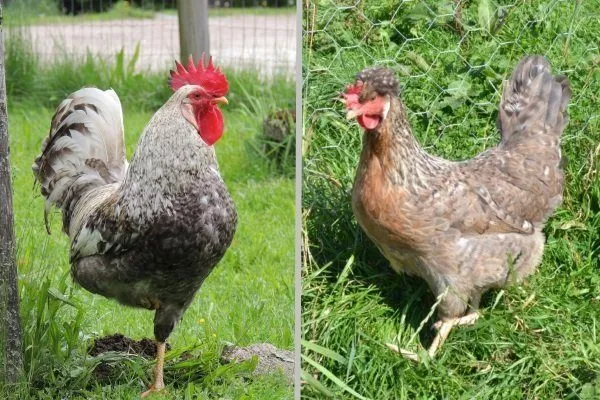
The feathers are creamy beige, distinguished by brown stripes. Hens are darker than roosters, so the stripes are practically invisible. The skin is yellow.
The main external characteristics of Legbar chickens:
- the head is small, proportional;
- The rooster's comb is red, leaf-shaped, erect, and has 6 teeth;
- chickens have a comb that is slightly compressed to the side and does not cover the eyes;
- there is a crest on the back of the head, which is a collection of long and thin feathers;
- strong beak, slightly curved, yellowish in color;
- big eyes;
- the earrings are round and not small;
- earlobes are well developed, oval;
- the neck is long with a lot of feathers;
- rounded chest;
- the back is not wide, long;
- the wings are voluminous and fit tightly to the body;
- the tail is small;
- the braids are long and wide;
- the legs are not long;
- fingers spread wide.
Unacceptable external characteristics of Legbar chickens:
- a collapsed comb set in a male;
- earlobes are red instead of white;
- crooked fingers;
- small tail;
- the metatarsus is not yellow.
Bird's temperament
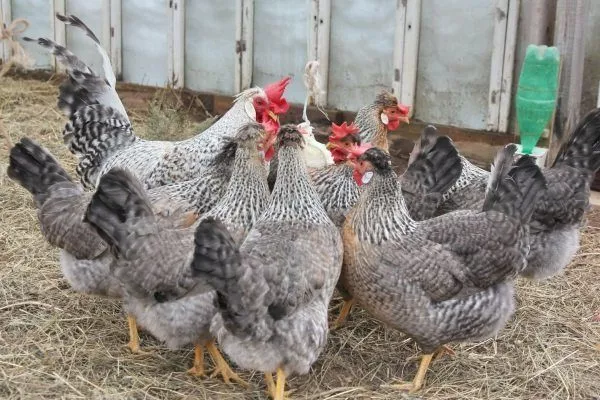
Legbar hens are known for their active and inquisitive nature. They love exploring new territories, so it's recommended not to let them roam freely, but rather keep them confined to a yard. Otherwise, they'll wander into the most secluded areas of the garden or vegetable patch and destroy everything in their path.
Crested females are non-confrontational, showing maximum affection and friendliness to other individuals. Males behave slightly differently; they are also curious and active, but they enjoy fighting. Aggressive behavior can be somewhat reduced by using colored lighting, particularly green.
Poultry farmers believe that the color green has a beneficial effect on the temperament of fighting hens and encourages them to calm down. Additionally, you can install red feeders in the coop and yard; they can somewhat quell the unruly nature of the troublemakers. If all else fails, separate the males further apart.
Productive qualities
Legbar females mature early, thanks to their ancestors. They begin laying eggs at 4-6 months of age, often at 5 months. They reach full sexual maturity a little later, at 11 months.
The main problem of crested cats is obesity.
Fat accumulation delays sexual maturation. Initially, the birds lay small eggs, each weighing about 40 g. Over time, their size increases to 75 g.
The Legbar breed's signature feature is its multicolored eggshells, a trait that poultry farmers love. They lay not only blue eggs, but also brown, cream, turquoise, and green ones.
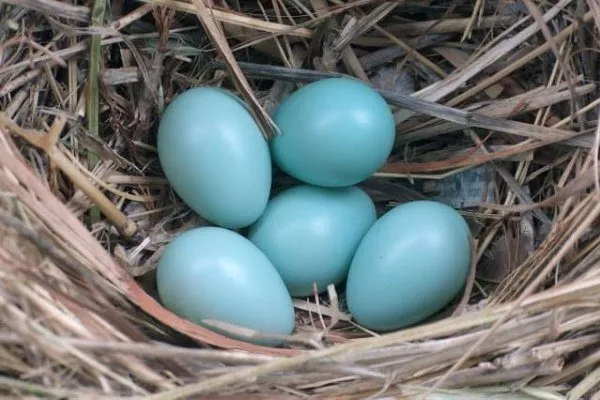
As for the productivity of hens, poultry farmers still debate the issue. Some argue that 270 hens per year is too few, while others believe this number is sufficient to qualify them as productive layers.
The female is very sensitive and gets nervous about any changes in the weather, the hens, her environment, etc. Because of this, the number of eggs she lays can fluctuate, sometimes for the better, sometimes for the worse.
The Legbar chicken breed is a meat and egg breed, so in addition to eggs, the hens produce a large amount of meat. Roosters reach 3.2 kg, and hens 2.5 kg. The meat is juicy and tender, perfect for holiday dishes.
Advantages and disadvantages of Legbars
The Legbar chicken breed also has its pros and cons, like other poultry varieties. These must be taken into account when breeding the breed.
Advantages of the Legbar chicken breed:
- decorative appearance, although not related to the decorative direction;
- multi-colored eggshells;
- high productivity;
- strong immunity.
Disadvantages of the Legbar chicken breed:
- the need to create a special diet;
- difficulty of breeding;
- lack of maternal instinct;
- aggressiveness of roosters;
- cessation or partial reduction of egg laying at low temperatures.
Features of care and maintenance
The productivity of this breed of chickens directly depends on the conditions and quality of maintenance.
- ✓ The temperature in the chicken coop should be maintained at +15°C all year round to prevent a decrease in egg production.
- ✓ Use of bacterial bedding in the chicken coop to keep it clean and dry.
Place of detention
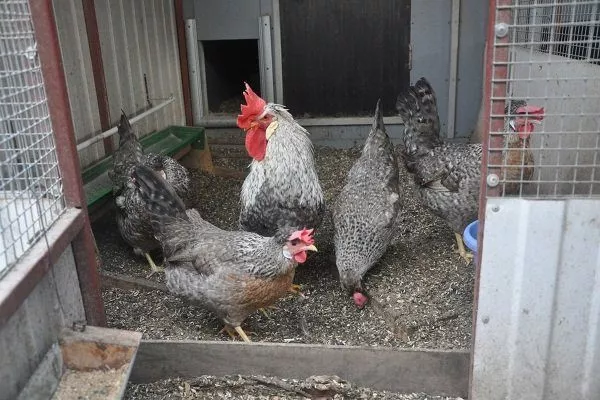
Legbar is better for chickens build a chicken coop from scratch, rather than using an old barn. Birds are very demanding when it comes to their living conditions, so it's not worth skimping on this.
Recommendations for equipping a poultry house:
- The poultry house should be located on an elevated area to prevent groundwater from flowing into it.
- It is recommended to use bacterial bedding for the chicken coop.
- Perches made of rounded timber are installed inside the coop. Each female should have approximately 0.3 m of perch perch. The perch height is 1 m from the ground, and the distance between perches is 0.5 m.
- Nests for females Place the containers at a height of 0.8 m from the ground. Simple boxes measuring 0.4 x 0.4 m can be used for this purpose. Straw or hay is placed inside to provide warm bedding and should be changed periodically.
Legbar chickens are very active, so a run is essential. It's built next to the coop and fenced with chain-link fencing around the perimeter to prevent the birds from escaping. It's best to cover the run with a small but sturdy roof to protect the chickens from heavy rain, scorching sun, and wild birds.
Watch a video about the characteristics of the Lekbar chicken breed, how to properly keep and care for them:
Temperature, lighting, humidity
Birds love warmth, so the coop should be heated year-round. The ideal temperature is 15 degrees Celsius. In winter, the coop is insulated with either warm upOtherwise, egg production will drop, and some hens will even die. It's best to install heaters and thoroughly insulate the floor with straw, hay, or peat.
Cleanliness and dryness are two other key factors for keeping poultry well. Change the litter twice a month, and clean and ventilate the room. Chicken droppings contain a small amount of ammonia, which is harmful not only to the birds' respiratory system but also to their gastrointestinal tract.
Lighting in the poultry house is also important; there must be windows to allow natural sunlight to enter; additional lighting is installed in the room in the fall and winter.
Diet and feeding rules
Chickens are demanding when it comes to their diet, and ensuring they have all the essential nutrients is key to high productivity. A typical menu consists of: compound feed and grain mixtures are not suitable for birds.
To feed this breed, you need to create or purchase a special diet. This is a balanced, blue-colored food. Similar food is available at bird markets; it contains all the necessary nutrients for Legbars.
As for the blue color, it does not affect the color of the shell in any way; apparently, this is simply a clever marketing ploy by the food manufacturer.
You can make your own Legbar feeding formula, which consists of the following ingredients:
- a couple of types of crushed grain;
- cake;
- roots;
- meat and bone meal or fish;
- dried grass;
- special supplements and vitamins.
Add to feed vitamin complexes, which increase egg production. However, the permissible norm must not be exceeded, otherwise it will lead to vitamin deficiency and complete exhaustion of the body. The chicken coop must be constantly stocked with drinking bowls With clean water. It's also helpful to place bathtubs with shells or small gravel.
Legbar chickens drink twice as much water as other breeds.
Poultry farmers say that occasionally, some chickens peck at others—this is due to a lack of vitamins and minerals. Vitamin C plays a particularly important role in Legbar chickens' health; experts recommend purchasing Pentavit, which provides the chickens with all the necessary nutrients.
Shedding and care in winter
Molting is a normal occurrence and shouldn't be feared. On the contrary, it's a good idea to help your birds through this challenging period. Molting promotes better health and increased productivity. This process can be delayed if you provide your birds with too much daylight.
- Increase the amount of protein in the diet to support the feathering process.
- Provide additional heat in the chicken coop, as birds are more sensitive to cold during this period.
- Limit stressful situations for chickens to avoid worsening their condition.
If molting is delayed, you should consult a veterinarian who can help induce it. During this period, hens do not lay eggs.
Egg production decreases after 2 years from the start of laying, so an experienced poultry farmer should already take care of a planned replacement of the livestock.
Winter is the most challenging period of the year. Birds freeze and die. Poultry farmers must take care of their hens, keeping them in a heated area, preventing drafts, and providing them with adequate nutrition. During winter, minerals and vitamins are added to their diet to help protect them from various diseases.
Reproduction
Crested hens are very poor mothers, so farmers raise the chicks themselves; you can't expect help from the hens.
Natural brooding or incubation?
The lack of maternal instinct is the birds' main drawback. This loss stems from extensive breeding efforts, so hatching chicks without an incubator is impossible. Hens from other chicken breeds can also be used.
Read about the specifics of incubating chicken eggs at home. Here.
Conditions for chicks
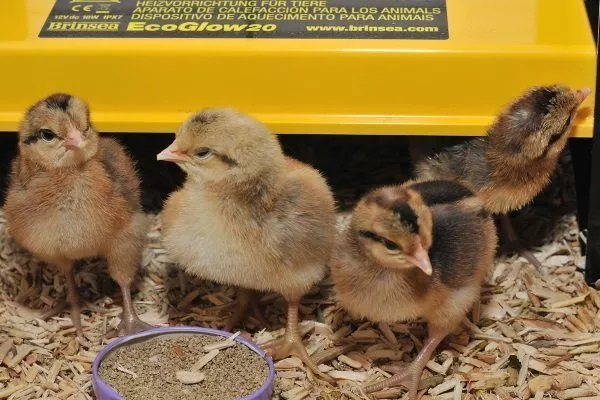
Breeding chicks is a responsible, important, and yet fascinating process. At one day old, the chicks already differ from each other: males have indistinct feather coloring and bright black stripes, while females have no stripes. By one month, the chicks fledge and weigh 0.5 kg.
In the first days of life, they need warmth, proper nutrition, and the reduction of all stressful situations. They should be handled, disturbed, and frightened as little as possible. Stress will affect the birds' psyche, triggering aggression and hostility in the future.
Nutrition
The first meal for Legbar chickens is finely ground wheat porridge. Add something new to their diet daily: fine grass, cooked vegetables, and sufficient vitamins and minerals. Occasionally, offer semolina with mashed egg, but don't overdo it.
Common diseases
Legbars are prized by poultry farmers for their strong immunity and excellent stamina. However, one problem plagues these hens throughout their lives: deformed feet and toes. It's no coincidence that crooked toes are listed as an unacceptable characteristic.
Veterinarians divide this condition into acquired and congenital deformities. The former develops due to an improperly selected diet or poor digestion, while the latter is present from birth. The acquired condition can only be cured by improving nutrition.
Potential problems during breeding
Birds are bred on both small and large farms, and in all cases there are certain difficulties in breeding chickens.
The main problems when breeding Legbar chickens:
- The occurrence of bone deformation disease.
- Lack of maternal instinct.
- Too high sensitivity to cold, as a result of which the chickens die.
Profitability of the Leghorn Breeding Business
Poultry farmers are confident that even a novice farmer can raise Leghorns; the breed isn't particularly difficult to maintain, it simply requires some attention. The meat isn't much more expensive than other chicken breeds, but blue-shelled eggs are especially prized. They fetch several times the market price of regular white or cream-colored eggs.
Where and at what cost can I buy it?
Prices for eggs, chicks and adult Legbar chickens are as follows:
- incubator egg – 150 rubles;
- 1 day old chicken – 250 rubles;
- 1 month old chicken – 350 rubles;
- female or male aged 4 months – 1700 rubles;
- female or male over 4 months old – 3000 rubles.
Similar chicken breeds (analogues)
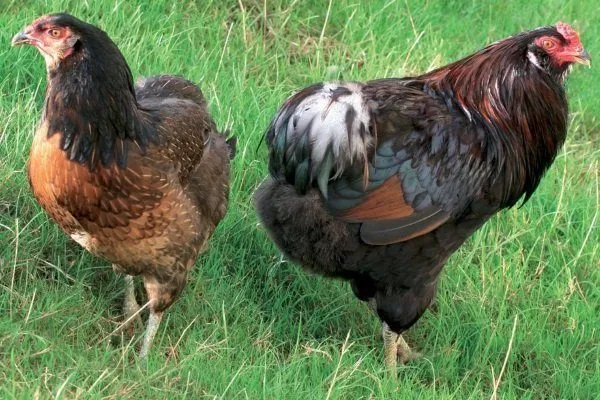
The Legbar is considered the equivalent of the well-known Araucana. The breed has an unusual coloring and appearance, lacks maternal instinct, and weighs minimally – about 1.8 kg. It lays about 150 blue-shelled eggs per year.
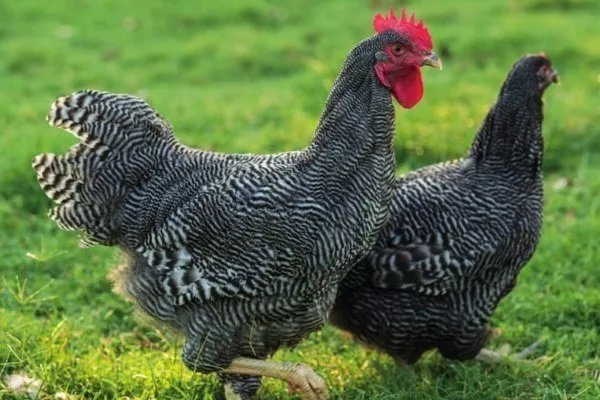
The second similar breed is the striped Plymouth Rock. The rooster reaches 3.5 kg, and the hens 3 kg. They lay medium-sized eggs, producing around 175 per year.
Araucana chickens
Plymouth Rock chickens
Reviews of the breed
The hens fledged at 3 months and started laying eggs at 6 months. There are four breeds of hens in the coop, and none of them fight. I buy the same feed for them all, but I add some vegetables and dried grass.
The Legbar chicken breed is an excellent choice for the beginning poultry farmer. It has earned its popularity thanks to its strong immune system, attractive appearance, and high productivity. These hens lay beautiful blue-shelled eggs and boast delicious, juicy meat.