
Birds of this breed are distinguished by their beautiful appearance, ability to quickly gain weight, and ability to lay eggs throughout the year. They have a strong immune system, are resistant to cold weather, and are easy to feed and care for. However, there are some specific considerations regarding the care and breeding of these birds, which we will discuss below.
A bit of history
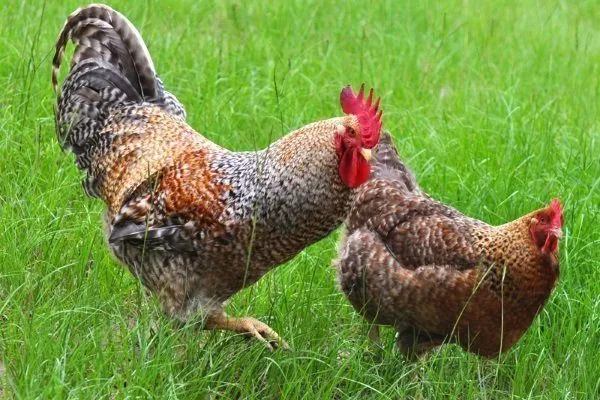
The Bielefelder chicken breed was developed in the second half of the 20th century by German farmers. The bird was exhibited at the Hanover Agricultural Exhibition as the German Pollinated Chicken. It wasn't until 1980 that the breed was officially recognized under its current name (named after the town in Germany where the bird was bred).
New Hampshire, Rhode Island, and Welsummer breeds were used in developing the breed. As a result of their successful work, breeders have created a unique poultry variety characterized by high egg production and high-quality, dietary meat.
Sex determination in day-old chicks
- ✓ Cockerels: light down, black stripes on the back, light spot on the forehead.
- ✓ Hens: dark color, black markings around the eyes.
Features of the species
The bird of this breed is distinguished primarily by its appearance – size and color:
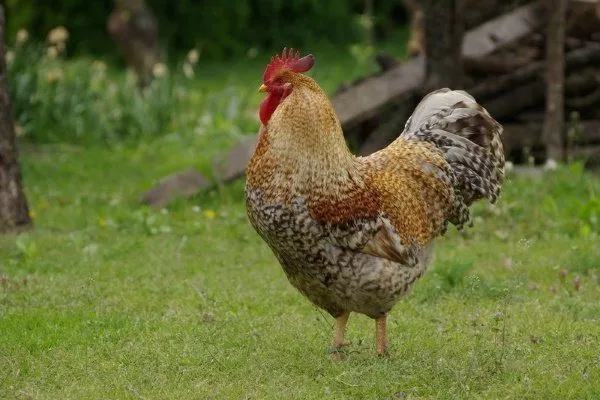
- Hens are characterized by two-toned feathers: black alternating with gold, brown, or silver. Their bodies are elongated, with hens having a wider breastbone than roosters. They have broad shoulders, medium-sized wings, and dense, dense feathers.
- Breeders set themselves the goal of producing a meat breed, and they succeeded: Bielefelders produce high-quality meat, and an adult, with proper care and nutrition, reaches a weight of 4 to 5 kg.
A specific feature of the breed is that the sex of the chicks can be determined within the first day after hatching.
In terms of productivity, females begin laying eggs at six months of age, producing approximately 200 eggs per year, each weighing 60-70 grams, in brown shells. Their peak productivity occurs during the first two to three years of life, after which their productivity declines.
Some poultry farmers add special nutritional supplements to their hens' diets to boost egg production, but this is absolutely not recommended. This will quickly reduce their strength and egg-laying ability. It's important to follow proper poultry nutrition and husbandry recommendations from the very beginning.
What are the benefits of breeding this breed?
Let's consider what makes this breed of chickens so good, compared to other representatives:
- Bielefelders are a meat-and-egg breed, meaning you're guaranteed to get not only tasty, high-quality meat, but also a fairly large number of eggs throughout the year.
- These birds are naturally resistant to various diseases and cold, giving them a distinct advantage over other breeds. For example, these chickens can withstand temperatures as low as -15°C.
- With proper nutrition and sufficient protein, individuals gain weight quite quickly and from an early age.
- Bielefelders are valued for their calm nature – the birds are quite peaceful and friendly, rarely conflicting with their fellows.
Exterior evaluation parameters
| Criterion | Norm |
|---|---|
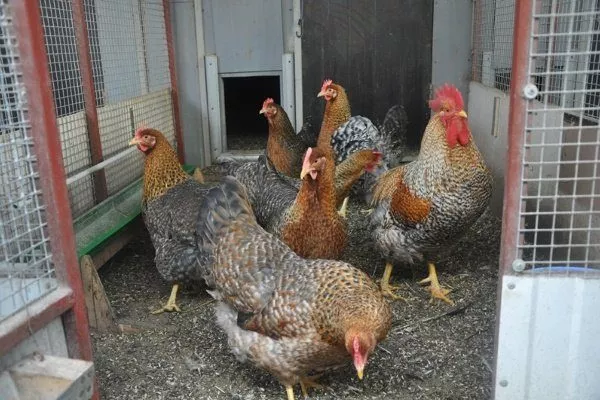
| Crest | Bright red, without pale areas |
| Beak and paws | Yellow, without cracks or growths |
| Plumage | Thick, shiny, without bald spots |
How to choose the right breed representatives: selection criteria
As noted above, Bielefelder chickens have one distinctive feature: from the first days after hatching, you can distinguish between males and females by the color of their down. Males have light plumage, with black stripes on their backs and a light spot on their foreheads. Future layers have darker plumage, with black or dark markings near their eyes.
This way, when purchasing ready-to-hatch chicks from an incubator, you can select the required number of hens and roosters based on their appearance.
When selecting individuals, please pay attention to the following points:
- If you want to buy a bird that is already capable of laying eggs, then select individuals that are at least six months old - Bielefelder hens lay their first eggs at 7-8 months of age.
- Pay attention to the condition of the bird's feathers – they should be smooth, shiny, and healthy-looking. Bald spots on the body indicate illness or poor living conditions. Dirt and feces under the tail indicate possible intestinal infections.
- A healthy bird's comb and wattle are typically a rich red color. Pale skin indicates the bird's advanced age and poor circulation.
- Look closely at the bird's beak and feet – they should be yellow. There should be no discharge around the eyes.
You can learn about what healthy Bielefelders look like at 2.5 months of age, their weight and size, and their typical behavior by watching the video:
Sanitation treatment schedule
- Daily: change water, clean feeders.
- Weekly: disinfection of drinking bowls with 1% potassium permanganate.
- Monthly: complete replacement of litter.
Requirements for the care and supervision of birds
The most practical way to keep domestic chickens is in a simple coop. If the birds are kept year-round, the structures should be more substantial. They should reliably protect the birds not only from sudden temperature fluctuations but also from enemies (animals and birds), and they should be dry and sufficiently light. If such a coop is insulated, then in winter, when the chickens are kept on deep litter without any heating, the temperature in such a room will remain stable at no less than 6°C.
You can ensure a comfortable existence for your bird by observing a number of conditions:
- The site for building the poultry house should be level, with a slight southward slope to ensure water drainage. To prevent groundwater from seeping into the house, drainage ditches up to 50 cm wide are installed around it. Inside, the walls should be smooth, using plywood or drywall. These walls are easier to clean and disinfect.
- Peat, sawdust, shavings, straw, tree leaves, and dry coarse sand are used as bedding material.
Use litter in the poultry house: it will eliminate the need for daily removal of droppings and will destroy pathogens of certain infectious diseases.
- In winter, to achieve high egg production from laying hens, it is necessary to use artificial lighting.
- Pay special attention to the insulation of the ceiling, floor, manholes and windows, since heat loss in winter occurs mainly through them.
- Considering that the Bielefelder is a large bird, the chicken coop and the walking area need to be spacious so that the chickens can roam freely around the area.
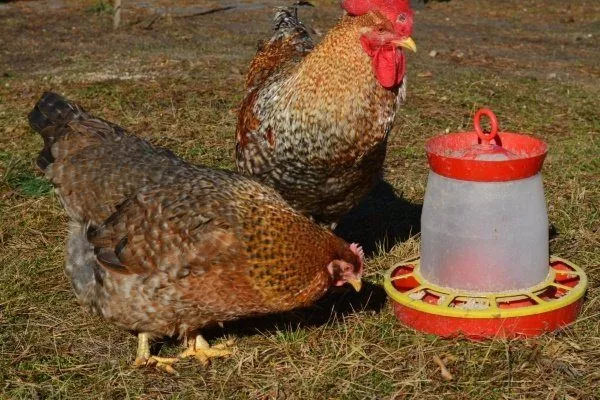
- The poultry house must be equipped with feeders, drinkers and perches:
- For wet food, it is best to use metal feeders, and for dry feed mixtures, chalk and gravel, wooden ones.
- Water bowls are essential indoors, as these poultry drink a lot of water. On average, young birds drink twice as much water as they consume feed, so water must be available at all times.
- Roosts are a must-have for any chicken coop. Smoothly planed wooden blocks are used to construct them. It's important to install the roosts so that their height above the litter is no more than 50 cm, as Bielefelder chickens are quite large and heavy.
- Another element of poultry house equipment is nest boxes, which will facilitate egg collection. Birds need to be trained to lay eggs in nest boxes. These boxes are installed directly on the perches in a shaded area of the house.
- Before placing birds in the coop, the room must be thoroughly washed, cleaned, and disinfected. Before cleaning, all internal elements of the structure—floors, equipment, and utensils—are washed with a hot 1.5-2% solution of soda ash (150-200 grams of soda per bucket of water). Ash lye is used to clean feeders and perches. To prepare it, dissolve 1 kg of stove ash in 5 liters of water, then boil the mixture and dilute it by half with water.
- A solarium (aviary) is a fenced-in area in front of the poultry house for hens to run freely. This enclosure should be at least half the size of the enclosed space. Since Bielefelder hens are quite large, the enclosure should be spacious enough. To prevent the hens from escaping from the solarium and to isolate them from other wild birds, fences up to 2.2 meters high are installed. Mesh netting is stretched over the fence. The enclosure itself can be filled with sand and sown with fine grass.
What and how to feed birds correctly
With proper feeding, hens will lay eggs year-round and gain significant weight. Let's look at some of the specifics of poultry feeding:
1. All feeds included in a bird's diet are conventionally divided into carbohydrates, proteins, vitamins, and minerals. This should also include whole grains, flour mixtures, and feeds of plant, animal, and mineral origin (see table):
| Carbohydrates | Protein | Vitamins | Minerals |
| Cereal grains (corn, wheat, millet, barley, oats, sorghum, millet, etc.), potatoes and root crops with melons, cereals and waste from flour milling (bran, mill dust). | They contain a lot of protein and are divided into feeds of animal origin (fish, meat and bone, meat and feather meal, whole and skim milk, cottage cheese) and plant origin (legume grains, oilcakes, yeast, flour from legumes and nettles). | These types of feed serve as a source of vitamins and provitamins, which are present in whole milk, flour from various herbs and vegetable tops, pine flour, carrots, and green grass. | These feeds provide minerals such as calcium, phosphorus, sodium, chlorine, and iron. These include shells, chalk, limestone, feed phosphates, table salt, and macro- and microelement salts. |
2. Particular attention should be paid to mineral nutrition of poultryThus, to form the shell of one egg, a hen expends over 2 grams of calcium and 0.1 grams of phosphorus. Chalk, shells, eggshells, and limestone are good sources of calcium.
3. The diet of hens that produce eggs for hatching young must include feed rich in vitamins and containing easily digestible, complete protein.
4. An adult bird undergoes an annual change of plumage, which usually begins in late summer – early autumn, and is accompanied by a weakening of the body. Feeding during the molting period The diet should be less abundant than during the peak of egg-laying, but varied and high in calories. Birds can be fed fish meal, meat and bone meal, and fresh cottage cheese. They should also be given shells, slaked lime, chalk, bone meal, eggshells, as well as carrots, pumpkin, potatoes, cabbage and beet leaves, and legume greens.
5. Birds eat well mashes that contain garden waste – chopped fallen apples, pears and plums, apple pomace, etc.
Usually the bird is fed 3-4 times a day.Water for drinking should always be available in the poultry house and aviary. A typical daily ration for one bird might be as follows (in grams):
- grain (oats, barley, etc.) – 50;
- flour mixture (oatmeal, barley, wheat bran) – 50;
- hay flour – 10;
- succulent feed (carrots, rutabaga, beets) – 30-50;
- dry protein feeds of animal and plant origin (oil cakes, meat scraps, etc.) – 10-15;
- shell – 5;
- bone meal – 2;
- salt – 0.5.
Egg incubation mode
| Period | Temperature | Humidity |
|---|---|---|
| Days 1-18 | 37.5-37.8°C | 50-55% |
| Days 19-21 | 37.0-37.2°C | 65-70% |
Breeding and hatching young chicks
If you've decided on this breed of poultry, the first thing you need to decide is where and how you'll purchase the chickens. There are several possible options:
- Buy a young chicken – it’s best to choose grown chickens aged 3-5 months, when they can already eat, walk, and sometimes even lay eggs.
- Take newly hatched chicks (aged from 1 day) - you can find them in specialty stores, at the bird market, or from friends.
- If you already have Bielefelders, then you can quite possibly expect offspring from your hens.
- Buy an egg and hatch the chicks yourself in an incubator.
It should be noted that Bielefelder hens are reluctant to hatch chicks, so to be on the safe side, it is best to have an incubator and a generator for it on hand.
It is recommended to store fresh eggs for up to five days before placing them in the apparatus, after which the raw material becomes unsuitable for hatching birds.
The optimal time for laying eggs in the device is early spring (February-April). Chicks from such a brood will grow and develop in the spring, when there is plenty of sun, fresh grass, and small insects.
It is especially important to pay attention to feeding chickens:
- For the first 3-5 days, chickens are fed hard-boiled eggs or fresh cottage cheese mixed with crushed corn, wheat or boiled millet in a ratio of 1:3 or 1:5.
- From the third day of rearing, they should be given fresh greens—nettles, alfalfa, and clover. The greens are chopped and added to the feed mash; boiled potatoes and grated carrots can also be added.
- Until the age of 10 days, chicks are fed 5-6 times a day.
As the chicks grow older, shells, chalk, crushed bones, and flour are added to their feed.
Rules for keeping and caring for adults and young animals
The conditions in which adult birds and young individuals are kept do not differ much.
As a general rule, birds of this breed require a constant source of protein and calcium for proper development and stable weight gain. Adults are relatively unpretentious eaters, but young chicks (up to 5-6 months) require a varied diet enriched with vitamins and calories.
Chickens of this breed should be kept clean – not only because of their intolerance to dirt, but also for hygiene reasons. Monitor the condition of the food in the feeders, drinking water, and bedding in the coop. The latter can be loosened periodically for adult chickens, but it's best to change it daily for chicks to prevent their still-fledged bodies from contracting any infections.
Vaccination schedule for young animals
- 1 day: against Marek's disease.
- 7-10 days: against Newcastle disease.
- 14 days: against infectious bronchitis.
Preventive measures to prevent diseases
Most poultry illnesses are caused by improper housing or feeding. It's important to notice a sick bird promptly (loss of appetite, closed eyes, heavy breathing, limping or not standing, or convulsions of the limbs or head). If the cause of the illness cannot be determined, a veterinarian should be consulted.
Let's look at some points regarding the prevention of infectious diseases, which are spread primarily by ticks and rats:
- Birds should be purchased from farms where there are no infections.
- Disinfect premises and equipment in combination with adequate feeding and high sanitary and hygienic conditions.
- The litter in the poultry houses must always be dry, and the room must be ventilated regularly.
- The following substances and agents are used as disinfectants: sunlight, high temperature, freshly slaked lime, potassium permanganate and others.
As you can see, breeding and maintaining Bielefelders is quite simple. Their living conditions and feeding requirements are not much different from those of regular chickens. Any novice poultry farmer will have no trouble raising these chickens, taking their characteristics into account, and producing valuable meat and eggs.
Thank you. Very useful information.
Thank you! The breed is interesting!