
The Kotlyarevskaya breed is a versatile bird, ideal for home rearing. In addition to high egg and meat production, the breed boasts another significant advantage: high vitality.
History of the breed's origin
Breeders are working tirelessly to create various versatile breeds with excellent health and low maintenance. Scientists are achieving varying results, but no chicken breed can surpass the Kotlyarevskaya.
The breed got its name from a farm in Kabardino-Balkaria. Currently, the breed is being refined and its standards are being established at Genofond LLC. Scientists used the following chickens to develop the Kotlyarevskaya: Zagorsk salmon, Russian white, Naked neck, New Hampshire and Striped Plymurka.
The Kotlyarevskaya breed was developed with the goal of producing chickens with excellent vitality, high egg production, and a high meat yield. Over time, selection continued to refine all existing characteristics and improve their quality. Some claim that Kotlyarevskaya chickens are meat-and-egg breeds, but in reality, they are both egg-and-meat.
Chickens aren't raised commercially, and there aren't many of them in rural areas. Purchasing chickens is expensive. The price is high due to the limited supply of purebred chickens.
Advantages and disadvantages of Kotlyarevsky chickens
Advantages of the breed:
- strong immunity, excellent survival rate of young animals (about 92%);
- undemanding in care;
- require little food;
- there is a high demand for young animals (at poultry fairs, chicks are bought in a matter of minutes);
- high productivity (at 6 months a chicken weighs about 3 kg);
- high egg production;
- juicy, tasty, dietary meat.
Disadvantages of the Kotlyarevskaya chicken breed:
- difficult to acquire (chicks are quickly sold out and often poultry farmers simply do not have time to buy young birds);
- there is no maternal instinct.
A review of the productivity and maintenance of the Kotlyarevskaya chicken breed is presented in the following video:
Characteristics and description of the breed
The Kotlyarevskaya breed is a bird with excellent heredity. Its ancestors are considered to be the best breeds of domestic birds.
Appearance
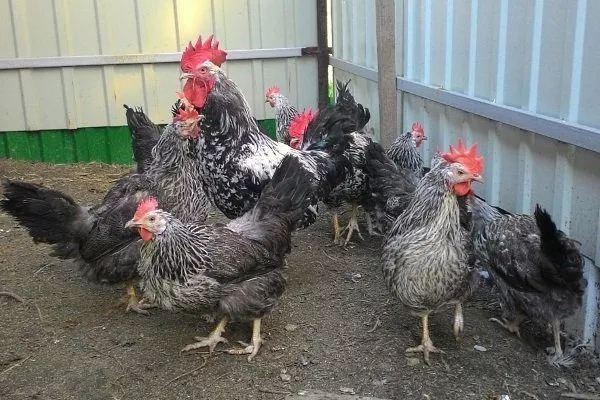
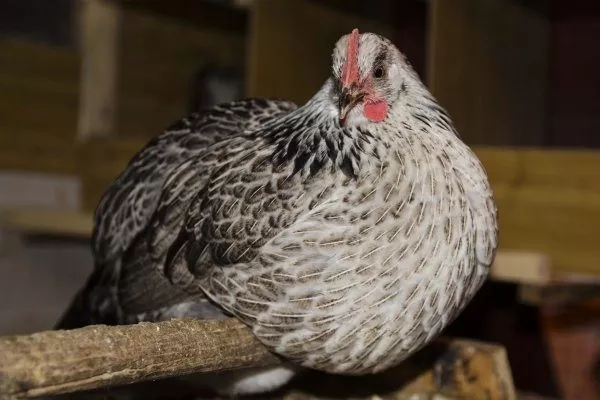
This breed's appearance has its own distinctive characteristics. The birds have a small head and a short neck. The plumage makes the neck appear much larger than it actually is. Both the hen and the rooster have a comb, but the male's is more pronounced. The comb is leaf-shaped.
The birds have large, orange eyes. A distinctive feature is the red-and-white earlobes of hens. Males boast a prominent chest. The back is straight, rising toward the tail.
The wings and tail are well developed, covered with numerous feathers. They can fly, but Kotlyarevsky's owls dislike airborne locomotion, preferring to walk and run. Their legs are wide-set and short. Their feet are featherless, with four toes on each foot. Their beak is short and pointed.
As for the birds' coloring, it can vary. This is due to the large number of breeds involved in the creation of Kotlyarevsky birds.
Character
Breeders don't complain about the behavior of this breed of laying hens. They are known for their calm and friendly nature. Kotlyarevskaya hens are ideal for keeping in villages. They are not particularly active, don't run all over the yard, and don't encroach on garden beds.
The birds are extremely happy to interact with people, and they don't quarrel with each other or scream. It's fair to say that the Kotlyarevskaya breed is a truly phlegmatic breed.
Productivity
The birds' weight and the number of eggs they lay indicate high productivity. They are characterized by high egg production—one hen can produce approximately 220 eggs per year. The birds gain weight quickly, so they are often raised for their tasty and juicy meat.
The onset of puberty
Rapid growth and vigorous development are the main distinguishing characteristics of laying hens. At six months of age, roosters reach a weight of 3 kg, and hens begin laying eggs.
Egg production
This process doesn't happen overnight. Hens become prolific with age. Their shells are cream-colored. They lay eggs actively, up to 240 per year, taking a break only during molting. Even in a cold climate, in a cozy and warm coop, you can get large eggs every day.
The instinct of incubation
Selective breeding brings not only benefits but also colossal harm. For example, the lack of maternal instinct. Pure breeds retain this ability, but crossbreeds and hybrids rarely do. Species created by breeders also lack the broodiness instinct, or it is greatly weakened. This is truly a major drawback, as hens are unable to properly incubate their offspring, and the eggs die before they even hatch.
The instinct isn't completely lost, but finding a good "mother" is difficult. All hens sit on their eggs, but almost none of them hatch them fully. Out of desperation, poultry farmers resort to using a broody hen of a different breed or a special incubator.
Subtleties of content
Inexperienced poultry farmers can safely keep this breed. Kotlyarevskaya chickens are easy to care for, don't require special feed, and almost never gain weight.
Diet
A properly selected diet can help a breeder produce eggs weighing approximately 70 g. Summer food differs from winter food. During the winter, breeders add more mineral supplements and nutrients to the diet. Dried grass, pine needles, or grass meal are used as food. In summer, greens and grass are the main food for hens.
The second difference between the winter and summer menus is the amount of food. In winter, it should be 10% more. This is because chickens expend a huge amount of energy on keeping their bodies warm.
A particularly favorite food for birds is wet mash. It's easily digested, and chickens eat it with relish. Another advantage is that poultry farmers can add any vitamin and mineral powders they want. Wet mash provides energy and strength for the entire day. It's best to feed it to birds for breakfast.
Adult hens are fed two or three times a day. During the winter, at least three times. In the summer, feeding twice is possible, but only if the birds can eat greenery and forage outdoors.
The basis of all chickens' diets is grains. Wheat and oats are the most important, but cereals should also be considered. Sunflower seeds help restore feathers; they are best fed during molting.
Chicken coop design
If you live in a warm climate, you don't need to build a heated coop. You'll need to provide the chickens with a roof and, during colder months, provide them with plenty of food so they can generate enough energy to stay warm.
We recommend reading the article about How to build a chicken coop yourself.
The floor is covered with a special heating material, such as straw or peat. In winter, a warm bedding should be laid, which itself will serve as an excellent heat source. The sawdust or peat is turned over periodically and additional heat is added.
A chicken coop shouldn't be without perches, and it's best to make them from planks. Place the perches low to the ground so the birds can easily climb onto them, remembering that they don't like to fly.
Nest boxes are essential in the chicken coop for laying eggs. The number of nest boxes depends directly on the number of hens, but for every five hens there should be one nest box, and if possible, more nest boxes should be provided. The boxes should be lined with hay or straw; leaving them bare is not recommended, as the birds may abandon such nest boxes altogether and lay their eggs elsewhere.
Walking
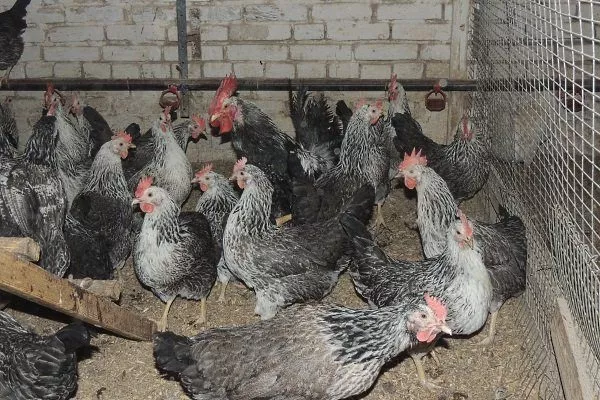
A run yard is essential, as Kotlyarevskaya chickens love fresh air and walks, although they do so very slowly. The yard should be filled with greenery, such as clover or alfalfa, which provide excellent food for the birds. The yard should be fenced on all sides with mesh to prevent the birds from entering other animals' territory. This, in turn, prevents the other animals from infecting the Kotlyarevskaya chickens with viruses and infections.
Feeders and drinkers
The basic requirements for feeders and waterers are: comfortable, spacious, and easy to maintain. These containers are installed in the exercise yard and in the chicken house. The number and size depend directly on the number of birds. Read about making your own waterers. Here.
Each bird requires approximately 0.1 m of feeding tape. Drinking bowls should be stable and convenient. Plastic bowls or enamel buckets can be used. If you have the resources and the necessary materials, you can make your own water and food containers. Read more about this in the article. How to make a chicken feeder yourself.
Using a siphon drinker is advisable if you have up to 12 chickens. It consists of a glass with a siphon system and a reservoir for collecting water.
Moulting period
Every year, laying hens face a difficult stage in their lives: molting. People suffer from boredom and despondency in the fall, and hens begin to lose their feathers due to the shorter daylight hours. During molting, the birds stop laying eggs.
This is normal and doesn't cause any health problems. Sometimes, hens are unable to molt on their own and need assistance.
Only a veterinarian can prescribe forced molting; there is no need to “torture” the chicken yourself.
Breeding
Since Kotlyarevskaya chickens are not particularly good mothers, their eggs are placed under other hens (of a different breed) for incubation, or a special incubator is used.
The hatching of chicks is a very sensitive and important moment. It is important to prepare for it in advance to ensure the young don't die, as they are very fragile and sensitive, and any wrong move can cause irreparable harm.
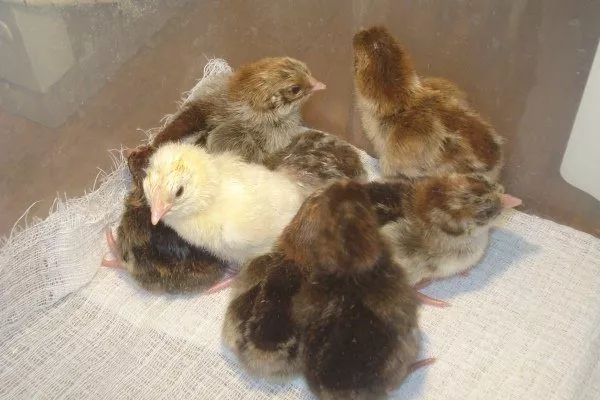
In terms of appearance, Kotlyarevskaya chicks are all the same. They are born white or yellow. Some chicks also have two black stripes on their backs. All the striped chicks are hens, while the solid-colored chicks are future cockerels.
A one-day-old chick weighs no more than 40 g. However, this isn't permanent; the birds gain weight very quickly, especially with a high-quality and balanced diet. Thirty days after birth, the chicks weigh 350 g, and after 1.5 months, they weigh 500 g.
Caring for chickens
Kotlyarevskaya young are very sensitive to temperature fluctuations. Any harsh climate conditions should be avoided to prevent the babies from dying. Begin preparing their "home" one day before birth.
When raising large numbers of birds, specialized systems and equipment are used, but this isn't necessary at home. If the rearing area is a box, dry bedding should be laid on the bottom. A lamp and an electric heating pad should be installed near the "house."
One of the most important components of caring for chicks is a properly selected diet. This ensures good growth and development of the young. Particular attention should be paid to protein foods, as they promote rapid muscle growth, which is essential for young chicks. For the first 10 days, the diet consists of boiled eggs, low-fat cottage cheese, and grains. After some time, coarsely ground mixed feed is added to the menu.
- ✓ The temperature in the first days of the chicks’ life should be strictly +32°C, with a gradual decrease of 2°C every 6 days.
- ✓ Humidity in the chicks' room should not exceed 55% during the first week of life.
The temperature requirements are the same as for other chicken breeds. Newborn chicks should be kept at a temperature of 32 degrees Celsius. The optimal humidity level is 55%. This requirement applies for the first 7 days; after that, the humidity is reduced by 2 degrees every 6 days.
- ✓ Bright orange eye color indicates good health of the chick.
- ✓ Activity and appetite are key indicators of the well-being of young animals.
Sanitation must be maintained at the highest level, and this rule applies not only to chicks but also to adult birds. However, chicks require greater cleanliness than adults, as their immune system is just beginning to develop, and any bacteria or infections can weaken it.
You can strengthen the health of your chicks from birth by gradually adding vitamins and minerals to their diet. For example, fish oil, yeast, and ascorbic acid are good options. Feed them a food mixture that contains vitamins.
Diseases
The Kotlyarevskaya hen doesn't get sick often, but if her health does deteriorate, it's usually due to parasitic infections. This only happens if the hen hasn't been vaccinated.
The survival rate for chicks and adult hens is approximately 93%, which is a high figure for birds. If a poultry farmer takes all preventative care measures, they are unlikely to experience any serious problems with their hens.
Poultry farmers' reviews of the Kotlyarevskaya chicken breed
Kotlyarevskaya chickens are easy to care for and have an excellent survival rate. If a poultry farmer provides them with the proper conditions, they can raise healthy and strong poultry.