
In the 13th century, the first mentions of Chinese silkie chickens appeared in the travelogues of Marco Polo. He described them as ornamental birds distantly related to the devil. As evidence, he cited the characteristic black color of their skin, bones, and meat.
History of the breed
Almost nothing is known about this. Scientists suggest that it appeared in China about 1,000 years ago. Five hundred years later, it was brought to the Russian Empire.
Among the hypotheses about the origin of the Chinese chicken, the most popular is the theory that it was crossed with a rabbit. This hypothesis stems from the silky down that covers the hens. It resembles animal fur more than bird feathers.
Also watch a video about this chicken breed:
Description of the Chinese Silkie chicken breed: characteristics
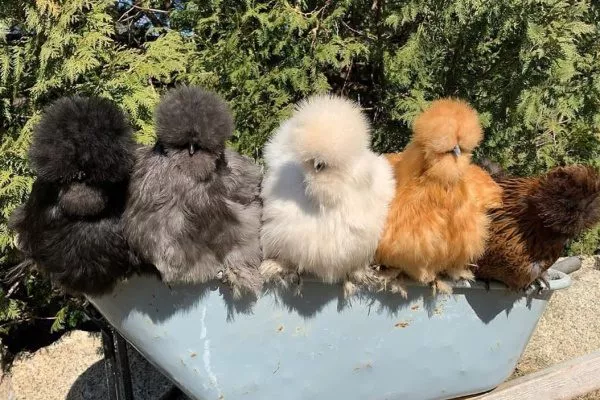
The main feature of snares is their soft covering, reminiscent of wool or fur. It consists of hookless feathers with soft yet highly flexible shafts. This gives them a soft, silky feel.
The plumage is a uniform color. It can be:
- black;
- white;
- blue;
- red;
- yellow.
In rare cases, birds of different colors are bred. Their chicks may then display several shades of color. However, due to the structure of their feathers, this pattern is faintly visible.
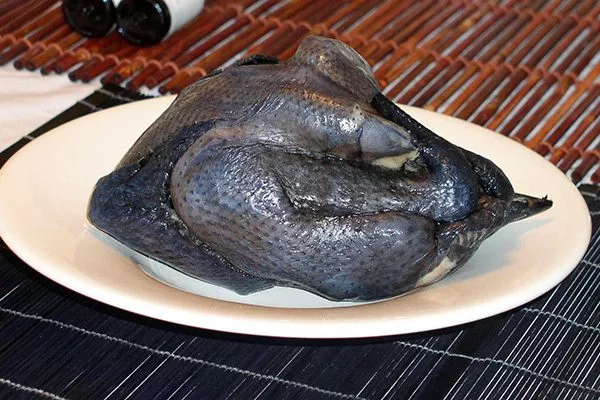
The birds' bodies contain a large amount of the dark pigment "eumelanin." This pigment is responsible for their black skeleton, dark skin, and grayish-black meat. These characteristics are why the Chinese call them "crow-bone chickens."
Bird exterior
It has certain features:
- the weight of the female (carcass) is from 0.8 to 1.1 kg, the male - from 1.1 to 1.5 kg;
- light bones;
- small, round body;
- a small head with a lush crest growing on it;
- a long, bluish-colored beak whose end is slightly curved;
- face, comb, earrings are painted blue, earlobes are light blue;
- thin neck;
- well developed chest;
- broad back;
- short wings, not tightly attached to the body;
- five-fingered fingers;
- feathered metatarsus of blue-black color;
- short fluffy tail.
Character
This is a calm and friendly chicken. It bonds with its owner, so it enjoys affection and allows itself to be handled. Its quick adaptation to a new environment makes it a welcome addition to any petting zoo.
They don't conflict with members of their own species. However, males are kept separate from females. They become aggressive in certain situations:
- family protection;
- struggle for the female's attention.
Peace reigns among the inhabitants of a single birdhouse, but they prefer to keep their distance from each other. However, in dangerous situations, the birds huddle together to feel a sense of family support.
Productive qualities
After 5 months, hens reach sexual maturity and continue laying for about 4 years. The first eggs weigh 35 g, which will increase to 40 g over time. The annual egg production is up to 100. The eggs are light beige.
The black meat of Chinese chicken has high nutritional value. Doctors include it in the diets of people suffering from tuberculosis, migraines, and stomach problems. It contains many beneficial elements:
- amino acids;
- vitamins B and C;
- retinol;
- tocopherol.
Peculiarities:
- The meat tastes no different from regular chicken. It's a bit coarse, so it's boiled rather than fried. However, the birds are small, and even less meat remains after slaughter. The lack of profitability has led Russian farmers to seek out the breed solely for ornamental purposes.
Poultry farms that raise chickens for slaughter are located in China. - This breed requires regular trimming to prevent feather growth from obscuring their vision or interfering with their normal functioning. One trim per month is permitted. Up to 150 grams of down and feathers can be trimmed at a time.
The silky covering is highly valued in industrial production. Therefore, farmers who have established marketing channels for their products make a good profit.
The instinct of incubation
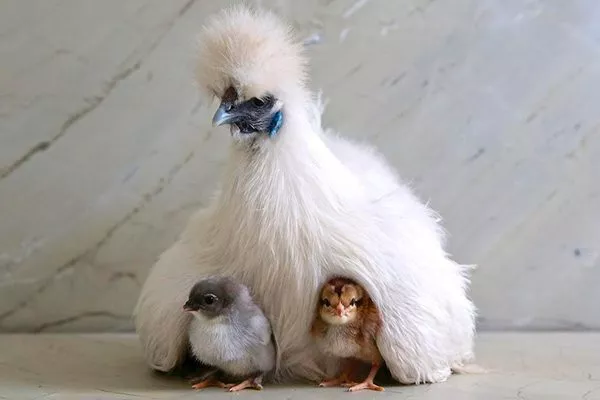
Laying hens readily incubate their eggs. Their maternal instinct is so strong that farmers often provide them with other hens' eggs (chicken, duck, or goose). They continue to care for the chicks even after they hatch, keeping them warm and protected. Hens don't discriminate between "theirs" and "others," so they happily raise abandoned chicks.
Pros and cons of the breed
Also watch a video about the advantages and disadvantages of this breed of birds:
Peculiarities of keeping exotic birds
The silky plumage dictates its own care requirements for this breed. In summer, they can be kept in cages. When temperatures drop below 12 degrees Celsius, the birds are moved to the coop on warm bedding.
- ✓ The temperature in the chicken coop should not fall below +10 degrees, the optimal temperature is +12-+15 degrees.
- ✓ The humidity level in the room should not exceed 65% to prevent the plumage from getting wet.
Requirements for the arrangement of a chicken coop
The room must be warm. It is necessary to provide the possibility good ventilation, but with a complete absence of drafts. To achieve this, all cracks and holes are sealed and their formation is constantly checked.
The stocking density is 3 birds per square meter. This breed is flightless, so perches are installed 40 cm above the floor. To save space, ladders are installed for the birds to climb and jump on.
A comfortable chicken coop must meet certain requirements:
- A basin of ash and sand is provided. The snares use it to clean their feathers of dirt and parasites.
- Good lighting, providing 10 to 12 hours of daylight. Brightness is not important; a 40-watt bulb is sufficient for 5-6 square meters.
- Continuous heatingThe indoor temperature should not drop below 10 degrees Celsius. Stoves, heaters, or infrared lamps can be used to maintain this temperature.
- The floor litter consists of sawdust and peat. It is replaced regularly with fresh litter. The walls, floors, and equipment are then disinfected.
- Installed windows. Vitamin D is essential for birds.
The snares depend on the humidity level in the chicken coop. The acceptable level is up to 65%. The feathers of ordinary birds don't absorb moisture, but their coats quickly become damp. This negatively impacts their appearance and health.
Walking yard
A dry area with grass is suitable for this purpose. A roof over this area is recommended. This will protect the birds from rain and predators. In a pinch, fine mesh will do.
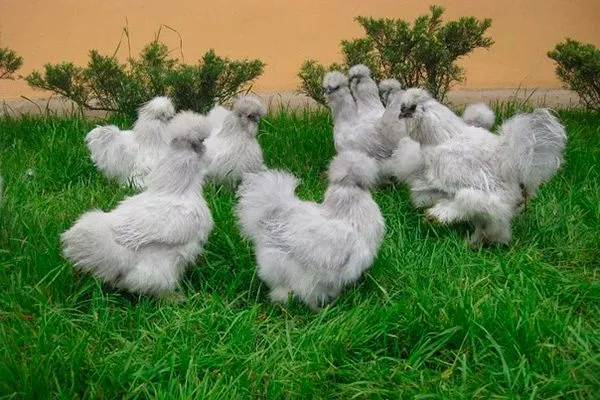
Place for walking The birds are enclosed with a makeshift fence, 1 meter high. During the summer, they are allowed to roam freely. In winter, the birds are released in dry, windless weather. The temperature should be above -5 degrees Celsius.
Dietary requirements
Grain accounts for 50% of the birds' diet. In the morning and evening, snares are fed mixtures consisting of buckwheat, wheat, barley, oats, and millet. At lunch, they are given a wet mash prepared with whey or broth (cooked concentrated feed).
For additional nutrients, add the following to the birds' daily diet:
- boiled white fish;
- legumes (peas, lentils);
- greens (nettle, alfalfa, sprouted wheat), and in winter it is replaced with dried herbs;
- dairy products (cottage cheese, whey);
- meat and fish broths;
- vegetables (zucchini, carrots, cucumbers);
- mineral supplements (eggshell, chalk, bone meal).
A container filled with fine gravel is placed next to the feeder. This helps the birds process coarse food and prevents crop blockage. However, it won't help if the farmer has overdosed the supplements. Several signs indicate this:
- obesity;
- decreased activity;
- development of diseases;
- decreased productivity.
Susceptibility to diseases and their prevention
Representatives of the breed may become ill with:
- intestinal infections;
- lung pathologies;
- respiratory tract infection;
- inflammation of the stomach;
- intoxication of the body;
- rickets;
- coccidiosis;
- worms and pests (ticks, fleas).
A good preventative measure is regular wet cleaning of the chicken coop (once a month). At this time, wash the walls, floors, food and liquid containers, and renew the beddingTo prevent parasites, each bird is carefully examined.
The infected animal is isolated from the rest of the herd until it fully recovers. The first signs of infection include:
- the comb changes color;
- mucous discharge from the eyes or beak;
- apathy;
- loss of appetite;
- cough and wheezing in the chest;
- general exhaustion.
Breeding the breed at home
The farm uses two methods of breeding this breed: natural (using a laying hen) and artificial (using an incubator). It's best to entrust the eggs to a hen, who will ensure proper warming and subsequent care of the offspring. If this isn't possible, they are placed in an incubator.
How to properly care for Chinese Silkie chickens?
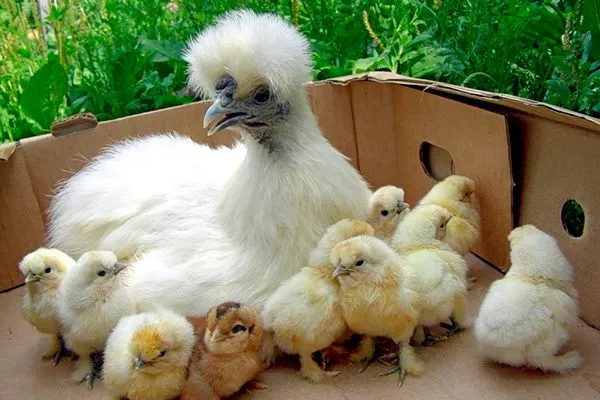
This breed's chicks are half the size of regular chickens. They fledge within two months, so they are highly dependent on temperature control and proper nutrition. Any hypothermia or overheating will negatively impact their health and overall viability.
Wintering
The chicks hatch after 20-21 days. The hatched chicks are placed in brooder (a place for keeping chickens). The ideal temperature is 30 degrees Celsius. It's reduced by 3 degrees every week. A gradual transition will strengthen the chicks' immune systems, allowing them to thrive in cooler conditions.
Soft cotton fabric is used as bedding and changed daily. Anything the chicks might come into contact with is washed as needed. A waterer is placed nearby and the water is changed frequently. Once the chicks have fledged, they are transferred to the coop.
Feeding chickens
They are fed every two hours. Hard-boiled eggs are a suitable food. To prevent food from sticking to the chicks' feet, egg pieces are rolled in semolina. From the second day of life, their diet is supplemented with low-fat cottage cheese, boiled carrots, chopped greens, and crushed grains (corn, millet, barley).
Gradually, the intervals between feedings are increased. Month-old birds are fed every three hours. Older birds are fed three times a day. The juvenile diet consists of grass, bran, vitamin supplements, broths, chalk, fish oil, grains, and vegetables.
Allowed dairy products include low-fat sour cream, kefir, and cottage cheese. Contraindicated foods include:
- chocolate;
- raw meat;
- vegetables without heat treatment;
- whole grain;
- poisonous plants.
Growing recommendations
They are so simple that even a novice breeder can handle them:
- There is one male for every 10 females. Roosters are replaced every 2 years, hens every 5 years.
- When there's a shortage of additional bird families, representatives of this breed are crossed with other species. However, only the first generation of such a union is subsequently used.
- Individuals with non-standard coloring, rough or sparse coat, defects of the fifth toe, or an unusual tail are excluded from further breeding.
- For nests of laying hens Boxes filled with straw and placed in dark corners of the chicken coop will do.
- This breed is prone to molting, which lasts for four weeks. During this time, the bird stops laying eggs and becomes lethargic and sleepy. This is normal and does not require any intervention.
- Regularly clean and disinfect even clean-looking chicken coops.
- Make portable feeders and nipple drinkers so that the birds do not have the opportunity to get dirty.
- Ensure that fresh water is always available.
- If necessary, install heating and additional lighting.
- Provide a separate room in which sick individuals will be isolated until they have fully recovered.
- Visit the veterinarian.
With proper care, Chinese Silkie chickens will become a true gem in any yard. They are so peaceful and easy-to-care-for that they can live comfortably even in an apartment. The excellent quality of their silky plumage and the meat they produce make them an excellent choice for any farmer.