
Gilyan chickens are among the oldest domesticated birds developed in Rus'. These birds are classified as meat and egg breeders, characterized by high productivity and low maintenance. The breed lost some popularity in the late 19th century, but today a small number of poultry farmers are reviving it.
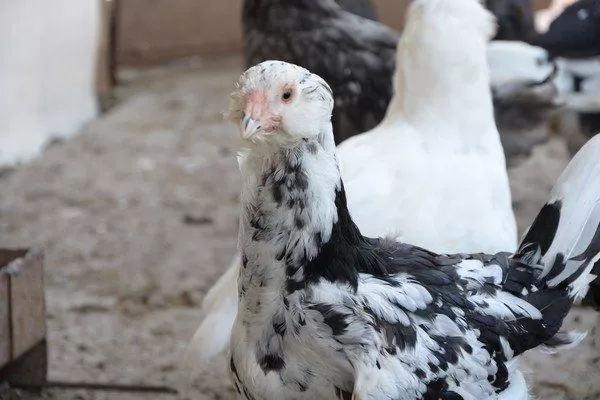
Gilan chickens
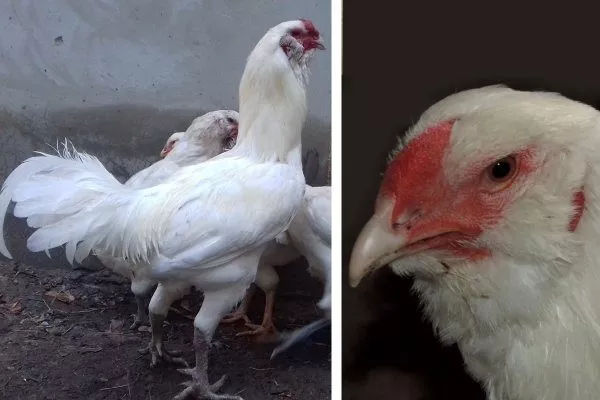
The Gilan breed of chicken has a unique appearance.
Breed selection
To this day, no one can say for sure when or who developed the breed. However, scientists are certain that it appeared in Ancient Rus' long ago and is the direct ancestor of the Orlov chicken breed.
Historians speculate that the birds most likely originated in the Persian province of Gilan. However, no one can confirm the veracity of this information. Since the 16th century, farmers in Russia have been breeding them, and the breed was in high demand.
For unknown reasons, the number of Gilan chickens declined significantly in the 19th century, and the breed's gene pool was almost lost. Today, a small population of Gilan chickens has been found in Dagestan, near their historical homeland.
Hobby poultry breeders began cultivating this breed. What's special about this breed is that modern farmers strive not only to recreate similar chickens, but to completely restore the breed's gene pool. All birds bred in clubs meet the breed standard.
Description and distinctive features of the Gilan breed
Gilan birds are unique; no other chicken breed has been able to replicate their appearance. Their main characteristics are their truly large size and unusual sideburns with a beard.
External features
| Name | Weight of an adult (kg) | Egg production (pieces/year) | Color of eggs |
|---|---|---|---|
| Gilan chicken | 6-7 | 145 | Light/cream |
| Gilan rooster | 7-8 | It doesn't rush | It doesn't rush |
Breed standard:
- small head, slightly elongated;
- a small nut-shaped comb with a tubercle, covered with short hairs;
- eyes can be any color, the rarest is black;
- earlobes are red and not particularly visible on birds;
- earrings are covered by a beard, underdeveloped;
- medium-sized beak, flattened at the base, arched;
- the sideburns and beard are clearly defined, the beard takes on a wedge-shaped form with age;
- elongated neck, straight, with a small scruff;
- the body is massive, elongated, quite muscular with large shoulders and chest;
- high-set body, tucked-in stomach;
- the back is straight, tapering slightly towards the tail;
- the plumage on the lower back is dense;
- wings pressed tightly to the body, short but wide;
- medium-sized tail, short braids;
- legs are strong, shins are long and massive;
- metatarsus developed, strong, without feathering;
- the plumage is dense and hard;
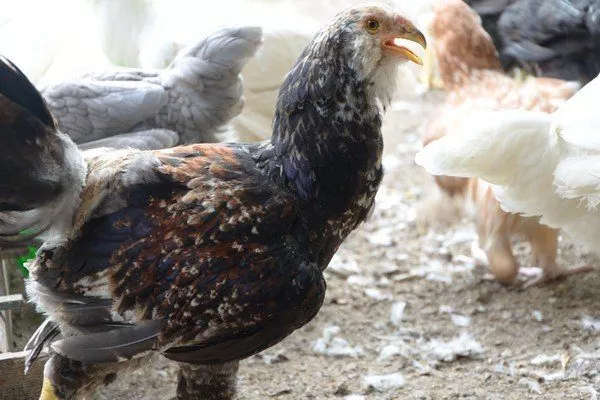
- the color of the feathers can be different, the rarest is calico;
- The color of the beak should completely match the color of the metatarsus and claws.
Deviations in appearance:
- short legs;
- the presence of feathers on the paws;
- non-nut-shaped comb;
- underdeveloped sideburns and beard;
- small weight and dimensions.
Temperament
Gilan domestic birds are active and inquisitive, and in some situations they can be quite aggressive. They don't fight with each other, but other species or breeds of birds can disrupt the idyllic coop.
To prevent aggressive behavior, keep your birds separate from other domestic birds.
Excessive activity and curiosity can be dangerous for birds. Birds often try to squeeze through the chain-link fence in the exercise yard, looking for any opening or loophole to achieve their goals. If birds end up in your garden or vegetable patch, the seedlings cannot be saved. To prevent this, restrict your Gilan storks' freedom.
Gilan chickens are very friendly with each other, so they often graze in small “groups” or “companies”.
The instinct of incubation
This chicken breed has retained its innate maternal instincts over the years and through numerous conservation efforts. They incubate eggs with great pleasure and subsequently care for their offspring. Hens constantly monitor the chicks, teach them about life in the coop, and try to help them with food and socialize with other birds of the same breed.
Productivity
Gilan chickens are giants among other breeds, and they are seriously considered among the largest. They are tall, large, and meaty. The fact that these birds are classified as meat-and-egg breeders indicates that, in addition to their large meat production, they also produce a significant number of eggs per year.
Live weight of chicken and rooster
Males at one year of age weigh approximately 6 kg and stand 0.7 m tall. Adult males reach 7-8 kg and stand 0.8-0.9 m tall. Females weigh a kilogram less: up to one year – about 5 kg, and as adults – 6-7 kg, standing approximately 0.5-0.6 m tall.
Some farmers claim to have seen a real Gilan giant – weighing 10 kg and 0.95 m tall.
Watch the video about breeding this breed and weighing the Gilan rooster:
When do they start laying eggs and what is their egg production?
Gilan chickens are not considered early maturing, nor can they even be considered mid-maturing. They grow very slowly, mature slowly, and only reach full development at two years of age, which is why they begin bearing eggs at this time.
This long delay is compensated for by a longer egg-laying period than other birds—approximately three years. During the first year of laying, the number of eggs per year from a single hen is approximately 145. Over time, this number decreases to 120.
Gilan hens lay very large eggs, weighing approximately 75 grams in the worst-case scenario, but they often lay 10 grams more. The appearance of the birds corresponds perfectly to the size of the eggs: greater weight means larger eggs.
The shell is light in color, sometimes cream-colored. It can also be light pink or brown. Gilan hens are also unique in that they continue to lay eggs in winter, while other hens are not productive during this time of year.
What to feed?
Laying hens are generally unpretentious in terms of care and diet, so they can eat whatever grows under their feet. However, a diet rich in various minerals and vitamins will help the birds maintain their health for as long as possible and ensure high productivity.
Chickens
Gilan chickens have a natural immunity to many diseases, so the chicks are born strong and quite large. The survival rate of the chicks is approximately 95%. To ensure healthy and strong growth, feed them for the first time no later than 12 hours after birth.
For the first three days, the young animals' diet consists of a mixture of boiled eggs and cereal such as millet or barley. Add oat flakes or low-fat cottage cheese to the mash. Finely chop all ingredients and feed them warm.
Then gradually add greens and vegetables to the menu. Nettle, clover, or alfalfa are excellent options. Vegetables include beets, carrots, and pumpkin. Pour boiling water over the greens beforehand and chop them coarsely. Boil the vegetables and mash them into a paste.
During the first week of life, chicks should be fed grains, greens, vegetables, and boiled eggs. During the second week, add fish or bone and meat and bone meal.
Clean, fresh water is essential so the chicks can quench their thirst. Add a little potassium permanganate to the water; this will help protect the chicks from harmful insects and diseases. By the end of their first month, the chicks can be transitioned to adult hens' diets, which are high in protein and calcium.
Adult herd
Feed adult chickens no more than three times a day: two meals of grain mixtures and one meal of wet mash. It's important to carefully select your chickens' diet to ensure they receive all the essential nutrients. High-protein mixed feeds are also an option. Generally, chickens will eat any feed intended for their breed.
The diet of adult Gilan chickens consists of:
- grains: wheat, oats, corn, rye or barley;
- fresh greens and herbs that help restore the vitamin balance in birds;
- In winter, you can do without greens, but then add sprouted grains to your diet;
- maggots, oilcake and meal;
- bone and fish meal;
- crushed shells or small gravel;
- crushed eggshells and crushed bones, which not only improve the functioning of the gastrointestinal tract, but also replenish the lack of vitamins in food.
One of the most important requirements for feeding Gilan chickens is adherence to a schedule and portion control. After the chickens have eaten, remove any leftovers, otherwise they will begin to accumulate excess fat, which will negatively impact their productivity.
Laying hens need a special diet to ensure their egg production doesn't drop. The daily ration for a laying hen is given in this article.
Advantages and disadvantages of the breed
The Gilan breed has a number of advantages and disadvantages that must be taken into account when breeding birds.
Advantages of the breed:
- unique appearance;
- a large amount of meat from giant chickens;
- good egg production rate;
- large eggs;
- cold resistance;
- ease of care;
- long period of egg laying;
- active, moderately pugnacious nature;
- the presence of maternal instinct.
Disadvantages of the breed:
- late puberty and egg production;
- prolonged non-feathering of chicks (there is a need for additional heating of the young during the first month of life);
- do not tolerate heat well;
- curiosity, which is the reason for fencing the exercise yard with a fence or net;
- The unfriendly attitude of the Gilan people towards other birds besides their own breed.
Conditions of detention
Gilan chickens are considered an unpretentious breed, but they still require proper and regular care to ensure the birds feel well and are highly productive.
Requirements for the poultry house
A chicken coop is a home for chickens, so it must meet all their physical requirements. First, choose the right location for its construction. Choose a high location to prevent the chicken coop and run from flooding from runoff and groundwater.
The site should be dry and protected from winds. It's especially good to locate the coop in an area with indirect sunlight. In summer, chickens don't tolerate heat well, so the coop should be located in a cool area where they can find shelter and rest.
There should be at least 1 square meter of space per bird in the poultry house.
The height of the chicken coop is approximately 1.8 m, since the individuals cannot do without a walking yard, a hole of approximately 1 m in size can be made in the doorway so that the birds can freely go out for a walk.
In winter, the coop is not heated because Gilan chickens thrive in low temperatures. A "house" with sturdy walls and a heated floor is needed for them. The birds' health deteriorates significantly in summer, so ensure the temperature in the coop does not rise above 25 degrees Celsius during this season.
The floor covering is laid bedding, at least 0.1-0.2 m thick. Make it from hay, dried grass, straw, or peat. Install additional lighting and several windows in the coop.
The longer the daylight hours, the better the hens' egg production.
Some of the main components of a poultry house are nests and perches. Build perches at a rate of 0.4-0.6 m per bird. They can be arranged in a ladder-like pattern or around the entire perimeter of the house.
Each hen needs a separate nestBirds of this breed lay eggs one at a time. Make the nest warm, comfortable, and dark. If the young are initially housed separately from the adult flock, install separate heating in addition to lamps. Adult hens don't need it, but the young do.
A poultry house must have containers for water and food. A basin of ash and sand is also essential; the birds will use it to clean their feathers of pests. Keep the air in the coop fresh, as chicken manure contains a small amount of ammonia, which is harmful not only to the birds' respiratory system but also to the gastrointestinal tract.
For better ventilation, install exhaust fans in the coop and ventilate it during the chickens' outings. Be sure to keep the coop clean, remove any food scraps, and keep the feeders free of dirt. Change the litter as it becomes soiled and add fresh litter.
How to make a chicken coop with your own hands is described in another article.
Walking yard
Without a run, birds cannot develop properly, grow, or produce enough eggs. This area provides a place for birds to socialize, eat, exercise, breathe fresh air, and lead a healthy lifestyle. The key requirements for a run are the same as for a chicken coop: a dry, clean, wind-free area.
It's best if the area is shaded, preferably by a building or small structure. Avoid placing it under a tree, as wood can harbor pests and viruses that will attack the chickens.
A shaded area will help prevent the area from overheating during the summer. A roofed yard can also provide additional protection from rain and the scorching sun. Due to the birds' enormous size, each individual should have at least 1 square meter of space, so the yard should be larger.
Place water and food containers in the area to ensure the Gilan chickens feel as comfortable as they would in a coop. The most important thing for the birds is the height of the fence; it should be high enough to prevent them from flying over it.
Care during molting
In the fall, laying hens begin to molt. During this period, egg production decreases slightly, but not significantly. They devote all their energy to regenerating their plumage, which is essential for the onset of winter.
Laying hens should be fed with a diet rich in minerals, vitamins to increase egg productionIf there is not enough of it, the hens may start pecking each other, and sometimes even themselves.
How do they cope with the winter cold?
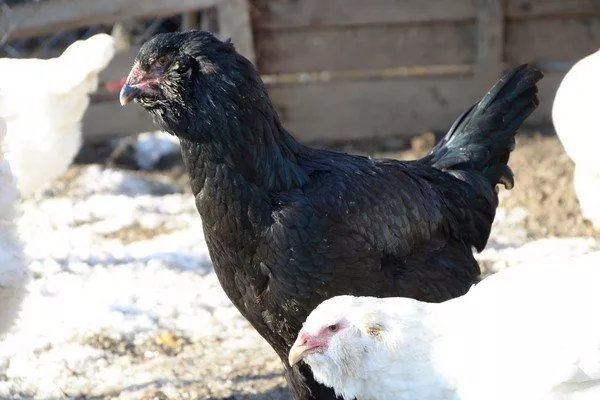
This chicken breed originated in the cold regions of Ancient Rus', where winters were harsh and cold in almost all outlying areas in the 16th century. Gilan chickens are not afraid of low temperatures and thrive even when walking in the snow, although poultry farmers do not recommend walking their birds in such weather, as their legs are featherless.
Can they be bred in cages?
Breeding chickens in cages involves raising only egg-laying chickens. This method saves significant space, but it doesn't require a male or the ability to let the birds roam freely. The Gilan chicken breed is not strictly an egg-laying breed.
Birds are bred to replenish their population, so there's no need to keep them in cages. Raising young this way eliminates the need to breed the same breed, produce babies, or produce fertilized eggs.
Breeding Features
Breeding this breed of chickens doesn't require much effort. The young are born strong and large. They take a long time to fledge—about two months or more—and sometimes require additional veterinary assistance. They won't reach their adult appearance until they're six months old.
Caring for the younger generation
The chicks have strong immune systems and, with proper care, are generally disease-free. Tips for caring for Gilan chickens:
- Maintaining a temperature regime. Young birds, whose thermoregulation systems are still underdeveloped, will require your help. If there are only a few babies, you can forgo heaters and use infrared lamps.
- Plenty of clean, fresh water. The more they drink, the stronger and healthier they become.
- Feeding no later than 12 hours after birth.
- The presence of calcium and protein in products.
- Disease prevention.
- ✓ The temperature in the chicken house should be maintained at 32-35°C during the first week of life, with a gradual decrease of 2-3°C each subsequent week.
- ✓ Humidity in the room for young animals should not exceed 60-70% to prevent respiratory diseases.
Common diseases
Laying hens have a strong immune system; illnesses only occur if the proper care and maintenance procedures are not followed. Laying hens without essential nutrients can lead to vitamin deficiencies, and frequent overheating can weaken their immune system. Timely preventative measures, such as vaccinations, will help protect your birds.
The Gilan chicken breed has a distinctive, decorative appearance—their wattles are not visible, but their beard and sideburns are clearly visible. These chickens are tall, strong, and muscular. They are rightly called giant chickens, reaching almost 1 meter in height. Given this breed's productivity and history, it can be argued that it truly deserves a second chance to restore its full population.
Good article, detailed. Where can I buy Gilan chickens?
Look for hatching eggs for sale from private sellers on sites like Avito. But to avoid getting a pig in a poke, it's best to visit the seller, see the producers in person, select the eggs yourself, and keep in mind that a certain percentage may be infertile.