
Hercules chickens are considered one of the best all-purpose poultry. They belong to the meat and egg group, so farmers will appreciate not only their high egg production but also their juicy meat. Due to their low maintenance requirements, these birds have become a popular choice in almost every homestead.
History of origin
The Hercules breed was created in 2000. It originated in Kharkiv, Ukraine. The Hercules breed is a crossbreed. The breeding work was carried out by scientists led by Professor Yu. A. Bondarenko at the Poultry Institute. The development of these birds took approximately ten years. The Hercules combines the gene pool of Ukrainian and foreign birds.
These birds got their name from their considerable size and high productivity. Although the breed is less than two decades old, it is already renowned among poultry farmers.
Description of the Hercules breed
These domestic birds have a massive, strong build and a good nature. Let's look at the key characteristics of this breed, which are unique to it.
External data
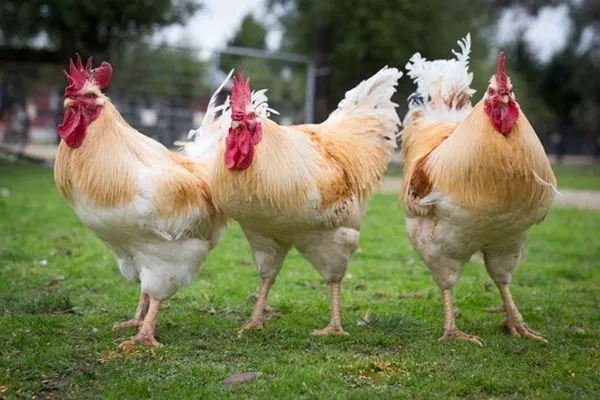
Ukrainian chickens are admirable. There's nothing exotic or unusual about them, but it's their simple appearance that makes them interesting and unique. Hercules chickens look like calm country hens; their large frame makes them clumsy and very cute.
Main characteristics of the breed:
- Weight and dimensionsSince chickens are a meat and egg breed, they weigh a considerable amount. Females weigh approximately 3.5 kg, while roosters can reach 4.5 kg. These figures are average for these birds; with proper, high-quality care, they can reach even greater weights. Hercules roosters have been recorded weighing as much as 9 kg, and such cases are becoming more and more common.
- Ukrainian beauty can be in several colorsCuckoo, golden, speckled, silver, and white. According to poultry breeders, golden hens produce the most eggs, but white hens are the largest.
- Physique Trapezoidal, well-defined, with a broad back, large chest, and a sizeable belly. Both males and females are identical in build, differing only in size.
- Head Small. Although it's actually quite large, it simply appears miniature compared to the rest of the body. There are no feathers growing on the face. The comb is developed, and in some roosters it hangs slightly to the side. The ears are small.
- Plumage The tail consists of dense, closely spaced feathers. Beneath them is a huge amount of down. The tail braids are striking in size, especially in roosters.
Character
Ukrainian hens' appearance can be intimidating, seeming menacing and feisty, but this is actually a misconception. Hens are very calm, peaceful, and kind. They are good at negotiating with other birds, respecting their family members, and always yielding.
Representatives of this breed lead a calm lifestyle, treating all adversities and problems in the yard with indifference and disinterest. These birds are not afraid of people, do not experience stress, and are not prone to shyness.
Productivity
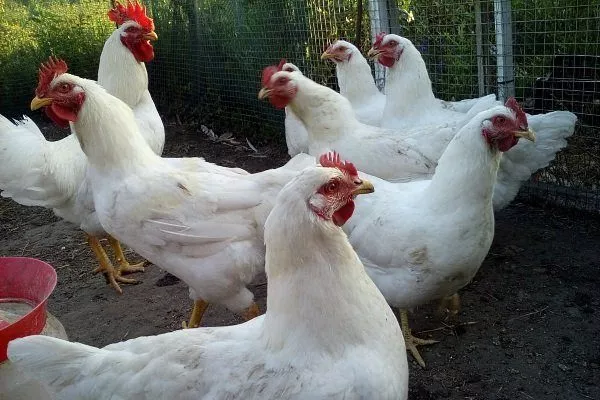
The name Hercules speaks for itself. These birds are renowned for their high productivity (around 200 eggs per year) and the large amount of meat they produce per hen.
Puberty and egg production
Hercules eggs are popular not only with commercial farmers but also with homesteaders. These hens are bred not only in their own backyards but also on an industrial scale – on poultry farms.
The first eggs can be obtained when hens are approximately 5 months old. In some cases, sexual maturity occurs at 6 months. The poultry farmer's primary goal is to provide the hens with good, high-quality nutrition. This will ensure that laying begins sooner and no problems with the eggs or the birds arise.
Egg production from one laying hen per year reaches 200 pieces, all eggs are large - from 60 to 70 g.
A distinctive feature of Hercules hens' eggs is their large yolk, which accounts for almost 40% of the total egg mass. The shell is light-colored.
Maternal instinct
The brooding instinct is completely absent, which is not surprising, as almost all hybrids and crosses have lost this characteristic. The Hercules chicken breed is no exception. The hens are calm and passive throughout the year, but as soon as they sit on their brood, their behavior immediately changes: they become aggressive and active. As a result, the hen spends her time doing everything possible except brooding her young.
This kind of negligent attitude towards young birds forces poultry farmers to use incubators or other breeds of birds that possess this instinct to hatch eggs.
Care and maintenance
Hercules birds do not require any special care; they easily tolerate natural changes and adapt to them quickly.
- ✓ Optimal stocking density: no more than 3-4 chickens per 1 m² to prevent stress and diseases.
- ✓ Required ventilation level: minimum 0.5 m³/h per 1 kg of live weight of the bird to maintain respiratory health.
Poultry house
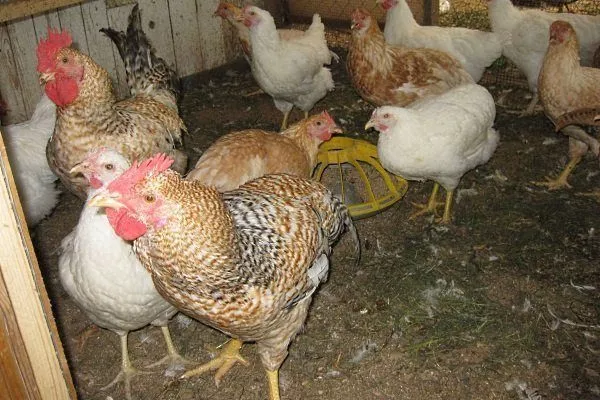
Because these birds are so large, they require a large coop. They should feel comfortable in it, so avoid housing too many birds in one area: limit the number to a small number or build another coop.
Read the article about How to build a chicken coop yourself.
The large weight of Hercules chickens forces farmers to make changes to the chicken coop's layout—perches are not installed. The birds simply won't be able to reach them. Therefore, great attention must be paid to the flooring, as this is where the chickens will spend most of their time. It's best to lay a layer of straw, hay, or peat on the floor. This should be maintained regularly and replaced periodically.
Temperature, humidity and lighting
Residents of northern regions have long been delighted with these breeds. Finally, breeders have created layers suitable for living in cold climates. Hercules hens easily tolerate being kept in a coop during the winter without special heating devices, and they can also roam outside in cold weather.
Birds happily get active in the snow, which strengthens their immune system even more. Furthermore, the moment when hens go outside is considered an opportune time to ventilate the room.
Exception: if the air temperature is below -20 degrees Celsius, chickens cannot be taken outside.
As for lighting, its intensity varies depending on the age of the birds. For example, young hens require 40 lux; over time, the brightness is reduced, and adult hens live in 7 lux. If a rooster is housed with the hens, the lighting intensity is increased slightly.
Maintain optimal humidity in the coop (around 50%). Humidity increases due to damp bedding, water, and mash. Ventilate the room regularly and remove all excess moisture.
Walking yard
The Hercules chicken breed can't live solely in a coop; it requires fresh air and frequent exercise. A run is essential. It should be spacious so the birds don't push each other, can do their business, and don't become stressed by discomfort.
During the summer and spring, birds enjoy eating various green herbs, so poultry farmers often plant nettles or clover in their outdoor yard. The birds happily eat them. Cereals can also be planted.
The chicken coop and its yard should be built on a slight elevation, otherwise runoff water will begin to flood the area.
Feeding
To ensure that your birds not only grow healthy and large, but also receive high-quality and consistent feeding, they need to be fed consistently. Fresh air, clean water, and disease prevention are key to a healthy appetite. Any breed requires containers filled with pebbles, chalk, and shells.
At different times of the year, depending on the hens' age, the menu changes and is supplemented. The most important thing is that the meals are complete and balanced. Hercules hens' growth period lasts about 12 months, so protein-rich grain feeds form the basis of their first year. Root vegetables, fruits, and vegetables are also used as supplements. Green herbs are especially important; they can be fed either fresh or dried.
The following products serve as additional minerals:
- worms and insects;
- salt;
- flaxseed (approximately 0.01 kg per 1 hen);
- meat and bone meal.
Molting and break in egg production
Chickens that lose their old feathers may seem miserable and unhappy, but in reality, this doesn't cause them much discomfort. Hercules chickens cope with this process resiliently and recover quickly. These birds have a huge number of feathers, but they regrow within just 60-70 days. During this period, it's important to supplement their diet with animal fats, such as fish oil and broth.
Some birds do not want to molt, in which case it is necessary to use unconventional methods to induce molting, but often poultry farmers do without them.
The danger lies in the risk of cannibalism. In these cases, individuals eat birds of their own species. To avoid this, feed the birds correctly and frequently.
Planned replacement of the herd
Hercules poultry are kept in the yard for approximately two years, after which the flock is renewed. Older birds are no longer known for their high egg production and tender, juicy meat.
Breeding
This breed of chicken was created by crossing four different bird species, so breeding Hercules chickens at home is not a good idea. When crossing crosses or hybrids, the offspring lose their genetic characteristics.
The main traits can only be preserved in the first generation; beyond that, all genetic traits are lost. After that, purebred chickens completely degenerate.
When breeding birds from eggs, only 25% of the breed's traits are preserved. To obtain purebred chicks, experienced farmers purchase hatching eggs from specialized poultry farms.
When all the requirements for raising young stock are met, the hatchability of chicks in an incubator is approximately 85%. The chicks are born very small, but then rapidly gain weight.
You can read about the peculiarities of incubating chicken eggs in this article.
Raising chickens
Beginning farmers don't always succeed in raising chickens, as they are tiny and delicate. Even the smallest mistakes can have irreversible consequences. To avoid losing young birds, it's essential to immediately learn all the useful information and strictly follow the rules for raising chickens.
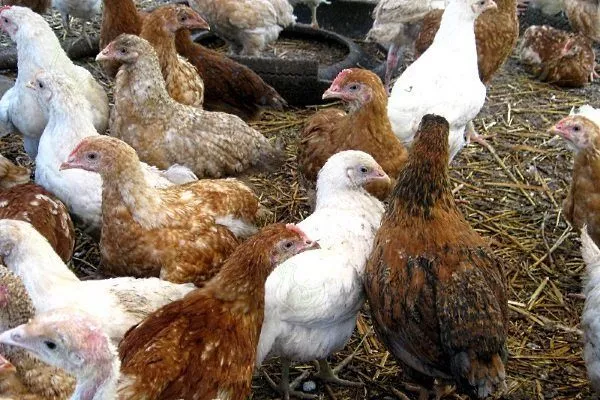
The young lack a comb, which develops over time. The color of the down varies, depending on the color of the parents. The chicks are born very small, but their weight increases, reaching 1.8 kg at two months.
Caring for chicks is simple; you only need to hold out for three weeks, while they're tiny and defenseless. During this time, the chicks require constant temperature maintenance, frequent feedings, and disease prevention.
When breeding young animals, approximately 10% of the generation of eggs from the total number of eggs is not preserved.
Recommendations for caring for Hercules kittens:
- For the first 3 days after birth, illuminate the poultry house with special lamps without interruption.
- The air temperature should be approximately 32 degrees Celsius (90 degrees Fahrenheit). Reduce the temperature weekly. Once the chicks reach one month of age, they no longer require additional heating. At that point, transfer them to the adult birds.
- Chicks need high-quality, plentiful food. To ensure rapid growth and development, their diet should be rich in protein and calcium. Minerals and vitamins are especially important.
- Make sure there is fresh and clean water, without it the young will die.
Advantages and disadvantages
Every poultry farmer should think carefully before getting a particular breed of chicken.
Advantages of Hercules chickens:
- rapid growth of chicks;
- large weight of individuals;
- massive eggs with a large yolk;
- friendly disposition;
- strong immunity;
- excellent frost resistance.
Disadvantages of Hercules chickens:
- reduction of genetic traits during domestic breeding;
- the cost of one chicken is not small.
In the video below, the breeder provides an overview of the Hercules chickens:
Potential problems when growing
Hercules birds present little difficulty for their owners. They have excellent immunity, and most importantly, they adapt quickly to a new environment and climate.
Common diseases
Many diseases can be avoided by implementing preventative measures. Such measures will help preserve not only individual birds, but the entire flock.
The main rules for preventive measures against diseases:
- Don't place young chickens and adult chickens in the same coop. Young chickens are not particularly healthy, so even a mild virus transmitted from adult chickens can have a detrimental effect on the young chickens.
- If you find a sick bird, remove it immediately.
- Treat and ventilate the room where the infected individual lived.
- Monitor the balance of food; the better the quality of feed you give, the less sick the chicken will be.
- Don't allow the poultry house to become heavily soiled. Unsanitary conditions are a source of many diseases.
Following these simple rules will significantly reduce the risk of illness in your birds.
Farmer reviews of Hercules chickens
At two months old, the hen weighed 2 kg. The roosters have grown, and now one of them weighs about 6 kg. Sexual maturity occurred at five months. Initially, the eggs were small, but now they weigh about 70 g. All my initial investment has been more than recouped.
Hercules chickens are a unique breed that lays approximately 200 eggs per year and reaches a weight of over 4 kg. These calm and friendly birds are a true treasure for a caring and responsible poultry farmer.
It's a pity that the website doesn't indicate where to buy livestock by region.