
Vorwerk chickens are a meat and egg breed. Their main characteristics are high productivity and a distinctive appearance. Breeders are drawn to the breed for its calm and patient temperament.
History of the breed's origin
German breeders had been working for many years to create interesting and high-quality hybrids. At the end of the 19th century, scientists decided to conduct another experiment to create a remarkable chicken breed. Their goal was to produce a variety of birds that would produce large numbers of eggs and have juicy, tender meat.
1912 was the year breeders created the breed, and it also marked the period of standardization. Local residents took a liking to the birds, not only for their high egg production, but also for their attractive appearance and even temperament.
Characteristics and description of the Vorwerk breed
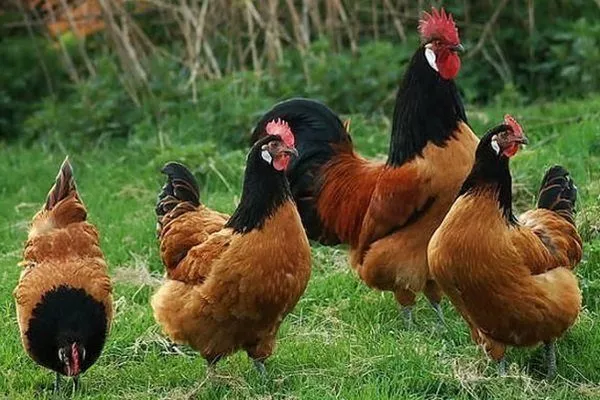
The German bird has an unusual appearance and can therefore decorate any poultry yard.
External signs
Peculiarities:
- the body size is not standard for chickens: the body is large, the sides are wide;
- big back;
- round belly;
- the shins are inexpressive, two small wings are attached to the body;
- the feather cover is thick, there is a small amount of down;
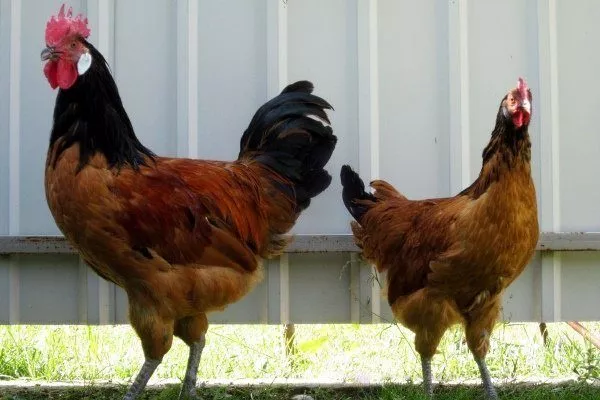
- The tail of roosters is large, while that of hens is slightly smaller and not as thick;
- the coloring is unusual: the necks and tails are black, other feathers are brown or red;
- the head is round, the ears are oval-shaped;
- straight comb with red earrings;
- The weight of hens is 2 kg, roosters – 3 kg.
Character
The birds' temperament appeals to many farmers. Chickens inherited their parents' calm disposition; they don't scream over trifles, don't run all over the yard, and don't cause trouble. These birds aren't afraid of noise, shouting, or other actions by the farmer. They handle shocks without affecting their immune systems; sometimes it seems as if these birds aren't afraid of anything at all.
Vorwerk chickens bond with their owners, so problems may arise when they are relocated. Males don't fight, and with the correct rooster-to-hen ratio, poultry farmers will experience mutual understanding and peace in the yard.
Puberty and egg laying
Laying hens begin to hatch eggs at about six months of age, but with the onset of this period, the hens do not stop gaining weight and continue to “plump” for the next 8-12 months.
Egg production is average. German hens lay small eggs with yellow shells. Each egg weighs around 50 g, and larger specimens are selected for breeding.
The peak productivity of laying hens occurs in the first year after reaching sexual maturity. During this year, hens can produce approximately 170 eggs, but this figure rapidly declines in subsequent years.
The instinct of incubation
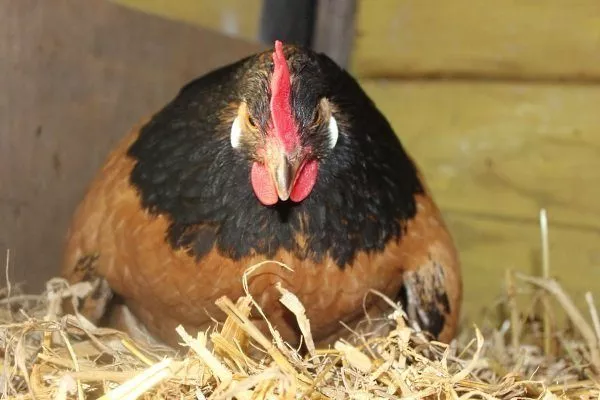
Experienced breeders know that a lack of maternal instinct is not a barrier to breeding chickens. Using a special incubator and a few skills can replace a real hen.
During the breeding process, these hens lost the genes responsible for maternal instinct. Farmers may hope that their birds will be the exception and hatch their own eggs, but experience shows otherwise. It's best to stock up on an incubator or use a good broody hen from a different breed.
Invalid characteristics
The breed has been developed over a long period of time, and its core characteristics cannot be lost. Poultry breeders meticulously select purebred Vorwerk chickens.
Unacceptable characteristics of a chicken breed:
- the presence of feathers of a different color;
- triangle-shaped body;
- pink earrings;
- white paws;
- dark colored eyes.
Weak, sickly, or sparsely plumaged chickens are not allowed for breeding. Such minor characteristics will inevitably manifest themselves over several generations, and instead of high-quality, beautiful birds, you'll end up with simple, rustic-looking birds with a typical farmhouse coloring.
Conditions of maintenance and care
German Shepherds are not particularly demanding in terms of care, but they do require comfort and normal living conditions.
Setting up a chicken coop
Chickens don't tolerate frost well, so they need to be kept in a cozy, warm room. You can raise chickens in cold regions, but the room they live in should be heated during the winter. All holes in the walls and floor should be sealed. The floor should be warmed immediately, or warm bedding should be provided.
Perches are placed low, 0.5 m from the floor. Hens need nesting boxes, which are placed in a dark area of the room. One nest box per 5 hens. To clean their feathers of parasites, the birds need a container filled with sand and ash.
One of the important conditions for the normal life of laying hens is the presence of a large number of drinking bowls (read how to make a drinking bowl yourself) Here) and feeders (how to make a feeder is written here). Per 1 bird – 0.12 m of feeding tape.
Indoor microclimate requirements:
- The temperature is not below +10 degrees Celsius.
- Humidity: 60-65%. Higher humidity increases the risk of infection and the spread of various infections.
- The recommended lighting duration is 12-14 hours. In summer, natural sunlight coming through windows is sufficient. In winter, special lamps are used.
Farmers must maintain sanitary conditions in the premises, otherwise the birds become ill. Water and food containers are cleaned daily to prevent the development of harmful microflora. The floor mat is shaken out and replaced three times a year.
To prevent the feathers from becoming soiled, the sawdust is stirred weekly to its full depth. A layer of bedding material is added monthly.
A general cleaning is performed once every six months. All surfaces are treated with special solutions against germs and infections.
You can use sulfur candles to help kill the fungus. This should only be done when the birds are not present.
Walking
These breeds can survive without walks, but they need fresh air, especially in the summer. Exercise and walks strengthen the immune system and have a positive effect on the chickens' metabolism.
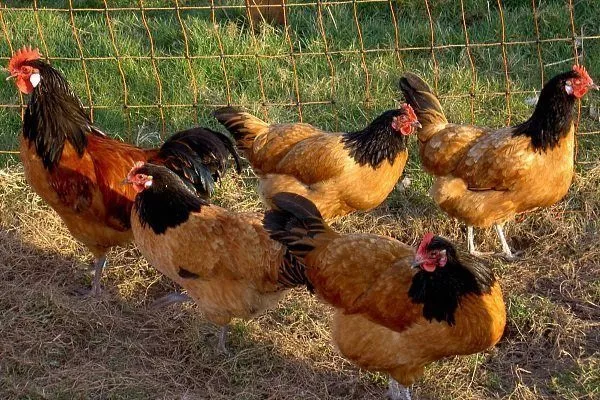
The German hen aviary is installed on the south side. The aviary is covered with a canopy to protect the birds from rain and the scorching sun. The mesh fence should be at least 2 meters high.
Vorwerk chickens are only allowed outside in calm, sunny weather. The temperature should not drop below -1°C. In winter, the birds are kept in the coop.
If you need advice on how to build a chicken coop yourself, then read on this article.
Nutrition
Proper nutrition will improve productivity. During the warmer months, the breed is fed twice a day: morning and evening, provided the hens are free-range during the day and can forage for food. During the winter, their nutritional needs increase, requiring three meals a day.
The diet is based on grains. The menu includes millet, oats, buckwheat, proso millet, and barley. Vitamins are provided by vegetables. Carrots, beets, and pumpkin are also suitable.
Experienced poultry farmers prepare dried herbs for the winter. These greens are added to the feeders. Chickens need vitamins and various beneficial supplements, which increase egg production and strengthen the immune system.
Best nutritional supplements:
- chalk;
- yeast;
- crushed shells;
- bone and meat and bone meal;
- herbal flour.
To improve digestion, small containers with crushed gravel are placed near the food containers; this helps improve and speed up metabolism.
Moulting period
In autumn, daylight hours decrease significantly, and birds react to this by molting. There are periods when this process is postponed into winter, depending on the region where the birds live and the conditions they are kept in.
During molting, it is necessary to monitor the temperature in the room - in freezing temperatures, birds should not be let outside, so as not to harm their health.
Molting causes a brief pause in egg production. Once feather production returns, the hens will begin laying eggs as before. If they lost feathers in the fall, they will continue to lay eggs in the winter, but not as prolifically as in the spring and summer.
Replacement of the herd
During the first year of life, hens produce their maximum number of eggs, after which their production decreases by 25% each year. Every two years, the flock should be replaced.
Breeding
Vorwerk hens reach sexual maturity at six months, and roosters a month later. To start a family, one rooster and eight hens are sufficient. The largest eggs, weighing approximately 60 g each, are selected for incubation. An incubator or a broody hen of a different breed of chicken is used.
- ✓ The temperature in the brooder for chicks should be maintained at 32-35°C during the first week of life.
- ✓ Humidity in the chicken room should not exceed 70% to avoid the development of respiratory diseases.
After laying eggs in an incubator The chicks hatch after three weeks. They are extremely sensitive to sudden temperature changes. The chicks are immediately placed in brooders with a special heating system. The chicks are kept in the brooder for about three to four weeks, as the fledging process takes a very long time.
The temperature is lowered by 2 degrees weekly to acclimate the chicks to the new environment. After this, the chicks are transferred to the brooder house, but are kept in a separate room from the adult hens until the molt is complete.
- ✓ Bright yellow down color indicates the good health of the chicken.
- ✓ Activity and constant squeaking are signs of normal development.
Vorwerk chicks are born black with yellow heads. Their feather color changes. First, orange feathers appear on their wings, then all over their bodies.
In the video below, the breeder demonstrates the Vorwerk chicken breed and talks about its breeding:
Caring for chicks
The chicks are fed 15 hours after birth. The first meal is a boiled egg. After this, they are fed every couple of hours. The diet includes low-fat cottage cheese, millet, fresh greens, and root vegetables. Mineral supplements, such as chalk, meal, fish meal, and bone meal, are especially important for chicks.
13-15 chicks fit per 1 sq. m.
As the birds grow, their territories expand. In a cramped space, healthy and strong birds bully the weaker ones. Young birds need sun and warmth, so exercise is essential. Proper housing conditions and a carefully selected diet will help raise strong and healthy Vorwerk flocks.
Diseases
The breed has a strong immune system, so illnesses rarely attack the birds. These are often related to poor diet and hypothermia, which weakens the immune system. A lack of essential micronutrients can lead to feather problems, and in some cases, can even lead to cannibalism.
The Vorwerk breed requires frequent preventative measures, which include proper vaccination.
Farmers must ensure that chickens do not interact with wild animals that carry bacteria and infections. To achieve this, they fence off the chicken run with netting. They regularly inspect the birds and treat them for parasites using specialized products.
Advantages and disadvantages
Advantages of Vorwerk chickens:
- active growth of young animals;
- juicy and tender meat;
- ease of care;
- unusual appearance, including feather color;
- calm character.
Disadvantages of Vorwerk chickens:
- sensitivity to sudden temperature changes;
- lack of maternal instinct.
The breed is suitable for raising in small yards; small expenses on livestock maintenance can bring you great benefits in the form of eggs and meat.
Poultry farmers' reviews of Forwerk chickens
My husband and I built a chicken coop, bought young chickens, cared for them, and fed them. The hens laid a lot of eggs the first year, but then their productivity declined, and we had to replace the flock. The chickens' meat is tasty and tender. We've decided to increase the number of birds in our poultry yard.
It's very difficult to find Vorwerk chicks in Russia today. Only a few breeders offer these chicks. In Europe, this breed is much more common. While German Vorwerk chicks can adapt to our climate, breeding them in northern regions is not recommended.