
Phoenix chickens are considered an ornamental breed. They are kept solely for the purpose of decorating a yard for those who enjoy exotic creatures. Read on to find out what you need to get one, and whether there are any special requirements for breeding, housing, and feeding these chickens.
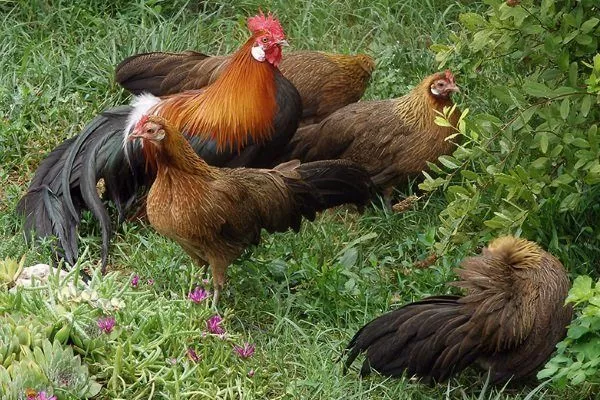
History of origin
The breed originated in China about two centuries ago, where it was originally called the Feng Huan. This decorative bird with an unusually long tail was supposed to be kept in the southern part of the yard; according to Feng Shui practices, it would bring good luck and prosperity.
After some time, phoenixes arrived in Japan, where they began to adorn the imperial court and were renamed Yokohama-toshi and Onagadori. Today, this bird symbolizes wealth and high status in the Land of the Rising Sun. Furthermore, Japanese breeders have improved the bird's natural qualities and achieved unprecedented tail length.
The German branch of Phoenixes is widespread; these are the birds that can be found in the backyards of exotic lovers.
Description of the Phoenix chicken breed
Phoenix chickens are considered ornamental—they should be kept only for the purpose of decorating your backyard. Even a novice poultry farmer can handle their care, except for tail care.
Appearance
| Name | Tail length (m) | Rooster weight (kg) | Chicken weight (kg) |
|---|---|---|---|
| Phoenix | 3 | 2.1-3.5 | 1.6-2 |
| Dwarf Phoenix | 1.5 | 0.8 | 0.7 |
A distinctive feature of Phoenixes is the exotic tails with long feathers in males. However, such a tail is very inconvenient for the rooster itself—the bird cannot lift it without soiling it.
Pedigree roosters must meet the following standards:
- Frame. A graceful, taut body. The shoulders and belly are moderately developed, tapering toward the tail. The plumage around the lower back is long; in older individuals, it may droop toward the ground.
- Legs. Proportionate length. Color: gray, may have a bluish tint. Fine spurs are present. Feathering on the lower legs is medium.
- Tail. A one-year-old rooster reaches 0.9 m. By European standards, an adult male's length is up to 3 m, and by Japanese standards, up to 10 m.
- Neck. Covered with a thick mane of medium length that falls down the back.
- Head. Narrow, small in size. The comb is well-shaped, the earlobes are not large, of the same color as before, and the wattles are medium-sized and red. The beak is medium-sized and gray. The eyes are amber.
The longest tail recorded was that of a 13-year-old bird. It reached 17 meters and continues to grow.
Chickens meet the following characteristics:
- Size. Graceful, smaller than males.
- Torso. The body is positioned low.
- Tail. Longer than most chickens, large and full.
- Legs. May come with spurs.
- Head. Small, proportional. The comb is rectangular, small, and narrow. The earrings are small.
There are 5 colors of Phoenixes:
- Wild:
- general impression – brown color;
- head is black-brown, mane with a black or brown belt;
- black plumage on the body and tail;
- the top of the body is covered with brown feathers with a black tint;
- On the chest there are brown feathers with dark spots.
- Golden:
- body - brown, chest - gray;
- neck - golden;
- on the lower back there are feathers with a golden sheen, yellow;
- black spots are visible on the back and neck;
- wing feathers - black and brown;
- The tail feathers are black with a green tint.
- Orange:
- the head and neck are a rich orange color with a red tint;
- black – on the tail (without iridescence), shins, belly (closer to gray);
- The body is dark gray, with a greenish tint that may be present.
- Silver:
- main color – white;
- the body feathers have a silvery sheen, and the sides have black specks;
- the tail feathers are black with a green tint;
- head - light shades;
- the black neck is decorated with a white stripe;
- the rest of the body is grey.
- White:
- the bird is completely white;
- any other shades are excluded.
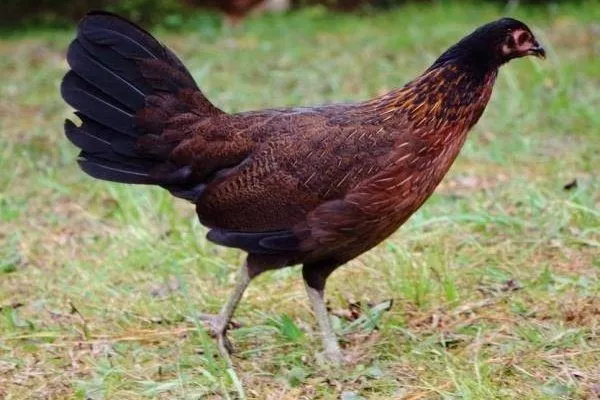
Phoenix is wild
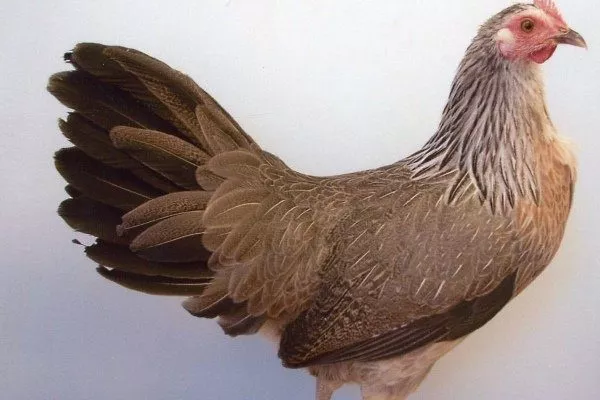
Phoenix Golden
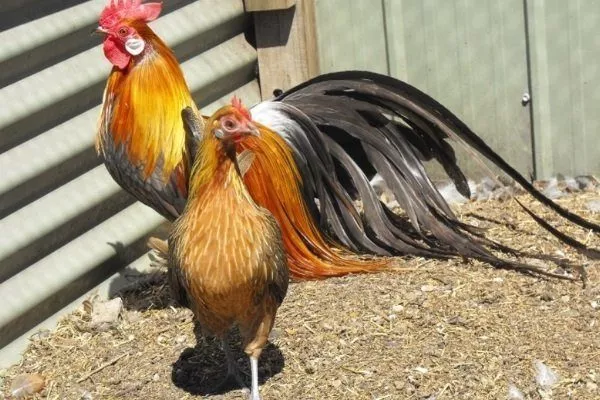
Phoenix Orange
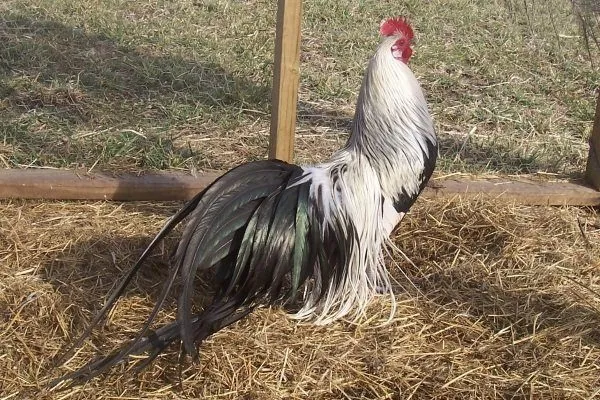
Phoenix Silver
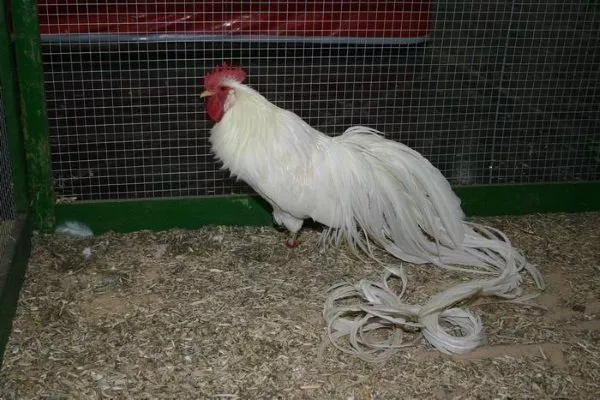
Phoenix White
Roosters are medium-heavy, they weigh from 2.1 to 3.5 kg, hens of the same class - they gain from 1.6 to 2 kg.
German breeders have developed dwarf Phoenixes.
Dwarf representatives of the breed are no different from the usual ones in appearance and color, only their size is proportionally smaller:
- rooster weight – 0.8 kg;
- chicken weight – 0.7 kg;
- tail length – reaches 1.5 m;
- egg production – about 60 eggs/year;
- egg weight – 25 g.
Birds with the following characteristics are subject to culling:
- plumage on the legs;
- awkward figure;
- short plumage;
- wide tail braids;
- red earlobes;
- white or yellow metatarsus.
Temperament
The birds' personalities vary widely—some are aggressive, while others are shy. In a family, the rooster is constantly busy—he supervises the hens, cares for them, and seeks and offers them food. The breed is noted for its intelligence. Roosters love to show off. As soon as they notice someone watching, they immediately assume a graceful pose and freeze.
Productivity
Phoenix chickens have no commercial value. Keeping them for eggs or meat is not practical. Phoenix carcasses do not have the marketable appearance that consumers value. The meat has a good flavor but a tough texture.
Sexual maturity occurs at 6-8 months, at which time hens begin laying eggs. Their egg production is considered low: 50-100 light-yellow-shelled eggs per year, weighing 45 to 60 g.
Phoenixes are not raised for meat or eggs.
Maintenance and care
Japanese roosters are kept in special long, narrow cages, with the perch positioned so that the tail hangs completely down. They are also fed in the cages. The birds are taken for walks three times a day. As long as their tails are up to one and a half meters long, they are able to move about on their own. If their tails are longer, they are carried or their feathers are wrapped in special curlers.
The German branch of Phoenixes, which grow shorter tails, are kept in poultry houses.
When setting up a chicken coop, follow these rules:
- Selecting a location. For construction, choose a place protected from the wind, on an elevated area, with sufficient sunlight.
- Construction material. It's best to choose wood for this purpose. This will ensure natural humidity regulation in the room.
- Space. One rooster should have 1 square meter of space. The same amount of space can accommodate up to 3 hens.
- Ventilation system. Phoenixes do not respond well to low oxygen levels. Provide a ventilation system that will ventilate the room but not create drafts. Air movement should not exceed 0.5 m/s.
- Floor. A concrete floor should only be used as a base for the bedding. Wood will attract rodents and is therefore not recommended for this purpose.
- Bedding. The hutch should always be dry, warm, and clean. Use sawdust, straw, or peat as bedding.
- Perches. Position the perches so that the birds' tails hang down without touching the floor. Place the perches in remote, shaded areas, away from doorways and windows. Allow 35 cm of space per chicken. Build ladders or steps to the perches.
- Dry baths. Set up a box with sand and ash (1:1) to clean feathers. You can add insecticide to the mixture.
- Regular cleaning. When keeping Phoenixes, maintaining impeccable cleanliness is essential. This is the only way to maintain the attractive appearance of their feathers.
- Annual cleaning. This is done in the spring. Clean the coop, wash all equipment, and disinfect the walls with lime. Lay down new bedding.
- Feeders and drinkers. Secure it at the height of the rooster's perch, right next to it. This will prevent injury to the roosters and damage to their feathers. How to make your own waterers is explained.here.
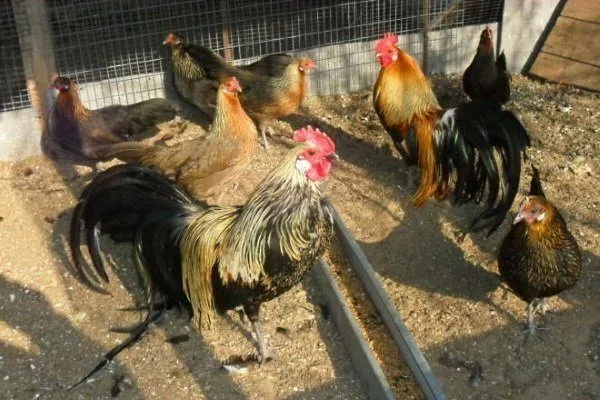
Standard cage keeping of Phoenixes is not recommended to avoid damage to their tails.
Arrangement of the walking area:
- Walking yard. Choose a dry place so that water does not stagnate in the area after rain.
- Coating. Sow the exercise yard with thick grass. Plant a few trees or install special perches for roosters to perch on.
- Fencing. Make sure the fence is high, or stretch a net over the top – Phoenixes are very good flyers.
- Feeders, drinkers, baths. Install it in the dog run during the warmer months. How to make a bird feeder yourself is described in Here.
Walking has a positive effect on the health and color of the feathers.
Climate requirements
The phoenix is a frost-resistant bird; it loves to go out onto the snow and peck at it, but such walks are only allowed in sunny, windless weather.
It is permissible to keep chickens out of the poultry house for several days during snowfalls, gusts of wind, severe frosts and rain.
The coop must be insulated, as birds do not tolerate drafts. In winter, do not allow the temperature to drop below 5°C. Optimally, maintaining a temperature of 10-12°C will cause the birds to develop colds, and at very low temperatures, their wattles, combs, and legs may freeze. To ensure the well-being of the hens, during short daylight hours, install lighting in the coop.
Read the article about How to build a chicken coop yourself.
Nutritional Features
The main feature of the Phoenix chicken diet is its low calorie content, but increased vitamin and mineral complexes aimed at the growth and quality of plumage.
The diet of adults must necessarily include:
- yeast;
- oats;
- barley;
- vegetables (potatoes, beets, cabbage, carrots);
- bone meal as a source of protein;
- minerals in the form of eggshells and shell rock;
- gravel or sand – for digestion.
The feeding regime is no different from other breeds: 2 times a day, soft food in the morning, grain in the evening.
Phoenixes do not have any special dietary requirements.
Table of approximate diet for 1 individual per day:
| Feed for 1 chicken | Quantity, g/day |
| Cereals | 40 |
| Succulent feed | 30-40 |
| Yeast | 14 |
| Animal feed | 5-10 |
| Bone meal | 1 |
| Salt | 0.5 |
Moulting period
Phoenixes do not undergo molting periods. This was achieved by eliminating the gene responsible for feather shedding. This allowed males to grow tails that, under natural conditions (over a six-month period), would not exceed 1 meter.
Advantages and disadvantages
The advantages of the breed include:
- high decorative qualities;
- ease of care;
- frost resistance;
- no predisposition to disease.
Disadvantages:
- tail feathers require extra cleanliness;
- intolerance to drafts;
- loss of brooding instinct;
- difficult to acquire.
See below for an overview of the Phoenix chicken breed:
The main advantage of Phoenix roosters – their luxurious tail – is also their disadvantage, requiring increased care.
Reproduction, brooding instinct
Although sexual maturity occurs at six months, the final formation of a mature chicken occurs at 2 years of age, by which time it begins to lay fertilized eggs.
- ✓ Eggs must be fresh, no older than 7 days.
- ✓ The optimal egg weight for incubation is 50-60 g.
- ✓ The shell must be clean, without cracks or deformations.
Phoenix roosters can be crossed with hens of other breeds, and such chicks will develop bright plumage and long tails.
Phoenix genes are dominant, passing on the breed's characteristics.
Chickens have lost their instinct to brood, so chicks are raised in an incubator. The incubation period and conditions are no different from those for other chickens.
Table of changing parameters when hatching chicks in an incubator:
| Period, days | 1-11 | 12-17 | 18-19 | 20-21 |
| Temperature conditions, °C | 37.9 | 37.3 | 37.3 | 37.0 |
| Air humidity, % | 66 | 53 | 47 | 66 |
| Turning eggs, once a day | 4 | 4 | 4 | — |
| Ventilation, once a day | — | 2 | 2 | 2 |
| Ventilation, min/time | — | 5 | 20 | 5 |
Immediately after hatching, the chicks are transferred to a box, where the temperature is maintained at 25-30°C for the first 10 days. An infrared lamp is used for heating. Then, the temperature is gradually reduced to 18-20°C. Paper is placed on the bottom of the box (newspapers are prohibited) and changed whenever it becomes soiled.
- ✓ Maintain the temperature in the box at 30-32°C for the first 5 days.
- ✓ Provide 24-hour access to clean water and starter food.
- ✓ Avoid drafts and sudden temperature changes.
The first outdoor walk should not be planned until the chicks are 14 days old. This should only be done in an enclosed nesting pen and in good weather conditions.
Sometimes you can encounter Phoenix mothers. Poultry farmers believe this is possible if Phoenix chicks are raised by a broody hen of a different breed. However, such cases are extremely rare. If you have a broody hen of a different breed, you can add Phoenix eggs to her nest; typically, 10-12 eggs are added.
Phoenix chicks can also be placed under a hen during the first 2-3 days after hatching. This should be done at night. The hen and chicks are kept indoors for up to 5 days, after which they can be let out for short walks.
We recommend that you additionally read the article about features of incubation of chicken eggs.
Feeding chickens
To ensure good survival and proper development, ensure your chickens are fed a balanced diet.
Feeding rules:
- feed the chicks in a specific place;
- keep the dishes clean, after cleaning, pour boiling water over them;
- chicks should always have access to clean water;
- It is not recommended to add potassium permanganate to water, as it affects the balance of microflora and reduces immunity;
- Feed the chicks only fresh food; storing previously uneaten food is not allowed;
- It is useful to add greens (green onions, nettles) to the diet;
- until the chicks are 10 days old, feed them every 3 hours;
- From the 10th day of life, add specialized feed additives to the feed.
Table of feed norms for 1-day-old chickens by age:
| Feed | Age, days | |||
| 1-5 | 6-10 | 11-20 | 21:40 | |
| Hard-boiled egg, g/day | 2 | 3 | — | — |
| Low-fat cottage cheese, g/day | 1-2 | 2-3 | 4-5 | 5-6 |
| Greens, g/day | 1 | 4-5 | 8-10 | 10-12 |
| Grain (crushed grain), g/day | 1-2 | 2-3 | 5-10 | 10-15 |
| Mineral supplements, g/day | — | 0.5 | 1.0 | 1.5 |
| Boiled potatoes, g/day | — | — | 4-5 | 8-15 |
Tendency to diseases
Phoenix chicken health depends on their living conditions. Cleanliness and a balanced diet ensure healthy chickens. If these standards are not met, they can become susceptible to common illnesses. There are no specific diseases specific to the Phoenix chicken breed.
Buying poultry
Buying representatives of this breed in Russia is practically impossible. Although domestic hobby farmers own these birds, they have no documentation. If you decide to buy one, be prepared for the unexpected.
It's best to buy chickens abroad, from specialized clubs that have the necessary certificates. The easiest place to do this is in Germany, where both standard and dwarf Phoenix chickens are bred.
In Japan, selling Yokohama-toshi chickens is prohibited by law. The only way to acquire the birds is by participating in annual agricultural exhibitions, where Phoenix chickens are exchanged for other breeds.
Poultry farmers' reviews of Phoenix chickens
Phoenix chicken care is limited to caring for their long tail. These birds rarely get sick, are undemanding in terms of food, and survive winter well, though they are wary of drafts. They have lost their maternal instincts, so they should be hatched in an incubator. The biggest challenge is acquiring the incubation material.