
Many poultry farmers are considering keeping Faverolles chickens. These chickens are known for their docile nature, delicious meat, and high egg production. In this article, you'll learn about the main varieties of Faverolles and signs of non-pedigree chickens, the specifics of feeding and caring for these birds, and read reviews from people who have kept this breed. All this will help you decide if the Faverolles breed is right for you.
History of the breed
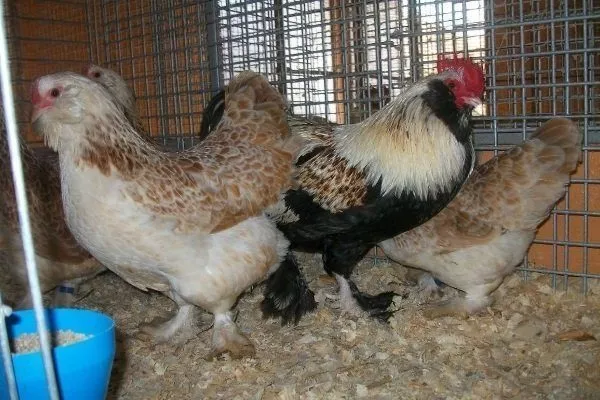
Faverolles chickens were first bred in the village of the same name in France in the mid-18th century. They are the product of crossing the Goudan and Mantes breeds. Cochin China and the Silver Dorking. This breed was intended to be a "broth" breed, but through subsequent crossbreeding it became a meat breed, and later, thanks to the efforts of English and German breeders, also a decorative breed.
Description of the Faverolles breed
Birds of this breed are usually classified as meat and egg breeding, although in some countries they are bred exclusively as an ornamental breed.
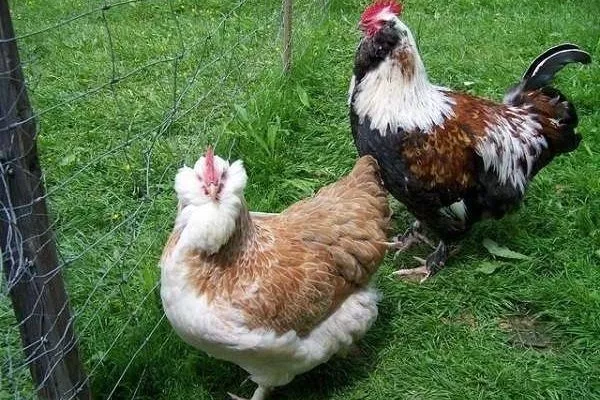
This breed is easily distinguished from other breeds by its appearance. The birds have a slightly flattened head with a vertical comb located just above the beak. The beak itself is short and powerful, ranging in color from milky white to light pink.
The neck and upper back feature a distinctive ruff, with some feathers pointing up and others facing away. The eyes are orange, and the earlobes are completely covered by the beard and flanks.
Overall, the body appears heavy, even ponderous. These birds are very muscular, with a massive chest and deep abdomen. From the side, the body somewhat resembles a trapezoid. The tail is raised, with short, stiff feathers.
The wings are positioned close to the upper body, and the feet have five toes, with no hawk's foot. The fifth toe ends in a long, upward-pointing claw. This toe is one of the breed's defining characteristics.
Hens generally have a stockier, heavier build than roosters. Their backs are broad and raised at the rear, and their bellies are well developed.
Adults' plumage is soft and fluffy, and their skin is always milky white. Their coloring can vary widely: black, blue, gold, salmon, and more.
Varieties of the breed
There are several varieties of this chicken breed, the main ones being the Salmon, Blue, and Columbian. These varieties differ only in color.
| Name | Color | Rooster weight (kg) | Chicken weight (kg) | Egg production (pieces/year) |
|---|---|---|---|---|
| Salmon | Red-brown | 3-4 | 2.5-3.5 | 160-180 |
| Blue | Blue | 3-4 | 2.5-3.5 | 160-180 |
| Colombian | Silvery white | 3-4 | 2.5-3.5 | 160-180 |
Salmon
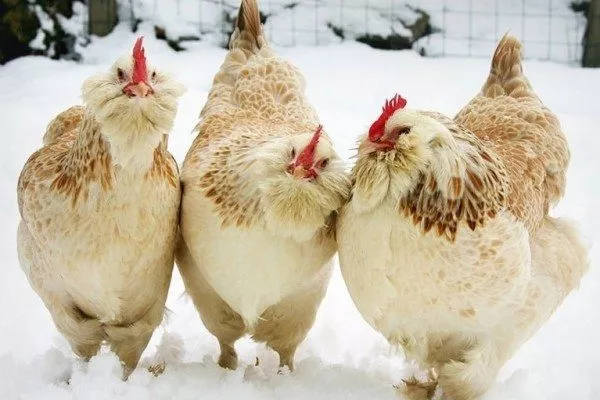
The most popular type of Faverolles chicken is the salmon. Hens and roosters of this variety have noticeably different colors.
The Salmon Rooster's back plumage is reddish or yellowish-brown. The ruff and lower back are much lighter. The sides of the neck have distinctive brown spots that indicate the purity of the breed. The wings are a deep black with a green or blue tint. The rest of the body is covered in black plumage.
This breed's chickens have a more uniform salmon-red coloration, with a narrow white border on the feathers. The breast, belly, and drumsticks are pale yellow.
Blue
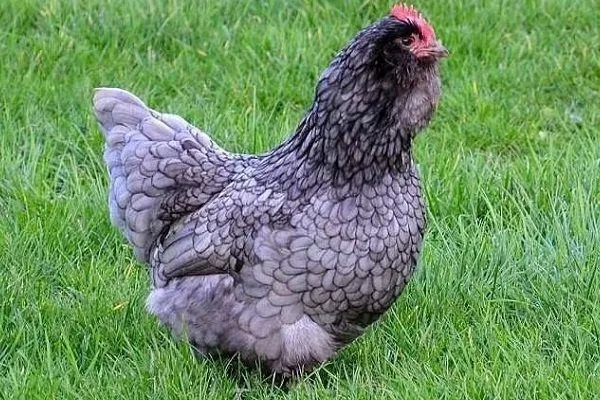
Chickens of this variety have a uniform blue coloration throughout their body, but the edges of their feathers are not white, like those of Colombian or Salmon birds, but a rich blue hue.
Colombian
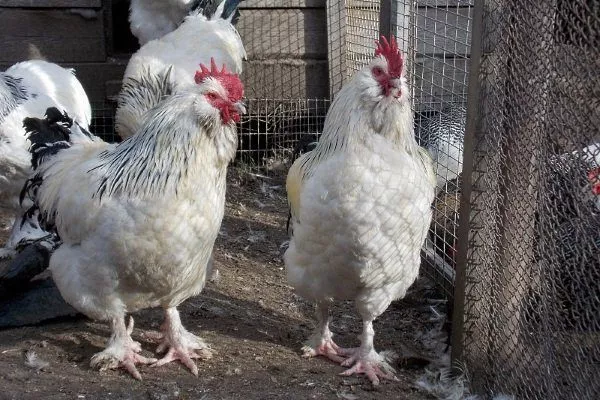
Another name for this variety is "silver." Hens and roosters of this type have a single coloration—silver-white. The mane and tail are striped with black feathers with a blue or emerald sheen, and the feathers are edged with white.
Signs of non-pedigree
Maintaining the purity of the Faverolles breed is crucial. Offspring bred with other chicken breeds will be less robust than the previous generation and may eventually lose their distinctive characteristics.
The main sign of a non-pedigree Faverolles hen or rooster is poorly developed muscles. A very squat or, conversely, very tall body, a thin or insufficiently long neck, an uneven back (for example, too arched), or a long, pointed tail—all of these factors lead to the bird being culled from the purebred flock.
It is also worth paying attention to the feet: birds without a fifth toe, with a “hawk heel,” or with an incorrect position of the fourth and fifth toes will not be able to pass standardization.
A lack of or insufficient feathering on a hen's head, and slight fluffiness on the neck and sides of roosters are also signs of non-pedigree. A yellow beak, a disproportionate comb, and excessive feathering on the hocks indicate a mixed breed.
Characteristics of Faverolles chickens
Faverolles chickens are bright, beautiful, and eye-catching, and according to numerous reviews, they are good for both aesthetic pleasure and farming.
Temperament
These birds are trusting and docile, and they become attached to their owners. They have a calm, phlegmatic nature. They enjoy stopping while being walked and observing other chickens. They get along well with other birds and pets and are not prone to aggression.
Productivity
Faverolles are a productive chicken breed. Originally bred for meat production, they also boast high egg production.
Young chickens quickly gain muscle mass, and with increased feeding, they are ready for slaughter at 4.5-5 months. Roosters often reach 3-4 kg live weight, and hens 2.5-3.5 kg.
The meat is white, tender, not too fibrous, very similar to pheasant meat – Faverolles was conceived as a bird for restaurant dishes.
At six months of age, hens can begin laying eggs and can produce 160-180 eggs in the first year of sexual maturity and about 130 thereafter. Faverolles' shells range in color from yellow-brown to light pink, and each egg weighs approximately 55-58 g.
If daylight hours are at least 13 hours and the hens have a warm place to sleep, they can lay eggs all year round, but egg production decreases somewhat in winter.
As birds approach three years of age, productivity declines sharply. Meat becomes tougher, loses flavor, and egg production declines (to 100 eggs per year or less). Therefore, poultry farmers recommend regularly replacing the flock and culling birds that reach two and a half to three years of age.
Conditions of maintenance and care
Faverolles chickens don't require any special care, with one exception: it's best not to share a coop or run with other breeds. This will help maintain the purity of their offspring. It will also protect the peaceful birds from more aggressive breeds, as the good-natured Faverolles are often unable to defend themselves.
If you need advice on how to build a chicken coop yourself, then This article may become useful.
Keeping Faverolles in cages or aviaries is highly undesirable, as they are large birds prone to obesity and require physical activity. Often, only a wide, grassy run and a small amount of feed in the coop can motivate these sluggish birds to move.
Feeding
Faverolles are prone to overeating and obesity, so careful feeding guidelines are essential. A balanced diet, including adequate protein, is essential. Protein promotes good growth and egg production.
Dry feed is preferable, as wet feed will stain the feathers and make the hens look untidy. Wet feed can get stuck in the feathers, causing the hens to try to peck at each other, which can result in injury.
Poultry farmers often feed these chickens whole grains, grass, and root vegetables. Artificial vitamins may be added. Each bird should receive approximately 150 g of dry feed (grain or compound feed). In case of obesity, the norm is reduced to 80-100 g.
In summer, about a third of the daily diet should come from grass (nettles, dandelions, alfalfa, etc.). In winter, green fodder is replaced with sprouted wheat, pumpkin, and pine needles. Lean, unspoiled kitchen scraps are also acceptable.
It is very easy to check whether the Faverolles' diet is composed correctly - with a balanced diet, the normal egg production of a hen is 2 eggs every 3 days.
Breeding
The optimal time to hatch chickens is considered to be late winter. Birds hatched in February will be able to go outside in the spring, and young hens will begin laying eggs in the summer or fall.
- ✓ The temperature in the incubator must be strictly maintained at 37.6°C to prevent leg deformities in chicks.
- ✓ The optimal age of hens for collecting eggs for incubation is from 1 to 3 years; eggs younger than this age can lead to weak offspring.
Faverolles are rare breeders, so their chicks are usually hatched in an incubator. Eggs are taken from hens aged 1-3 years; it is undesirable to take eggs from younger hens. These eggs should be stored for no longer than 2 weeks at 10°C (50°F). It is important to maintain the incubator temperature at 37.6°C (99.5°F), as even a slight change in temperature can result in chicks hatching with crooked legs.
We recommend reading the article about features of incubation of chicken eggs.
Newly hatched chicks are typically fed boiled eggs and crushed parboiled corn. Other grains are added on the second day, and greens, vegetables, and bran on the fifth. At this time, yeast is gradually introduced into the chick's diet if it is being raised for meat.
From two months of age, crushed grain and corn, or special compound feed, are added to the chicks' diet. After three months, the chick is considered an adult and is fed the same diet as its older siblings.
For high survival of young animals, in addition to nutrition, temperature conditions (around 38 degrees) and a sufficient amount of light are important (supplementary lighting is necessary if daylight hours are short or it is cloudy outside).
Chicks are born with yellow or yellowish-white down. Sexing can be determined 10 days after birth, or later in some cases (cockerels begin to develop sideburns and a beard, and the feathers on the tips of their wings darken).
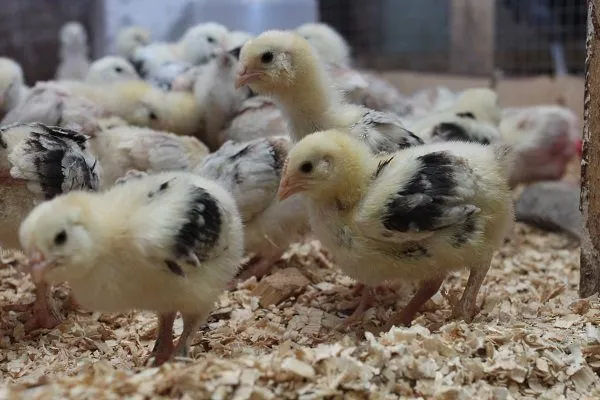
Once they reach 2 months of age, the roosters and hens are separated from each other, and then a flock of 10-15 hens and 2 roosters is formed.
Moulting period
Molting is a difficult and painful process for Faverolles hens. They feel unwell, are inactive, hide in the coop, and temporarily stop laying eggs.
- Increase the vitamin content of food to support immunity.
- Keep the chicken coop dry and clean to prevent disease.
- Minimize stress factors such as sudden changes in diet or living conditions.
During this period, it's important to provide the birds with a complete diet rich in vitamins. Careful monitoring of their living conditions is essential to ensure that the molting period doesn't become complicated by illness due to weakened immunity.
Walking
Faverolles need a spacious run, as they need to be active to avoid obesity. Adequate space is one of the determining factors in egg production.
It is important to make sure that there are no poisonous plants (black nightshade, hemlock, colchicum, spotted hemlock, hellebore) in the exercise yard, because Faverolles love to forage and may accidentally eat them.
There's no need to protect the run with a high fence—Faverolles are generally flightless. They can be safely allowed into the garden, as they won't dig up flowerbeds or garden beds in search of worms.
Chicken coop
Faverolles' housing should be spacious to prevent overcrowding. Too many birds in a small space is dangerous – it can lead to illness and increased feed consumption (the chickens will trample it).
Chickens tend to scatter their feed, and to prevent this, they are provided with narrow feeders or special bars inserted into the feeding troughs. How to make a feeder yourself is written here.
Faverolles are large birds, so they can injure their feet if they jump from a perch that's too high. Therefore, perches for them need to be wide, round, and not too high, with special ladders for climbing.
Dryness in the coop is extremely important—birds of this breed do not tolerate excessive humidity. They have shaggy paws, so excessively damp bedding can cause infections. Bedding for the coop is made of sawdust and straw and is regularly checked for dryness.
It is advisable to clean the chicken coop once a week, removing droppings and partially or completely replacing the litter.
Diseases
When kept properly, Faverolles are extremely rarely sick. Like all birds, they can be susceptible to infectious diseases. The main cause of illness and death in this breed of chickens when improperly kept is damp litter in the coop.
Obesity, a common scourge of Faverolles and those who care for them, can also cause health problems. Left untreated, obesity can result in a sharp decline in egg production and growth rates. Resolving this situation can take up to several months.
Advantages and disadvantages
Although the Faverolles breed appeared in Russia quite a while ago, it remains uncommon and reviews can be mixed. However, breeders and poultry farmers have enough experience with this breed to understand its main advantages and disadvantages.
The main advantages of the breed include:
- high egg production;
- excellent taste of meat;
- rapid growth;
- calm character;
- attractive appearance;
- rarity of diseases;
- frost resistance.
The disadvantages usually include:
- the difficulty of maintaining the purity of the breed;
- tendency to gain excess weight;
- difficulties with acquisition;
- the need for frequent cleaning of the chicken coop.
Watch a review of the Faverolles chicken breed in the video below:
Reviews from poultry farmers
There's a lot of information about Faverolles chickens, but poultry farmers' reviews vary. It's quite difficult to buy a true Faverolle bird, and the price increases with age. Accidentally buying a crossbreed instead of a purebred bird is likely the reason for negative reviews of the breed. Those who have been more fortunate report high egg production, tasty meat, and ease of care. However, many agree that these chickens are beautiful, have good temperaments, and become very attached to their owners.