
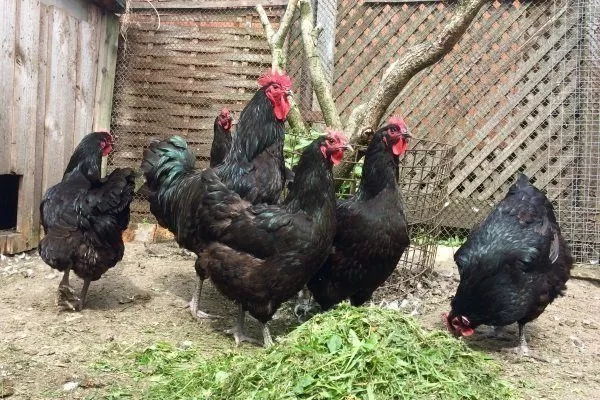
The Jersey Giant is a unique chicken breed, whose members are truly giants. Among meat poultry breeds, this species holds a special place. Jerseys are record-breakers and are considered the largest birds on the planet. These chickens can weigh up to 7 kg, are hardy and resilient, and are very popular among private farms.
Origin
The Jersey Giant breed first became known in the state of New Jersey (USA). In 1915, Uham Dexter succeeded in creating a unique breed of hefty chickens, which earned its curious name.
In the second half of the 19th century, John Blackie developed a new breed through selective breeding. This process took nearly 20 years. In the 21st century, this species was safely brought to England. It was here that intensive work began to develop birds of various colors.
Over time, this breed spread and became established in Europe. Through extensive genetic testing, Jerseys with blue feathers were developed. German scientists were able to breed birds with a snow-white color.
Description and appearance
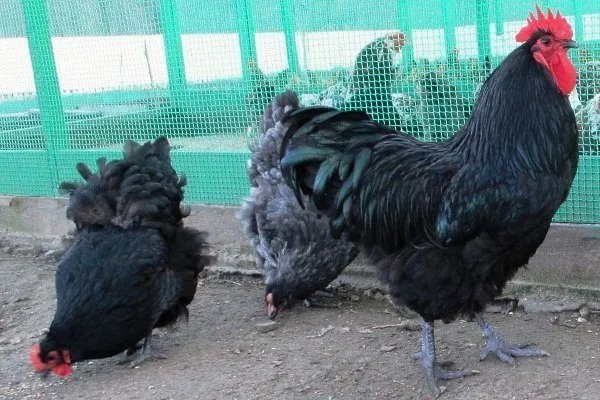
These handsome and stately hens are the flagship representatives of their species. Their heads are large, and the males have a six-toothed comb, a straight, red coat, and matching wattles. Their beaks are not large, but have a noticeable curve. Their eyes are dark brown.
The neck is feathered, the back is long and straight, and the belly is round and slightly protruding. The chest is large and prominent, causing a slight shift in the center of gravity. This gives the birds a proud posture. The tail is voluminous, but more pronounced in females than in males.
The breed's main characteristic is its strong, wide-set, and stable feet, which have four toes. Females resemble males in appearance, but are slightly smaller in body size and appear more stocky.
Bird's temperament
The birds are not shy, and have a balanced and quiet disposition. They easily cope with even severe stress. A change in their usual environment does not negatively affect productivity.
Representatives of this breed are very active and enjoy outdoor walks. The aviary doesn't need a high fence, as the birds don't attempt to fly.
Chickens are clumsy and somewhat slow, and they may step on eggs. Therefore, regular egg collection is essential.
Varieties
| Name | Plumage color | Beak color | Paw color |
|---|---|---|---|
| White | Snow-white | Yellow | Light gray |
| Black | Black with emerald tint | Black | Black |
| Blue | Gray with blue rays | Grey | Grey |
Only three subspecies of Jersey cats have been officially recognized:
- White – the birds’ plumage is snow-white, the beak is yellow, and the legs are light gray.
- Black – the plumage is black, with a slight emerald tint.
- Blue – the birds' coloring shimmers with various shades of gray with light blue rays.
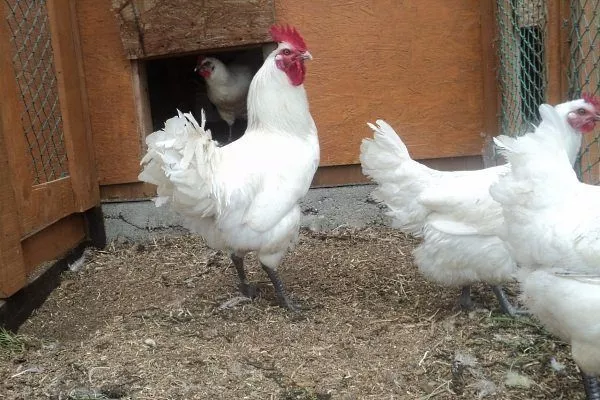
white Jersey Giant
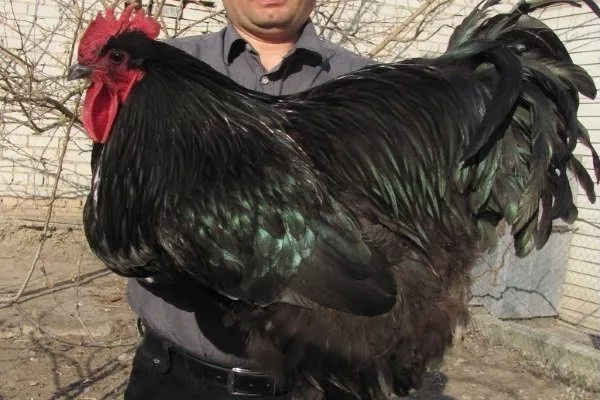
black Jersey Giant
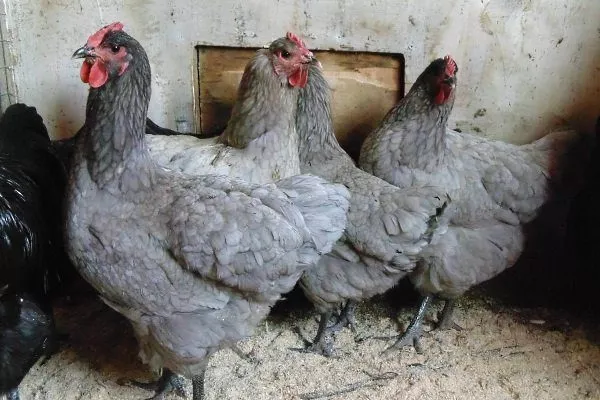
blue "Jersey Giant"
Advantages and disadvantages
Jersey Giants have certain advantages, which include:
- the meat is tasty and juicy;
- high productivity;
- birds gain weight in a short time;
- eggs of excellent taste;
- easily adapt to various conditions of maintenance;
- females become excellent brood hens;
- are practically not susceptible to diseases;
- high survival rate.
Like any other breed, this species has some disadvantages:
- the birds are large, so they need a large area to walk around;
- it is necessary to select a special diet that will ensure the survival of the young;
- The taste of meat in birds older than 11 months decreases.
Birds of this breed often suffer from obesity, a common problem. This can negatively impact the quality of eggs for hatching.
Poultry farming as a business
If you plan to raise and breed birds of this breed to build a successful and profitable business, you need to consider the following nuances:
- To raise chickens, use only highly productive, high-quality and expensive feed.
- Initially, you'll need to make a fairly substantial financial investment. If you approach the business correctly, your investment will definitely pay off in the near future.
- Females are very large and clumsy, so they can crush eggs while incubating. To avoid this, use an incubator to hatch the chicks.
- The weight of an adult bird can be determined in advance by examining the egg.
- If necessary, you can calculate the weight of the young using the following formula: add 170 g of the chick’s weight to the egg’s weight.
- Select the young no later than 10-11 hours after hatching.
Eggs have no distinctive appearance, so when starting your own business, it's important to purchase them from reputable farmers. This will help ensure the breed's purity.
Characteristics
This species is considered a meat-eating species, but females have retained the ability to lay eggs, which can be fertilized. Their brooding skills are not particularly pronounced, but this is not considered a flaw. For home breeding, an incubator is required.
Sexual maturity and onset of oviposition
Birds reach sexual maturity at 6 months of age, at which time hens begin laying eggs. However, for breeding or when using an incubator, only collect eggs from hens that are at least 8 months old.
Stopping oviposition and beginning of molting
During the first year of life, molting may occur in the spring, but in later years, it occurs in the fall. During molting, females stop laying eggs, eat less, and become less active. The average molt lasts about 4-7 weeks, but in some cases it can take longer.
Reasons that cause shedding for more than 3 months include:
- poor and limited diet;
- development of vitamin deficiency;
- infestation of birds with parasitic insects or helminths;
- various diseases;
- severe stress;
- abrupt relocation or introduction of new birds.
The duration of the molt directly affects how actively a hen lays eggs—the sooner this process ends, the sooner the hens will begin laying. This period is very difficult for this breed of bird and requires careful and constant attention, as well as good care.
Don't forget about the need to adjust their diet—include manganese and iodine supplements and vitamins. If possible, feed your birds fresh viburnum berries.
Heavyweight hens may molt in the summer. Experienced breeders advise culling such birds, as they won't be good layers anyway.
If your bird barely eats, moves little, and becomes very lethargic during molting, take it to the vet. This behavior is not typical of a healthy bird.
During the molting period, birds are susceptible to illness, so they should not be allowed to live in a cold room or get wet in the rain.
Productivity
Over 12 months, a single hen can lay approximately 180-185 eggs. The eggs have a rich brown shell. The first egg weighs around 50 g, while adult eggs weigh 60 g.
Chickens of this breed can be raised for meat production. Slaughtering can begin at approximately 6-6.5 months of age, when the birds weigh 3 kg or more.
Growth and weight gain dynamics
Adulthood in this breed lasts until the age of 7-7.5 months. Roosters complete their active growth phase at approximately 5-5.5 months. If the bird is not intended for breeding, it is slaughtered at this age.
By the start of egg-laying, which occurs at the beginning of the seventh month of life, females weigh approximately 4 kg, while males reach 5-6 kg. With age, males continue to increase in weight, and by 1.5 years of age, an individual can weigh up to 7 kg.
Excessive body weight of a rooster negatively affects the ability to fertilize.
Content Features
The described breed of chickens does not cause any particular difficulties in maintenance, but there are certain subtleties due to the rather large size of the individuals.
Watch a review of the Jersey Giant chicken in the video below:
To ensure strong and healthy birds, purchase chicks or hatching eggs only from reliable and trusted suppliers. Ideally, purchase the eggs and monitor the hatching and growth of the chicks.
Requirements for the poultry house
For comfortable development, chickens require a room of at least 50 square meters. Ensure adequate lighting in the coop. A window, preferably facing south, is recommended.
Regarding artificial lighting, install one bulb per 10 square meters. Don't forget to install a ventilation system. You can ventilate the room simply by opening the doors, but this isn't the best option during the colder months.
Laying hens are large and have a tendency to throw eggs out of the nest. Therefore, place nests as close to the floor as possible. Place boards at an angle next to the nests to make it easier for the birds to climb into them.
Walking requirements
During the warmer months, this breed requires long, daily walks. Chickens are active and forage for food and nutrients themselves, consuming various insects, worms, pebbles, and green grass. The size of the pen is determined by the number of chickens, as they are large.
Birds don't try to fly. Therefore, a high fence or enclosure around their roosting area is not required. They can feel quite comfortable even in small areas if the flock is small.
Conditions for winter
Jerseys tolerate low temperatures well. Even at -5°C (23°F) above zero, egg production does not decrease. However, more severe cold can cause significant discomfort. If the birds are let out during the cold season, be sure to regularly oil their combs.
The temperature in the room where the chickens will spend the night should not fall below 5 degrees Celsius. A temperature range of 10-13 degrees Celsius is considered optimal.
Be sure to provide bedding in the chicken coop; dry straw, sawdust, or sunflower husks are ideal. Remember to regularly ventilate the room, even during cold weather, as the birds need clean air. Avoid strong drafts, as this will make the chickens constantly sick.
Nutrition of laying hens
Laying hens require a properly balanced diet, especially when molting begins, as this is when hens require special care and attention. The diet should include not only protein but also grains. Soybean meal and sunflower cake are recommended. meat and bone, or fishmeal.
Sprouting wheat is recommended in winter and early spring. Feed the birds 50-60 g per bird daily. To increase the nutrient content, you can ferment the grains.
Caring for young animals
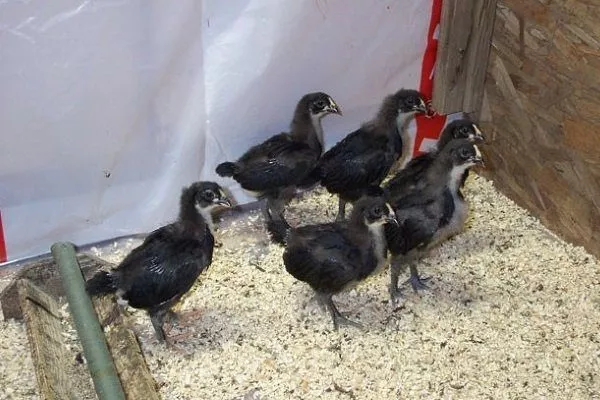
Place the hatched chicks in a dry, warm room, maintaining a temperature of around 28 degrees Celsius. It is not recommended to feed them for the first 24 hours.
- ✓ The temperature in the room for young animals should be maintained at +28 degrees during the first days of life.
- ✓ Water for chicks should be about 40 degrees with the addition of vitamin C and glucose.
Be sure to provide water at a temperature of around 40 degrees Celsius. Dissolve vitamin C and glucose in the water. Wash the water bowls several times a day and add clean water, being careful not to let it get dirty.
Feeding growing birds
Start feeding with boiled yolk - 1 yolk per 20 chicks, pre-crushed. On the 2nd day, give the egg in combination with a specialized compound feedAfter 3 days, stop giving the egg and replace it with millet or corn porridge. Along with the porridge, give a small amount of fresh cottage cheese.
| Age | Staple food | Additional components |
|---|---|---|
| 1-3 days | Boiled yolk | — |
| 4-10 days | Compound feed, porridge | Cottage cheese, greens |
| 1 month | Diet of adult birds | Fish oil, boiled vegetables |
On days 3-4, add greens to the diet to provide the growing chicks with vitamins. After 10 days, introduce boiled vegetables. Give fish oil during the morning feeding. At one month of age, gradually transition the chicks to an adult diet.
Jersey Giant Diseases
Starting from the first days of the chicks' lives, carry out simple preventative measures that will help prevent various diseases. For this purpose, give the chicks antibiotics, and when they grow up, use antihelminthic drugs.
All birds can be susceptible to mycoplasmosis, so remember the importance of ongoing prevention. To do this, keep the coop clean, ventilate the area regularly, and prevent chickens from coming into contact with wild birds, which can carry the disease.
Chickens should always have access to an ash bath. Bathing in ash helps clean their feathers. This simple technique also helps prevent parasites from appearing on their feathers and skin.
Be sure to cover the roof of the mesh aviary with any material to prevent feathers and droppings from wild birds from getting inside.
Where to buy and at what cost?
Jerseys are a highly sought-after breed in our country due to their large size, tasty and juicy meat, excellent egg quality, and attractive appearance. Many farms breed this breed.
Jerseys can be purchased:
- Nursery "Count's Nest", Nizhny Novgorod.
- "Chicken Yard", Krasnodar Region, Apsheronsk.
- Simbirevs' private farmstead, Moscow region, Ivashkovo village.
Average cost of representatives of this breed:
- young rooster - about 1500 rubles;
- laying hen – about 1000 rubles;
- chicken – about 250 rubles;
- hatching egg – about 200 rubles.
Reviews of the breed
The Jersey Giant is a unique breed. It is considered one of the most interesting and promising meat and egg breeds. These birds demonstrate high production rates, not only in egg production but also in weight. They have a calm and stable disposition, an attractive appearance, and high endurance. It is precisely these qualities that make this breed so sought after by farmers.