
Dekalb is considered one of the most productive laying hens. Not only do their egg production rates but also their egg weight significantly exceed those of other chicken breeds. These birds require no special care or specific feed, which is also considered a significant advantage.
History of cross-country
Dekalb chickens are a new egg-laying cross bred in the United States. This breed was developed by Dekalb Poultry Research. The company initially produced fertilizers with hybrid seeds. In the 1960s, the "Princess of Poultry"—the name given to the bird—was introduced.
During the development of this breed, the primary goal was to produce a bird with high productivity and a long egg-laying period. The bird had to produce eggs of the highest quality.
Today, the company is the primary and largest supplier of DeKalb chickens. Breeders continue to actively improve the cross. There's a good chance that the performance characteristics of this cross will improve over time.
Bird exterior
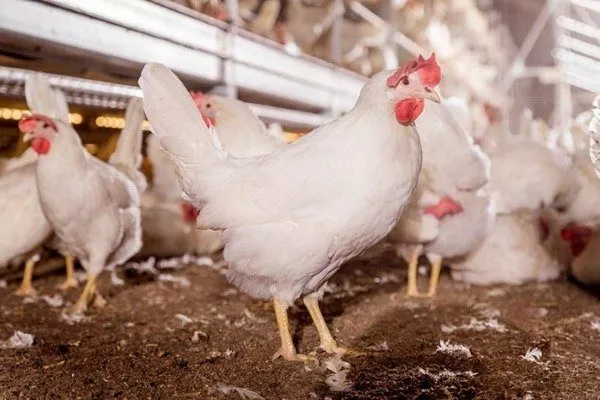
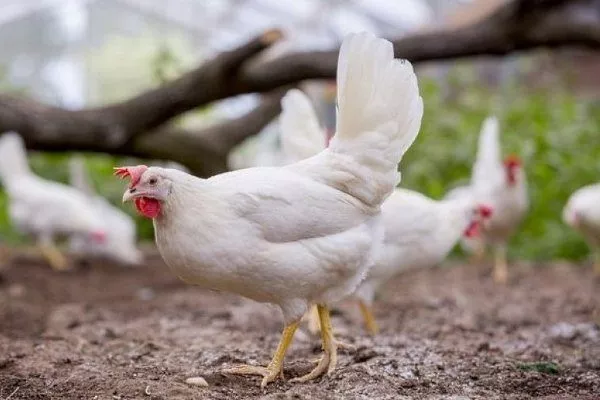
In appearance, this cross is virtually indistinguishable from other white chickens. The Dekalb has a compact body, a medium-sized body, very light bone structure, a slightly protruding, rounded chest, and a full belly. The head is not too large, and the comb is leaf-shaped and slightly tilted to the side. Like the wattles, it is red.
The plumage is well-filled and comes in not only white but also brown. The bill is small, yellow, and strong. Adult birds weigh 1.5-1.8 kg, while males weigh around 2 kg.
There is little variation in egg production or egg weight within the flock. This quality is especially valuable when breeding birds on an industrial scale.
Dekalbs are unpretentious birds, so they will feel quite comfortable both in cages or a poultry house, and in an aviary.
Productivity
Today, layers are achieving maximum egg mass. Extensive breeding efforts have resulted in a variety whose hens can produce 330 eggs in just one year. The average egg weight ranges from 60-64 g. The White Dekalb hen produces light-shelled eggs, while the Brown Dekalb produces brownish-brown eggs.
One of the main characteristics of this cross is its rapid maturation. As a result, egg-laying begins at 4 or 5 months, with approximately 95% of laying occurring by 40-41 weeks.
There aren't any significant differences between Dekalb and other egg-laying breeds. However, this particular breed is gradually and steadily replacing other layers in both private and commercial farms. Dekalb produces some of the best performance, slightly surpassing such a common breed as Hisex.
In the following video, the breeder talks about the productivity of Dekalb chickens:
Natural decline in egg production
The onset of molting is often associated with a natural decline in productivity. Molting occurs between 63 and 67 weeks. Artificial stimulation can accelerate the molting period. To do this, follow these tips:
- the daylight hours are decreasing and should be brought closer to 2 hours;
- only a drinking bowl with water is left and the food is removed;
- after about 10 days, after the feeding and light regime has been limited, the light levels are gradually increased (by 30 minutes per day);
- then the bird's feeding changes - the caloric content of the food increases, which should be higher than before the molt.
This type of forced molt reduces the non-productive period, which will last no more than 45 days instead of 60. During this entire period, the bird does not lay eggs at all. After the plumage changes, laying activity resumes.
Advantages and disadvantages of cross-country skiing
This bird has both advantages and disadvantages. Its main advantages include:
- high egg production;
- large eggs;
- puberty occurs early;
- It is possible to keep birds in cages (how to make a chicken cage with your own hands is written here);
- calm and peaceful character;
- undemanding to maintenance conditions.
The disadvantages include:
- laying hens do not have the instinct to brood;
- short period of productivity.
The main drawback of the Dekalb cross is the almost complete lack of broodiness. If you plan to breed the cross yourself and hatch the chicks, you'll need to find a broody hen, but only of a different breed. An incubator is also an option.
The flock is replaced every two years, which is one of the disadvantages of the cross. Keeping the birds longer than that makes no sense, as after this time, productivity declines sharply.
Keeping Dekalb chickens
Dekalb is one of the comfortable crosses that is recommended for beginning farmers, especially if the main goal is to obtain a large number of large eggs.
- ✓ The optimal temperature in the chicken coop in winter should not fall below +12°C to maintain egg production.
- ✓ The humidity level in the room should be 60-70% to prevent respiratory diseases.
When purchasing birds, it is necessary to take into account certain standards:
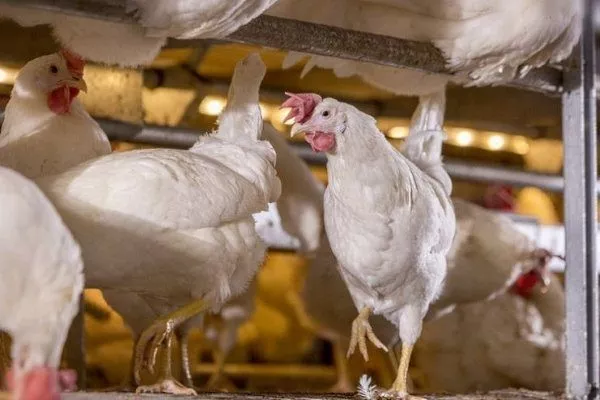
- There should be no more than five laying hens per square meter in a chicken coop. This will help keep the birds warm during the winter. Exceeding this limit can lead to pecking and delayed puberty.
- When building a chicken coop, choose between a concrete or earthen floor. If using a wooden floor, the boards must be pre-treated with special solutions. An earthen floor should be covered with deep litter.
For a large farm, a concrete floor is an ideal choice, but for a small herd, this may not be justified.
- Choose a dry, elevated location for the chicken coop. The terrain is important, as a dirt floor will actively absorb water. If the coop is located in a low-lying area, a layer of crushed stone approximately 20 cm thick should be placed on top of the floor.
- Dry peat, sawdust, or straw are ideal flooring materials. The floor surface should be disinfected beforehand.
To achieve deep litter, the layer should be at least 15 cm thick, but it must be thoroughly dried beforehand. A new layer is added periodically as needed. Good litter and sufficiently dense bird placement help keep the coop warm during frosty periods. - On the south side, a bird hole is constructed. A small threshold is built, approximately 5-6 cm above the floor. The hole should be 30 cm high.
If you need advice on how to build a chicken coop yourself, this article is located Here.
Ventilation and lighting
Avoid strong drafts in the chicken coop. This can be avoided by carefully sealing all holes and cracks in the walls, and installing double-glazed windows is recommended. Ventilation can be provided through a door and window, but this option is highly undesirable. Not only is it ineffective, but it also causes rapid heat loss.
A good choice would be to install specialized mechanical ventilation using a fan and exhaust pipe. This option is best suited for larger farms. However, for smaller coops, the excessively high electricity costs are unjustifiable.
A rational and simple solution is to install supply and exhaust pipes with a diameter of approximately 200 mm. The exhaust pipe is installed directly under the ceiling, extending approximately 1 m above the roof. The supply pipe is installed no lower than 30 cm from the floor, extending 40 cm above the roof.
This type of pipe arrangement allows for passive and effective ventilation. The main advantage is that no heat is lost during ventilation.
Incandescent lamps maintain the correct lighting conditions and also provide additional heating. It's important to maintain approximately 15 hours of daylight per day, which ensures productive laying even in winter.
Interior design of the chicken coop
When setting up a chicken coop, special attention should be paid to the number of nests. The egg production rate is also important to consider: 10 hens will lay approximately 8 eggs per day. Therefore, there should be at least 3 nests per 10 hens. Perches should be positioned approximately 90 cm above the floor and stacked in several layers.
These birds are fairly lightweight, so multi-tiered perches are easy to install. Horizontal perches are also comfortable, as they occupy a larger area, but the chickens won't be soiled by the droppings of birds perched above. Additional 5cm-wide bars can be installed.
The largest amount of droppings always accumulates under the perch. To prevent the spread of infection, cleaning should be carried out as frequently as possible.
Clean water is essential in the chicken coop. Various types of waterers can be used:
- vertical;
- nipple;
- simple bowl.
How to make a waterer with your own hands – read on here.
To encourage regular feather preening, birds require simple ash. An ash basin can be placed either indoors or outdoors. Placing the ash basin inside the coop will result in excess dust, but this is the best option for winter.
Feeding chickens
Feed at least four times a day, but only in small quantities. Avoid long intervals between feedings. This breed of bird is characterized by a high metabolism.
60% of the total diet should be consumed in the afternoon. It is at night that active egg maturation begins.
The diet of Dekalb chickens should contain the following components:
- Approximately 60% of the nutrient mixture consists of crushed grains. However, it shouldn't consist of just one grain. A mixture of several grains is ideal. Corn should be a priority, including wheat; barley combined with oats is also suitable.
- Fresh greens are an essential part of a bird's diet. Alfalfa and fresh nettles are particularly beneficial. For the winter, it's a good idea to prepare herbal meal; it's also recommended to purchase ready-made herbal pellets from specialty stores.
- Introduce foods that provide calcium, which is essential for proper eggshell formation, into the chicken's diet. Laying a large number of eggs can lead to a depletion of this micronutrient. This can be avoided by adding eggshells, finely crushed shells, or simple chalk to the chicken's diet.
- Salt is added to the feed. Yeast, oilcake, and fish meal are also suitable.
A wonderful alternative is specially formulated feed for laying hens. These feeds contain all the nutrients needed by the birds during the initial stages of active laying.
Each bird requires 100 grams of feed per day. Feeding too much is not recommended, as it can lead to obesity and decreased productivity. Drastic changes to the diet may temporarily reduce egg production.
Development of chicks
Since hens become less active with age, it's recommended to breed young hens every two years. Hens of this breed are almost completely devoid of the brooding instinct, so an additional incubator will be required. You can also feed the eggs to hens of other breeds, if possible.
Dekalb eggs have a high fertilization rate—approximately 95% of eggs are suitable for hatching. If an incubator is used, this rate drops to almost 80%. Approximately 90% of hatched chicks survive.
Check out the Dekalb chicks review in the video below:
Eggs no more than 5 days old are suitable for incubation. It's important that they are free of defects and of approximately the same size. Before placing the egg in the incubator, it's recommended to examine it with an ovoscope to accurately rule out any developmental issues.
For hatching young hens, it is not recommended to use eggs from hens that lay for less than three months. This is because these eggs are not fertilized, as Dekalb hens have a delayed puberty period relative to the start of laying.
Incubation
The egg maturation period is 20 days. The success of hatching depends on the temperature. Air humidity and the quality of the eggs used are also important. Candling allows you to rule out the possibility of double yolks, dark gray spots under the shell, embryonic death, or signs of fungal infection.
After the inspection is complete, all eggs are disinfected using simple potassium permanganate or Ecocide. After this, laying eggs in an incubatorIt is necessary to take care of the temperature and humidity level (about 60%).
Embryo maturation and subsequent hatching should occur in conditions as close to natural as possible. If the chicks are overheated, they will hatch quickly but will be weak and sickly. Chicks that are underheated will have problems with the umbilical cord healing process.
The first days after incubation
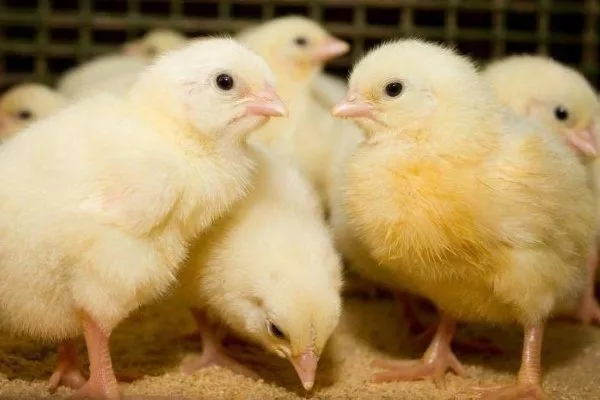
During the first 10 days after hatching, chicks require special care. Until they reach 5 days of age, they are placed in a spacious wooden box, the bottom of which is lined with a layer of paper and a wire rack placed on top.
- On day 1: vaccination against Marek's disease.
- On the 7th day: vaccination against infectious bronchitis.
- On the 14th day: vaccination against Newcastle disease.
It is not recommended to use additional bedding, as chicks have sensitive paws and there is a risk of injury.
The chicks are fed corn grits or millet. At night, the box should be additionally heated using infrared lamps; on warm, sunny days, the nesting box can be taken outside.
During the first days of life, a comfortable temperature of around 30 degrees Celsius (86 degrees Fahrenheit) is ideal for chicks. This can gradually be lowered to 26 degrees Celsius (80 degrees Fahrenheit). After the birds are four weeks old, the temperature can be lowered to 18 degrees Celsius (64 degrees Fahrenheit). Gradually, the chicks become accustomed to being outside.
Feeding chicks
Feed the chicks according to the following recommendations:
- the first 10 days after hatching - hard-boiled eggs, cereals, chopped greens;
- from the 10th day of life, the eggs are gradually removed and replaced compound feed, which should contain 23% protein;
- During growth, chickens are fed grain, which is better digested when combined with chopped greens;
- grown young animals are given fish oil - no more than 1 g per 1 chicken;
- boiled root vegetables are gradually introduced into the diet;
- when the chicks reach 8 days of age, you can give them raw root vegetables;
- Young animals should always have access to fresh and clean water, but it cannot be cold.
Disinfect drinking bowls and feeders regularly.
Conditions of detention
A dry and warm pen is set up, but only outside the poultry house. It's important that it be properly ventilated, preventing even the slightest draft.
There should be no more than 20 chicks per square meter of space. After 6 weeks, there should be no more than 17 chicks per square meter, and after 12 weeks, 10 chicks per square meter.
Poultry hygiene
Ash bathing allows chickens to clean their feathers themselves, removing insects and germs. For this purpose, a box filled with simple wood ash is placed near or inside the coop.
What diseases is this cross prone to?
Like any other poultry, Dekalb chickens are susceptible to various diseases and pathologies. A list of the most common chicken diseases and methods for preventing them is described in our next article.
Poultry farmers' reviews of Dekalb chickens
The hens started laying large eggs at five months. However, there's a short break during molting. To keep egg production from dropping during the winter, I use supplemental lighting.
Dekalb chickens possess valuable production qualities that distinguish them from other commercial egg-producing breeds. Today, this breed is gaining popularity in Russia, not only among experienced but also beginning farmers.