
Braeckel chickens are among the oldest egg-laying birds. The exact origins of the breed are difficult to determine, and some believe that Braeckel chickens were developed from native breeds. For several years, these birds were popular in Belgium. Braeckel chickens, also known as Campin chickens, possess decorative characteristics, making them highly sought after by breeders.
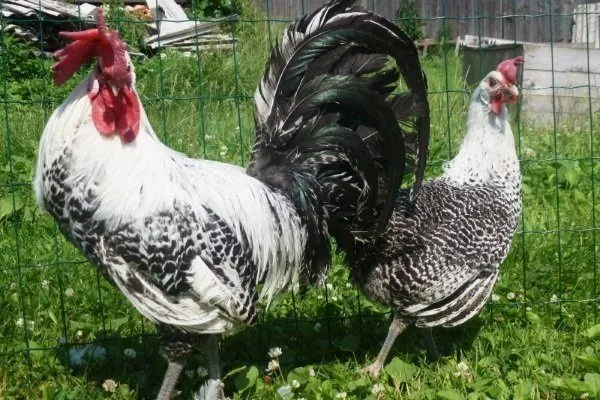
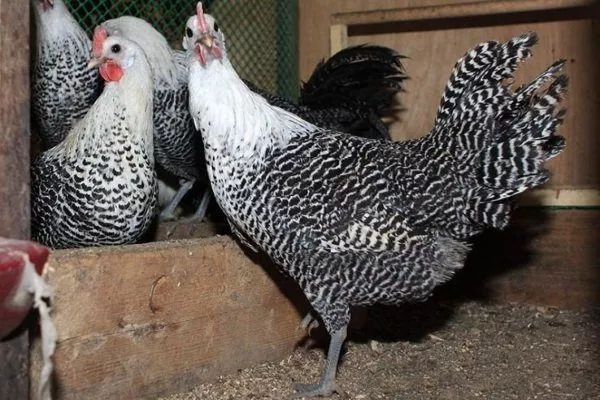
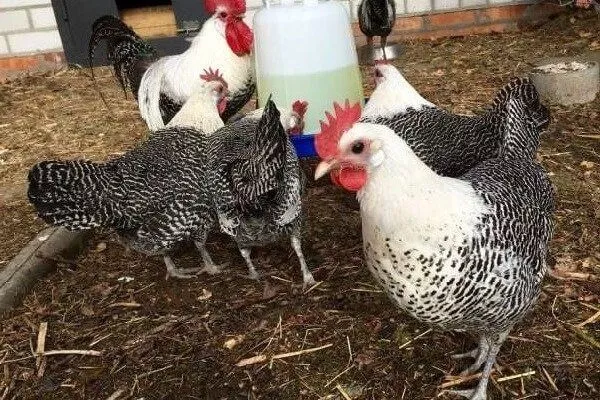
Breckel Silver (rooster and hen)
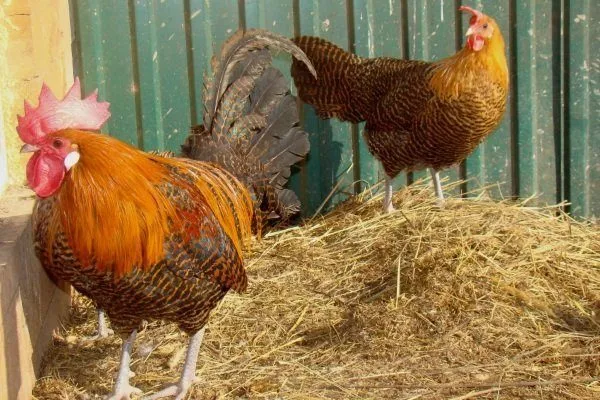
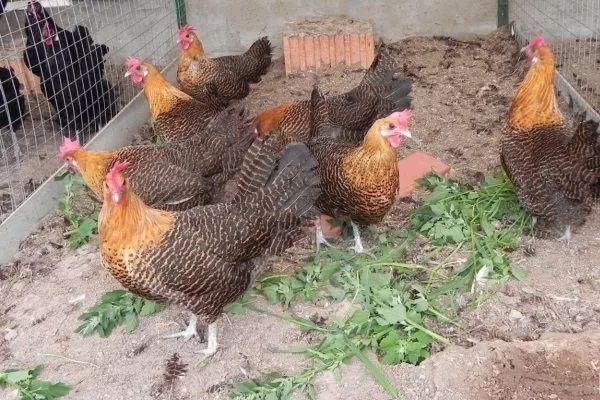
Golden Braeckel rooster and hen
History of the breed's origin
The origins of the chicken go back a long way. To this day, no one has been able to determine the age of the Breckel chicken. The same is true for the region where they were bred. Many historians believe that the Breckel chicken first appeared in Belgium and are descendants of native birds.
Records have been found stating that the Braeckel cross has been popular in our country for over 600 years. Records describe this breed as early as the early 15th century.
At the end of the 19th century, a club for enthusiasts of these chickens was founded in Nederbrekel. A year later, poultry breeders insisted on creating an official standard for the birds. Based on this data, poultry breeders classify the Brekel as a Belgian chicken.
Historical records indicate that these crosses were developed to produce large quantities of white-shelled eggs. In the 20th century, due to the World Wars, the number of Braeckel birds declined significantly. In the 1980s, only five Braeckel birds were found in their native land.
Poultry breeders didn't despair and revived the breed in a special club. At the end of the 20th century, a book was published describing the care of these crosses. In the current century, demand for these birds has declined slightly, and new, more productive crosses have replaced the Braekel. However, this breed has many fans, as Belgian birds offer many advantages.
Main features and characteristics
Braeckel chickens are bred primarily for egg production. They have a strong immune system and are resistant to many diseases. They quickly adapt to new environments, making them suitable for transport.
Appearance
The birds' appearance is recognizable; many poultry farmers keep them not only for their high egg production but also for their decorative appearance. Breckel birds are sturdy and small in stature.
The main characteristics of birds:
- the body is small, low, positioned horizontally;
- the belly is convex;
- well-developed wings, tightly adjacent to the body;
- paws are small, grey in colour, shins are poorly developed;
- the neck is small, the plumage is massive;
- head of medium size, with a pronounced crest;
- the forehead is massive;
- the beak is strong and sharp;
- Silver Braeckel is a color of black and white feathers;
- earlobes are blue, earrings and comb are bright scarlet;
- The young are born black.
The difference between a rooster and a hen
Newly hatched chicks are not particularly distinguishable from each other. They can only be distinguished when they reach adolescence. Males have a large, upright comb with 5-6 petals. Hens have a much smaller comb, which is also slightly tilted to the side.
They differ in tail size: roosters have massive feathers with drooping braids, while hens have a miniature fan-shaped tail. The male's body is large and muscular, while the females are thinner and more delicate. The male has a large ruff around his neck, while the hens boast smooth, close-fitting plumage.
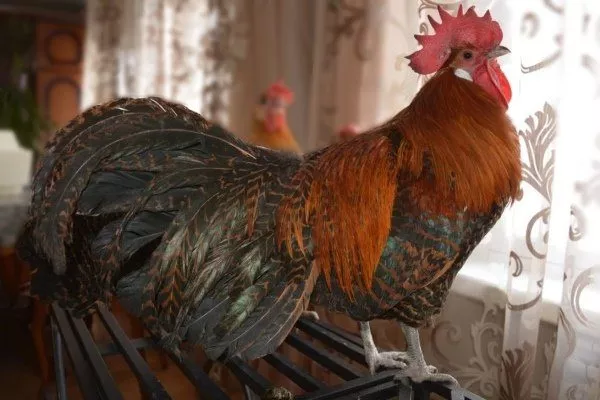
Braeckel rooster
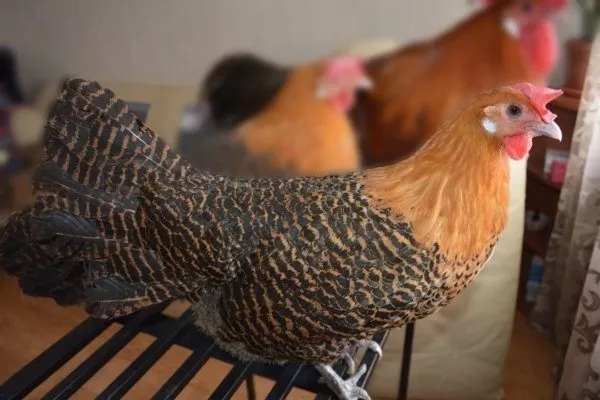
Braeckel chicken
Puberty and egg production
Breckel hens are noted for their early maturity and rapid growth. Statistically, hens rarely demonstrate exceptional productivity. Hens begin laying eggs as early as four months of age, and within a month, they have fully mastered this skill.
Egg production is average; even with poultry farmers using feed to improve egg production, hens still lay around 200 eggs per year. Their shells are white.
The instinct of incubation
Only purebred bird breeds possess maternal instinct; hybrids and crossbreeds cannot boast of it, and the Braeckel birds are no exception. I'd love to see the "mothers" fussing over their "babies," but alas, that's not the case.
Laying hens have a weak maternal instinct, and poultry farmers are unable to get them to lay eggs, so breeders are forced to use hens of other breeds. An incubator is a great help. The specifics of incubating chicken eggs are described. here.
Character
The main character trait of these birds is their pronounced rebellious nature. They are impulsive and quarrelsome, often fighting, and detest other species of birds, even other breeds of chickens. Roosters initiate fights among themselves, while females remain silent.
Another characteristic of the breed is that males never harm females, unless by accident. In addition to being overly impulsive, these birds have a keen and active interest in their surroundings, and their curiosity sometimes leads to injuries.
Due to the hens' excessive curiosity, the poultry farmer must completely fence the walking yard so that they cannot climb over it and damage the owner's garden or vegetable plot.
Tendency to illness
Birds boast strong immunity and are resistant to many diseases. However, they are susceptible to smallpox and salmonellosis. Modern veterinary medicine has developed reliable vaccines against these diseases. If vaccinations are administered on time and all sanitary conditions are observed, the risk of infection for both males and females is low.
| Disease | Sustainability level |
|---|---|
| Smallpox | Short |
| Salmonellosis | Short |
| Inflammation of the oviduct | Average |
Another ailment that can affect birds is oviduct inflammation. This is a risk because these birds tend to lay eggs early. To prevent this problem, experienced poultry farmers deliberately restrict their diet and reduce daylight hours two months before puberty.
Conditions of maintenance and care
Braeckels are active birds, so they require a lot of space. Cages are not suitable, nor are closed, narrow aviaries. Two hens are housed per square meter.
- ✓ The temperature in the chicken coop should not fall below +12°C to maintain egg production.
- ✓ The ceiling height in the chicken coop must be at least 2 m to ensure the ability to fly.
Birds love to fly, so the ceiling should be at least 2 meters high, allowing them to stretch their wings and take off. For summer, it's best to set up a yard with grass and shrubs. The area is fenced with mesh, and it's best to build some sort of roof on top, such as wood or slate.
A roof is essential for birds to prevent them from flying away from the coop and to protect them from rain and bright sunlight. The coop's underside is reinforced with brick to prevent rodents from approaching the chickens. For the same purpose, the coop floor is raised 0.4 m above the ground and a deck of thick boards (0.15-0.2 m) is constructed.
Chickens can easily withstand frost, but they need to be kept warm, otherwise egg production will drop significantly. Sudden temperature fluctuations are especially dangerous, as they degrade egg quality. About How to increase egg production in winter, more details are given in our other article.
Birds can be kept in the coop at a temperature of 15 degrees Celsius. Temperatures as low as 12 degrees Celsius are acceptable, but this carries certain risks. Wall surfaces should be insulated and checked daily for cracks and holes. To prevent drafts, a vestibule leading to the main "room" for the birds can be built.
An air vent ensures proper ventilation. To prevent bacteria from growing and moisture from accumulating in the coop, the room should be ventilated, preferably while the birds are playing in the yard. Particular attention should be paid to the flooring; it's best to use clay, topped with straw and sawdust. In winter, you can add peat moss and install heaters.
If you lay straw on the ground in the run, you can let the birds out in temperatures down to -10 degrees Celsius. Perches of various sizes are installed in the coop. Both young and adult birds enjoy climbing on them.
Nests are placed in a corner; they can be freestanding or a multi-tiered cabinet with ladders. The nests are lined with straw and range in size from 0.4 to 0.5 m. As for food and water containers, they are placed in one place and not moved. How to build a roost for chickens – read here.
You can install a special compartment in the chicken coop for storing handy equipment: shovels, troughs, etc.
Poultry house sanitation consists of regular cleaning, including replacing litter and airing the room. Food and water containers are washed and sanitized daily, and food scraps are not stored in them. The house is periodically whitewashed to prevent the growth of fungi, bacteria, and parasites.
Ash baths are a must, as birds use them to clean their feathers of insects. During the summer, these containers are placed outside.
It's important to keep the chicken coop clean and dry. Roofs should be pitched, gutters installed, and walls and flooring treated with impregnations to prevent water from seeping into the room. To eliminate excess moisture, it's best to make the floor sloped. This will allow water to drain into one place, making it much easier to remove. Learn how to build a chicken coop yourself that meets all the requirements. this article.
Birds require 16 hours of daylight per day. Windows provide light during the day and summer, but artificial lighting is necessary in winter.
Feeding and diet
Newly hatched chicks are fed boiled eggs with semolina. They are also given fish oil, yeast, and ascorbic acid as nutritional supplements. bone and meat and bone mealAdult foods are gradually added to the menu, and by 1.5 months the young are transferred to adult feeding.
For up to 60 days, chicks are fed 4 times a day, then the amount of food is reduced by 15%. When the chicks are first hatched, they need to be fed every 2 hours, then the number of meals is reduced.
Adults are fed three times a day, with a six-hour interval between meals. Minerals (calcium, phosphorus, and sodium) are added to the diet, and vitamins are also necessary.
It's best to feed a wet mash in the morning, as it's quickly digested and the hens will want to eat again after a while. Avoid feeding this food in the evening. To improve productivity, add eggshells, vegetables, and pine flour to their diet. Laying hens readily eat wet mash, which consists of a mixture of feed and vegetables. You can find more information on feeding laying hens in next article.
In winter, increase the amount of food, and place bowls with shells or pebbles next to the food containers to help the gastrointestinal tract digest the food faster. Water should always be fresh and clean.
Shedding season
Molting is a normal phenomenon, nothing to be afraid of, and birds experience no pain or discomfort during this period. Old feathers fall off, and new ones appear.
During this period, laying hens suffer from increased sensitivity – the hens become cold and require more micronutrients, which are spent on plumage restoration.
During the molting season, laying hens stop laying eggs because their bodies are already too overloaded, and if egg-laying doesn't stop, the female's death is not far off.
Reproduction
These feathered crossbreeds require a large coop with a yard for running. They are easy-to-care-for, so they can be kept in a small private homestead. To prevent health problems, the hens receive mandatory vaccinations at two months of age.
They are not susceptible to cold-related illnesses. If they freeze, they can lose their combs and wattles, which can lead to reduced productivity. Breeding Braeckel chickens is generally straightforward. For a small farm, the eggs and meat are sufficient; raising this breed on an industrial scale is not feasible.
For breeding, it's best to use incubators that can maintain optimal temperatures. You can also place eggs under layers of other breeds. Use only high-quality, large eggs for breeding.
Advantages and disadvantages of the breed
Before you start breeding this cross of chickens, you need to familiarize yourself with the pros and cons of the breed.
Advantages of the Braeckel breed:
- decorative appearance – the beautiful appearance of the birds pleases the eye and decorates the yard;
- juicy and tender meat - the aftertaste is especially pleasing; the product serves as a festive dish;
- high egg production – the number of eggs is sufficient for both personal use and for sale;
- stable productivity – egg production all year round (except during the molting period);
- unpretentious in care – can be bred in any climate, it is not difficult to build a chicken coop;
- simple diet;
- the opportunity to walk birds in winter.
Disadvantages of the Braeckel breed:
- impulsive and aggressive nature, vindictiveness;
- lack of maternal instinct.
There are significantly fewer disadvantages; with this set of advantages, you can easily raise a large flock of Brakel chickens that will produce a high-quality product for their owner.
Reviews from poultry farmers
Based on all the advantages of the Braeckel cross, it can be concluded that this breed is an excellent choice for keeping on your property. Beginner poultry farmers may struggle to raise these birds due to their lack of brooding instinct. However, experienced breeders can raise a large flock. With proper care, these hens can produce high egg production and high-quality meat.