
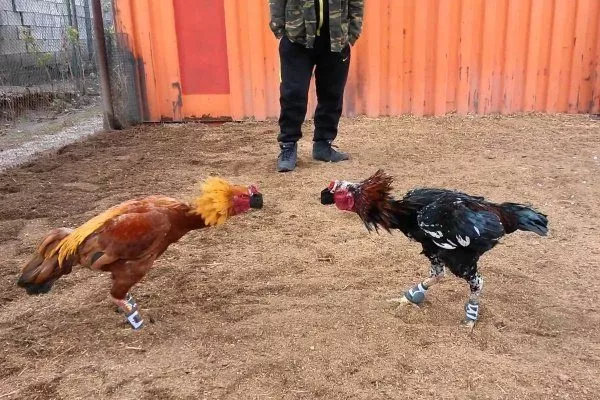
Fighting breeds of chickens and roosters are considered the most ancient of all known species, and their numbers have increased significantly over the years. These birds are believed to have originated in Central Asia, which is where the fashion for cockfighting originated.
General characteristics
Different breeds can differ from each other in a wide variety of characteristics:
- weight varies from 0.5 kg to 6-7 kg, however, fighting birds can in no way be frail or harmless;
- the body structure is very dense and strong;
- powerful beak;
- sharp claws;
- legs set wide apart, medium length;
- chest is muscular;
- character is evil, cocky and persistent.
| Breed | Rooster weight (kg) | Chicken weight (kg) | Egg production (pieces/year) | Peculiarities |
|---|---|---|---|---|
| Azil | 2-2.5 | 1.5-2 | 50-60 | Strong, with short, strong legs |
| Elephant chickens | up to 7 | up to 5.5 | up to 60 | Massive scaly legs |
| Yamato | not specified | not specified | not specified | Exclusively combat |
| Indian fighting cocks | up to 3 | up to 2.5 | up to 80 | Large size and powerful paws |
| Old English Game Hound | 3 | 2.5 | up to 50 | Medium size, strong muscles |
| Shamo | not specified | not specified | not specified | Very hardy |
| Belgian Game Chickens | up to 5.5 | up to 4 | not specified | A large, strong bird |
| Malayan fighting chickens | not specified | not specified | not specified | They grow up to 90 cm |
Many fighting chickens have a high meat content due to their dense build, and their meat is considered very tasty.
Breeds of fighting cocks
Many public figures oppose cockfighting. However, breeders defend themselves by claiming it helps the economy. Currently, there are a huge number of breeds used for purposes other than fighting.
During cockfights, birds are selected, ensuring that only the strongest individuals remain. These are the ones retained for subsequent breeding.
Roosters participating in fights are also divided into weight and age categories - young, transitional (up to two years) and old.
Azil
Considered one of the most famous breeds, the Azil breed originated in India—in ancient times, this was the name given to all fighting breeds.
Azil is divided into two types:
- Reza - birds whose weight varies from 2 to 3 kg;
- Kulangi, Madras and South Indian types are large chickens weighing up to 6 kg.
Breed characteristics:
- strong, with short, strong legs;
- medium height;
- the plumage is hard and fits tightly to the body;
- quarrelsome nature even in hens, not just in roosters;
- This individual has a short body, but powerful shoulders;
- short, high-raised wings;
- broad back;
- tail down;
- the stomach is underdeveloped.
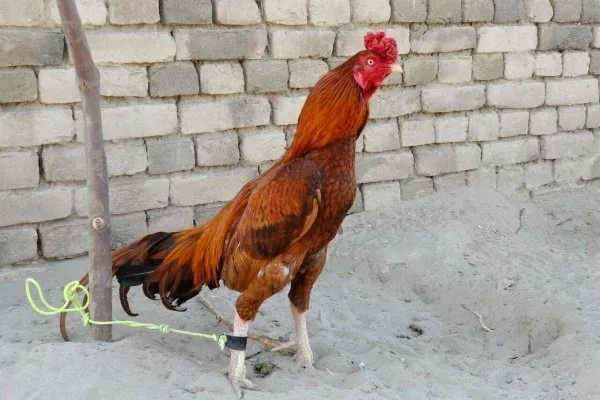
Azil is considered an excellent fighter, who, however, becomes attached to his owner.
It develops and reaches maturity by the second year of life. The most common color is variegated red. Other colors include gray, black and white, piebald, and others.
A rooster weighs 2 to 2.5 kg, while a hen weighs 1.5 to 2 kg. Their eggs weigh 40 g and are cream and light brown in color. Hens can lay up to 50-60 eggs per year, which isn't much. A rooster's ring size is 3, while a hen's is 4.
This breed of fighting cock requires constant competition, as without it, it withers. To maximize training effectiveness, these birds are kept under strict discipline.
- Start training at 8 months.
- Regular jogging to develop endurance.
- Training using somersaults and squats.
- Massage and gymnastics for the neck and head.
- Gradually increase the intensity of training.
Roosters and hens are fed a balanced diet. They require regular exercise, massage, neck and head exercises, and exercise (running, somersaults, and squats).
Azil is bred in Asia and Latin America, and in Russia they are found, for example, in Dagestan.
Elephant chickens
Considered a rather rare bird species native to Vietnam, it is virtually impossible to find outside the country. Another name for them is the Ga Dong Tao.
The name of the breed speaks of its place of origin, because “Ga” means chicken, and “Dong Tao” is a large Vietnamese village where cockfighting has always been practiced.
Breed characteristics:
- very loose, "raw" body type;
- large weight (roosters reach up to 7 kg, and hens – up to 5.5 kg);
- nut-shaped comb;
- color: wheaten, black, fawn;
- the neck and wings are short;
- the body is wide, the plumage is hard;
- The main feature is the massive scaly legs.
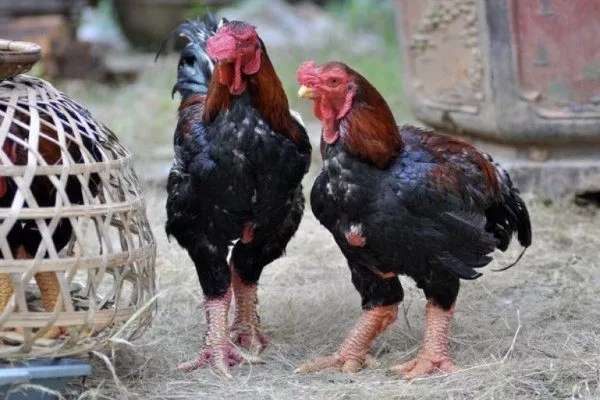
Previously, the breed was considered a fighting breed, but now it is more important for meat and ornamental purposes. Elephant hens were once bred specifically for cockfighting.
The unusual legs of this breed do not impede their mobility and are certainly not the result of any illness. An adult rooster's foot can be as wide around as a child's wrist. Elephant chickens have four toes, which are poorly developed.
Breeding and keeping such chickens in European countries is a very difficult task. Importing a specimen from Asia requires a breeder to overcome numerous challenges, including proper incubator conditions, disease protection, an insulated coop, and supplemental feed during the cold season.
Elephant chickens do not show aggression towards their own kind, but they are timid, distrustful and unwilling to make contact with people.
The birds require a large enclosure for maintenance, and to quickly gain weight, they need enhanced nutrition and constant access to greenery. Chickens themselves can seek out and eat worms.
Hens lay an average of 60 eggs per year. The shells are cream-colored.
Yamato
This breed originated in Japan. These birds are exclusively used for fighting and are not bred for other purposes.
Breed characteristics:
- Yamato are small, with an upright posture and a fleshy face;
- the plumage is sparse, as in almost all fighting breeds;
- the neck is slightly arched, of medium length;
- the chest is broad and well rounded;
- the wings are broad and short, the shoulder blades protrude and the bare bones of the wing can be seen;
- the beak is strong and curved;
- comb pod-shaped;
- pearl-colored eyes;
- legs can be either short or medium length;
- the ears are well developed;
- The color can be wheaten or wild.
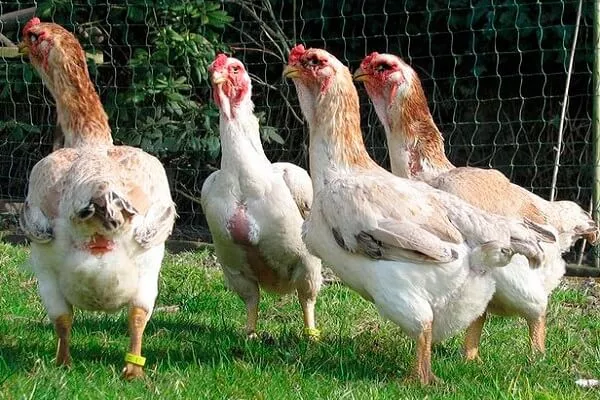
Breeding this breed can be challenging, as Yamatos are less fertile than other fighting breeds and have low egg production. They also have a difficult personality, which further complicates matters.
A small lawn is needed for walking, and they should be kept in a dry, frost-free room. To ensure meaty birds, they need sufficient animal and vegetable protein. The birds reach full maturity by two years of age, and this is when the distinctive characteristics of the breed can be observed.
Indian fighting cocks
A fairly ancient breed that was artificially bred by crossing several breeds (Malay and English breeds were used) specifically for fighting.
Breed characteristics:
- They have strong and powerful limbs, which they use successfully during combat;
- the body is large, but of medium height;
- feathers are hard and smooth;
- short wings;
- the head is medium in size, the earrings are poorly defined;
- strong beak;
- The tail unit is voluminous and short.
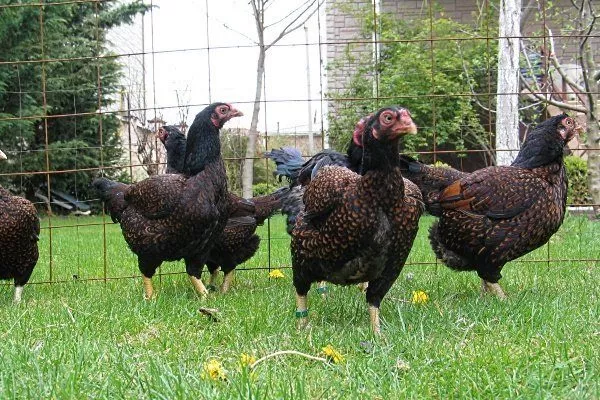
The Indian breed's coat is mostly yellow or white, but brown, black, and even blue are sometimes found. Their advantages include:
- large size and powerful paws;
- hens are good brooders;
- good fighters;
- used for crossbreeding;
- tasty meat.
Disadvantages:
- they take a long time to prepare for battle;
- painful;
- unstable;
- low egg production;
- restless and aggressive.
Due to the high incidence of disease among these birds, frequent inspections are necessary to prevent infection in the brood. Mites and lice are particularly dangerous for Indian Gamebirds.
It's also important to provide them with warm shelter to ensure high-quality egg production and prevent disease. The foundation for a new brood is selected in December.
Insemination is carried out using a rooster from the very last brood due to his high fertilization quality.
Indian fighting chickens aren't easy to find in Russia. They can be found in the village of Kurovo and in Tambov.
Old English Game Hound
As the name suggests, this breed's origins are considered to be England. These roosters have been bred there since the mid-nineteenth century.
There are two subspecies: dwarf (fighting) and Oxford (show). Dwarfs are preferred because their body type is more suited to fighting.
Breed characteristics:
- medium size, strong muscles;
- long neck;
- chest is broad;
- legs are long;
- the tail is large, slightly spread out and raised;
- wings are wide-spread with truncated feathers;
- Roosters have an upright posture and a quarrelsome character;
- egg production is low – up to 50 eggs;
- the weight of a chicken is up to 2.5 kg, the weight of a rooster is 3 kg;
- The color varies from wheat to black and bluish.
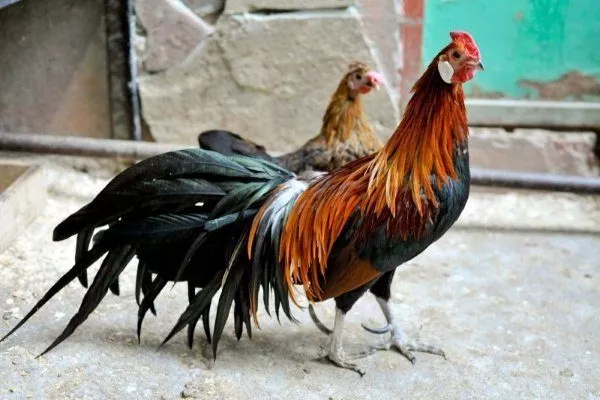
All Old English roosters are susceptible to mating, requiring them to be kept either with hens or separately. This breed is not known for its brittle bones or clumsiness.
They're not picky eaters, but they need plenty of space to develop their muscles and exercise. They can compete starting at one year of age, and with proper care, they can compete for several years.
Shamo
Translated from Japanese, "shamo" means "fighter." It is one of the most popular breeds of fighting cocks in the world. The breed itself is divided into three subspecies: large, medium, and dwarf. The only difference between them is weight.
Breed characteristics:
- muscular cheeks;
- long curved neck;
- wide head;
- a muscular chest that juts forward like bare bone;
- very hardy.
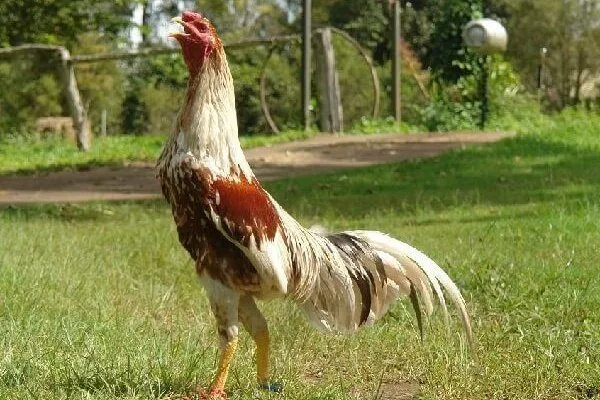
This species is highly resistant to disease and infection, but they still require special care. Shamos are fed a high-protein diet. They need a large, open area to roam. Crossbreeding is prohibited—mixing of bloodlines is not allowed.
There are only a few farmers in Russia who breed this breed.
Belgian Game Chickens
This breed originated in the 17th century and was developed in Belgium. They are characterized by a sturdy and hardy temperament, and the birds themselves are considered prolific. Young birds, compared to other difficult breeds, present little difficulty.
Breed characteristics:
- a large, strong bird;
- wide-set, long, bony legs with protruding ankles;
- poorly developed tail;
- the average weight of a hen is up to 4 kg, a rooster – up to 5.5 kg;
- wings are short, close-fitting;
- small ears;
- high-set eyes;
- The color is most often blue.
During the growing season, birds need to be fed protein-rich food, and for good muscle development, young birds need a large amount of grain.
Malayan fighting chickens
Their history began over three thousand years ago. Their homeland is, of course, the Malay Archipelago and India. The birds arrived in Europe in the 19th century.
Breed characteristics:
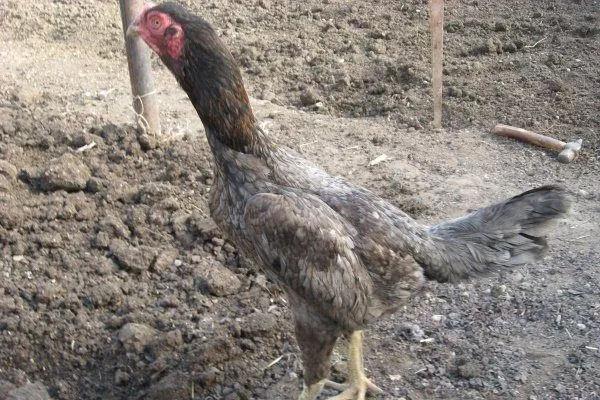
- grow up to 90 cm;
- the shoulders are set very high, the skin is translucent, the wings are convex;
- the skull is wide, the occipital line is sloping;
- eye color – from pearl to yellowish;
- the comb is wide, walnut-shaped;
- The plumage is sparse and stiff, and they fledge slowly.
The birds are considered to be insensitive and very hardy, but due to the incubation period, which begins very early, they must be protected from cold and dampness.
Breeding of the breed:
- the breeding stock is formed at the beginning of winter and is fed with feed mixture and grain mixture;
- additional lighting is required during incubation;
- in the first days, the chicks are kept in a place where the air temperature is not less than 33 degrees;
- The chicks are fed with special compound feed and given vitamins with water once a week;
- after a couple of weeks, they begin to give dandelion, lettuce leaves, and green onions in small quantities;
- It is important to carry out regular disinfection of the premises.
Larry
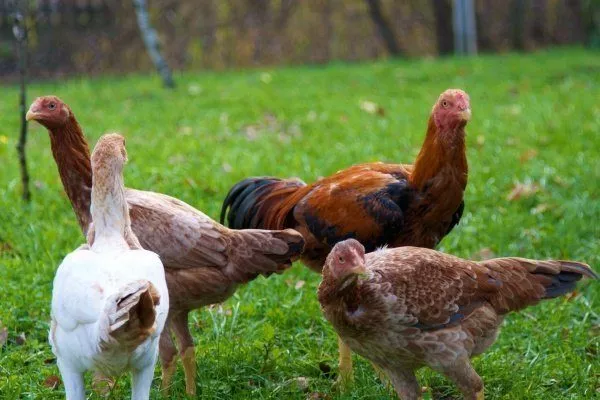
Lari fighting chickens originated in Afghanistan and Iran and are considered the finest fighting birds. Breeders also refer to this breed as the Iranian Azil due to its resemblance to that breed.
Larry's Features:
- a hen can weigh up to 1.5 kg, and a rooster – up to 2;
- the average number of eggs that hens lay is 80-100;
- the breed is not considered productive in farming, so their main purpose is to participate in fights;
- very warlike character;
- need regular training to avoid losing fighting form;
- the birds' heads are small and fit tightly to the body;
- the beak is tightly compressed, hooked;
- legs - strong and muscular, set wide apart;
- the coloring is dominated by white and variegated colors;
- the feathers are sparse, without down, and the tail tapers to a sharp cone;
- The neck is thick and long.
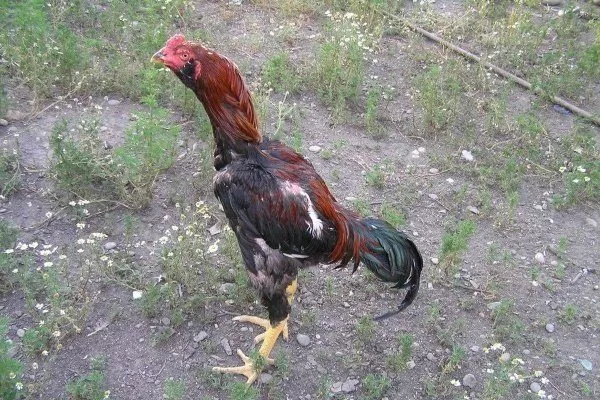
In winter, like all other birds, laris require constant warmth due to their sparse and sparse feather cover. If this is maintained, and there are no drafts, the hens will begin laying eggs.
Larrys reach maturity at two years of age, but can compete as early as 8 months.
They eat a varied diet, often in small portions. Strict hygiene standards must be observed in their habitat.
Kulangi
An ancient chicken breed developed in Central Asia. Black roosters are called Dakans.
Breed characteristics:
- small head, flattened on the sides;
- sharp, short and powerful beak;
- vertically positioned body;
- pink face;
- long muscular neck;
- a small, walnut-shaped comb, which is less developed in roosters than in hens;
- strong, wide-set legs of yellow color with black pigmentation;
- salmon color;
- aggressive character;
- easy to train;
- tolerates hot climates well.
English fighting cock
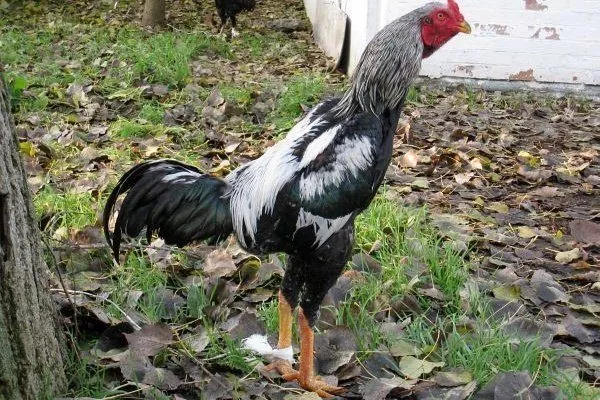
The English Gamecock originates from India, but the English have done so much to improve and modify this breed that they consider it exclusively their own.
Breed characteristics:
- graceful and proud posture;
- the head is long and flat (the chicken has a smaller head);
- eyes are large, with a mischievous look;
- red comb erect;
- the body protrudes forward, the neck and chest are raised upward;
- the back of the head is steep and wide;
- the wings are large and powerful, they fit tightly to the sides;
- the plumage is hard and shiny;
- the tail is long and beautifully curved;
- the thighs are muscular and abundantly covered with feathers;
- the toes are long and spread out, which gives the bird good support and stability;
- when walking, lifts legs high;
- the weight of a rooster is up to 3 kg, a hen – up to 2.5 kg;
- egg production – up to 80 eggs per year;
- The birds are meaty, but the meat is very tough.
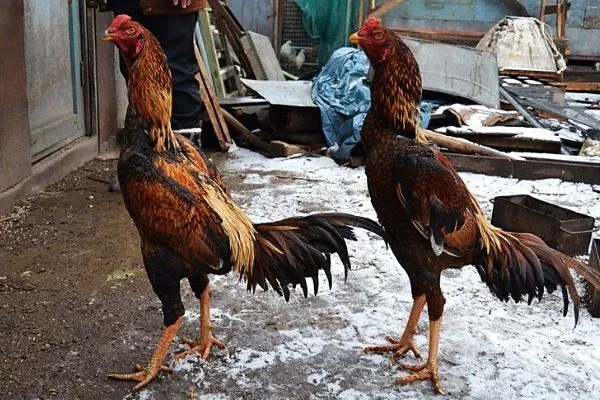
Hens are excellent brooders. During this period, they are calm and orderly. If all breeding conditions are met, the chicks fledge fairly quickly. They develop into young roosters within six months. If fed intensively, they can gain weight very quickly.
Moscow fighting chickens
The Moscow breed originated from the English breed. Various historical sources claim that Count A.G. Orlov brought the first roosters from England to Moscow.
In general, the Moscow breed has retained the characteristics of its parent, but under the influence of climatic and other conditions, it has changed to such an extent that it can be perceived as a separate breed.
Features of Moscow fighting chickens:
- small head size;
- broad shoulders and torso;
- This breed does not have earrings, or they do have them, but they are very small;
- long neck;
- the beak is short but powerful;
- long, strong legs;
- rooster weight – up to 6 kg, hen weight – up to 3 kg;
- egg production – up to 120 eggs per year;
- The color can be different, but most often it is red.
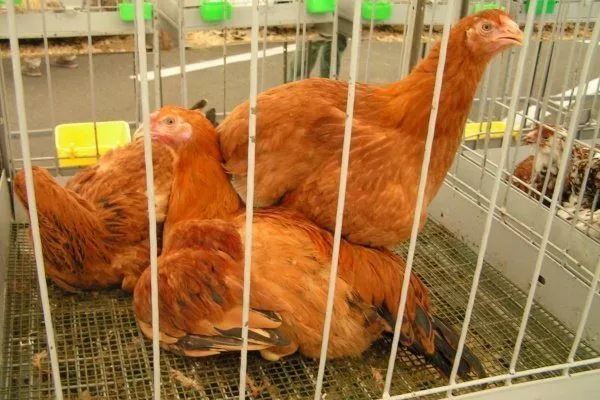
Lutticher
Their original history dates back to the 16th century. The Malayan pea-comb breed is considered their predecessor. The breed's final form emerged in Belgium in the 19th century. In Germany, the Lütticher was officially recognized in 1983.
Breed characteristics:
- large muscular chickens;
- strong claws;
- broad shoulders;
- straight posture;
- quarrelsome character;
- The weight of a rooster is up to 5 kg, a hen – up to 4 kg.
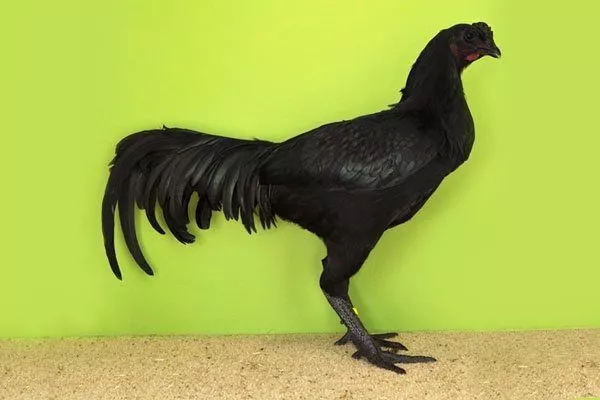
Tuzo
Like most fighting hens and roosters, the Tuzo also originated in Asia. Although Tuzos appeared in Japan as early as the 16th century, they only arrived in Europe after World War II.
Breed characteristics:
- very small birds with well-developed muscles;
- the body is oval, elongated;
- voluminous wings;
- the rooster weighs up to 1.2 kg, the hen weighs about 1 kg;
- color: black with a greenish tint;
- the head is small, the neck is long;
- tail braids are long and straight;
- long and powerful paws;
- hot-tempered and aggressive character;
- loud voice;
- able to learn easily;
- egg production – up to 60 eggs.
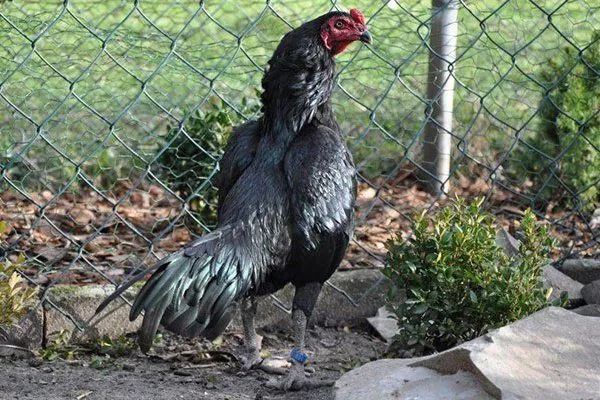
Sumatran chicken breed
Despite the fact that this breed is declared as a fighting one, it is more often used as a decorative one.
Breed characteristics:
- double and triple spurs are present in roosters;
- aggressive character;
- weight of roosters – up to 3 kg, hens – up to 2 kg;
- egg production – up to 50 eggs;
- very thermophilic;
- small head;
- the neck is covered with feathers;
- face and earrings are purple;
- strong beak, slightly curved towards the end;
- flat chest, sunken belly;
- powerful tail feathering in roosters;
- a small, walnut-shaped comb;
- color: black with green or blue highlights.
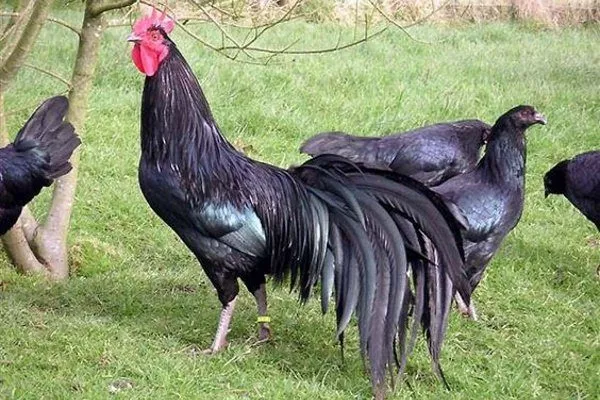
Belgian Dwarfs
This breed is exclusively for fighting and is not bred on farms. Country of origin: Germany.
Breed characteristics:
- straight posture;
- broad shoulders;
- gloomy expression;
- moderately sparse plumage;
- body of medium length;
- the head is wide and long;
- the chest is wide and not protruding forward;
- face purple-red;
- the abdomen is narrow, drawn in;
- wings of medium length;
- long, strong fingers;
- small, spread tail;
- The weight of a rooster is up to 1.2 kg, that of a hen is up to 1 kg.
Indian dwarf breed
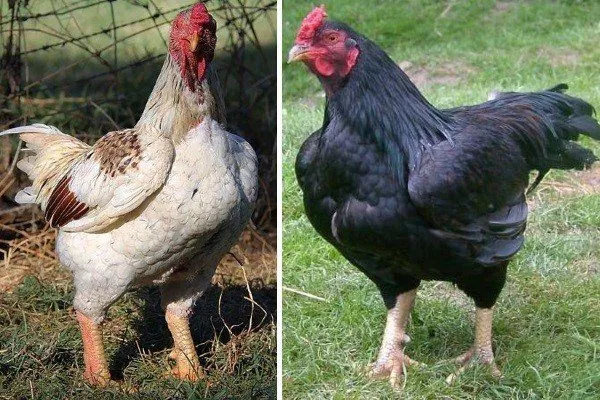
Despite its name, this breed's origins are believed to be 19th-century England. The original breeds are the large Indian game birds and the dwarf Malayan and English game birds. These birds are highly productive and egg-laying.
Breed characteristics:
- rooster weight – up to 4.5 kg, hen weight – 2-3 kg;
- color from white to pheasant-brown;
- the body is short and wide;
- short stature;
- broad chest;
- strong curved beak;
- the head is small, short and wide;
- Eye color from pearl to light yellow.
Conditions of detention
Fighting breeds adapt poorly to cold weather due to their sparse feathers—they cannot retain heat sufficiently. Therefore, breeders of fighting hens and roosters must ensure they are kept in warm rooms at all times.
It's also crucial to monitor the diet of fighting birds, as if the menu isn't planned correctly, the birds won't gain weight. The main rules are as follows:
- Grains are considered the basis of the diet. They should make up to 60% of the diet. Some grains should be ground before consumption, and others should be given sprouted.
- Dairy products are very beneficial for birds, providing their bodies with essential vitamins and minerals.
- The lack of grass and greenery in winter can be compensated for with grass meal. This is essential for birds, as grass should be part of their diet year-round.
Once upon a time, plump roosters were given black bread, and thin ones – wheat.
Rules for feeding chicks
To ensure the brood is healthy, it is necessary to follow several rules:
- If the chick eats poorly or rarely, it should be fed using a pipette filled with egg yolk and milk;
- the feeders are filled one third full;
- the place where the chickens eat should be well lit;
- birds should always have access to water - one vacuum drinker is enough for 50 chicks;
- 3 times a week the chicks are given a weak solution of potassium permanganate;
- Feeders should be washed periodically with soapy water, and food residues should be removed daily.
Fighting styles of fighting cocks
Fighting cocks are classified by their fighting style. Fighting styles can be divided into four types:
- Straight (sometimes also called riding). This name speaks for itself - the rooster attacks its opponent directly, striking with its beak at the head or chest.
- Messenger. It involves intercepting the opponent. The roosters attack from behind, attacking the opponent with blows to the back of the head without tiring them out.
- Circular. The rooster walks in a circle and strikes the opponent from behind.
- Thievish. It's not the most spectacular form of combat, but birds capable of such a fight are highly prized. This is because these roosters dodge blows and hide, defending their lives.
There are a great many varieties of fighting cocks, but they all share the same purpose: to fight in cockfights. This is a very popular hobby for a certain group of people. However, when taking on this hobby, it's important to understand all the principles of care and training; otherwise, the cock will not be profitable for its breeder.