
To successfully breed the Borkovskaya Barvistaya, it's important to understand the breed's characteristics and features. Although it's considered undemanding, there are some aspects worth considering. Read more about the breed, its maintenance, care, and breeding below.
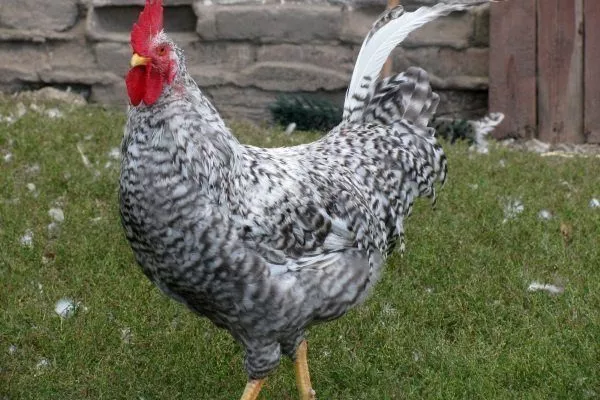
Rooster of the Borkovskaya Barvista breed
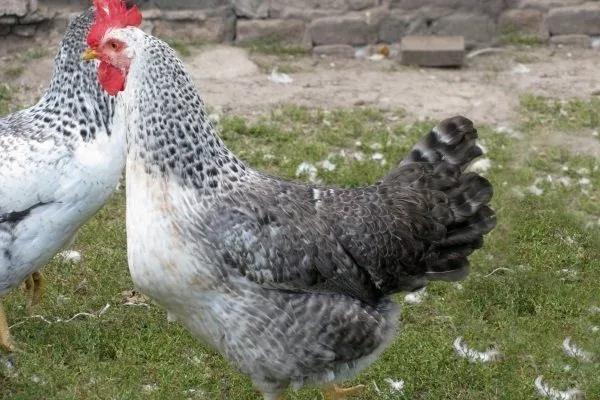
Chicken Borkovskaya Barvistaya
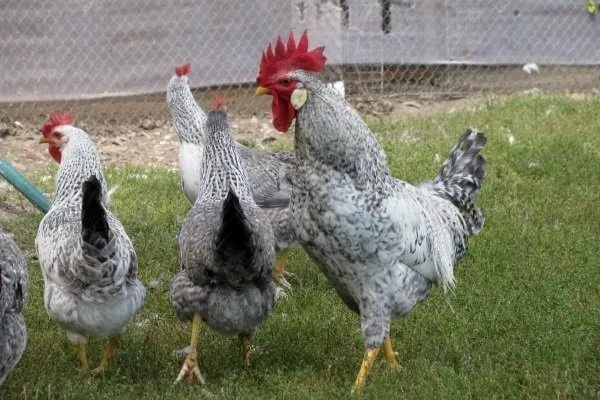
Adults of this breed on a walk
Historical information about the breed
This is a little-known new breed developed by Ukrainian breeders in 2005. They crossed egg-laying chickens—colored and white Leghorns, which are very popular among poultry farmers. These hens inherited their high egg production from their parents.
Another major advantage is that the bird is not a hybrid, meaning it can be bred independently without any problems. This does not mean the bird's positive characteristics are lost.
It got its name from the location of the poultry institute where it was developed—the village of Borki, near Kharkiv. The second name comes from the Ukrainian word "barva," which translates as "color."
Bird exterior and standards
Representatives of this breed are not particularly large. They are small hens, weighing 2.1 kg, while the average rooster weighs 2.7 kg.
The main breed standards include:
- Head. The bird is small, its face is red, and its eyes are orange.
- Beak. Slightly curved, greyish with a yellow tint.
- Crest. Bright red (a pinkish tint is acceptable) and leaf-shaped, males have up to 8 long teeth, while females have more modest ones.
- Body. Fine-boned, strong. The skin is yellowish. The back is straight. The rooster has a tucked-up belly and a rounded chest; layers have a well-developed belly.
- Wings. Small, tightly pressed to the body. The feathers are stiff and dense, with little down.
- Tail. Set high, long and lush, with dark spots visible on the tail feathers.
- PawsThe legs are of medium length and are yellow in colour and have no feathers.
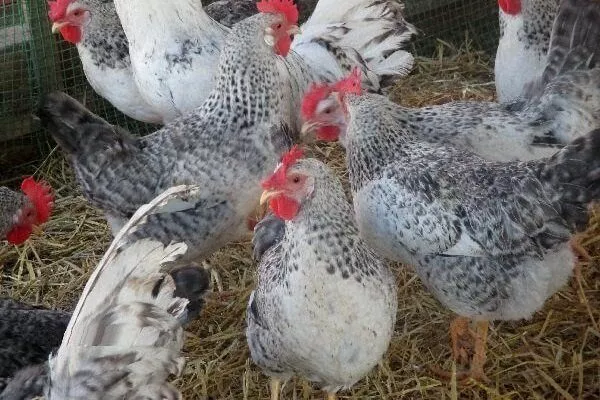
This breed is characterized by a cuckoo-like coloration. Males and females can be distinguished even at a young age. Females are typically darker in color, but the coloration becomes lighter toward the bottom. Many breeds have white belly feathers, but feathers with a light red tint are also acceptable. Barkovsky chickens can now be found with white, red, or red coloring.
To obtain offspring, the following are not used:
- roosters with a solid collar;
- with a small comb and earrings.
- ✓ Lack of a solid collar in roosters.
- ✓ The size of the comb and earrings must correspond to the breed standards.
Productive Features
Borkovsky Barvistye chickens are an egg-laying breed. They begin laying eggs early, at four months of age. They can produce up to 265 eggs per year. Peak egg production occurs at seven to eight months of age. This high production rate persists for two to two and a half years, after which it gradually begins to decline.
The weight of a single egg laid by a pullet does not exceed 53 g, and by the time the hens are a year old, it reaches 59 g. However, some owners claim that the egg can weigh up to 65 g. The egg shell is cream or light brown. The taste is excellent.
Despite their small live weight, their meat is nutritious and tasty. By two months of age, chicks weigh an average of 1.2 kg.
For an overview of this chicken breed, watch the video below:
Temperament and maternal instinct
Laying hens are known for their calm and friendly nature, but are quite timid. They quickly become accustomed to their owners and do not run away.
There are conflicting reports about bettas. Some owners claim they are peaceful. Others report aggressiveness, with conflicts often escalating into fights that can result in the death of the opponent. Aggressive individuals should be immediately sent to the soup.
Experts explain this discrepancy by the fact that the breed is relatively young and hasn't had time to mature. If the pugnacious roosters aren't used for breeding, the aggressiveness will soon fade away.
Borkovsky Barvisty chickens make excellent brood hens. They are often bred with eggs from other chicken breeds. The viability of brood hens hatched by a broody hen is up to 96%, while incubated eggs are lower (around 90%).
Pros and cons of the breed
The advantages of the breed include:
- high immunity;
- autosexing, that is, the ability to separate chicks by sex (based on down color) at day old;
- excellent maternal instinct;
- high hatchability of chicks;
- their high survival rate;
- good adaptability;
- frost resistance of poultry.
The following are some of the disadvantages:
- aggressiveness of roosters;
- average egg production compared to egg-laying crosses.
Bird keeping
Chickens of this breed are easy to care for. They quickly adapt to new conditions and tolerate frost well.
Chicken coop
The chicken coop should be dry, bright, and ventilated, as is the case with all poultry. However, perches can be placed not only at 0.7-0.8 m from the floor, but also much higher. The chickens' flight abilities are a major advantage in this case, as they save space in the coop. How to organize perches in a chicken coop is described. here.
For the winter, the chicken coop is insulated. The room temperature should be above freezing at all times. Insulating only the walls and floor is sufficient; heaters are not installed.
The most important requirement is the absence of drafts. While the birds can tolerate frost, a strong wind in the room will negatively impact their health. Deep bedding should be placed on the floor and changed regularly to prevent the development of infectious diseases.
Be sure to provide baths with ash or sand for bathing. This will prevent the chickens from suffering from external parasites.
Daylight hours are extended in the fall and winter using supplemental lighting. Optimal daylight hours should be 12-14 hours, allowing hens to lay eggs even during the colder months.
- ✓ The duration of daylight hours should be 12-14 hours.
- ✓ The temperature in the chicken coop should be above zero, without drafts.
How build a chicken coop with your own hands For all requirements, read our other article.
Walking area, feeders and waterers
When building an outdoor enclosure for them, keep in mind that they have strong wings and are capable of flight. Therefore, either build high fences that they cannot fly over, or cover the enclosure with netting.
This small bird loves to dig up food with its paws. Due to its small size, it can even manage to climb into special feeders designed to prevent entry. Therefore, it's best to purchase feeders with openings only for the bird's head.
How to make a bird feeder yourself is described in detail Here.
Seasonal molting and planned replacement of the herd
Molting begins in October and lasts for two months. When the feathers are replaced, the hens stop laying eggs.
Females lay eggs well for the first two years, but then their egg production gradually declines. Therefore, keeping them for more than four years is not advisable.
Feeding ration
The diet of adults and chicks differs, so feeding is organized differently.
Adults
The staple diet of adult birds is grain. It must provide the birds with all the essential nutrients. Experts recommend using grain mixtures made from wheat, oats, corn, and rye, or using commercially available compound feed, consisting of a mixture of grains. In the summer, some of the grain is replaced with greens—fresh grass. For large herds, it is easier to cut it with special grinder.
During the winter, laying hens especially need vitamins. Fresh vegetables are the primary source. If vegetables or grass are unavailable, vitamin supplements, available at specialty stores, can be added to the diet.
How to increase the egg production of laying hens in winter is described in this article.
To ensure strong shells, calcium is added to the diet. Birds should always have a container of shell rock, crushed shells, or chalk in the room. A plate of small stones should be placed nearby to support normal digestive function.
A clean water bowl should always be readily available. In hot weather, the need for fluids increases. You can make a suitable water bowl for chickens yourself. Read on to learn how. Here.
Chicks
To ensure the chicks gain weight quickly and grow well, they maintain a consistent feeding schedule. For the first seven days of life, they are fed every three hours—six times a day.
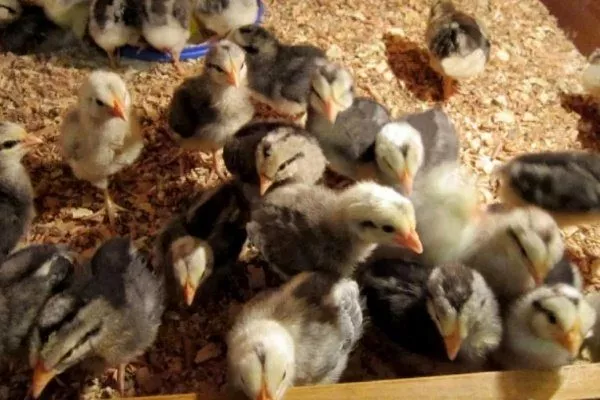
The food must be chopped and crumbly. The chick should swallow it easily. For the first three days, they are fed chopped boiled eggs, then cooked grains and greens are introduced. To enrich the food with vitamins, fish oil, cottage cheese, yogurt, and yeast are added. Vegetables and mixed feed are then introduced.
At one month, the young are offered "live" food—maggots and insects. From one and a half months, they are fed with the main herd. However, as their muscle mass continues to grow, they are given more protein, vitamins, and minerals.
Breeding chickens
Raising chickens is not difficult at all. A broody hen does her job perfectly, and you can also use incubator for hatching chicksHealthy hens that meet breed standards are selected for breeding. One rooster is left for every 10 hens.
Growing chickens are kept separately by sex, since roosters can be pugnacious and require more feed.
Common diseases
Birds of this breed have strong immunity and rarely get sick. The main factors that trigger infection are improper diet, care, and maintenance.
During the active egg-laying period, laying hens require increased amounts of minerals and vitamins. Otherwise, they develop vitamin deficiencies, which immediately impact their productivity and health.
Reviews from breeders and farmers
Reviews of Borkovskaya Barvistaya chickens are mostly positive and enthusiastic; breeders appreciate the birds' low maintenance and egg production.
Borkovskaya Barvistaya chickens are excellent egg layers, are easy to care for, and require little training or maintenance. They quickly adapt to any climate, with the exception of the Far North and regions with similar climates.