
Bantams are an exotic dwarf chicken breed comprising approximately 10 decorative subspecies. These birds are distinguished by their small size, striking appearance, and excellent production. This article describes the distinctive features of Bantams, their varieties, and the intricacies of their care and maintenance.
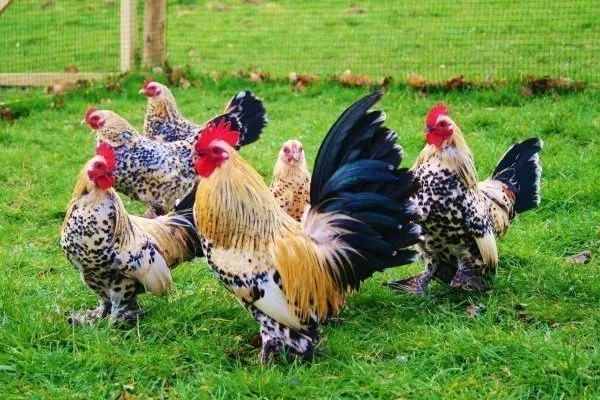
Origin of the breed
According to one theory, the birthplace of dwarf chickens is Japan. There is no reliable data on the details of Bantam chicken breeding or the breeds involved in the selection program. The first mention of layers and a description of the breed's characteristics dates back to 1645.
Other scientists claim that these chickens were brought to Japan from ancient India, where they emerged naturally. It is believed that the ancestors of these laying hens were wild chickens, from which Bantams inherited excellent immunity and a strong maternal instinct.
In India, miniature hens were kept in poultry yards for decorative purposes, while the roosters demonstrated excellent fighting qualities. After some time, the hens made their way to Europe, where they quickly gained popularity for their high productivity. Ornamental birds were brought to Russia in 1774.
Description of the breed and characteristic features of the Bantam
Bantams are one of the oldest and most beautiful breeds in the world. In Russia, they can be found in many backyard farms, as they not only lay eggs well but also make a real eye-catcher in the poultry house. These chickens are not suitable for northern regions, as they do not tolerate low temperatures well. In winter, their legs, comb, and wattles can freeze.
Bantam hens have strong maternal instincts, making them excellent brooders and caring mothers. Many poultry farmers use Bantam hens to incubate eggs from other chicken breeds that are less capable of brooding. If a broody hen has ample food and water, she can brood chicks continuously for up to three months.
Appearance
All purebred birds are characterized by an unusual body position—it's almost vertical, with the roosters' bodies being more elevated. The birds' skin is light yellow, although there are subspecies with a gray-blue tint. Some Bantam varieties have lush feathering on their legs, giving the bird a particularly decorative appearance. Hens of this breed are typically light in weight—400 to 700 grams, while roosters can weigh up to 1 kg.
The small head is crowned with a rose- or leaf-shaped crimson comb. The wattles are small, rounded, and pink or red. Hens have short legs, while roosters have slightly longer ones. The tail and flight feathers are long, creating the impression that the wings practically touch the ground. The body is densely feathered.
The beak is small, slightly curved, and yellow. Bantams' eyes are predominantly reddish-orange, but can also be dark brown. The tail is set high, with long, medium, and short tails.
The following is considered a breed defect:
- tall;
- weight more than 1 kg;
- loosely fitting body plumage;
- tapered or under-feathered tail;
- poorly defined crest.
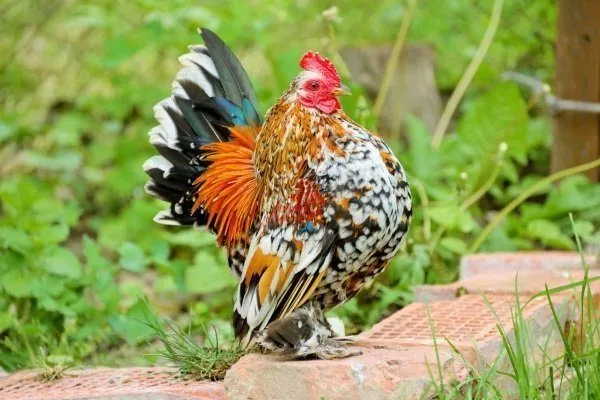
Productivity
Hens of this breed are early laying hens, starting to lay eggs at five months. They produce approximately 150 eggs per year, each weighing 43-45 g. With good lighting in the coop, you can produce eggs even in winter. Some poultry farmers raise Bantams for their lean meat, praising the excellent taste and particularly tender texture of the finished product.
Behavior and characteristics
Laying hens are known for their inquisitiveness and agility. They get along fairly well with other chicken breeds in a backyard and are friendly to their owners. Bantams have a strong brooding instinct and are excellent caregivers. Despite their small size, they will not hesitate to defend their chicks from any enemy.
Bantams' maternal instincts are so strong that, upon seeing hatched chicks in a neighboring nest, a young hen may abandon her own eggs and rush to care for the other chicks. To avoid this, the hatched chicks should be immediately moved to a remote part of the coop.
Roosters are excellent family men, caring for their hens and protecting their offspring from other members of the poultry yard. Conflicts may arise between two roosters when they struggle for dominance, but these birds generally do not attack each other. The only exception may be males of the fighting varieties, which are particularly aggressive and belligerent.
Varieties of the breed
Bantam subspecies vary in size, temperament, color, and even productivity. In Europe, the most popular are the Dutch, Danish, and Hamburg chickens, while in Russia, the Calico and Walnut varieties are popular. Some varieties arose naturally, while others are smaller versions of larger, well-established breeds, created through selective breeding.
| Name | Weight of an adult (g) | Egg production (pieces/year) | Color |
|---|---|---|---|
| Bantam of Padua | 700-1000 | 150 | Golden with black flecks, white with silver flecks |
| Nankeen bantam | 400-700 | 150 | Golden to chocolate, lighter on the wings and breast |
| Pekinese bantam | 500-800 | 150 | Variety of colors: solid and variegated |
| Bantam calico | 400-700 | 150 | Brown or red with white spots |
| Altai Bantam | 400-700 | 150 | Brown with patches of grey and black feathers |
| Dutch Bantam | 400-700 | 150 | Black plumage with a sheen, white crest |
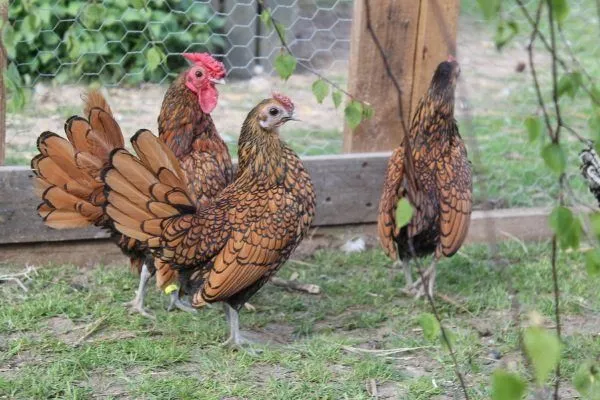
| Bantam Seabright | 400-700 | 150 | Sand, gray, silver-milk with black edging |
| Yokohama Bantam Phoenix | 400-700 | 150 | Yellow-brown in hens, black breast in roosters |
| Malaysian Serama | 300-600 | 60 | Variety of colors |
| Bantam Shabo Japanese | 400-700 | 150 | Plain or variegated plumage |
Bantam of Padua
Chickens of this variety are considered the largest among the Bantam chickens. A distinctive feature of this subspecies is its color, which is available in two variations:
- golden background with black inclusions;
- white background with silver inclusions.
The second option is more popular, as the pattern of spots has an attractive crescent shape.
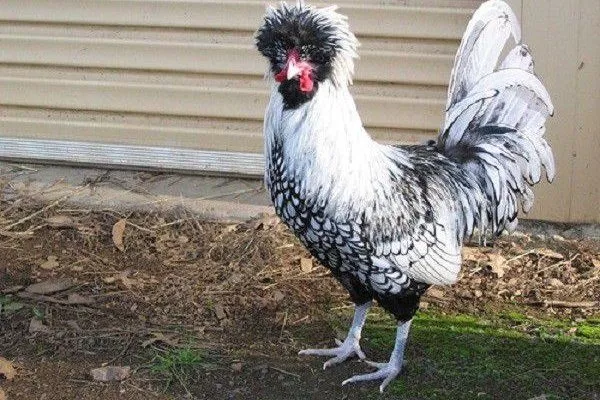
Nankeen bantam
The Nankeen subspecies is considered one of the oldest and is particularly common in Asian countries. The back feathers of the hens range from golden to chocolate, with the wingtips and breast feathers a few shades lighter. The tail of Nankeen bantams is bushy and dark brown. Roosters have black breast feathers. Their legs are grayish and featherless.
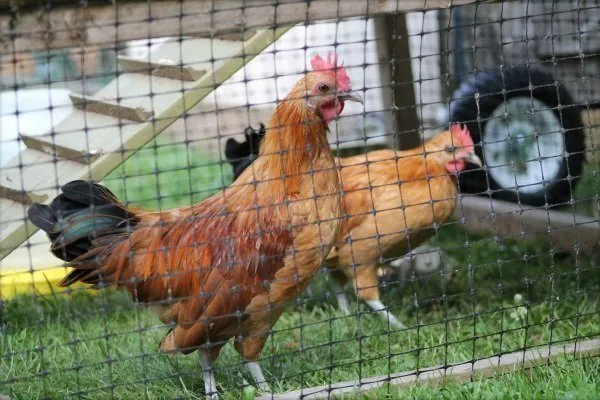
Pekinese bantam
In some sources, the Peking Benthams are called Cochin Benthams, as they are a smaller copy Cochin chickensDistinguishing features of this subspecies include shaggy legs, a rounded tail, and soft, dense plumage. Currently, Peking Bantams come in a wide variety of colors, including solid colors (white, black, red) and variegated specimens.
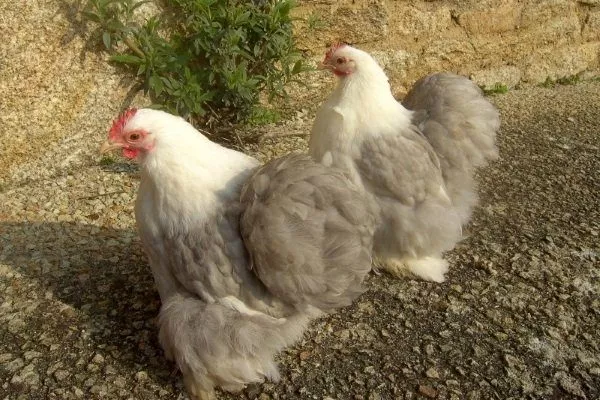
Bantam calico
Calico chickens can be found in many private poultry yards across Russia. Individuals of this subspecies are characterized by a massive pinkish comb and mottled plumage. The chickens' base color is brown or red, with white spots of varying sizes scattered across it.
Roosters are much brighter in color. Their chest and tail are black with a green tint, and their backs are a bright red. Their legs are short, yellow, and mostly featherless.
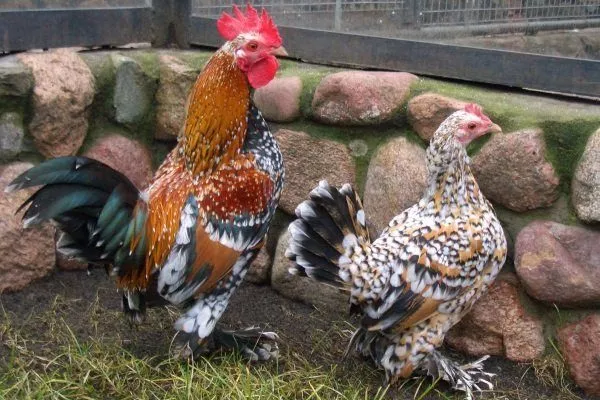
Altai Bantam
These birds are distinguished by their robust build, broad, prominent chest, and a lush crest on the back of their heads that completely conceals their comb. The breed was developed in Barnaul in the late 20th century. The plumage of Altai Bantams on their bodies and legs is dense and thick. These chickens are adapted to cold climates, but are kept in heated coops during the winter.
The most common coloration is brown with gray and black feathers. Roosters have tail feathers that are black with a greenish tint, white, and red. Purebred Altai Bantams can also be calico, hazel, piebald, and fawn.
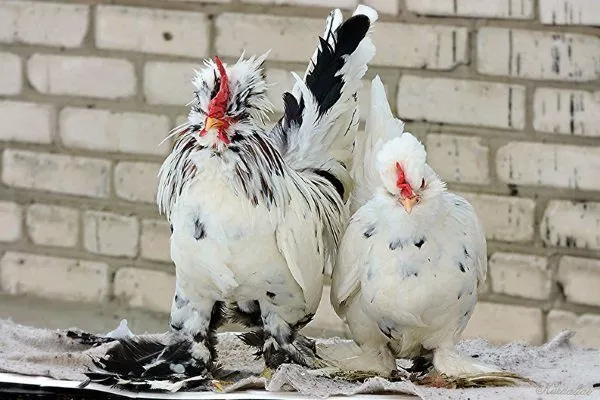
Dutch Bantam
The Dutch Bantam is considered the most decorative variety of dwarf chicken. These stunning birds have iridescent black plumage and a lush white crest on their heads. Their legs and beak are black with a bluish tint, and their comb is bright red. This subspecies is only found among hobbyists and collectors, as keeping these hens is not easy.
The snow-white crest constantly gets dirty while feeding, which not only spoils the bird's appearance but also harms its health. Food debris and dirt get into the eyes, causing inflammation. Furthermore, roosters often get into fights, and other birds rip out feathers from their heads, causing serious injuries to the white-crested opponent.
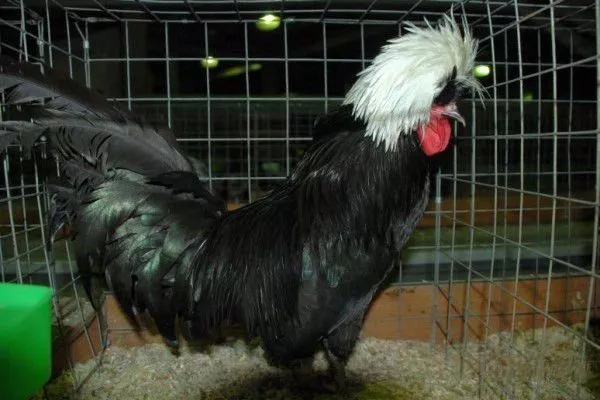
Bantam Seabright
This subspecies is distinguished by its distinctive coloration—each feather is edged in black. The most common colors are sandy, gray, and silvery-milk. The Sebright Bantam is an endangered species, so finding a purebred hen is quite difficult. The hens are infertile and are poor brood hens (which is completely unusual for this breed).
The survival rate among chicks is very low. The young have weak immune systems, and only a few of the entire brood survive to adulthood. Sebright roosters are belligerent and aggressive, making them difficult to keep in a communal coop or backyard.
Yokohama Bantam Phoenix
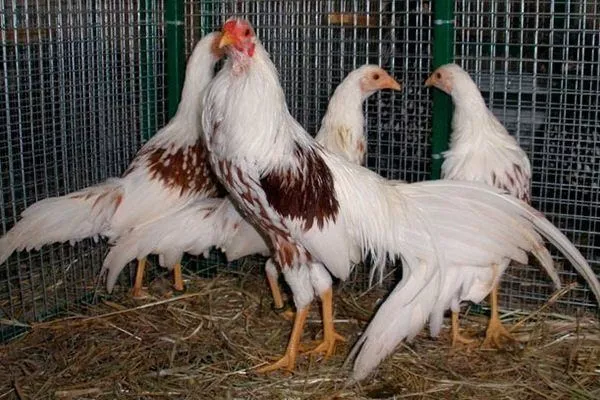
This subspecies was artificially bred in Japan in the 18th century. The hens are a uniform yellow-brown color. The males have a black chest, red-gold plumage on the neck and back, and a luxurious black tail with a green sheen. The tail's tail can reach 7 meters in length. To preserve its decorative appearance, it is curled on a special holder.
Phoenixes are usually hand-held and kept in special cages. It's virtually impossible to find such a rooster in a poultry yard; they are usually kept commercially by collectors. Remarkably, breeders in other countries have failed to produce a similar breed to the Yokohama bird.
Malaysian Serama
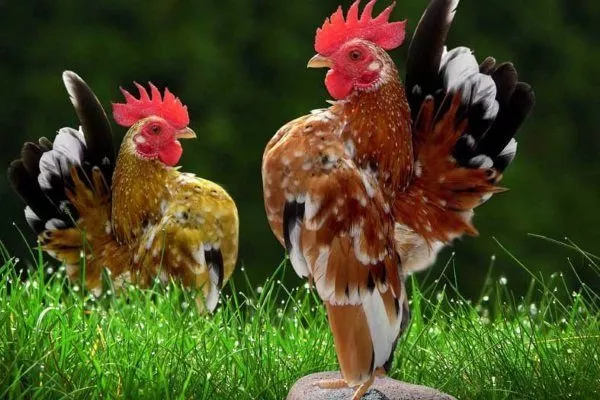
The Serama is a purely ornamental breed, recently developed in Malaysia. An adult hen weighs just 300g, while a rooster weighs 600g. The bird's body is positioned almost vertically, with the tail raised at a 90-degree angle and the neck arched. Malaysian Seramas have a light plumage, and their coloring can vary.
The breed's legs are wide-set, short, and yellow. Their wings are wide and long. Egg-laying productivity is low: a hen can produce up to 60 eggs per year, weighing 25-30 g. These birds are fussy and prone to illness.
Bantam Shabo Japanese
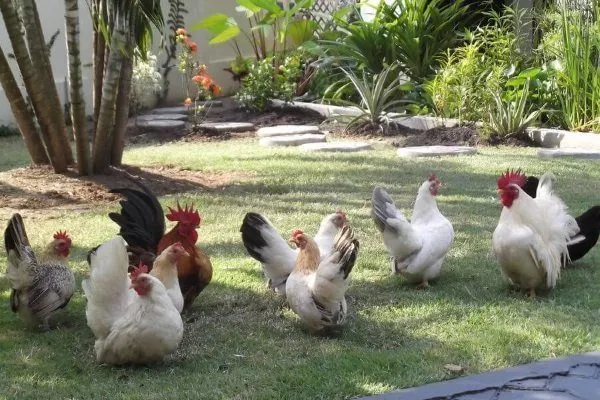
The Shabo is one of the central branches of the breed, whose ancestors can still be found in the wild. Their legs are too short to allow them to move quickly. Their wings are wide and long, reaching the ground. Their beak is yellow and almost straight.
Japanese Bantams have no specific color pattern; members of the subspecies can have either solid or variegated plumage. Their feathers are straight and long, but the curly and silky Shabos have been bred for show purposes.
Maintenance and care
Unlike most ornamental breeds, Bantams don't require any special housing conditions or feeding regimens. In the summer, the birds are typically kept in a spacious aviary, the size of which is determined by the number of birds on the farm. For miniature Bantams, the run area should be 5-6 square meters per 10 hens. If you plan to house them with larger breeds of chicken, the aviary should be increased to 10 square meters per 10 birds.
Laying hens of this breed are fairly good flyers, so experienced poultry farmers recommend installing protective netting over the aviary. The yard should be equipped with waterers and feeders located around the perimeter. Nests are installed under a canopy, and perches are also built there.
We recommend that you read the articles on self-production drinking bowls, and also feedersfor chickens.
It's advisable to dig up part of the enclosure and sow it with cereals: millet, wheat, and oats. It's also necessary to create a place for ash baths. To do this, dig a 30x30 cm hole in the ground and fill it with a mixture of sun-warmed sand, clay, and ash. An ash bath can also be made using a wide basin or box.
By "bathing" in a sand-ash mixture, chickens can clean excess oil and dirt from their feathers, maintaining proper hygiene. Ash is also an excellent preventative against various ectoparasites, which carry many dangerous diseases.
Particular attention should be paid to winter care for bantams. These miniature chickens do not tolerate low temperatures well, so they are moved to a heated coop during the winter. The optimal temperature for laying hens is 14-16 degrees Celsius. It's also important to ensure adequate ventilation in the room, as high humidity promotes the development of colds and fungal infections.
- ✓ The temperature in the chicken coop should not fall below 14°C.
- ✓ Air humidity should be maintained at 60-70%.
The floor of the chicken coop should be covered with bedding: straw, peat, or sawdust. During winter, the bedding layer should be approximately 20 cm thick. For breeds with feathered legs, it should be loosened weekly to prevent the birds from getting dirty with their droppings.
Breeding and feeding
Bantams are possible breed using an incubatorOr using a broody hen. A young hen can hatch chicks as early as six months of age. Due to her small size, a single bantam hen can hatch only 6-7 chicks at a time. However, she can do this three times over the summer, increasing the brood to 20 chicks.
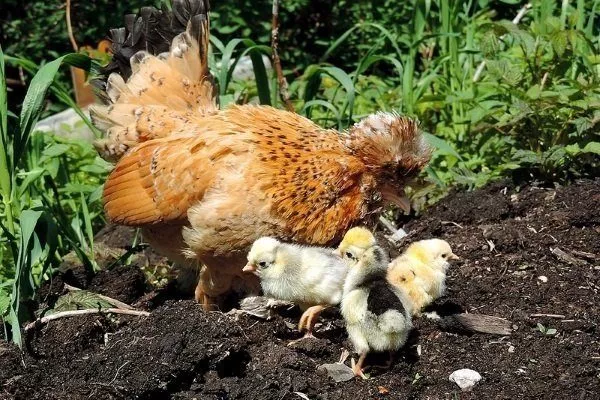
No more than seven eggs should be left in a clutch, as not all of them will receive sufficient heat due to the bantam's small size. This can result in hatching unviable and sickly chicks.
If you plan to use a laying hen to hatch large breed chickens, the number of eggs should not exceed 5. Natural incubation does not require any intervention, as the hen's strong maternal instinct will prevent her from leaving the eggs for long.
Bantams aren't picky eaters, so they can be fed like other chickens in the backyard. Feedings should be no more than three times a day. The foundation of an adult chicken's diet is high-quality whole grains. Their diet should also include vegetable scraps, succulent grass, stale black bread, cottage cheese, whey, and fish scraps.
In winter, green grass is replaced with wet mash and potatoes. Mineral supplements such as shell rock are suitable. bone and meat and bone mealTable salt is essential in their daily diet. Bantams can also be fed commercial foods that contain all the necessary micronutrients and vitamins for harmonious development.
Caring for chickens
Bantam chicks hatch at 21 days. The brood consists of approximately equal numbers of cockerels and hens, all of whom have good immunity and appetites from birth. The chicks are placed in a small box with a basking lamp placed above them at a height of approximately 25-30 cm. The temperature around the chicks should be maintained at 33-35 degrees Celsius during the first week of life.
- ✓ Activity and rapid weight gain in the first days of life.
- ✓ Bright orange color of the beak and paws as an indicator of good health.
For the first 3-4 days, the brood should be fed at least 7 times a day. The best food during this period is chopped boiled eggs and low-fat cottage cheese. Gradually, the number of feedings is reduced and new foods are introduced: steamed millet, corn grits, and finely chopped greens. The chicks gain weight and feather quickly. The survival rate of the young is approximately 90%.
Advantages and disadvantages
Bantams are a remarkable breed that combines striking appearance with excellent productivity. The main advantages of these miniature layers include:
- developed maternal instinct;
- good immunity;
- diversity of subspecies;
- friendly nature of chickens;
- small size;
- ease of breeding;
- undemanding to maintenance conditions;
- low feed consumption;
- good taste of eggs and meat;
- the roosters have a loud voice.
The disadvantages include:
- The high cost of a pair of Bantams. Many beginning poultry farmers are reluctant to purchase them, believing the price to be too high given the birds' small size. However, the aforementioned advantages have played a role, and the breed has remained popular for many decades.
Watch a video review of the Bantam breed presented by the breeder:
Diseases and treatment
Bantams have strong immune systems and rarely get sick. Most often, problems arise from poor care, improper husbandry practices, or contact with sick animals. Regular inspections are essential to identify any warning signs and isolate the individual before the disease spreads to the entire flock.
You can suspect a disease in a laying hen by noticing:
- ruffled feathers;
- lack or decrease of appetite;
- lethargy;
- bowel movement disorder;
- decrease in egg production;
- lameness, gait disturbance.
If these symptoms appear, your bantam should be immediately removed to a cage away from other birds in your yard. The best option is to take your bird to a veterinarian. If this isn't possible, you can try to help your bird yourself by reviewing the information in the table below.
Common Bantam Diseases and Treatments
| Name of the disease | Main symptoms | Treatment |
| Colibacillosis | Lethargy, fever, thirst, wheezing. | Antibacterial drugs are used: Synthomycin, Biomycin, Furazolidone, Furazidin. |
| Pasteurellosis | High temperature, lethargy, ruffled feathers, diarrhea, blue comb. | At the first signs of the disease, an aqueous solution of 2% Tetracycline or a solution of Norsulfazole is added to the feed. |
| Salmonellosis | Lacrimation, conjunctivitis, lameness, difficulty breathing. | Antibiotics used: Chloramphenicol, Sulfanilamide. |
| Dropsy of the abdominal cavity | Enlargement and change in shape of the abdomen, difficulty breathing, decreased activity. | The disease is treatable only in its early stages. The veterinarian drains excess fluid from the abdominal cavity and prescribes diuretics. |
| Newcastle disease | Mucus discharge from the beak, refusal to eat, difficulty breathing, depressed consciousness. | There is no cure. Infected birds and all birds in contact with them should be destroyed. |
| Gastroenteritis | Diarrhea, lethargy, loss of appetite. | Normalization of diet, introduction of fermented milk products. In severe cases, the doctor may prescribe treating chickens with antibiotics. |
Reviews from poultry farmers
Bantams are the smallest of the dwarf chicken breeds in the world. They are distinguished by their striking appearance, disease resistance, and good productivity. They are easy to breed, as the hens are responsible incubators and care for the chicks well.