
Barnevelder chickens are a popular, yet very rare, meat and egg breed in Russia. These birds are beautiful, easy-to-care-for, and versatile.
History of the breed's origin
Originating in Holland, eggs with dark brown shells were in high demand in the 19th century. This prompted selective breeding efforts to create a chicken breed capable of producing eggs of this unusual color. Unfortunately, scientists were unable to create a chicken that met all their desires.
Barnevelder hens still lay red, not brown, eggs. Despite this, the birds have developed remarkable double-edged feathers, which has led to their popularity and fame.
To create the breed, various species were crossed: Gate, Rhode Island, Cochins and Indian fighting dogs. At the beginning of the 20th century, the Barnevelder breed was finally recognized by the association. It was also during this time that it received its main standard.
Description and distinctive features of Barnevelder chickens
This breed of chicken is significantly different from other birds. They are unique in appearance, temperament, and feather color, are high egg-layers, and possess a strong maternal instinct.
| Name | Weight of an adult | Egg production per year | Color of eggs |
|---|---|---|---|
| Barnevelder | 3-3.5 kg (rooster), 2.5-2.7 kg (hen) | 180 | Red |
| Dwarf Barnevelder | up to 1 kg | not specified | not specified |
Exterior
Based on the Barnevelder standards, the rooster has the following characteristics:
- the body is massive and strong;
- the length is one third greater than the depth;
- the neck is medium in size and has plenty of feathers;
- the chest is set low, with a special curve;
- the back is of medium size, wide, slightly raised near the tail;
- wings are close to the body;
- tail with many feathers, not long;
- the tummy is voluminous;
- the head is not set high;
- there are no feathers on the face;
- the comb is small and sparsely feathered;
- the beard is round, the ears are small and elongated;
- the beak is yellow, large but not long;
- orange-tinted eyes;
- large hips;
- paws of medium length;
- weight 3-3.5 kg.
Chicken characteristics:
- low landing, large body;
- the chest is wide;
- the back is of medium size, slightly raised near the tail;
- the tail is large;
- weight – 2.5-2.7 kg.
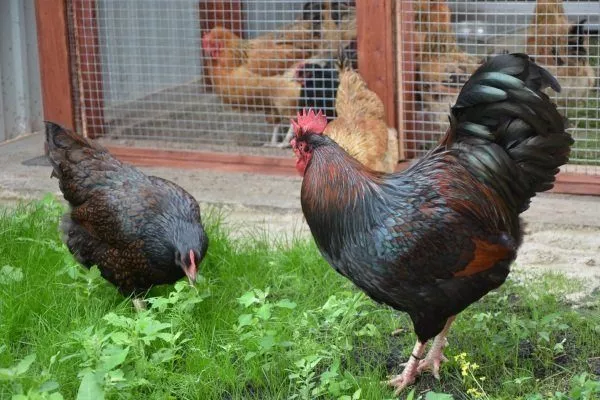
Barnevelder red black-edged
Thanks to selective breeding, dwarf varieties of this breed have also emerged; their weight often does not exceed 1 kg.
Color
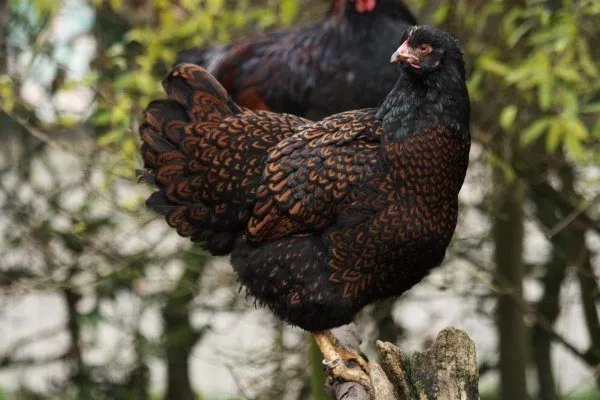
Chickens can be multicolored. The reddish-brown color is often edged with black. Barnevelders have black dots on their necks, and their tails are iridescent black. Their wings are brown and black inside. Red-colored birds have black edges on their feathers.
Lavender-grey edging on brown feathers is a sign of mutation.
In America, only birds with a reddish-brown coloring are considered pure Barnevelders. In England, red-edged feathers are preferred. In many countries, the cuckoo-like coloring is considered non-standard, and such birds are not considered purebred.
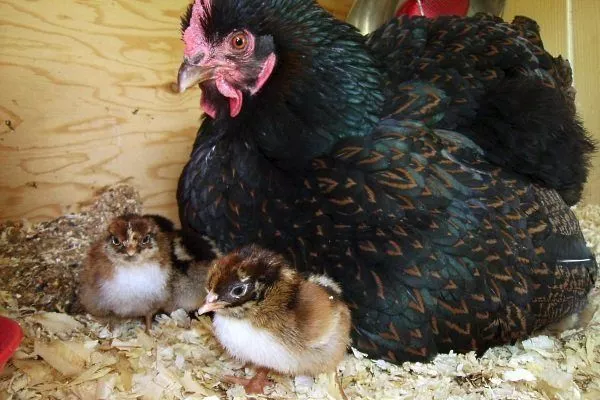
Barnevelders can only be silver if they are dwarf. Young are born light or dark brown, black, or yellow with a brown back.
Character
Barnevelder chickens get along well with other birds, animals, and people. They don't fight, bully each other, or attack people. They remember those who bully them, as well as anyone who treats them kindly. They recognize their owner from 10 meters away.
Chickens don't need a male to start laying eggs. But the eggs won't hatch.
Egg production
Barnevelders are very productive, starting to lay eggs at seven months of age and producing approximately 180 eggs per year, each weighing 65 g. They continue laying even with the onset of winter. Their shells are reddish in color. The dwarf variety lays eggs weighing approximately 40 g. The only time they don't lay eggs is during the molting season (approximately 60 days). Egg production declines at three years of age.
The instinct of incubation
This trait is well-developed in this breed; they not only care for their young but can also hatch eggs from other birds. Approximately 95% of eggs survive, and young hens are born.
Unacceptable vices
Barnevelder chicken breeding is done with great care, as poultry farmers strive to preserve the purebred appearance and character of the birds.
Invalid characteristics:
- narrow, very tall or very short body;
- small back;
- pointed chest;
- small belly;
- short tail.
- ✓ Optimal stocking density: no more than 3 chickens per 1 sq. m to prevent stress and disease.
- ✓ Temperature conditions in the chicken coop: +18 to +25 degrees Celsius to maintain high egg production.
Conditions of detention
Comfortable conditions for any breed of bird require the creation of a high-quality, warm room and a cozy yard for walking.
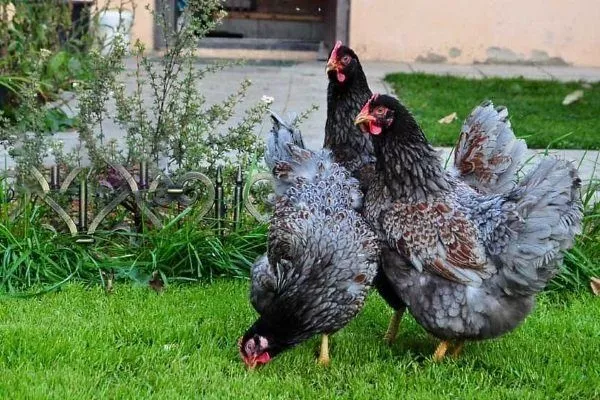
Barnevelder red blue-edged in farms
Chicken coop requirements
Cage breeding is contraindicated for these birds. They are very active and desperately need a large area to roam. If they are restricted from fresh air, they can develop joint pain in their legs.
The chicken coop is built large enough to accommodate approximately five hens per square meter, or even better, three. Winds and drafts also negatively impact the birds' health; the Barnevelder coop is enclosed on the north side with an additional structure.
We recommend reading the article about How to build a chicken coop yourself.
Small ventilation holes should be left in place to prevent stagnant air in the coop. Allowing air to flow freely will help maintain normal temperature and humidity. This will not only improve the health of your Barnevelder hens but also increase their productivity, which is crucial when raising chickens.
In addition to adequate ventilation, the room should have windows. For hens to lay eggs, 17 hours of daylight is essential. In summer, an open door and windows are sufficient, but in winter, special artificial lighting will need to be installed.
Flooding in the chicken coop is unacceptable, so a columnar foundation should be built. This will prevent heavy rains and melted snow from entering the room, and the floor will always be dry. It's best to seal the floor with clay and then add sawdust or sand on top. This will help retain heat longer.
The chicken coop should always be kept clean, so it's important to change the bedding regularly. Each bird consumes about 15 kg of hay per year. The walls in the coop can be made of cinder block, brick, or wood. Wood is best, as this material doesn't require additional insulation.
Barnevelder chickens thrive in temperatures ranging from 18 to 25 degrees Celsius. Perches should be placed 1 meter above the floor, 0.3 meters apart, and 50 mm in diameter. Nests are lined with straw, sawdust, down, etc. Hens lay eggs well using these materials.
You can protect birds from fleas using baths with river sand and ash. The mixture is placed in containers approximately 0.5 m in size. The birdhouse should have feeders and waterers. They should be equipped so that the birds cannot scatter food or climb into them. Containers with chalk and shells are placed separately. How to make a bird feeder is described in here.
If you are also interested in how to make a chicken waterer yourself, you can read this article.
Yard for walking
The yard should be twice the size of the chicken coop. It should be enclosed with mesh at least 2 meters high. The yard should be located far from the garden, otherwise the chickens will dig it up and eat your future harvest.
Particular attention should be paid to sun and rain shelters; it's best to cover the yard with them. This will protect the chickens from the bright sun and from getting wet in heavy rain, thereby preventing their health from deteriorating.
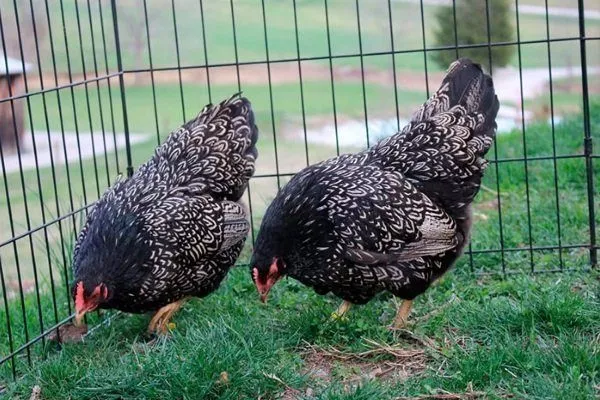
Barnevelder silver black-edged on the range
Molting
Molting in chickens is an annual occurrence. It most often occurs in the fall, during colder weather. Molting is a normal process, as old feathers fall off and are replaced by new ones, and is nothing to be alarmed about. Barnevelder chickens experience molting particularly well in early fall.
Sometimes the process is prolonged, and the birds lose their first feathers at the beginning of winter. At this point, the hens need to be closely monitored, as such sudden hypothermia can affect their health. The molting period lasts approximately 60-80 days. During this period, the hens do not lay eggs.
How do they tolerate the cold?
Chickens aren't particularly afraid of frost; they can even be let outside in winter, as long as the outside temperature isn't too low. The temperature in the chicken room shouldn't drop below 5 degrees Celsius.
What to feed adult Barnevelder chickens?
Another advantage of the breed is that the birds are not picky about their diet. In many countries, the birds are fed compound feed, but in our country they can enjoy grain, cottage cheese and corn flour.
At least 60% of the diet should consist of grain crops such as oats, millet, corn, rye, wheat and buckwheat.
Chickens should be fed twice a day: in the morning (7:00-8:00 AM) and in the evening (5:00-6:00 PM). The daily food intake should be between 80 and 150 g. Any leftover food should be removed 30 minutes after feeding to prevent the birds from gaining weight.
Egg quality suffers due to a lack of calcium; chalk, small shells, and slaked lime are added to the birds' diet. Nettles, leafy greens, flour, and legumes provide protein. Diluted yeast (15 g) is added daily.
Fats are considered an essential component, the source is fish,bone and meat and bone mealFish is added in small quantities so as not to spoil the taste of the eggs.
It's not enough to just buy a high-quality breed of bird; you also need to provide a complete diet containing plenty of vitamins and minerals. Vegetables such as potatoes, zucchini, and beets are good sources of carbohydrates. Sprouted grains, if fed to birds, will provide a high content of vitamins B and E. Birds also need free access to water.
Breeding chicks
Barnevelder chickens offer breeders the opportunity to raise chicks, all that is required is to provide them with high-quality care.
Hatching eggs
This breed has a highly developed maternal instinct, so they can easily incubate their young. A special incubator can also be used.
- Give the first Marek's disease vaccination on the first day of life.
- The second vaccination against infectious bronchitis is given on the 10th day.
- The third vaccination against Newcastle disease is on the 21st day.
Caring for chickens
In the first days of life, the babies require regular 24-hour light and a temperature of around 35 degrees Celsius. After two days, this light requirement is no longer necessary; after a week, the temperature can be reduced occasionally. To boost the young's immunity, they are vaccinated.
Chicken diet
After birth, the chicks are fed every two hours; after a week, they are fed five times a day. The chicks' first meal is a boiled egg rolled in grain, otherwise it will stick to the down. On the second day, cottage cheese, vegetables, and nettles can be added. After five days, gravel and sand are introduced. A special compound feed can be added to the diet. After 30 days, grains are introduced.
Milk should be avoided, but access to fresh water is essential.
Planned replacement of the herd
Layers can produce eggs for up to 10 years, but after three years, productivity declines significantly. The meat also becomes less tender and juicy, making it time for planned replacement of the flock.
Advantages and disadvantages of the breed
Advantages of the Barnevelder chicken breed:
- calm, good-natured disposition;
- high egg production;
- large eggs;
- tender and juicy meat;
- attractive appearance of eggshells;
- the breed produces not only eggs, but also meat;
- innate instinct to brood;
- 95% of offspring survive;
- disease resistance;
- average frost resistance;
- Some representatives of this breed take part in exhibitions.
Disadvantages of the Barnevelder chicken breed:
- joint diseases develop;
- need a large coop and a yard for walking;
- eggs or chickens of this breed are expensive.
An overview of the Barnevelder chicken breed is presented in the following video:
Breed diseases
Diseases can only be prevented through vaccinations. Barnevelders love to move, but if they are restricted in their living space, their muscles begin to atrophy, leading to joint problems.
Poor sanitary conditions lead to parasitic diseases, while vitamin deficiencies in food lead to hypovitaminosis. A complete lack of vitamins is rare.
It is possible to avoid illness in chickens only by taking preventative measures:
- regular vaccination;
- keeping the chicken coop clean;
- plenty of fresh and clean water;
- a large enough courtyard for walking.
Reviews from poultry farmers
The Barnevelder chicken breed is one of the most beautiful and productive. Breeders are attracted to these birds not only for their beautiful appearance but also for the abundance of food they can produce from a single hen. Keeping them in good condition requires little effort; all you need is a large yard for running and a cozy coop.