
The Ayam Cemani is the most exotic and mysterious chicken breed in the world. This bird's uniqueness lies in its absolute blackness. Let's find out where this breed originated, how to breed it, and whether it's profitable to raise.
Historical information about the breed
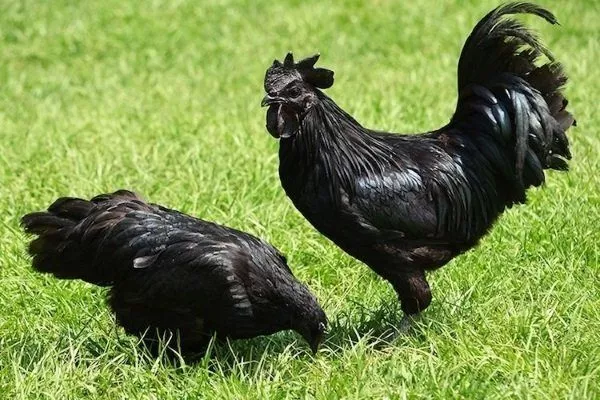
This unusual, blue-black chicken is the oldest domesticated bird. Scientists believe that humans bred it several thousand years ago. The black chickens originated in the Indonesian islands; even a specific island is named: Middle Java. It is believed that the Ayam Cemani first appeared on the outskirts of the town of Solo.
It is believed that the Ayam Cemani originated from crossing junglefowl—domestic or red kingfish—with green junglefowl roosters. It is also possible that there is no pure breed of Ayam Cemani; all its representatives are mixed breeds.
The Cemani owe their total blackness to a genetic mutation that causes them to suffer from fibromelanosis. The dominant gene responsible for producing the melanin enzyme is 10 times more active in black chickens.
Bird exterior
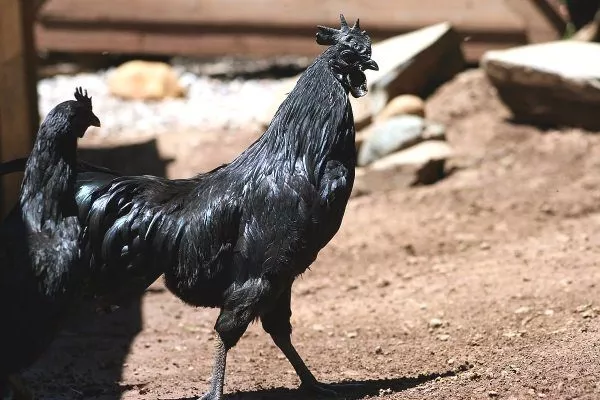
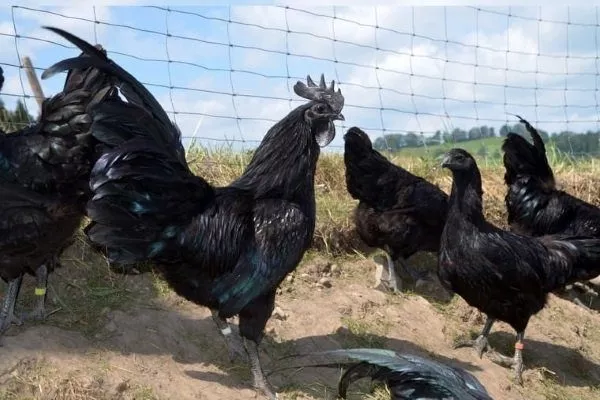
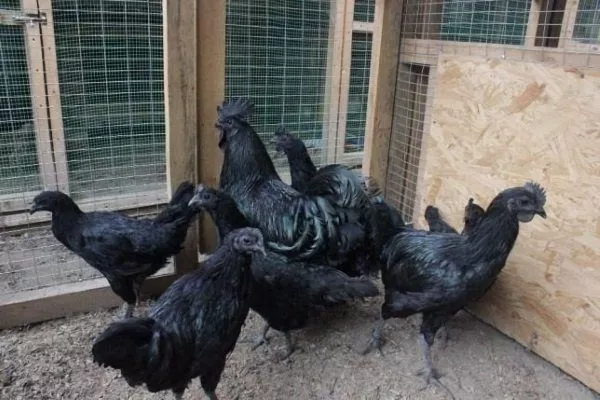
To date, there is no single, standard description of the breed in its original form. Information about its origins and appearance is passed down from generation to generation among Indonesians. The breed's main distinguishing feature, making it unique, is its completely black color. Moreover, not only the plumage of these chickens is black, but also all other parts of their body—the eyes, skin, legs, beak, comb, and wattles.
Individuals that have even the slightest bit of light color are not allowed to breed, so as not to spoil the “blackness” of the breed.
Main exterior features:
- the head is small;
- the body is compact, trapezoidal in shape;
- eyes are small, black;
- comb – straight, leaf-shaped, serrated;
- the beak is shortened, black, with a thickening at the end;
- earrings are round or oval;
- face and earlobes - black;
- neck of medium length;
- chest - slightly protruding;
- legs are long, with four splayed toes;
- the wings fit tightly to the body, slightly raised;
- The roosters' tails have very long braids, while the hens' tails are more modest, but also quite luxurious.
In Java, when reading “ayam cemani,” the “s” sound is heard as “ch,” which is why the second component of the breed’s name is sometimes written in two ways: “cemani” or “cemani.”
Popular myths about the breed
Black Ayam Cemani chickens are extremely rare. They are extremely difficult to find in Russia, and they are incredibly expensive. It's no wonder this strange breed is shrouded in myth. In Indonesia, Ayam Cemani are believed to have mystical properties. They are sacrificed there to increase fertility. Locals also consider these birds a symbol of good luck.
Ayam Cemani chickens aren't all black, as many "experts" claim. First, their blood is red, due to hemoglobin. Second, their eggs. Many photos of black Ayam Cemani eggs online are a hoax. In fact, these chickens' eggs are light-colored, both on the outside and inside.
Black chicken carcasses are rare, but if you see them on the shelves, they're almost certainly Chinese Silkie chickens. Unlike Indonesian Cemani chickens, they only have black skin, while the meat, bones, and internal organs are normal.
Spreading
Europeans first encountered black chickens in the 1920s, when settlers from Holland began studying them. Black chickens only arrived in Europe in 1998, brought here by a Dutch breeder.
This is a rare breed, but today it can be found among farmers in Holland, Slovakia, Germany, the Czech Republic, Belarus, Ukraine, the USA, Great Britain, and, to a very small extent, in Russia.
Productivity and egg production
A good layer lays around 200-250 eggs per year, while Indonesian hens lay no more than a hundred. Black hens lay cream or light brown eggs. Their eggs taste the same as those of regular layers. The yolk and white are the traditional colors. Indonesian hens produce black meat, which is tasty and tender, low in fat, and considered dietary. Even the bones and internal organs of this breed are black.
To achieve maximum egg production, it is recommended to add a vitamin and mineral supplement to the hens' feed, for example,Ryabushka".
Ayam Cemani's performance indicators:
| Indicator | Meaning |
| Egg production, eggs per year | 100 |
| Weight of one egg, g | 45-50 |
| Chicken weight, kg | 1.5- 2 |
| Rooster weight, kg | 2-2.5 |
Egg production peaks in the first year of laying, then the number of eggs laid declines. Meat quality declines by the fourth year of life.
The survival rate of young animals is 95%. Given the high cost of the breed, this figure is especially important for breeders.
Characteristics of Ayam Cemani
Indonesian Black-headed squirrels aren't particularly productive, and breeding them is a costly and demanding undertaking. Other characteristics of the breed worth knowing include:
- Slow weight gain. It is believed that this slow growth is responsible for the high-quality characteristics of the meat.
- No tendency to obesity.
- First clutch – at 6-8 months.
- The ability of roosters to reproduce is 10 months.
Advantages and disadvantages
Chickens are typically valued for their economic benefits—meat and egg production, and their ability to hatch eggs. In Ayam Cemani, they value the bird itself, its appearance, and the purity of the breed. Appearance is the breed's main asset.
There are no analogues to the Indonesian chicken anywhere in the world. This explains the incredible price of black chickens – only wealthy poultry farmers and collectors of rare breeds can afford them.
Besides her unique appearance, Ayam Cemani has other advantages:
- delicacy meat, tasty, tender and also black;
- hens take good care of the chicks;
- good immunity.
Flaws:
- low egg production;
- chickens have a poorly developed brooding instinct;
- distrust and unsociability;
- do not tolerate cold well;
- special conditions - a warm chicken coop and a run, fenced on all sides.
Content Recommendations
Ayam Cemani originate from warm climates, so the main challenge when breeding them is cold winters. To ensure healthy and productive birds, they require a warm and comfortable coop and a proper feeding regimen.
Conditions of detention
Ayam Cemani chickens are considered a "fussy" breed. They are very heat-loving and demanding in their care:
- Temperature conditions. Cemani chickens don't tolerate subzero temperatures well, so the main requirement for their care is maintaining a warm coop. When cold weather sets in, the chickens are not allowed outside. The room temperature should not drop below 15°C.
- Air mode. Chickens need fresh air, so the room should be well ventilated, but without drafts.
- Psychological climate. Black chickens are shy, so there should be no loud noises near their home. Approaching them should also be done with extreme caution to avoid frightening them. They may injure themselves while trying to escape.
- Lighting. For a 20 square meter area, a 40-watt bulb is sufficient, or an energy-saving bulb of equivalent wattage. Bright light is not necessary, as it can encourage aggression in the birds. To prolong the egg-laying period, illuminate the coop for 12-14 hours during the winter.
- Neighborhood. Ayam Cemani should not come into contact with birds of other species - they are unfriendly and conflict may arise that will end fatally for the expensive birds.
Ayam Cemani's young and adult birds are kept separately. To prevent fighting between the adults, goggles or a beak ring are used. Goggles prevent the hens from aiming their attacks, and the ring prevents them from closing their beaks for a full strike. However, these devices have drawbacks: the hens can discard the goggles, and the ring can injure their beaks.
What should a chicken coop be like?
Any building, barn, or poultry house can be used as a chicken coop. If a suitable building is unavailable, a regular barn made of stone or timber is built. The walls are standard and 2.5 meters high.
Choose a sunny location – Cemani love warmth. In southern regions, the coop is positioned so that it is shaded in summer. The roof is constructed so that there is no risk of collapse under the weight of snow. For southern regions, it is important that the roof protects the birds from the heat. Polycarbonate can be used as a roofing material.
Chicken coop requirements:
- Each chicken family is provided with a separate section. The coop is divided into sections using regular wire mesh to ensure good air circulation.
- The shed is built on a dry site, not prone to flooding or groundwater. Otherwise, the structure is placed on a foundation, after the soil has been drained.
- The chicken coop must be insulated. The floor and walls are insulated with mineral wool or foam. Gaps are sealed, and a layer of insulation—at least 15 cm—is placed on the floor. Straw or peat can be used. In winter, the coop is heated by installing electric heaters or planning for heating.
- In the chicken coop, perches are arranged at a distance of 1.5-2 m from the floor.
- In chicken coops built in southern regions, the doors are double—one solid and one mesh. The solid door is closed in winter, while the mesh door improves ventilation in summer.
- The premises for 1 family include one rooster and 19 hens.
- The windows of the chicken coop should face south to increase daylight hours, and the doors should face east or west to prevent northern winds from blowing through them.
- In northern regions, chicken coops are equipped with forced ventilation so that it can be turned off during severe cold weather.
- Nesting boxes measuring 30 x 50 x 20 cm are constructed. The bottom of the box is lined with hay or straw. Sawdust is not suitable, as it will spill over, and the eggs may be damaged by the bare boards.
- Perches are made from round timber with a diameter of 5 cm. The wood must be dry and free of cracks, otherwise it will harbor parasites. The best material for perches is oak or aspen.
- Feeders are either hopper- or trough-type to prevent the chickens from scattering their feed. The feeding holes are designed to prevent the birds from getting their feet in the feed. Learn how to make your own feeder from this article.
- Nipple waterers are used for drinking water; these closed containers keep the water always clean and fresh. If you want to make your own waterers, read on.this article.
A pen is set up next to the chicken coop. Cemani are good flyers, so the fence should be at least 2 meters high. Seeding grass isn't necessary; the chickens will quickly eat it anyway. It's best to sprinkle the ground with fine gravel and feed the greens with their feed.
The enclosure is equipped with drinking bowls, feeders, and baths filled with sand and ash, as well as a canopy so that the birds can shelter from the elements.
Is it possible to build it yourself?
Black hens spend most of their time in the coop, so it should be comfortable for both the birds and the maintenance. Build it at a rate of 2 birds per square meter.
How to build a chicken coop:
- Foundation. A foundation isn't necessary for a small barn—it's enough to dig metal posts around the perimeter to protect against undermining. For a larger herd, a more permanent structure is built. The best foundation option is a columnar one.
- Floor. It's better to install double floors for warmth. A subfloor is laid on the foundation, with sawdust between the sheathing elements. Insulation, such as mineral wool, is laid on top of the subfloor. Then the main floor is nailed in place. The boards are smooth to avoid cracks and holes that would allow cold air to penetrate.
- Walls. Height: 1.8-2.5 m. The best option is wooden beams. They are nailed or screwed together. The beams are covered with boards on both sides. Thermal insulation is placed between the boards and beams. The walls are painted to protect against insects and weather damage.
- Roof. You can build a gable roof with an attic. The attic can be used to store equipment and feed. First, lay a flooring, on top of which you lay a thermal insulator—for example, expanded clay or slag. Then, lay roofing felt, and then slate or other roofing material.
- Aviary. Its area should be twice the size of the chicken coop. The floor of the run should be earthen so the chickens can forage for insects.
- Arrangement of a chicken coop. Each bird requires a 30 cm perch. Perches should not be stacked on top of each other. To make cleaning easier, trays are placed under the perches.
What and how to feed Ayam Cemani?
Black Indonesian chickens don't require any special diet; they'll eat any food and won't suffer without their specific diet. Feeding guidelines for Ayam Cemani:
- The basis of the feed can be grain, or industrial compound feed, which includes wheat, corn and other grains. Correctly selected compound feed – the key to high egg production.
- To obtain tasty and juicy meat, the bird is fed meat scraps and insects.
- Feed wet mashes, flavored with vitamin and mineral supplements. These supplements include shells and crushed eggshells—they are also necessary for preventing crop impaction. Mash can be made with meat and fish broths.
- Fish oil is added to the feed. It has a positive effect on the beauty of the feathers and overall health.
- During the cold season, when greens are scarce, chickens are fed grass meal, hay, silage, pulp, and vegetables added to warm mash. They are also fed sprouted grain. Yeast and bran are added to the mash.
Breeding Indonesians
To produce "purebred" Ayam Cemani, the family is kept separate from other breeds. The "wild" gene in the pedigree of the "Indonesian" breeds has had a beneficial effect on the birds' fertility.
- ✓ Absence of light spots in the plumage and on the skin.
- ✓ Pedigree check to avoid inbreeding.
Subtleties of mating
Hens and roosters are taken from unrelated families. It's best if the birds come from different farms. If two roosters are purchased, the breeder is replaced the following year. The ideal sex ratio is five hens to one rooster.
Black-headed fowl inherited their high fertility from the wild green junglefowl. Fertilization of eggs from these "Indonesian" fowls is almost 100%.
Incubation period
Females have a brooding instinct, but it's not essential. For hatching or brooding, an incubator is required. It's unclear whether a hen will sit on the eggs to completion; if she refuses, the clutch will need to be rescued immediately, so it's best to prepare an incubator in advance.
Incubation lasts 21 days. The temperature is 37.8°C. If the temperature is raised, the chicks will hatch prematurely, which is unacceptable. If the incubator doesn't have automatic egg turning, they must be turned manually every two hours—a very tedious and demanding task. Turning is stopped only two days before hatching. The temperature is then lowered to 37.5°C.
We recommend reading the article about the peculiarities of incubating chicken eggs at home.
Caring for offspring
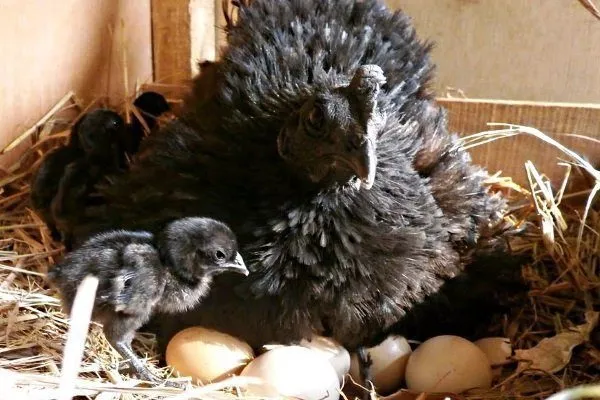
Newborn chicks are black, squeaky, and have short down. They have a strong immune system from birth. The survival rate is 95-100%. To ensure healthy chicks and good growth, it's important to provide them with favorable conditions:
- For the first two weeks, the temperature is maintained at +28-+30°C. Then, the temperature is gradually reduced to room temperature.
- When the chicks grow up, they are transferred to a separate, windproof enclosure. Young birds should not be kept with adult birds, as they may contain aggressive individuals that will kill the young. Young birds are placed with adult birds at two months of age.
Nutrition from the first days until adulthood
Feeding features:
- The chicks are given starter feed—regular millet and egg are not enough. Chopped egg is added to the feed. Dry feed is left freely available.
- During the first week, the chicks are fed cottage cheese with a fat content of up to 15%. They are also given crushed corn grits and greens.
- Vitamins are given to each chick by dripping them into its beak.
- From one month of age, chicks are fully transitioned to a balanced feed, selected according to their age. The feed is high in protein. The diet should also include grass meal, root vegetables, and mineral supplements. Maggots are recommended.
- Water is provided boiled in special drinking bowls. In addition to water, the chicks are given glucose solution and weak tea.
Planned replacement of the herd
Black chickens are often purchased for decorative purposes, in which case there is no need to rush to replace the flock – the birds can live happily and decorate the poultry yard for a long time.
In theory, the breeding stock is replaced annually. Birds are selected for breeding and a new flock is formed. Birds unsuitable for breeding are sold or slaughtered. With the Ayam Cemani breed, planned replacement is impossible due to its rarity. And then the breed's decline becomes inevitable.
To delay degeneration as much as possible, older hens are retained, and the young are subject to strict selection. With great care, inbreeding (related ties) can be avoided—but then no more than one pullet per 10 chicks will have to be selected.
Diseases
The breed is not known for its illnesses. Black chickens' main enemies are parasites. They can also suffer from non-contagious diseases that cause inflammation of the ovaries and oviducts. These illnesses can be caused by vitamin deficiency, unsanitary conditions in the coop, or poor-quality, moldy feed.
Symptoms and treatment of diseases in Cemani chickens:
| Diseases | Peculiarities | Symptoms | How do they treat it? |
| Eimeriosis | It is caused by a protozoan called Eimeria. Chicks can become infected immediately after birth, and diagnosis is made within 10-15 days. | No appetite, thirst, weight loss, ruffled feathers, diarrhea - first white-green, then dark brown. | For treatment and prevention, it is given to chickens antibiotics - coccidiostatics. Probiotics are also administered. |
| Marek's disease | Incubation time ranges from 2 to 15 weeks. Eye damage can lead to blindness. The older the bird, the greater the risk of damage. | At first, there was an unsteady gait and restlessness. Conjunctivitis developed in one eye. Tumors appeared on internal organs. Paralysis of the limbs. | There is no cure; vaccination is required. This is administered to day-old chicks. The second vaccination is at 10 days of age, and the third is three weeks later. |
Disease prevention:
- Use special drinking bowls to prevent dirt from getting into the feed and water.
- Regular cleaning and disinfection of the chicken coop and equipment.
- Avoiding overcrowding, dampness, and poor nutrition.
Cemani chickens are not afraid of many dangerous viruses, for example, they do not get bird flu.
- ✓ Resistance to bird flu.
- ✓ High immunity to most viral diseases.
The value of poultry and its marketing
The Ayam Cemani is not considered a productive breed. It is unprofitable to raise it for meat or eggs—it is too expensive, and breeding it is also fraught with difficulties. Premium eggs from black hens cost at least 12 euros, and the price of a single bird can reach up to $2,500.
Today, only the wealthiest farmers can raise Cemani chickens; there is little demand for such expensive chickens – this extremely rare bird will only interest exotic lovers.
Experts say it's nearly impossible to find a purebred Ayam Cemani—the market offers half-breeds that inherited the black color from the "Indonesian" breed.
Reviews of the breed
It's too early to talk about large-scale breeding of Ayam Cemani for meat or eggs. This breed is too rare and expensive. Their exceptional love of warmth also hinders their breeding. Perhaps Russian poultry breeders will develop their own breed of black-headed hens by crossing Indonesian chickens with local layers. For now, black "Indonesians" are used primarily as expensive and exotic ornaments for backyards.