
Ameraucana hens are among the rarest domesticated birds, laying blue, olive, and green eggs. They reach sexual maturity at five months, and the sheer number of eggs they lay each year amazes even experienced farmers.
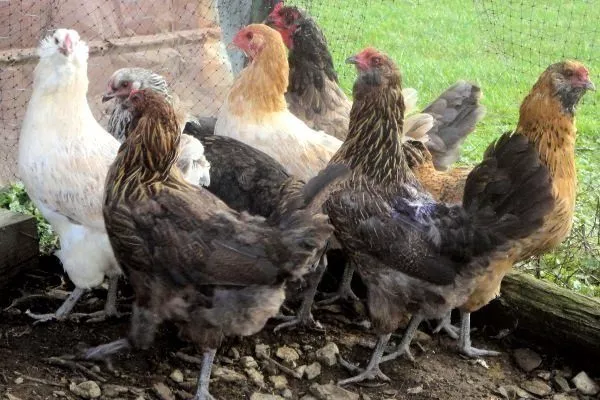
History of the breed's origin
Inexperienced poultry farmers sometimes make mistakes and confuse these birds with other more well-known chickens. AraucanaThese are completely different types of domesticated birds, differing in their origins, productivity, and living conditions. However, they do have one thing in common: they are very similar to each other.
The Araucana chicken breed is the ancestor of the Ameraucana. American scientists have been working on the breed discussed in this article for a long time. The work began in 1970. Breeders crossed American-origin chickens with tailless Araucana chickens.
The breeding efforts didn't stop there, and in 1984, this variety became established, and scientists were able to fully establish the standard. Despite their outstanding egg production, these hens are also renowned for their tender and uniquely flavored meat, which is why the breed is commonly classified as a meat-and-egg breed.
Advantages and disadvantages
The American breed, like other representatives of domestic birds, has advantages and disadvantages when breeding, which should be taken into account.
Advantages of the Ameraucana chicken breed:
- amazing and unique eggs of different colors;
- juicy and tender meat;
- undemanding in care;
- possibility of keeping in northern regions;
- unpretentiousness in nutrition.
Disadvantages of the Ameraucana chicken breed:
- lack of brooding instinct;
- too pugnacious character.
Description and characteristics
American scientists couldn't stop at just one color for this chicken breed, and they gave nature eight different color variations, which will be discussed below. In addition to the multicolored birds, there are also miniature Ameraucanas, called bantams, or dwarf birds.
Ameraucana bantams are no different from their larger cousins except for the size of the birds themselves and the eggs they lay.
Appearance
A complete picture of the bird's appearance can only be obtained by knowing its weight. With proper care and conditions, cockerels can reach 3.5 kg, while hens weigh 1-1.5 kg less. Dwarf Ameraucanas weigh up to 1 kg.
What colors are available?
| Name | Color of eggs | Rooster weight (kg) | Chicken weight (kg) |
|---|---|---|---|
| Ameraucana | blue, olive, green | 3.5 | 2.5 |
Breeders have created numerous color variations through breeding, but not all have passed the standardization process. Only eight varieties have been officially recognized:
- white;
- black;
- silver;
- wheat;
- wheat-blue;
- red-brown;
- blue.
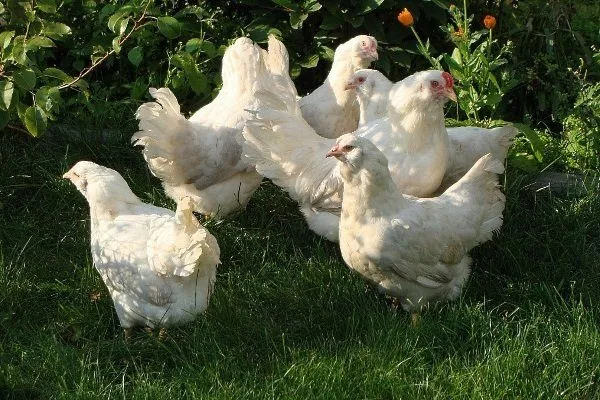
Ameraucana chicken breed, white color
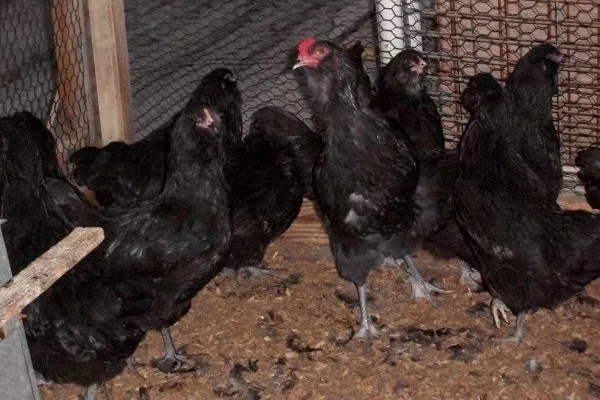
Ameraucana chicken breed, black color
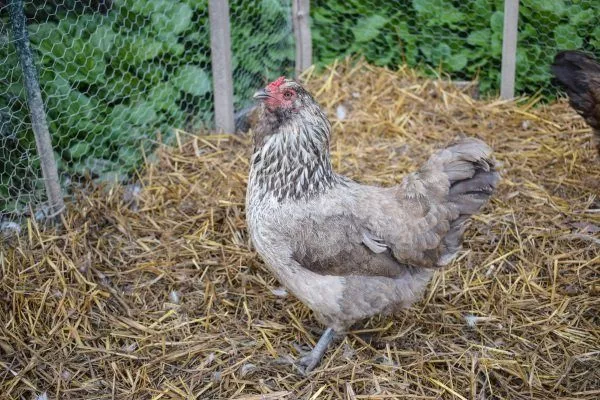
Ameraucana chicken breed, silver color
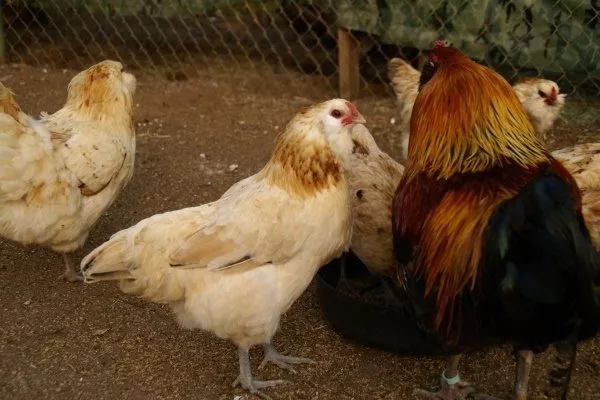
Ameraucana chicken breed, wheaten color
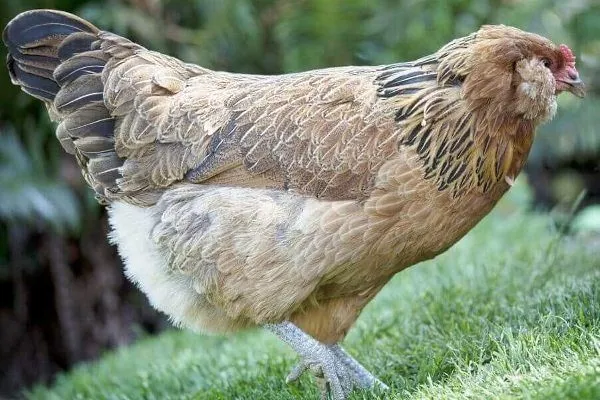
Ameraucana chicken breed, wheat-blue color
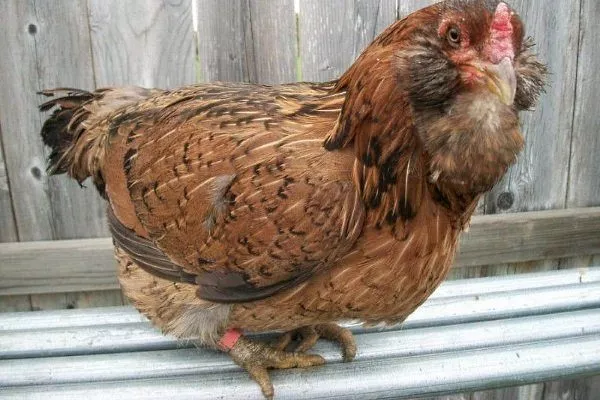
Ameraucana chicken breed, red-brown color
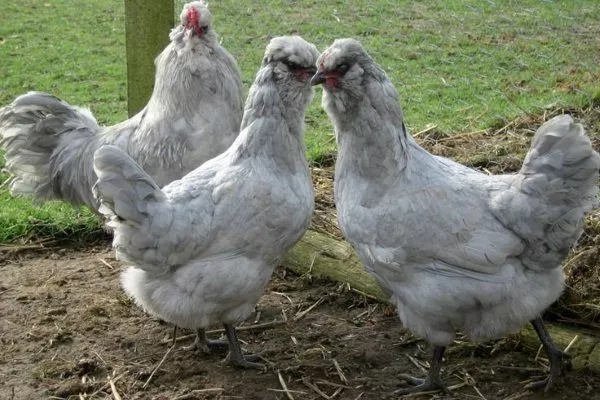
Ameraucana chicken breed, blue color
Traits of Ameraucana chickens
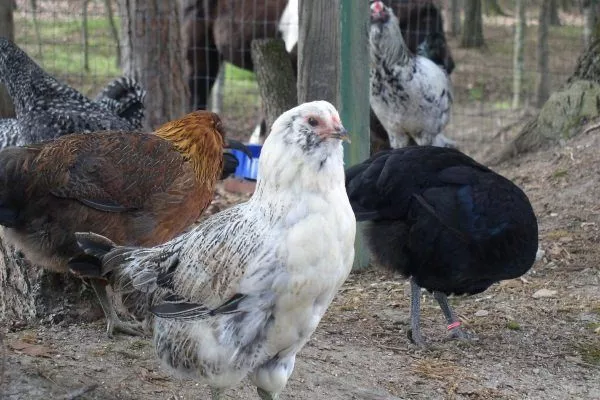
Individuals of this breed have two key characteristics that distinguish them from other chickens: a beard and massive sideburns. These birds have a very proud and arrogant appearance, and the sideburns add to their aristocratic appearance.
The eyes are red, and the beak is strong and curved. The comb is large and pea-shaped, slightly higher in the middle than at the base and ends. The earlobes are medium-sized and reddish. They are more prominent in males.
The tail is small, the wing muscles are well developed, and the birds can fly. The legs are featherless and the stance is not close. The color of the feet depends on the hen's color. The hen lays eggs of various colors: blue, green, and blue. Pink specimens are also common.
Having long, well-developed wings is a challenge for poultry farmers. These birds love to fly, so flying over a partition is no problem for them. Farmers should take this into account when constructing the coop and run.
Character and behavior
Laying hens are generally more or less modest and quiet, but roosters can't boast such character traits. They are very quarrelsome and aggressive. Males behave boorishly, causing harm not only to their owners but also to their hens.
To prevent males from harming the hens, they are kept separate from the females. Aggression isn't the breed's only drawback; these hens are very inquisitive, constantly running around the compound, trying to find food everywhere, and showing interest in everything and everyone.
They love to fly, so they're constantly eager to get out. This breed requires constant supervision to ensure they don't get into trouble.
Productivity and ripening speed
Poultry farmers often select hens of this breed not so much for productivity as for the unusual, colorful eggs they produce. Some farmers have nicknamed these hens "Easter chickens." These birds mature early, at five months, but sometimes they lay their first eggs earlier or later. Everything depends on the conditions they are kept in and the care they receive.
Egg production rates aren't record-breaking, but they're still quite good. A single hen can lay over 200 eggs per year, each weighing up to 70 g.
Maternal instinct
Almost all purebred breeds possess a brooding instinct, but the Ameraucana is an exception. These birds frustrate their owners by laying beautiful, bright eggs but failing to hatch their young. This trait was lost during selective breeding, and brooding is now problematic for these birds.
Negligent "mothers" are reluctant to sit on eggs; they sit on them for about a couple of minutes and then start running around the coop. At this point, they might be doing anything but incubating their brood. However, that's not the worst of it.
After hatching, hens become hostile toward their "babies," and in extreme cases, mother hens will even peck the chicks. Because of this behavior, the chicks are kept in separate rooms.
Conditions of maintenance and care
The Ameraucana poultry breed is popular among poultry farmers due to its frost resistance. These birds quickly adapt to cold temperatures and require no additional heating for the coop. They tolerate subzero temperatures and freezing temperatures without any problems.
Watch the video below for an overview of the Ameraucana chicken breed and a description of its eggs:
Poultry house
It's important to remember that this breed is very active and curious. Despite their small size, Ameraucana chickens require a large space.
The algorithm for preparing a chicken coop before moving hens in:
- Treat the chicken coop and all equipment with special disinfectants.
- Make a clay floor covering and lay hay or straw on top. If there's already covering material in the room, replace it.
- Insulate and whitewash the ceiling and walls. Whitewashing will help eliminate harmful bacteria and slightly improve the indoor microflora.
- Create an area for rest, eating and walking.
- Provide separate food and water containers. Clean and put them away regularly.
- Set the temperature in the chicken coop between 18 and 28 degrees Celsius. Maintain humidity at 60-70%.
- Install perches, they can be placed high so that the birds can fly up to them.
- Laying hens need nests; build them from boxes with straw or hay at the bottom.
- Ventilate the chicken coop, as chicken droppings contain a small amount of ammonia, which is harmful to their respiratory system.
- ✓ Optimal stocking density: no more than 8 heads per 1 sq. m to prevent aggression.
- ✓ Temperature conditions for chickens: the first 7 days +32°C, followed by a gradual decrease to +26°C.
Ameraucana chickens love the outdoors, so a run is essential. This will not only provide the birds with a place to play, but also protect them from predators and animals.
Enclose the aviary with netting to prevent birds from flying over it, otherwise they'll reach your garden. Build a canopy over the exercise yard to protect the birds from heavy rain and bright sunlight.
In summer, the diet is supplemented with outdoor food, including fresh greens and worms. To ensure the Ameraucana chickens can access these, the run is set up in open soil, into which the greens are sown.
It is better to build a chicken coop on a hill so that meltwater and rainwater do not flood it.
Although Ameraucana birds are easy to care for, some problems can arise. The main danger is the male, who frightens the hens and prevents them from living normally. The rooster is moved to a separate cage. His intense aggression is often caused by improper placement of the flock. Poultry farmers recommend no more than 8 birds per square meter.
Food and drink
Ameraucana chickens are no more demanding than other poultry. They don't have any special dietary requirements. However, following simple feeding guidelines for adult birds is crucial, and they will impress the poultry farmer with their productivity.
Rules for creating the correct diet for birds:
- Hens and roosters aren't prone to obesity, so feed them as much as they need without worrying about it. They're very active, so anything they eat in a day is digested very quickly. If your hens only eat twice a day, make sure their food is high in calories to ensure they have enough energy to last a long time.
- In summer, reduce feeding to twice a day, as birds spend the day outdoors and eating outdoor food. In winter, increase feeding to three or four times a day.
- If your birds don't have access to succulent grasses in the summer, bring them some greens daily. During the winter, dry or pellet the grass so they can eat mineral-rich and nutrient-rich food every day.
- Don't be afraid to feed them high-fat grains. Corn, sunflower meal, sunflower seeds, wheat, oats, and barley are excellent options for filling out their diet.
- Place bowls of clean, fresh water in the coop and run. Change the water daily. Always wash dishes and do not leave food scraps in them; do this as often as possible during the summer.
Molting and laying break
Molting is a standard, normal process common to every chicken breed. It occurs annually in the fall. It lasts about two months, sometimes extending up to three months. A unique feature of Ameraucana molting is that after the molt, they resume laying eggs fairly quickly and begin laying eggs as early as the winter.
During molting, birds stop laying eggs.
Birds may appear miserable and unhappy in the fall, but this is actually not the case; they don't experience much discomfort or pain. During this period, the breed should be fed well to prevent them from pecking at each other.
Frequent illnesses
Experienced American breeders have already developed a breed that, from birth, develops strong immunity to many diseases. There are no specific diseases known to attack this particular breed of poultry.
Ameraucana layers are less susceptible to viral or infectious diseases than to attacks by various parasites. Therefore, the primary preventative measures should focus on disinfecting the coop and the entire flock.
The main symptoms of a sick bird are: poor appetite or complete lack of it, change in the color of droppings, poor egg laying, excessive irritability or apathy.
Breeding
Once an adult flock reaches one year of age, it's time to consider breeding a new generation. Poultry farmers should be aware that the peak productive period lasts from one to two years, after which egg production slows down and meat quality declines significantly.
Rules for choosing eggs for an incubator
If you've decided to breed Ameraucana on your property, you need to understand and select eggs for your incubator wisely. Purchasing a suitable purebred egg will cost you around 200 rubles each. Choose larger specimens.
Key points when choosing eggs for an incubator:
- The age of eggs is from 2 to 7 days after laying.
- The egg should have a standard oval shape.
- It is almost impossible to shine a light through it properly, so check for cracks under good lighting.
- Before being placed in the incubator, the embryo within the egg is already developing. Handle it with extreme care to prevent it from falling or breaking.
- Embryos die at temperatures between +5 and +8 degrees Celsius. If eggs are exposed to this temperature, they cannot be used in an incubator.
Read the article about the peculiarities of incubating chicken eggs at home.
Caring for chickens
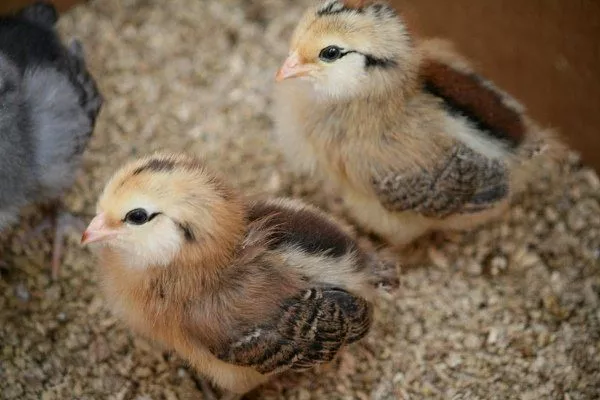
Raising Ameraucana chickens is much easier than raising other chicken varieties. The young are born with feathers and a warm downy coat that protects them from cold and drafts. They are very active and have an excellent appetite, so they grow quickly and thrive.
Many poultry farmers believe that future productivity depends on how well the chicks are cared for during the first two months after birth. During this time, the chicks' skeletons and muscle mass are fully formed. After two and a half months, the birds will begin to gain weight twice as fast as before. After three months, they will begin to consume a significant amount of feed.
During this period, it is necessary to monitor each bird to ensure that no one is harmed, that each laying hen receives food and water, and that they gain weight at approximately the same rate.
Commercial breeding of Ameraucana chickens involves artificially separating the young into large and small individuals. Sorting the birds into these groups helps the breeder ensure the full and balanced development of the flock.
Without this measure, some birds will remain hungry and will not grow as expected. Some individuals will become overly aggressive and feisty, and in large groups, leaders will begin to emerge who will consume food faster than the weaker chicks. All this will negatively impact the overall weight of the flock. After five months, the hens begin to lay eggs.
Poultry farmers prove that the larger the hen, the faster she begins to lay eggs, and the larger they are.
Top tips for caring for chickens:
- To stimulate the development of the young, leave the light on for the first two days, then alternate 2 hours of “night” with 4 hours of “day”.
- Build a spacious and ventilated coop for the chicks. To save time cleaning it, keep the young in cages. Place waterers and feeders in them. How to make a feeder yourself is described here. here.
How to make a drinking bowl with your own hands is described in this article.
Diet of young animals
The Ameraucana chicks' diet is standard. The basis of their diet is high-protein and calcium feed. In the first few days, the chicks are fed boiled eggs mixed with semolina, then greens and special vitamins are added.
- First days: boiled egg with semolina every two hours.
- Up to 18 days: 5-6 times a day with the addition of greens and vitamins.
- After 18 days: transition to 3-4 meals a day, including boiled vegetables.
By 1.5 months of age, boiled vegetables are added to the diet. A good appetite and stable development depend not only on the food but also on the feeding schedule. From day one, the young are fed every two hours. Around 18 days after birth, they are fed 5-6 times a day, after which they are transitioned to 3-4 meals a day.
Clean, fresh water is essential; the more the young birds drink, the better. Adult chickens and young chicks are very sensitive to water quality, so it should be boiled and cooled.
The young are very strong, but they need to be kept warm until they reach a certain age. For the first seven days, the temperature should be kept at 32 degrees Celsius, then 30 degrees Celsius, and then the temperature should be lowered to 26 degrees Celsius.
Farmer reviews of Ameraucana chickens
Ameraucana chickens are unique domestic birds; they are known for their wilful temperament and pugnacity, but they lay beautiful, unusually colored eggs.
I have some hens like these—they stand out among the others for their friendliness and quickly become tame. I haven't noticed any fighting in the rooster. I had several males in the hatchery, and none of them were pugnacious (unlike other breeds and crossbreeds). All the American-style roosters are sedate and dignified. We kept one for ourselves; he was downright tame, walking at my daughter's feet like a little dog, and was always walking alongside the cats and dog—he was always looking for their company.
They're very curious, that's true. They're not interested in just wandering around in their enclosure; they need to get out and approach people—they're underfoot. They're not comparable to Ukhai—those are a bit wild, no matter how you tame them. But American Ukhai seek out companionship, and if you talk to them, they listen attentively, as if they understand.
I disagree with the description of the broody hen. Of all the broody hens I've had this year (a dwarf broody hen, an Adler broody hen, and an American broody hen), she's the calmest. She sat responsibly in the nest and let me look at the eggs (the broody broody hen would panic, and the Adler broody broody hen would fight—you'd have to wear gloves when handling her). She also hatched the chicks—she lets you pick them up and leads them to people herself, whereas the other two hens have raised their chicks so well that they won't just let you pick them up.
Overall, it's a beautiful breed, I like the character, and the eggs are a turquoise color, unusual. The only downside is that they're a bit small. They're larger than those of the ornamental chicken, but much smaller than those of the Adlek and Kuban Red chickens (their eggs are so big they don't fit into a standard egg cell).