
When raising chickens, special attention must be paid to properly organizing the feeding process. To do this, you'll first need high-quality and convenient feeders. You can purchase them at a specialty store or make your own using readily available materials and patterns. Read on to find out what feeders should look like and how to make your own.
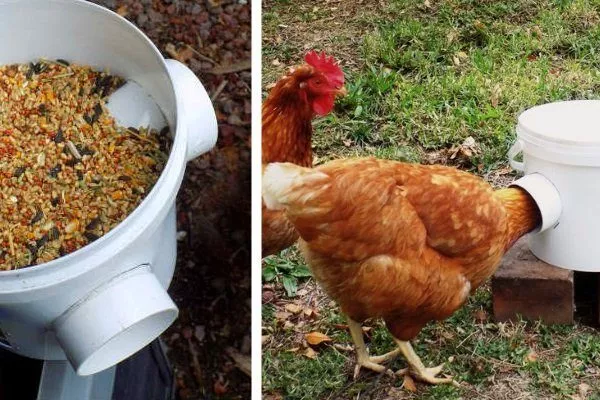
Requirements for feeders
A feeder for layers or broilers should have a number of characteristics:
- Made of durable materialThe feeder should be made of durable material that is minimally susceptible to deformation or damage during use. Furthermore, the material should not have harmful properties, otherwise it could negatively impact the health of the chickens during feeding.
- It has optimal dimensionsThe feeder should be large enough to feed the entire flock for a full day. To determine the optimal size, consider the following: 10-15 cm of space per hen. For chicks, this space is halved. However, if the tray is circular, 2.5 cm per bird is sufficient. It's best for all birds to have access to the feed at the same time, otherwise the stronger birds will crowd out the weaker ones.
- Easy to maintainThe feeder will need to be filled daily. It also needs to be cleaned, washed, and disinfected regularly. These processes should be straightforward for the breeder. For this purpose, it's best to create compact structures that are easy to move, wash, and prepare for further use.
- Ensures rational distribution of feedThe feeder should be designed to prevent chickens from climbing into it, scattering the feed, or contaminating it with their excrement. To this end, consider installing protective sides, spinners, and other devices to secure the bulk of the feed within the container. Furthermore, the feeder should be stable to prevent the birds from tipping it over.
- ✓ UV resistance for plastic feeders to prevent rapid deterioration under sunlight.
- ✓ The material does not contain toxic substances that may be released upon contact with feed and water.
The feeder should be arranged in such a way that all chickens have access to food, and the stronger individuals do not displace the weaker birds.
Types of structures
They are classified according to various parameters, each of which we will consider separately.
Based on the material
Choosing the right material for your feeder is key to preserving your feed, and therefore saving it. This could be:
- TreeWooden bird feeders are among the most common options, as they are ideal for storing dry food such as grain, mixed feed, and various mineral supplements. Furthermore, wood is a natural material, ensuring durability.
Wooden feeders should not be used for raw food, as the residue will stick to hard-to-reach areas of the structure and then begin to rot and contaminate the fresh food with pathogenic bacteria.
- PlasticChickens must be fed mash. It's best to pour wet feed into plastic feeders, as food debris is easy to remove from their surfaces. However, in this case, special care must be taken to select a high-strength plastic.
- MetalLike the previous material, it's suitable for making containers for storing wet, mixed feed. It can also be used to make bins for green grass. However, it's important to note that black material is prone to rusting when exposed to moisture, and stainless steel is quite expensive.
Chicken feeders are primarily made of wood and plastic, with the choice depending on what type of feed the tray will be used for.
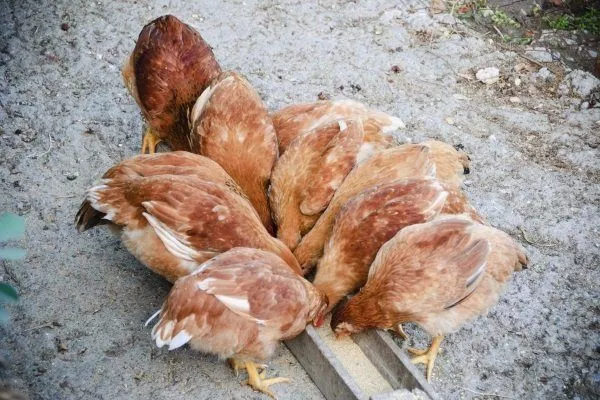
By method of feeding
The feeder's feeding method will determine the convenience of feeding your birds. It's much more convenient to dispense food once a day rather than several times at short intervals. Here are the optimal feeders based on feeding method:
- TrayThese are the simplest designs suitable for feeding young birds. A tray feeder is a simple container with sides to prevent food from spilling. Typically, this type of feeder has an elongated shape.
- GroovedThese structures are equipped with a rotating feeder or a removable dividing grid (mesh). Internally, they are divided by partitions into several compartments (compartments) designed for different types of feed. Trough feeders can be placed outside the cage so that the hens can reach the feed with their heads only. This significantly simplifies not only the feeding process but also cleaning the container.
- Bunker (automatic)They are used for feeding dry food. Their main advantage is that the breeder only needs to pour it into the feeder in the morning. compound feed or grain. This volume is sufficient to feed the birds for a full day. These devices are designed so that feed flows from a closed hopper into trays as needed, preventing contamination and keeping it dry throughout the day.
- Check feeders daily for leftover food and debris.
- Once a week, thoroughly clean and disinfect the feeders.
- Inspect feeders monthly for damage and wear.
By location
Depending on their location in the chicken coop, there are two types of feeders:
- floor-standing – mobile structures that can be installed in any part of the cage or poultry house;
- mounted – structures that are secured to the wall of the poultry house using special brackets or retaining devices, making them stable, which is an advantage over mobile feeders that can be knocked over by chickens.
Some poultry farmers use both types of feeders at the same time, as each has its own advantages.
Types of homemade wooden bird feeders
There are various types of wooden bird feeders, which we suggest you take a closer look at.
Hopper feeder made from pieces of wood
Ideal for those breeders who do not have the opportunity to periodically add grain.
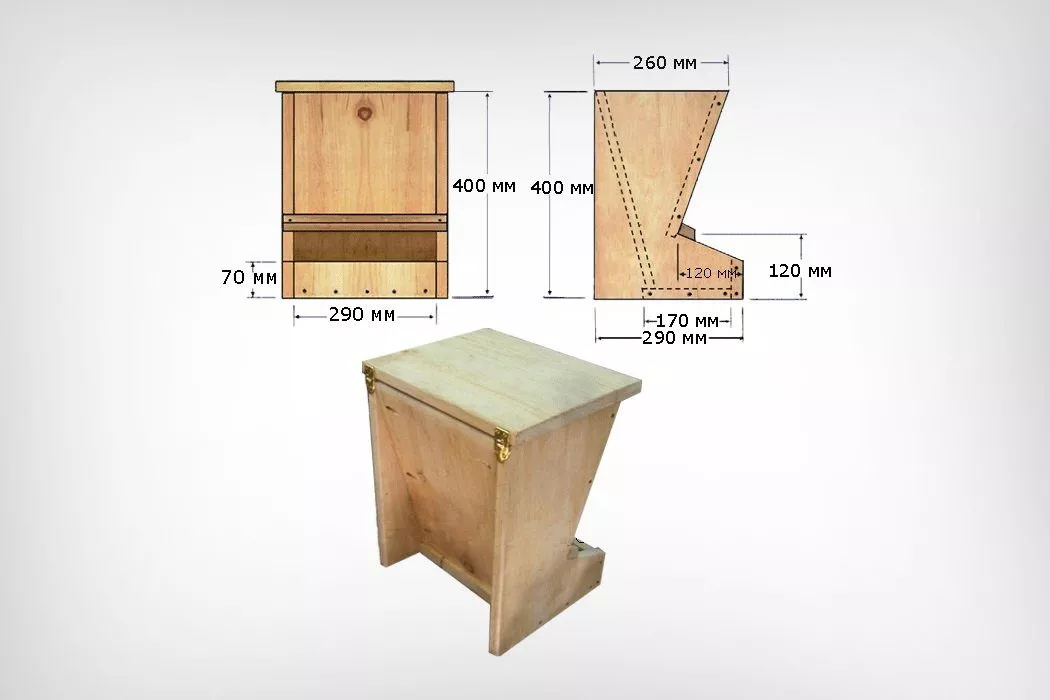
To assemble such a structure, first of all you need to prepare:
- boards made of durable plywood or wood;
- electric drill, set of drills;
- a couple of loops;
- sandpaper;
- saw;
- screwdriver;
- pencil;
- roulette.
The instructions for making a hopper feeder look like this:
- Draw a drawing, which you can then transfer to wood, carefully outlining the details of the future structure:
- bottom – 29x17 cm;
- two side walls 40 cm high and 29 cm long (you will need to cut a wedge in the side walls, as shown in the diagram below);

- two rectangles for the front wall – 28x29 and 7x29 cm;
- top cover – 26x29 cm;
- back wall – 40x29 cm.
- Cut out all the pieces following the drawn marker lines.
- Drill holes for screws in the required places using an electric drill.
- Sand the entire surface to make the feeder smooth and safe for birds.
- Assemble all the elements into a single structure using screws. To achieve maximum tightness, use a clamp. Also, keep in mind that the back and front walls should be joined at a 15° angle.
- Attach the lid to the back of the side walls using hinges.
- Treat the feeders with an antiseptic, remembering that the use of paints and varnish is strictly prohibited.
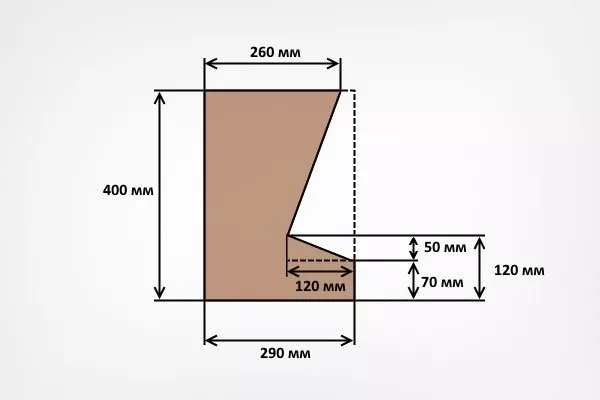
The assembled feeder will be spacious and convenient, operating in automatic mode.
An example of a bunker feeder assembled from wooden beams is shown in the following video:
A trough-shaped feeder
It is a simpler design, suitable for those who keep a large flock of chickens.
To assemble the structure you will need:
- thick boards or plywood;
- hammer;
- screws or nails;
- saw;
- pencil;
- roulette.
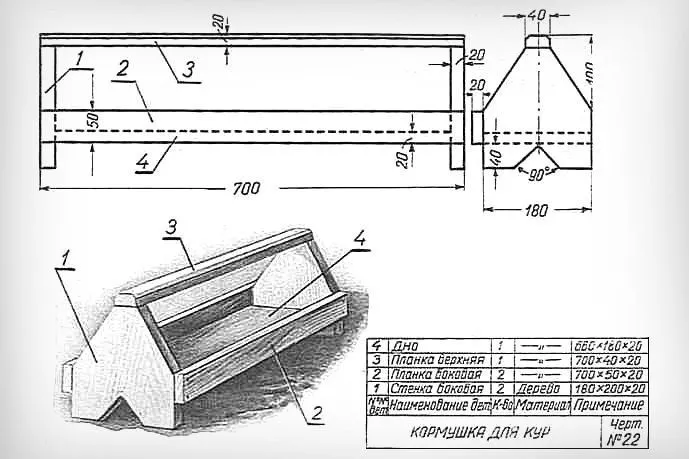
The feeder can be assembled according to the following instructions:
- Draw a diagram of the future feeder, accurately defining all the elements, their dimensions and the locations of the fasteners.
- Transfer the drawing to the tree, observing the parameters specified in the drawing above.
- Cut out all the parts of the structure along the marker lines. Keep in mind that the bottom must be thick and heavy, otherwise the birds will easily tip the feeder over. The sides must also be a comfortable height for the hens.
- Connect all the parts together, leaving no gaps, as these will allow food to escape. No additional treatment of the wood is necessary.
This feeder is durable and strong, and is also universal in terms of the type of food used, meaning it is suitable for serving both dry and wet food.
The following video explains and demonstrates how to assemble a wooden chicken feeder:
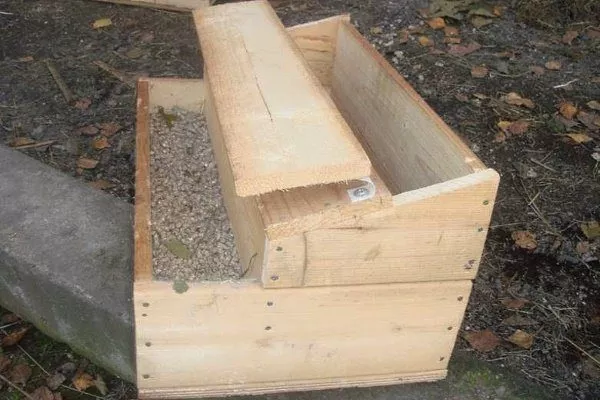
Two-tiered bird feeder
This option is primarily used for dry food, although it can also accommodate various mashes. This feeder is suitable for a small space, as the second tier helps compensate for the lack of space. It looks like this:
Once you have prepared the blocks and screws, you can begin assembling the feeder:
- Prepare all the components of the future feeder. The most important one is the bottom tier, 40 cm long and 50 cm wide. The length can be adjusted depending on the number of livestock. The second tier is a small filling bin – a trough with a front wall 10 cm high and a back wall 20 cm high.
- Make a flap that will divide the lower tier into 1/3 parts.
- Install the second floor on the ends of the first.
- Attach a lid that will cover the food to prevent debris from getting inside.
Types of PVC pipe feeders
Farmers often use PVC pipes to make plastic feeders because they're easy to use and quite practical—they don't require drilling, welding, or gluing. We'll look at various options for feeders made from these pipes below.
With a tee
This design has a "standing" shape. To make it, you'll need:
- sewer pipe 1 m long;
- 2 plugs for PVC pipes of the appropriate size;
- 45° tee;
- a device for cutting plastic pipes or a metal saw.
The instructions for making a tee feeder look like this:
- Cut the plastic pipe into three pieces: 70 cm, 20 cm, and 10 cm. It's worth noting that you can purchase pipes of the required sizes initially so you don't have to cut them later.
- Take a 20 cm long pipe and put a cap on one end. This will create the base, or bottom, of the structure.
- Place a tee on the other end of the pipe with the side elbow facing up.
- Insert a 10 cm long pipe into the side hole until it stops.
- Insert a 70 cm long pipe into the third hole of the tee and close it with a second plug at the other end to obtain a finished structure.
The assembled feeder should be secured to the wall of the coop at both ends (bottom and top) with wire. Of course, it's easier to secure it to wire mesh or support slats. Once the feeder is in place, it can be filled with feed. The hens will peck the feed from the side opening of the tee without scattering it on the ground. This amount of feed will be enough for 15-20 broilers or 30 laying hens for 24 hours.
At night, the top of the feeder must be closed with a plug, otherwise foreign objects, debris and bacteria will get into the food.
The following video shows what a sewer pipe feeder looks like:
With cutouts
This design will consist of two pipes, one of which will be installed horizontally and will serve to feed the birds, and the other will be installed vertically and will serve to supply grain.
Here are the materials and tools needed:
- 2 pieces of pipe – 50 cm and 30 cm or 60 cm and 40 cm;
- PVC elbow for pipe size;
- 2 plugs;
- drill, jigsaw or electric saw.
The procedure for making a feeder is as follows:
- On a long pipe, draw two or more holes, each 7 cm in diameter and spaced equally. They can be oval, round, or rectangular.
- Use a drill to make a hole, then use a jigsaw to cut it out. You can make cutouts on both sides if desired.
- Place a plug on one end of the pipe and install a elbow on the other end, into which you insert another pipe.
- Secure the finished feeder to the wall of the chicken coop with wire. It's best to secure it on both sides—top and bottom. As with the previous option, fill the top pipe with grain, then seal the opening with a second plug to prevent debris from getting in. This structure needs to be filled once or twice a day.
The method for making a feeder with two rectangular holes is demonstrated in the following video:
Bunker feeder for broilers
This feeder can be made for broilers aged two weeks and older, and it takes no more than 20-30 minutes. One load is enough to feed 30 hens for 24 hours.
To assemble the feeder you will need:
- a piece of plywood or wooden board measuring 20x20 cm and 8-10 mm thick (the thicker the base, the more stable the finished structure will be);
- plastic canister measuring 20x20 cm;
- PVC pipe for sewerage (section 10-15 cm high) and for water supply (section 25-30 cm high);
- scotch tape or electrical tape;
- mounting brackets, nuts, screws, nails;
- hammer, saw, awl and a piece of rope.
Once you have prepared everything you need, you can begin assembling the feeder:
- Attach a wide piece of pipe to the base of the structure (plywood or board) using mounting brackets and screws. Simply attach two brackets opposite each other on the inside of the pipe.
- Take the smaller pipe and cut it to the diameter of the hole, 10-15 cm high. Next, make a transverse cut that aligns with the longitudinal cut. This will create a pipe with half the bottom cut out.
- Insert a thin pipe inside the feeder with a wide cut, and then connect both pipes with two screws - at the top and bottom.
- Cut off the bottom of a plastic canister and then place it upside down on a narrow pipe. Wrap the joint with tape or electrical tape.
- Make a hole in the canister, closer to the top, through which to pull the rope.
- On the wall where you plan to install the feeder, nail a nail level with the rope. Secure the structure so it's stable and prevents the chickens from tipping it over.
The following video offers more detailed information about the characteristics of the assembled feeder:
Options for bird feeders made from scrap materials
Chicken feeders can be made from materials found in almost every yard or home. Let's look at several popular options.
From a cutting board
Necessary materials and tools:
- wooden cutting board;
- plastic funnel;
- small plastic cup;
- transparent rubber hose;
- electric drill.
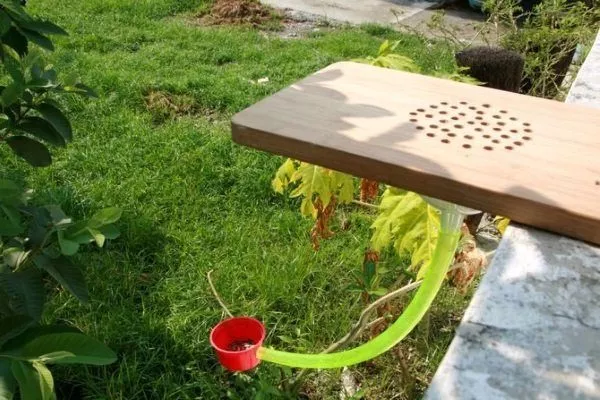
Assembly instructions:
- Trace the outer contours of the funnel on the board, trying to do this as accurately as possible.
- Drill a lot of holes within the drawn circle, but do not overdo it, since the supply of dry food should be moderate.
- Take the hose and connect it to the end of the funnel. If necessary, you can use additional fasteners such as a clamp.
- Make a hole in the plastic thicket, the diameter of which should be such that the free end of the hose fits tightly and holds well.
- Place the other end of the hose into the prepared hole. If the seal is insufficient, apply sealant to the edges of the hole and the outer surface of the hose.
- Attach the funnel's mouth to the cutting board, having first sealed the circle with sealant. Place the funnel on the circle and hold it there until the sealant dries.
- Connect one end of the hose to the cup and the other to the funnel, which should be at the bottom of the board.
The grain will flow from the watering can through a hose into the bowl itself, where the birds can access the feed. It's important to secure the board securely to prevent the chickens from tipping it over.
From a plastic bucket
Once you have a sectional pet bowl and a plastic bucket, you can make a simple stand-alone feeder using these instructions:
- Make holes in the bottom of the bucket through which the food will pour out.
- Attach a sectional bowl to the bottom of the bucket using screws.
- Fill the bucket with grain or any other feed, and then close the lid.
To learn how to make a bunker feeder from a plastic bucket, watch the following video:
From PET bottles
The simplest version of a bunker requires three bottles: 1.5 liters, 2 liters, and 5 m3. The feeder is assembled in the following order:
- Cut off the bottom of a 1.5-liter bottle and drill holes of approximately 20 mm in diameter around the neck. This will create a hopper.
- Cut off the bottom of a 2-liter bottle, leaving a rim of about 10 cm. This will be the lid of the feeder.
- Cut off the bottom of a 5-liter bottle, leaving a rim of about 15 cm. This will be the container where the feed from the hopper will be poured. Drill a hole in the center of the cut-off bottom, the diameter of which corresponds to the threaded neck of the 1.5-liter bottle. Drill a similar hole in a piece of plywood, which will provide stability.
- Connect all the parts - place the bottom of a 5-liter container on the neck of a 1.5-liter bottle, then a piece of plywood, and tighten it all with a cork.
- Turn the structure over so that the cap of the 1.5-liter bottle is at the bottom. This will create a vertical bin. Fill it with grain and then close it with a lid from the bottom of the 2-liter bottle. The feed will pour through the holes near the neck into a container made from the bottom of the 5-liter bottle.
You can see how to make a bird feeder from a simple bottle in the following video:
From a canister
To make this feeder, you'll need a plastic canister, a 10-15 cm piece of pipe, fasteners, and a knife. Assembly instructions are as follows:
- Clean and dry the canister.
- Using a knife or other tool, cut 5 holes with a diameter of 6-7 cm on the sides of the container, so that the chickens' heads fit freely into them.
- Make a hole in the top of the canister for adding grain and attach a pipe over it. This means their diameters must match. This will prevent the chickens from climbing inside the feeder.
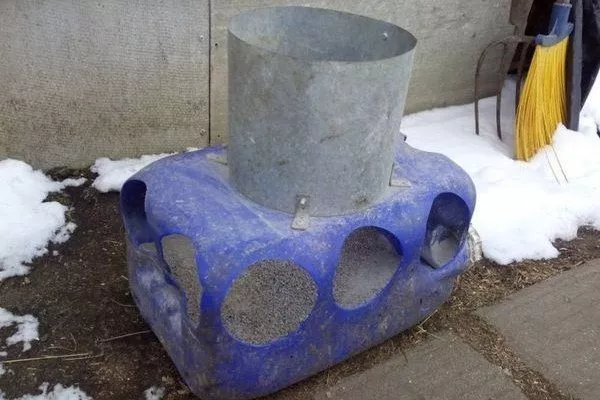
To protect the feed from debris and rain, consider covering the pipe. A piece of plywood, for example, can be used for this purpose.
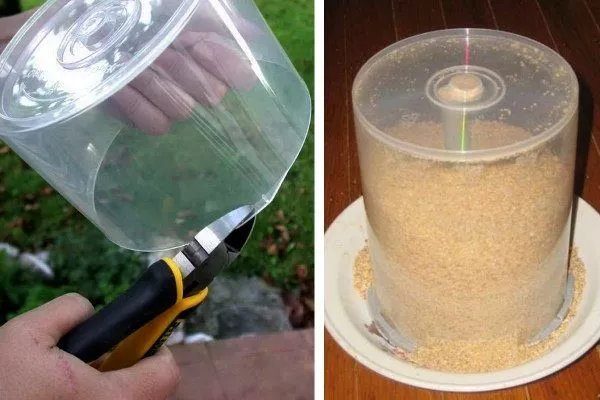
From a CD container
If you have an old CD container at home, you can use it to make a bird feeder. You'll also need a large bowl and a knife.
You can assemble the feeder in this way:
- Clean and dry the container, then cut 3-4 holes in its sides, 2 cm from the rim. The optimal diameter of these holes is 2 cm.
- Fill the container with food and cover it with a bowl on top.
- Turn the container with the bowl upside down and place it in the chicken coop.
As you can see, there are many options for chicken feeders you can make yourself using readily available materials and tools. These simple designs will ensure proper feeding of your chickens, which is one of the most important aspects of their care.
A feeder made from a cutting board isn't suitable for feeding chickens, but birds that don't fly to warmer climates in winter (like tits) can be fed. The other feeder options are good. I made one myself from PVC pipe... for me, it's the best option at the moment. I've adopted several ideas from the article. Thanks!