
If your poultry is constantly scratching itself and forcefully plucking its feathers, it may have a parasite called feather lice. These tiny insects, invisible to the human eye, cause significant discomfort and harm to the bird, leading to decreased egg production, weight loss, and even death. Let's find out how to detect and remove these parasites.
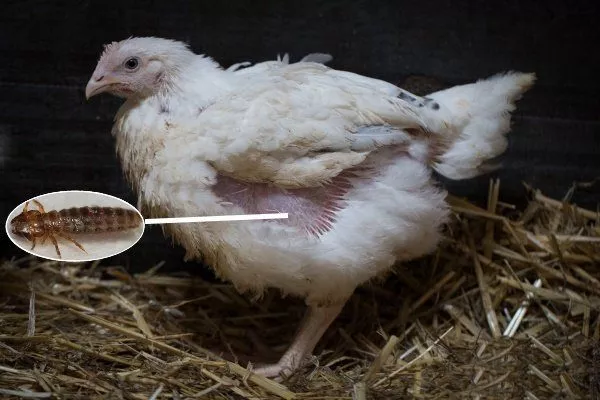
What kind of parasites are these?
The feather eater, also known as the "chicken louse" or "chicken mite," is a small parasite that can be recognized by the following characteristics:
- body size does not exceed 2-3 mm;
- the head is triangular in shape and protrudes above the body;
- the mouth organs are presented in the form of a gnawing apparatus;
- the body shape is flat and slightly elongated;
- the hard shell that covers the body is light brown in color with a yellow tint;
- the body is divided into several segments, between which dark stripes can be seen;
- wings are missing.
These parasitic organisms infest the birds' bodies and live in their feathers, clinging to them with their jaws and three pairs of legs. They cause chickens to become irritable and experience intense itching. To cope, they begin scratching themselves, plucking feathers, and pecking at each other.
This leads to feather loss in chickens, increased irritability, and the appearance of small abrasions on the skin, creating an environment more favorable for the development of parasites. In veterinary medicine, this disease is called mallophagosis, which is why feather eaters are also known as mallophages (feather eaters).
It's important to note that, unlike bloodsuckers, these parasites do not feed on chicken blood. The diet of feather eaters includes:
- fluff;
- feathers;
- particles of dead skin;
- ichor that is released from the places where the skin is pecked and scratched.
These parasites are quite fecund: at temperatures of 25-30°C and humidity of 70-80%, a single female can lay up to 10 eggs per day, attaching them to the feathers or down of chickens. The development cycle from egg to adult takes approximately 3-4 weeks.
Larvae typically hatch from the eggs 6-18 days after being laid. They then undergo three molting stages, each lasting 12-18 days. After this, the parasites emerge as adults, with a lifespan of 6 days in the environment and 30 days on the host.
A single chicken can harbor up to 10,000 parasites, which can migrate into poultry bedding, equipment, or flooring. It is believed that a single infected chicken can infect an entire coop with mallophagosis within a week. Young chickens are most susceptible to the pests.
Causes of chicken infection
Chickens typically become infested with feather mites due to overcrowding in the coop or poor veterinary hygiene practices. Initially, the mites may infest dirty equipment or perches, and later, their feathers.
Parasites can be brought into the building on the muddy shoes of workers caring for the flock. Furthermore, the risk of parasite infestation increases when wild birds—pigeons, sparrows, and crows—visit the coop. As carriers of feather mites, they often fly into poultry feeders and come into contact with them. As a result, the parasites "migrate" and infect the chickens with mallophagosis.
A healthy bird can pick up chicken lice while taking baths with sick birds.
Symptoms of mallophagosis
The following signs indicate the presence of feather eaters in chickens:
- the feather shafts are damaged at the base;
- There are bare areas on the body due to the fact that the chicken constantly scratches itself and pulls out fluff;
- the bird is in a state of constant neurosis and seems restless;
- the young animals lag behind in development and gain weight poorly;
- a liquid is released from the birds' eyes, which forms a crust when it dries;
- The affected areas gradually lose their feathers and become covered with small abrasions.
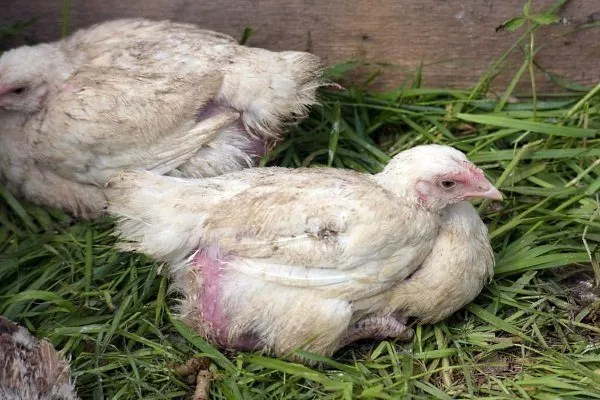
Breeders typically identify a parasitic infection by a "bald back," but in some cases, this sign indicates baldness due to poor housing and feeding. Vitamin D deficiency, dry air and overcrowding, or stale air and high humidity cause birds to shed feathers. This also occurs during normal molting, although not to the same extent as with illness.
Thus, to accurately determine mallophagosis, one should take into account the presence of not only a “bald back”, but also other symptoms characteristic of this disease.
We recommend that breeders read the article about what other dangerous ones exist chicken diseases.
Why are feather eaters dangerous?
If treatment is not given in a timely manner, you will have to face the following consequences of mallophagosis:
- a decrease in the productivity of laying hens by more than 10% as a result of the weakening of their body;
- slow weight gain in chickens and broilers;
- the onset of sexual maturity of chickens later than the due date;
- infection of birds with infectious diseases due to the appearance of open areas on the skin, which become covered with small wounds and become foci of penetration of skin infections;
- death of poultry;
- infection of the entire flock with a parasitic infection (parasites require the constant presence of a host, so they crawl from sick chickens onto the feathers of healthy individuals).
For ornamental chickens, the presence of feather eaters is also unpleasant from an aesthetic standpoint, as they ruin the beauty of their plumage and cause baldness in certain parts of the body. Feathers affected by the parasites gradually become dull and lose their luster.
How to withdraw?
If feather mites have infested chickens, the breeder must accomplish two tasks: treat the infected individuals and prevent the spread of the parasitic infection. However, eliminating this parasite takes quite a long time—on average, 3-4 months, and in severe cases, up to six months. The problem is that feather mites may reappear after a single treatment, so multiple treatments are required to completely eradicate them.
The larger the area of distribution, the more difficult it is to get rid of chicken lice, so you should not delay their removal.
To quickly and effectively eliminate feather eaters, veterinarians recommend using a combination of synthetic medications and folk remedies. While chemicals kill the lice, home remedies will repel them and serve as an excellent preventative measure.
Folk remedies
Chemicals alone are not sufficient for effective control of feather eaters. For best results, home remedies should be used in conjunction with chemicals. It's worth noting that these methods are preferable for treating young birds, as insecticides are too toxic for immature organisms.
So, to treat hens and chicks for mallophagosis, you can use gentle folk remedies. These include:
- Camomile teaTo make a strong chamomile infusion, pour 4 tablespoons of dried flowers into 1 liter of water and simmer for 5 minutes over low heat. Allow the infusion to cool and then rub into the feathers of adult hens and chicks.
- Dry wormwood powderA powder made from dried wormwood branches and leaves also works well as a parasite repellent. To enhance its effectiveness, you can add pyrethrum powder (a type of chamomile).
- HerbsFeather eaters dislike the scent of certain plants, including chamomile, juniper, wild rosemary, wormwood, rosemary, and tansy. To repel the parasites and force them to leave their favorite room, scatter dried herbs over the bedding, interspersed with straw or hay. In addition, an infusion of these herbs can be sprayed on infested birds using a spray bottle. It can also be rubbed into the chicken's feathers.
- Sand and ash bathsTo remove parasites from a bird's feathers, it should be bathed in sawdust. This method is especially effective if the infestation area is small. To allow the chickens to take these baths, place special boxes in the coop or run (depending on the time of year) filled with equal parts wood ash and clean sand. To enhance the therapeutic effect of this mixture, you can add a powdered insecticide.
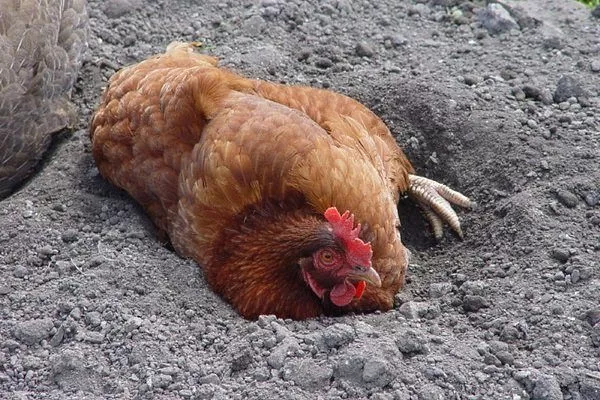
At the slightest discomfort, the chickens will "bathe" in these baths. The sand-ash mixture will coat their feathers, suffocating any feather eaters, while the birds' down and feather coats will be cleaned and freed from excess moisture.
Kerosene has also proven effective in combating chicken lice. It is believed to kill not only the feather-eaters but also their eggs, making it superior to chemical treatments. However, kerosene is aggressive and therefore contraindicated for use with chickens. Kerosene-based treatments are only suitable for adult chickens. Here's one effective recipe:
- Mix kerosene with water and 9% vinegar in a ratio of 1:2:1/4 to avoid burning the bird’s sensitive skin.
- First shake the resulting mixture and then use it to treat the feathers.
Kerosene can also be mixed in equal parts with ammonia and benzene. This solution is suitable for treating not only birds but the entire chicken coop.
Chemicals
Birds infected with lice should be separated from healthy birds to prevent an epidemic from developing. Sick chickens should then be treated with specialized insecticides available at veterinary pharmacies. These include:
- Frontline;
- Leopard;
- Beaphar;
- Neostomazan;
- Stronghold;
- Celandine.
- ✓ Toxicity level for birds of different ages.
- ✓ Compatibility with folk remedies.
- ✓ The period of action of the drug after treatment.
These products are intended for the removal of lice and ticks from pets (cats and dogs), but are also successfully used to treat mallophagosis in chickens. They should be purchased as sprays for treating chicken feathers. Drops are recommended for isolated cases of infestation.
If there are many sick birds, veterinarians recommend using other forms of antiparasitic drugs, which should be given special attention:
- ButoxThis is a universal antiparasitic product. It comes in liquid form and is diluted with water and used to treat chicken feathers using a spray. It can also be used to disinfect the chicken coop.
- InsektalThe product is available in powder form and is intended for application to the chicken's body. It should be dusted onto the bird, lightly rubbed into the base of the feathers.
- ArpalitThis aerosol has the safest formula for birds, so it can be used even on young birds as young as 2 months old. Arpalit should be sprayed evenly over the chicken's plumage.
- NyudaThis is a spray for human lice, but it can also be used to kill feather eaters. The product is quite expensive, but it has low toxicity, making it ideal for treating rare breeds or small numbers of infested birds.
Regardless of the drug chosen, the following rules should be observed when treating birds:
- Apply the drops to the feathers on the back. It's best to cover every area, treating not only the infected areas but all of the bird's feathers to prevent parasites from moving to untreated areas and developing further.
- Apply the spray evenly over the entire feather cover, paying particular attention to areas under the wings and bald spots. It's crucial to spray from a distance of 15-20 cm from the feathers. To prevent the product from getting into the hen's eyes, cover her head with a cloth. In any case, remember that spray insecticides should not be used on chicks under 3 months of age.
- The powder preparation must also be rubbed evenly into the bird's feathers, treating both affected and healthy areas.
- Once the insecticide has been applied to the feathers, the bird's beak should be temporarily bandaged to prevent it from pecking at the treated area. Adult parasites and larvae die within minutes, depending on the effectiveness of the product used.
- All individuals—both sick and healthy—should be treated. This will prevent cross-infection and the spread of parasites.
Toxic compounds cause paralysis in adult feather eaters, but have virtually no effect on the eggs. Therefore, the treatment should be repeated after 7-10 days to kill any newly hatched parasites. Otherwise, the chicken will be re-infested within 14 days.
Some breeders recommend a second treatment 9 days after the first in the summer and 12 days after the first in the winter. In any case, the interval between treatments must be maintained, otherwise the birds may suffer or even die.
The exact procedure for treating chickens is determined by the instructions on the packaging of each product. Ignoring these instructions can cause irreparable harm to the birds.
Disinfection of the chicken coop
Feather eaters infest not only the feathers of birds, but also bedding, garden tools, and even the wooden structures of the coop itself. Therefore, to get rid of the parasites, simply treating the chickens isn't enough—the coop itself also needs to be disinfected.
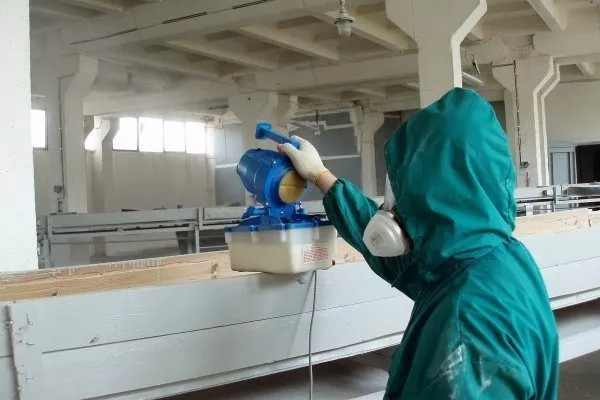
For these purposes, products against fleas, cockroaches, ants, or bedbugs are used. The choice of composition depends on the severity of the infestation; if there are numerous parasites, highly toxic products should be used. The most popular insecticides for indoor treatment are:
- Karbofos (aqueous solution 0.5%);
- Pyrethrum (aqueous suspension 10%);
- Butox (diluted 1 ml per 4 liters of water).
You should refrain from using preparations such as Dichlorvos, as their vapors are extremely toxic and can cause harm to the health of birds.
After selecting the optimal product, you can begin treating the room, following the following instructions:
- Temporarily relocate livestock to another place of residence.
- Put on a thick suit, a respirator, transparent plastic goggles and rubber gloves.
- Prepare the solution using the correct dosage, as most products are only maximally effective at the optimal concentration. For this reason, the appropriate dosage for room disinfection should be noted on the packaging.
- Remove feed, bowls, and feeders from the coop, and discard any wooden items that could harbor mites. Be sure to remove the bedding as well; it's best to burn it or take it to a landfill.
- Clear the room of chicken droppings, feed scraps and straw.
- Treat the perches, walls, and floor of the chicken coop with the prepared solution. It's best to use an emulsion-based solution for treating the entire room, as aerosol or spray will consume too much, requiring multiple bottles, significantly increasing the cost of lice control.
- Close the doors and wait a while for the vapor to soak into all the cracks. Then ventilate the room.
- Cover the floor with new matting and return clean equipment.
The birds can be returned to the chicken coop 2 days after it has been treated with a disinfectant.
Preventive measures
To significantly reduce the risk of chickens becoming infected with feather eaters, you should follow simple preventative measures:
- Minimize the use of wood in the chicken coop, as this material is a favorable environment for the life of feather eaters.
- Maintain an optimal humidity balance in the chicken coop and keep it clean - change the bedding as it gets dirty, and also treat the floor and walls, feeders, nests and perches with boiling water.
- Do not keep birds in confined spaces and provide them with the opportunity to walk.
- Monitor the chickens' diet, providing them with the necessary minerals, vitamins, proteins and fats.
- If possible, avoid contact between chickens and wild birds such as tits, pigeons, sparrows, etc., as they can carry feather eaters.
- Carefully inspect chickens to detect the slightest signs of infection in time and prevent the spread of harmful insects.
- Observe hygiene rules. It's advisable to wear special clothing and footwear for working in the chicken coop to prevent the introduction of parasite eggs from outside.
- Inspect the feathers and skin of chickens weekly for damage.
- Arrange for monthly inspection of the chicken coop for parasites.
- Ensure quarterly disinfection of the premises even in the absence of signs of infection.
Compliance with a set of preventive measures will help protect poultry from infestation by feather eaters.
Video: How to get rid of feather eaters in chickens?
During the cold season, chickens are often kept in cramped quarters, which can lead to infestations of feather eaters. These can be eliminated with a special product called Delcid. The following video explains and demonstrates how to treat infested chickens with this product:
If your chickens are becoming nervous, plucking their feathers, and eventually losing their hair, they may be infested with feather eaters. These parasites can reduce productivity and even lead to death. Therefore, it's crucial to take all necessary measures to eradicate them and then follow preventative measures to prevent reinfestation.