
To prevent bird deaths due to parasitic infestations, there is a medication called Metronidazole, an antibiotic. It is lethal to most protozoa and anaerobic microorganisms.
Release form and composition of Metronidazole
Metronidazole's main component is an antimicrobial and antiprotozoal agent of the same name. It also contains various fiber additives, glucose, and chemical compounds designed to facilitate the drug's absorption into the bloodstream and ensure maximum direct delivery.

The drug originates from France and was previously called Flagyl.
Metronidazole is available in several forms, including suppositories, ointments, and toothpastes, which are unsuitable for poultry. Tablets and capsules are considered the most suitable for chickens.
The tablet weight is most often 500 mg, and the amount of active substance is 0.125 or 0.250 g.
The number of pills in a package may vary depending on the country of manufacture. Most commonly, the drug is packaged in jars or boxes of 10, 20, 50, 100, 250, 500, and 1,000 tablets.
Since Metronidazole is a drug, before giving it to birds, you should consult a veterinarian who will make a diagnosis and determine the correct dosage.
Pharmacological properties and system of action
Metronidazole is effective against most protozoan parasites—Trichomonas, Histomonas, amoebas, and others. After entering bacteria and protozoa, the drug's molecules react with the transport proteins of these organisms. As a result, the drug actively binds to the microorganisms' DNA and blocks their ability to synthesize proteins, preventing their reproduction and leading to their death.
After ingestion, Metronidazole enters the digestive system, from where it spreads throughout organ tissues. It tends to accumulate in the liver.
The half-life is approximately 8 hours. Most metronidazole is eliminated from the body through renal filtration (60-80%), with the remainder excreted in the feces. Elimination of metabolites produced in the liver takes slightly longer.
Why and in what quantities is the product given to chickens and hens?
The essence of taking Metronidazole is to remove protozoan parasites and anaerobic microorganisms from the body.
Coccidiosis
This is a protozoan infectious disease caused by the simplest anaerobic bacteria, Eimeria. These bacteria develop and affect the gastrointestinal tract in the first days of life. There is no complete cure for this disease.
Symptoms of coccidiosis include:
- lack of appetite;
- increased thirst;
- diarrhea with blood clots;
- placement of the bird near a heat source;
- low mobility;
- the chicken's desire to isolate itself from other individuals;
- paralysis.
Coccidiosis is diagnosed using history, symptoms, and autopsy results of the dead bird.
How to treat coccidiosis with Metronidazole:
- The drug is given to birds in the amount of 0.1 g of the active ingredient per 1 kg of the individual’s weight (if the dosage is 0.125 g, then one tablet is per 5 kg of the bird’s weight; with 0.5 g of the active substance, one tablet is per 10 kg of body weight).
- The medicine in tablet or powder form must be dissolved in water.
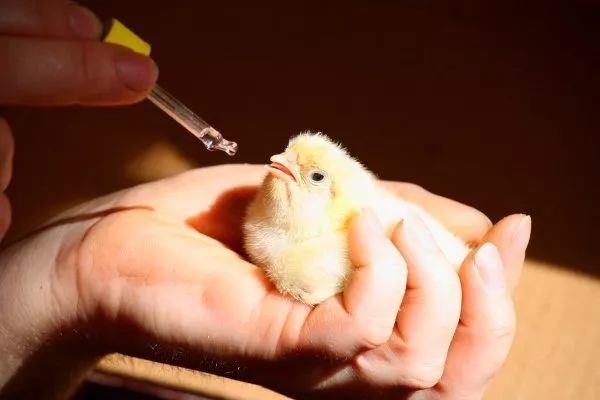
- A pipette or syringe is used to administer the medicine to the chicken.
- Metronidazole is given 3 times a day for 1.5 weeks.
- ✓ Monitor water consumption of birds during treatment to ensure sufficient drug intake.
- ✓ Monitor the behavior and condition of birds in the first 48 hours after the start of treatment for early detection of side effects.
Sometimes the medication is administered with food rather than water. The tablets are crushed and mixed with food at a dose of 150 mg per 1 kg of food for 10 days.
At preventive measures For broiler chickens, metronidazole is mixed with food at a dose of 0.2-0.25 g per 1 kg of body weight for five days. Prophylaxis can last up to 1.5 months.
Trichomoniasis
It is the most dangerous infection among chickens. It is especially dangerous for broilers, as they have a weak, underdeveloped immune system. However, they encounter this disease less frequently than backyard poultry, as broilers do not come into contact with pigeons, which carry trichomoniasis.
In addition, dirty water and chicken feed are common sources of infection, and the causative agent is Trichomonas. To prevent infection, it is recommended to keep water and food clean.
Symptoms of a sick bird are as follows:
- drowsiness;
- beak open all the time;
- diarrhea is observed;
- decreased mobility;
- a yellow coating appears in the throat and goiter;
- the wings hardly rise;
- the chicken refuses to eat and breathes heavily;
- conjunctivitis.
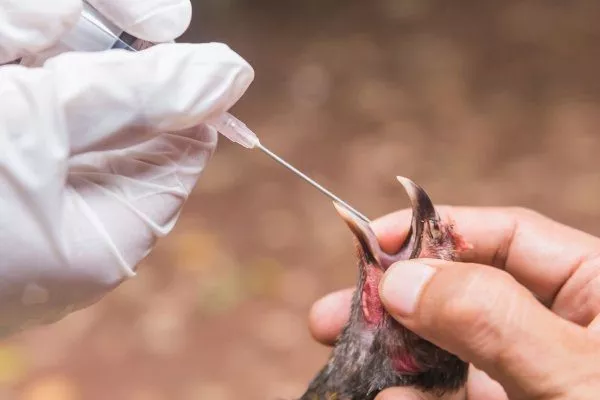
Trichomoniasis is diagnosed by examining swabs taken from the beak's mucous membranes. Symptoms of trichomoniasis resemble those of smallpox and vitamin A deficiency. While the breeder waits for test results, their birds may die from the disease (the mortality rate from trichomoniasis can rise to 90%). Therefore, they will have to administer vitamins and metronidazole to the chicks themselves.
The tablets should be thoroughly crushed and added to the bird's food (25 mg per 1 kg of body weight). The treatment is repeated once daily for 10 days.
For trichomoniasis preventive measures They are not carried out. To do this, it is sufficient to observe sanitary standards and a diet.
It's also worth noting that treatment may sometimes be necessary for older birds. In such cases, the dosage is 1.5 g of active ingredient per kilogram of feed. This should also be administered for 10 days.
Histomoniasis
This is an invasive disease caused by the protozoan anaerobic bacterium Histomonas. It occurs due to poor poultry husbandry practices and inadequate feeding. It is characterized by damage to the cecum and liver. Symptoms include:
- loss of appetite;
- yellow foamy diarrhea;
- low mobility;
- drooping wings;
- contamination of feathers;
- blue skin on the bird's head;
- chicks may tremble and squeak;
- death of epithelium in exposed areas of the body.
The disease occurs between the 20th and 90th days of a chick's life, lasts from one to three weeks, and ends with either recovery or death. Adult birds rarely contract histomoniasis.
Histomoniasis is diagnosed taking into account the epizootic situation, symptoms and autopsy results.
Treatment with Metronidazole:
- Dissolve 0.25 g per 1 kg of body weight in water and give to the bird using a pipette or syringe three times a day for a week.
- Crushed tablets or powder are also added to food at a dosage of 4.5 grams per 1 kg of feed, divided into three doses. Treatment duration is 10 days.
During preventive measures The powder is added to the feed at a rate of 20 mg per 1 kg of bird weight for a period of three to five days. The interval between courses is at least 10 days.
Possible contraindications and side effects
Intolerance to the main component of Metronidazole is a rare, but the most important contraindication.
If Metronidazole is administered at the correct dosage and at the correct time, allergic reactions are unlikely. However, if side effects do occur, discontinue use immediately and consult a veterinarian.
Overdose
Metronidazole poisoning is associated with exceeding the recommended dosage of tablets when the drug is taken orally. Suppositories and other forms of this medication are not capable of causing such a severe effect on the body, so the use of tablets should be approached with extreme caution in both humans and animals.
Other features of the drug
Metronidazole has a very short half-life, so even birds slaughtered immediately after administration will not contain any traces of it. However, it's still recommended to wait at least 3-5 days after the last administration before slaughtering the birds. Eggs laid during this period should not be consumed, as the drug can penetrate the eggs.
Avoid overdoing it with preventative measures—one course per year is more than enough, as Metronidazole significantly impacts kidney function in birds. The recommended preventative period is winter and spring.
Storage conditions and period
It is advisable to store the tablets in their original packaging in a dry place, out of reach of sunlight, at a temperature of +5 to +20 degrees, away from children and pets.
Do not allow the product to come into contact with surfaces where food is prepared or eaten, or with utensils used for eating.
The shelf life, if all conditions are met, is 5 years.
What is the cost of the drug and where can I buy it?
The chemical structure of the drug is completely the same depending on whether it is imported or domestic, but the price will vary due to transportation costs.
Among the domestic manufacturers of Metronidazole, the following can be noted:
- Biochemist;
- TakedaPharma AS;
- Medisorb;
- Dalhimfarm;
- Ozone;
- Trichobrolum.
The product can be purchased at any pharmacy, and the price starts at 19 rubles.
Metronidazole is an effective medication for many serious diseases, but self-medication of birds is not recommended. It's important to remember that before starting treatment, it's always a good idea to consult a veterinarian, who will advise on when, in what quantities, and whether to administer the medication to your brood.