
Methylene blue and blue iodine are antiseptics suitable not only for treating damaged skin but also for treating various viral, fungal, and bacterial diseases in chickens. We'll find out below whether methylene blue and blue iodine are beneficial for birds, and how to use them to prevent side effects.
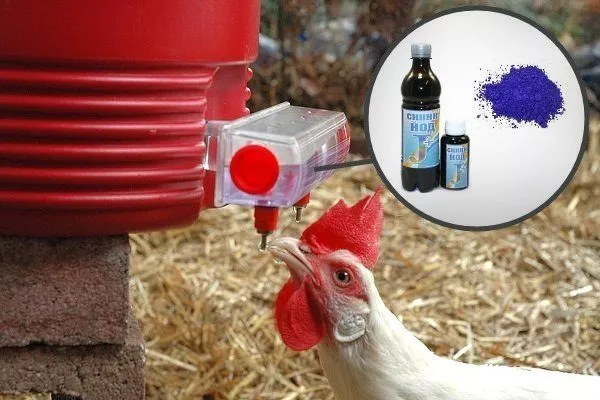
What are these drugs?
Methylene blue is a 1% aqueous solution of dark blue color, the active ingredient of which is methylthioninium chloride.
Blue iodine (amyloiodine) is a blue solution made from iodine and starch. It's available over-the-counter at any pharmacy. There's also a product called "Iodinol," but it contains polyvinyl alcohol instead of starch.
The main characteristics of the drug can be found in the table:
| Characteristic | Description |
| Release form | 1% aqueous solution, which is available in bottles of 25, 50, 100, 130, 200, 260, 500, 1000 ml (packaging in containers of other volumes is possible) |
| Best before date | The solutions are suitable for use for 3 years from the date of manufacture. |
| Storage conditions | The product must be kept in a dark place in a tightly closed bottle at a temperature of no lower than 0˚C and no higher than +25˚C |
How does an antiseptic work?
Once you understand the properties of these medications, you can understand why they are used to treat chicken diseases. For example, blue iodine:
- When applied to infected skin, its active ingredient reacts with the proteins of the harmful cells, forming organic compounds. After a period of time, these diseased cells die. This way, the drug destroys pathogenic microorganisms and disinfects the surface to which it is applied, which is why it is used in surgical practice and veterinary medicine for antiseptic treatment.
- Some believe that blue iodine acts like brilliant green. However, this is incorrect. When it enters bacteria, it causes cellular dysfunction, which leads to the death of the pathogen. Because the substance is quickly eliminated from the bird's tissue, a negative reaction is avoided.
- This remedy can be used not only externally but also internally. When the active ingredient enters the body, it negatively impacts pathogenic flora in the gastrointestinal tract, making it effective in cases of poisoning. It can also relieve mild pain.
- Like regular iodine, blue iodine affects thyroid function. Iodine deficiency impairs thyroid function, leading to widespread problems in chickens, including disruption of development, overall health, and productivity.
How do these drugs help chickens?
Methylene blue and blue iodine perform the following therapeutic functions:
- destroy bacteria, fungi, viruses and helminths (and resistance to these drugs does not develop in the future!);
- help heal wounds (burns, ulcers, eczema) and prevent sepsis;
- improve the general condition of the body.
Blue iodine also corrects iodine deficiency, boosts immunity, and increases hemoglobin, red blood cell, white blood cell, protein, and calcium levels in the blood. Methylene blue is also an antidote for poisoning (for example, carbon monoxide).
Methods for preparing blue iodine
Blue iodine can be purchased at a pharmacy or prepared at home using one of two recipes. The first recipe, believed to be developed by Dr. V. A. Mokhnach, is commonly used. The second is less well-known but produces iodine that dissolves better and does not irritate the intestinal and stomach lining of birds.
1 recipe
Ingredients:
- water – 200 ml;
- starch – 1 tbsp;
- sugar – 1 tsp;
- citric acid – 1/2 tsp;
- 5% iodine – 1 tsp.
Preparation:
- Take 100 ml of water, slightly warmer than room temperature, and add starch and sugar. Mix thoroughly until the mixture is smooth and lump-free.
- Add citric acid and another 100 ml of water. Place the mixture on the stove and bring to a boil to create a jelly-like consistency.
- Cool the mixture, add some iodine, and stir. The liquid should turn blue.
- Pour the mixture into a bottle or jar and close the lid tightly.
Sugar and citric acid are preservatives, so they preserve the properties of blue iodine. It will retain its properties for several months. However, once the composition begins to lose its blue color, it will lose its properties. Thus, color is an indicator of the drug's activity.
The preparation of this remedy according to this recipe can be clearly seen in the video below:
Recipe 2
Ingredients:
- water – 250 ml;
- starch – 1 tbsp;
- 5% iodine – 1 tsp.
Preparation:
- Take a 500 ml saucepan and pour 50 ml of warm water into it. Add starch and iodine, and mix thoroughly.
- Pour 200 ml of boiling water into the mixture in a thin stream, stirring constantly. The result should be a paste-like solution.
- Cool the mixture and pour it into a bottle or jar, seal it well.
This iodine can be stored for about 3 weeks in the refrigerator.
Watch another video about making blue iodine (then add 1-2 teaspoons of this blue iodine to 2 liters of water and serve it to the bird instead of water):
Methods of administration and dosage
Methylene blue and blue iodine are versatile agents used to treat various chicken ailments. Dosages depend on the specific ailment:
- Wounds, burnsIf skin diseases or injuries are present, they should be cleaned first (to remove scabs, pus, etc.) and treated with a 1% aqueous solution. The wound can be washed or covered with a compress (gauze soaked in blue iodinol). Dressings should be changed 1-2 times a day.
- Inflammatory processesIf an infection enters the bird's body, causing inflammation in the stomach and intestines, blue iodine should be administered orally. In this case, breeders must know and adhere to the strict dosage: 0.005 to 0.015 ml per 1 kg of body weight, diluted with water at a ratio of 1 to 100. Feed the prepared solution to the bird, replacing regular water. Treatment continues until symptoms of the disease completely disappear (usually about 10 days).
- Poisoning. If a bird has been poisoned, for example, by food, treatment is carried out with blue iodine: 0.03-0.05 ml of the preparation per 1 kg of live weight should be mixed with water at a ratio of 1 to 100 and given to the bird to drink every 2 hours for 3-5 days. In cases of severe poisoning, the dose may be increased, but a veterinarian consultation is necessary first.
For poisoning with nitrites, aniline, and plant toxins, a 1% aqueous solution of methylene blue is administered intravenously. Dosage: 0.1-0.25 ml per 1 kg of body weight.
For cyanide, carbon monoxide, and hydrogen sulfide poisoning, the same treatment is administered intravenously, but at a dosage of 0.5 ml of solution per 1 kg of bird weight. This treatment is performed by a veterinarian! - Coccidiosis and other gastrointestinal infectionsSick chickens should be given the medication orally. To do this, add 0.2-0.3 ml of iodinol to a small amount of water and administer it to the chickens once a day. Treatment lasts approximately 10-15 days.
Methylene blue in powder/granules is given with drinking water diluted in water in proportions of 1:5000. - Reduced immunityTo strengthen the bird's immunity, it should be given 0.3-0.5 ml of the preparation once a day. The duration of treatment is two weeks. Blue iodine is especially helpful in dealing with chicken diseases During the fall and winter seasons, they lack vitamins and microelements, which leads to various epidemics and colds.
Blue checker for chickens
Iodine checkers are also used to treat and prevent various chicken diseases. Blue iodine can be loose, sold in jars, or produced as tablets. The exact form depends on the manufacturer. In any case, checkers are very popular because the iodine vapor in this form is highly permeable.
As a rule, checkers are used to:
- disinfect the poultry house;
- prevent epidemics;
- to carry out therapy during epidemic outbreaks.
The drug is used as follows:
- Place the fire starter on a non-flammable surface that is level and flat. A sheet of iron, concrete, or brick are suitable for this purpose.
- Light the checker to carry out cyclic treatment with iodine vapor.
Once lit, the bomb will release blue or slightly violet iodine vapor into the atmosphere. It will burn within 30 seconds, so the birds won't even have time to suspect anything.
When using iodine checkers, the following nuances should be taken into account:
- If respiratory diseases are detected in chickens, then disinfection with an iodine checker will have to be carried out once every 2 days.
- If the concentration of the product decreases, the chicken coop can be treated every day, but one must not forget about breaks, which are arranged every 3 days.
- Air should not be allowed to enter the room to increase the concentration of iodine vapor to 200 mg per cubic meter.
- To better disinfect the chicken coop, it's best to temporarily move the birds to another room. Also, close all windows and doors tightly. In this case, complete disinfection will take about three hours. Afterward, ventilate the room and rinse the equipment with clean water before introducing the chickens.
- ✓ To achieve the maximum effect of disinfecting the chicken coop with iodine checkers, the room temperature should not be lower than +15°C.
- ✓ The air humidity in the chicken coop during treatment should not exceed 60% so as not to reduce the concentration of iodine vapor.
Side effects and contraindications
The use of blueing and blue iodine in the treatment of various pathologies in birds should not be taken lightly, as they can cause dangerous side effects. These include:
- painful sensations in the stomach and intestines (when taken orally);
- development of an allergic reaction.
Side effects may also occur if the dosage is not met. In this case, chickens may become poisoned, develop diarrhea, and experience vomiting.
As for contraindications, this medication should not be used if it causes individual intolerance. This may occur even with strict adherence to the dosage.
Breeder reviews
Breeders often use methylene blue and blue iodine to treat their pets. They share their experiences in the comments:
Methylene blue and blue iodine are antiseptic agents with excellent bioavailability, which are effective in treating chickens. However, before using them, consult a veterinarian. They will assess the treatment options and help you choose the correct dosage based on the specific disease and the chickens' condition.
A good article, large and quite detailed, but I would like to make a small clarification: methylene blue (methylthioninium chloride) and blue iodine (a compound of starch and alcoholic iodine) are completely different preparations.
We've added this information to the article. Thank you for your attention and insightful feedback!