
The musculoskeletal system of chickens can be affected by a variety of diseases, ranging from rickets to paralysis of crooked and curled toes. To provide the bird with the necessary medical care in a timely manner, it's important to immediately address any problems with its feet and begin appropriate treatment.
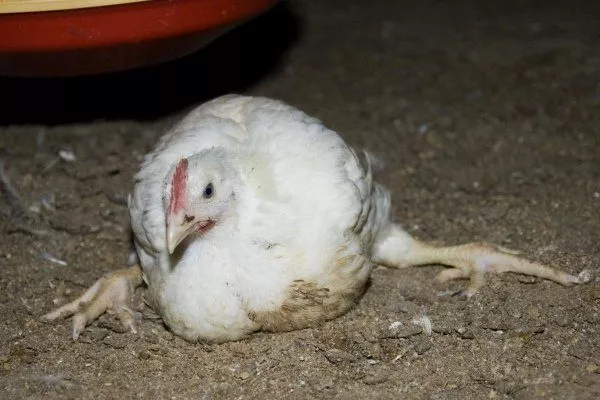
The main causes of diseases
There are many reasons that can lead to leg diseases in chickens, but the main ones are:
- Keeping livestock in unsuitable conditionsWhen chickens are kept in crowded and cramped conditions, the risk of developing various limb pathologies increases significantly. It's important to remember that chickens are active birds that primarily move on their feet. If they don't exercise their feet enough, they may develop various joint problems. Therefore, chickens should be kept in suitable conditions, with free feeding and water available.
- Limb injuriesChicken feet are easily injured by stepping on hard debris and even threads, so it's essential to keep the coop and run clean. Furthermore, contaminated litter can lead not only to injuries but also to infectious diseases, including mange.
- Unbalanced dietIf a chicken's body doesn't receive the necessary nutrients from its feed, it will try to compensate with its own resources, so at first, everything will seem fine. However, over time, problems will become apparent, and vitamin deficiency can affect not only the musculoskeletal system but also other organs.
- ✓ Optimal stocking density: no more than 4-5 chickens per 1 m² to prevent crowding and injuries.
- ✓ Temperature conditions: maintaining the temperature in the chicken coop within 12-16°C for the comfort of the birds.
- ✓ Humidity: Humidity levels should be between 60-70% to prevent the development of fungal diseases.
If a hen in the flock is noticed limping on one leg, limping, or rarely standing up, it should be separated from its brethren and examined carefully. This should be done promptly, as chickens do not tolerate the presence of a sick hen. They will bite and prevent it from accessing food, which will significantly complicate its subsequent treatment.
Vitamin deficiencies in chickens
A deficiency of certain vitamins can cause vitamin deficiency, which will manifest itself in various symptoms, including musculoskeletal disorders. The various types of vitamin deficiency and their consequences are presented in the table:
| Pathology | Peculiarities | Symptoms | Treatment and prevention |
| Avitaminosis A | It is caused by a deficiency of vitamin A (retinol), which is responsible for the normal functioning of the cornea, intestines, and mucous membranes of various organs, especially the respiratory tract. It also promotes rapid weight gain. | Initially, birds exhibit apathy, followed by a loss of appetite and weight loss. Over time, eye pathologies develop, which can lead to blindness. The feet are also affected, with ulcers forming and the soles damaged. A plaque forms on the mucous membranes. The bird's digestion is impaired, and its development is delayed. Symptoms develop slowly and go unnoticed for a long time. | Fish oil should be added to the chicken's diet for several weeks. Crystalline retinol should also be dissolved in water. The menu should be supplemented with corn, carrots, pumpkin, and ground alfalfa. |
| Vitamin B1 deficiency | It most often affects birds under one month old. It causes disruptions in the nervous system (polyneuritis) and metabolic processes, causing disturbances in protein, carbohydrate, and lipid metabolism. | It manifests itself as progressive weakness and lethargy in chickens, hypothermia (a drop in body temperature), rapid breathing (tachypnea), and diarrhea. Sometimes the bird experiences seizures, becomes sedentary, struggles to stand on its feet, and falls over and collapses on its chest when walking. In severe cases, paralysis of the neck, wings, and legs occurs. | Treatment involves administering a commercial preparation at a dose of 50-100 mcg per animal and lasts approximately 3-5 days. For prevention, it is necessary to supplement the diet with feed and supplements containing vitamin B1 (thiamine). These include brewer's yeast, bone meal, bran, and sprouted wheat. |
| Avitaminosis B2 | It is caused by nutritional errors and causes disturbances in the nervous system. It typically affects young hens. | This leads to decreased activity, weakness, and lethargy in the bird. Its appetite decreases, and weight loss occurs, with feather formation and growth being disrupted. Digestive problems lead to diarrhea. The bird has difficulty climbing and walks unsteadily due to impaired motor coordination. Furthermore, its eye is damaged, developing cataracts or conjunctivitis. | To treat vitamin deficiency, high doses of commercial riboflavin (vitamin B2) should be added to the chicken's diet. For prevention, feed ground alfalfa, sprouted grain, and fermented milk products, as they contain high amounts of riboflavin. Additionally, increase the daily protein and lipid intake. |
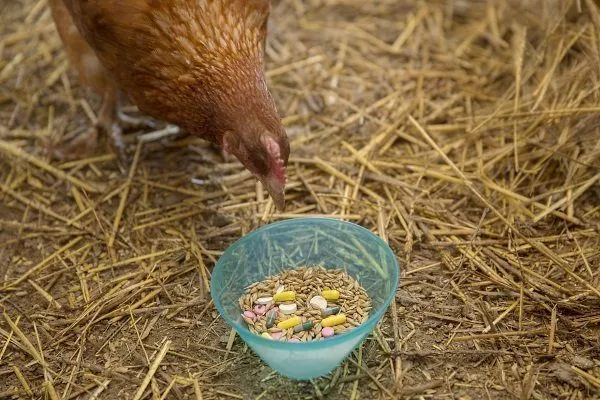
Table continues…
| Pathology | Peculiarities | Symptoms | Treatment and prevention |
| Vitamin B12 deficiency | Vitamin B12, or cyanocobalamin, is involved in metabolism and regulates hematopoiesis. Its deficiency causes vitamin deficiency in chickens of any age. | Chickens become less active, fall over when walking, and struggle to stand. Signs of anemia develop, such as a pale comb, wattles, and mucous membranes. Their wings droop, and their plumage becomes ruffled. | Pharmaceutical cyanocobalamin is added to the birds' diet. For prevention, flour and dairy byproducts are mixed into the feed. |
| Vitamin D deficiency | A deficiency of vitamin D or cholecalciferol leads to the development of rickets and disruption of mineral metabolism, particularly calcium and phosphorus. The disease develops in overcrowded poultry houses, high humidity, and polluted environments. | In young birds, bone growth slows, and the development and growth of their legs is impaired. They limp, walk unsteadily, constantly lie down, and are reluctant to rise. Leg joints often swell and become deformed, while the nails and beak become soft. The paws, keel, and chest become deformed. Egg formation is impaired, with the shells becoming excessively soft and thin. Eggs may even be completely missing. | To treat rickets, fish oil should be added to the diet at a rate of 10-50 drops per bird. For affected flocks, the entire oil can be mixed with the feed. Additionally, a pharmaceutical preparation containing synthetic vitamin D analogues should be given to the birds. For prevention, mineral supplements such as crushed shellfish shells, slaked lime, bone meal, or chalk should be added to the birds' diet. Birds also need access to fresh air. |
| Vitamin E deficiency | A deficiency of vitamin E or tocopherol slows muscle growth and development, and egg production declines. Vitamin deficiency is more common in young animals. | The birds feel lethargic and weak, are inactive, and stagger when walking. Leg damage occurs, with toes curling. Due to muscle weakness, chickens may fall while walking and rarely stand. | For treatment, synthetic tocopherol is added to the food, and for prevention, chickens need to be given fresh greens, fermented milk waste, sprouted oats, corn and barley. |
Any type of vitamin deficiency can disrupt the ovipositor function of laying hens, and many eggs lose their ability to be fertilized. Then, the laying hens' diet is supplemented with, for example,vitamin complex "Ryabushka"But if there are roosters on the farm, their diet should also be rich in proteins, fats, and vitamin-rich feed.
The following beneficial supplements are suitable for both sexes:
- brewer's yeast;
- fish, bone and meat and bone meal;
- fish oil, necessary for vitamin D and A deficiency;
- ready-made premixes, balanced in composition.
In addition, chickens need to be given plant foods:
- sprouted wheat grains;
- pureed alfalfa;
- bran;
- oats;
- corn;
- barley.
Do not give chickens a vitamin complex in combination with vitamin supplements, as this may result in an overdose, which can also have negative consequences for the bird's health.
Gout or urolithiasis
Classified as a metabolic disease, gout is caused by improper feeding and metabolic disorders in chickens. The disease is characterized by uric acid deposits in the joints and muscles. It typically affects flocks kept in cages and fed excessive amounts of animal feed (meat, bone meal, and fish meal). Therefore, gout is often observed in egg-laying and meat-producing breeds.
The disease manifests itself with the following symptoms:
- enlargement of the finger joints;
- the appearance of cone-shaped growths on the phalanges;
- lameness of chickens and their falling on their feet.
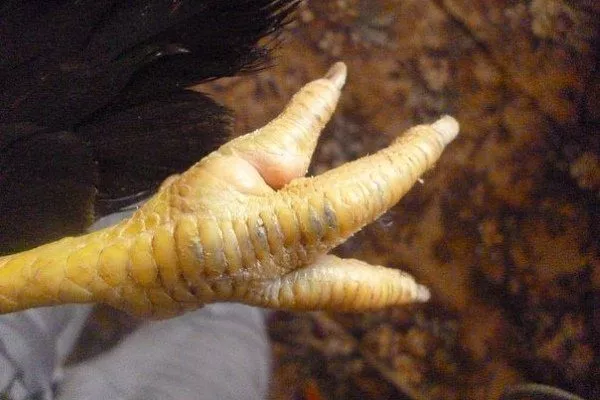
Gout treatment requires normalizing metabolism and eliminating uric acid salts from the body. This requires reducing protein in the diet and initiating treatment with Zinhofen (Atofan), which has the following effects:
- dissolves uric acid salts and removes them through the blood;
- produces an analgesic effect;
- increases the motor and feeding activity of chickens.
Zinchofen should be administered to birds as a "soda cocktail." The dosage is 0.5 g per bird. This treatment lasts 2-3 days.
In case of gout, chickens should also be given baking soda for 2 weeks, adding it to the common drinking bowl at the rate of 10 g per individual.
As for prevention, chickens need to be given the required amount of protein, vitamins, amino acids, and micronutrients. Furthermore, it's important to monitor their feed for mycotoxins, meaning it's free of mold. For prevention, birds should also be given vitamin A, yeast feed, chalk, and root vegetables, while animal protein should be reduced in favor of whole grains and leafy greens.
Chickens will feel good if they are provided with access to fresh air.
Rickets
A vitamin D3 deficiency leads to the development of rickets, which affects not only the legs but also the entire body of chickens. The most noticeable bone deformity is observed in the limbs. It's important to note that young birds develop classic rickets, while adult birds experience decalcification of eggshells and bones.
The pathology develops gradually and is manifested by the following symptoms:
- Egg-laying and all-purpose breed chickens begin to feel weak and have poor appetites from two weeks of age. Their feathers develop poorly.
- After two weeks, the birds become apathetic and lose interest in movement.
- The birds suffer from diarrhea and impaired coordination. Their claws and bones become soft and feel dented when palpated.
- Before death, the birds lose all strength, so they completely refuse to move. They lie motionless with their limbs outstretched and die in this position.
It's worth noting that symptoms of rickets in broilers can appear as early as day 8. They develop hock problems and become emaciated. Furthermore, the birds experience developmental delays, and their body weight drops by 50%.
In his video, the breeder uses his chickens as an example to demonstrate the symptoms of rickets:
If the disease affects laying hens, they begin to produce soft-shelled eggs. They suffer from lameness, brittle bones, and pain when walking. Their ribs become excessively soft, and their claws and beak become flexible. Some individuals may develop yolk peritonitis.
Rickets is treated with ultraviolet irradiation or allowing the birds to walk outdoors, along with supplementation with vitamin D. The dose can be 2-3 times higher than the prophylactic dose, but no more, as an overdose can lead to vitamin poisoning. Only a veterinarian can determine the correct dose, taking into account a number of additional factors:
- oviposition intensity;
- availability of walking area;
- region of residence (the dose of vitamin D is maximum for residents of northern regions);
- availability of green fodder.
To reduce the risk of hypovitaminosis, birds should be regularly given fresh air and promptly treated for digestive diseases, as they lead to impaired vitamin absorption, which can lead to softening of bones and the development of crooked legs.
Chicken lameness
Lameness in chickens can be a symptom of a serious disease, but it can also be considered a separate pathology caused by the following reasons:
- mechanical injuries – cuts, bruises, joint dislocations, sprains, etc.;
- damage to the nerves that innervate the limbs.
This defect can manifest itself either suddenly or gradually. The chicken will become restless, limping and having difficulty moving. It will also flap its wings frequently and perch to rest, even after short walks.
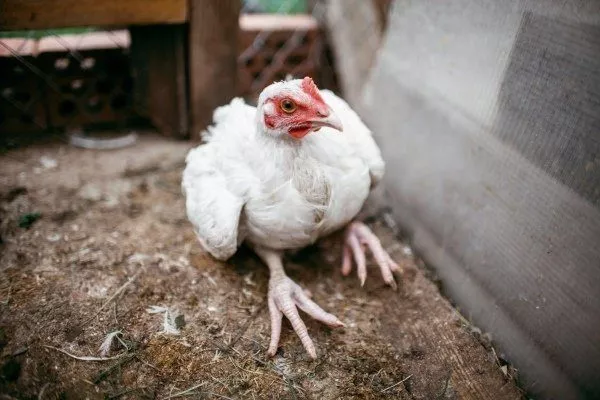
When examining a sick chicken, you may notice enlarged, swollen joints, wounds, abscesses, etc. In this case, treatment involves the following steps:
- Separate the lame chicken from the flock, as healthy chickens may become aggressive toward it. It's also a good idea to allow it to have visual contact with its fellow chickens to help it feel more at ease.
- Treat any cuts or wounds with a brilliant green solution to prevent infection and spread.
- Balance the diet by including vitamin supplements.
If a visual examination of a limping bird does not reveal any external injuries, it should be shown to a veterinarian, as lameness can be caused by a serious internal disease.
- ✓ Decreased activity and refusal to eat may indicate the onset of a disease.
- ✓ Aggressive behavior towards other chickens may be a sign of discomfort or pain.
Arthritis and tendovaginitis
Both conditions have virtually identical external symptoms, so they are often confused. Furthermore, in many cases, tendovaginitis is a complication of arthritis. To at least theoretically differentiate between these two conditions, we suggest reviewing the following table:
| Parameter | Arthritis | Tenosynovitis |
| Concept | This is an inflammatory condition of the joint capsules and adjacent tissues, also known as "joint aches" or "dirty chicken feet." It typically occurs in broiler chickens that are actively growing and rapidly gaining weight. | This is an inflammation of the tendons, or more specifically, the inner lining of their sheath. It is most often observed in older hens. |
| Reasons | Arthritis can develop due to mechanical injuries, infections (bacterial penetration of the joints), and gout. Often, the trigger for arthritis is poor animal management, such as overcrowding or infrequent bedding changes. | Tenosynovitis can be caused by microtrauma or bacteria that infect chickens due to improper care or being kept in dirty conditions. Furthermore, the condition can develop due to tendon strain, which is common in overweight chickens. |
| Symptoms | The bird limps on the affected leg and leads a sedentary lifestyle. The affected joint may become enlarged. In severe cases, an increase in local temperature is observed, indicating inflammation. | Redness and, less commonly, swelling may be observed in the joint area. Seizures may sometimes occur. If the bird is infected, it will develop a fever and pain. |
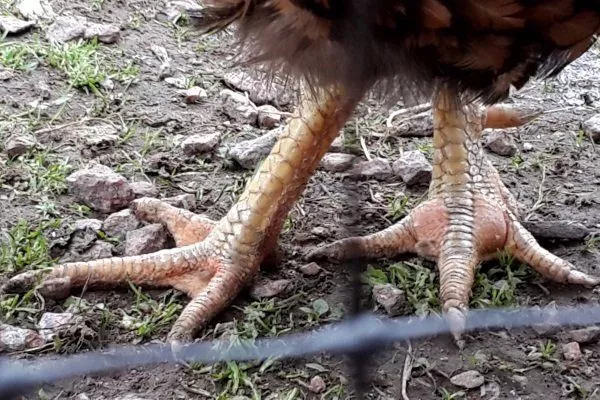
These diseases are difficult to detect early on, as their symptoms become apparent only in later stages. If treatment is deemed appropriate, it typically involves antibiotics. As a preventative measure, it's essential to keep the coop clean, prevent the litter from becoming damp, and change it regularly.
Knemidocoptic mange or scabies
It is considered the only anthropozoonotic disease among animals that is highly contagious. It is also commonly known as chalky foot. It is caused by the scabies mite, which penetrates the skin of the unfeathered parts of the feet, burrows, and reproduces, feeding on the secretions between the tissues. Infection can occur through shared objects, including feeders, waterers, and various tools.
The scabies mite on the legs of chickens also poses a danger to humans, so it is extremely important to observe personal hygiene rules.
Symptoms of Knemidocoptosis can appear in chickens as young as six months old. They develop gradually:
- Hard, lumpy bumps appear on the bird's legs, causing itching and dermatitis. To relieve the itching, the bird may peck at the scales until they bleed.
- Growths appear, and the scales become covered with a white coating, protrude and partially peel off.
- The hen becomes restless and indifferent to food. She often freezes on one leg, convulsively clenching and unclenching the toes of her drawn-up foot. In the evening, the hen is reluctant to return from the run to the coop, as parasites become more active at this time of day.
- The stratum corneum becomes completely covered with grey crusts, and then with cracks through which blood seeps.
- Finger joints become inflamed, and necrosis of the phalanges is possible, caused by the toxic breakdown of parasite waste products in the subcutaneous tissue of the affected limbs. The limbs may partially or completely fall off.
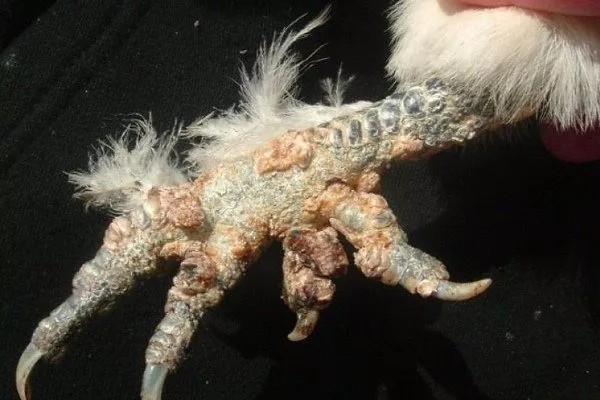
Treating scabies in chickens at an early stage is effective and may involve the use of the following methods:
- Soak the chicken feet in a soapy solution for 15-20 minutes, then treat with boric petroleum jelly or Dorogov's antiseptic stimulator.
- Clean the affected limbs with pharmacy hydrogen peroxide, and then apply Vishnevsky ointment.
- Soak the chicken's legs in a bath of birch tar for 15 minutes. This method is effective for both small and large farms.
All of the above procedures must be repeated twice: first after 2-3 days to completely destroy the ticks, and then after 2 weeks to neutralize the offspring that have hatched from the eggs.
If the disease is in an advanced stage, treatment does not guarantee full restoration of the chickens' locomotor functions, so its effectiveness is assessed on a case-by-case basis. In some cases, culled birds are culled.
Tendon displacement (perosis)
The condition primarily affects heavily overweight birds, so it's often diagnosed in chicks and young layers of fast-growing hybrid breeds. It develops due to rapid weight gain, as well as a deficiency of manganese and vitamin B in the diet.
Symptoms of perosis include:
- birds eat poorly;
- The hocks swell and then twist unnaturally in the opposite direction.
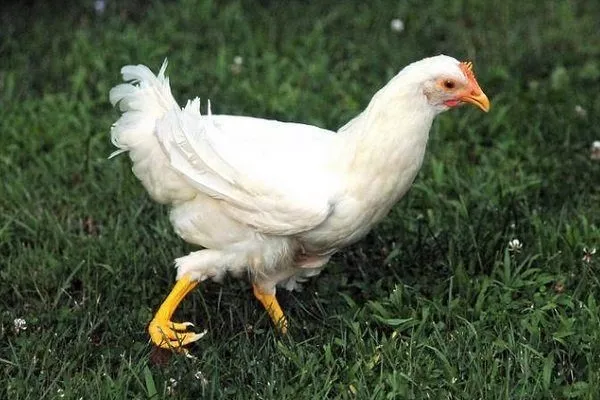
If treatment is not started promptly, the affected bird may die. Diet should be adjusted immediately, including additional doses of vitamin B and manganese. Prevention requires using high-quality equipment and providing the birds with a balanced diet. Chicks should be given special vitamins for young birds.
Crooked fingers
After the first week of life, chickens can develop foot disease, which may be a genetic disorder, so the advisability of breeding such individuals is questionable. Besides poor heredity, other causes of crooked toes are possible. These include:
- incorrect temperature regulation during the incubation period;
- concrete floor of the chicken coop, not covered with dry and warm bedding;
- mechanical injuries of the feet;
- keeping young animals in boxes with a mesh floor.
This pathology can be recognized by the following symptoms:
- the phalanges of the fingers are curved;
- When walking, the chicken waddles and rests on its outer side feet.
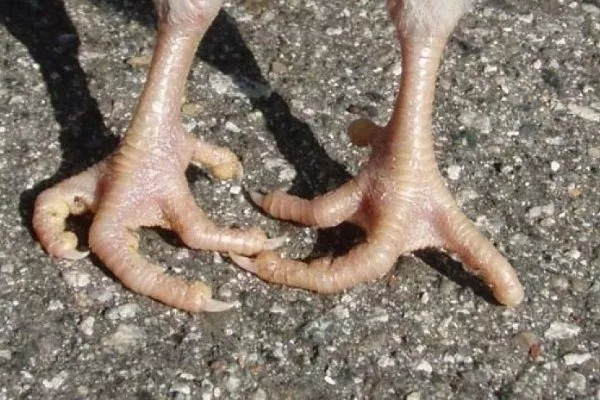
Unfortunately, crooked toes are not treatable. To prevent their development, young birds should be kept in comfortable conditions from the first days of life (the floor of the coop must be level and warm, covered with dry bedding).
Eggs from hens suffering from crooked toe disease should not be used for incubation. During the incubation period, all instructions must be strictly followed.
Curly fingers
The condition affects young animals aged 2-3 weeks and is caused by a vitamin B2 (riboflavin) deficiency in the diet. It can also be a consequence of poor heredity.
The disease is characterized by paralysis of the fingers and a downward curling of the phalanges, which curves downwards under the foot. The curled toes cannot be straightened even with strong pressure. Affected young animals experience difficulty walking, as they must tiptoe, supporting themselves on the tips of their curled phalanges.
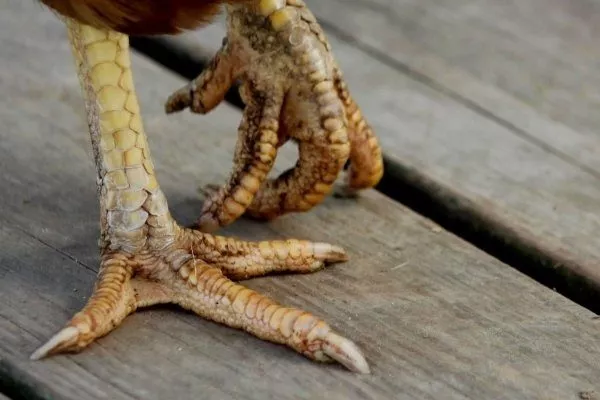
Curly toes causes early mortality in young birds due to severe illness. If a few chickens do survive, they are significantly retarded in development and growth.
If the disease is diagnosed in the early stages, the young need multivitamins with a high content of vitamin B2 to ensure their survival. In adults, the disease is incurable.
For preventative purposes, young birds should be fed a balanced diet of vitamins and minerals. However, if the condition is congenital, this indicates a genetic defect in the hens whose eggs were used for incubation. Breeding such young birds is not advisable.
Preventive measures
Leg diseases in chickens can often be prevented. To do so, follow these preventative measures:
- Inspect birds daily for bruises, cuts, and minor injuries to the extremities. These can occur in any bird, even under good living conditions, but it's important to identify and treat them promptly.
- Create a comfortable and safe environment for the birds. The coop and run should be kept clear to prevent overcrowding. Remove all sharp objects and threads, as they can cause paw injuries.
- Keep the bedding in the chicken coop fresh, clean and dry.
- Provide birds with a complete and balanced diet to prevent vitamin deficiencies. Avoid adding mineral plant fertilizers to their feed.
- Conduct artificial selection of birds, removing individuals that are prone to musculoskeletal disorders, or have crooked or curled toes.
There are numerous leg diseases in chickens, many of which are caused by improper nutrition and poor living conditions. To ensure healthy and proper development of young chickens, it's essential to follow preventative measures. If signs of leg damage are observed, consult a veterinarian for appropriate treatment.
I had no idea that chickens could suffer from joint disease. Now I've learned this thanks to your excellent article! You helped me identify the condition. I read it first, and then I consulted a vet. It turns out I diagnosed it correctly. Thank you so much!