
Turkey meat is sold year-round, so farmers try to raise them even in winter. This is especially true for birds that are kept for breeding and laying eggs. However, turkeys require special conditions in winter; otherwise, they can become ill and eventually die.
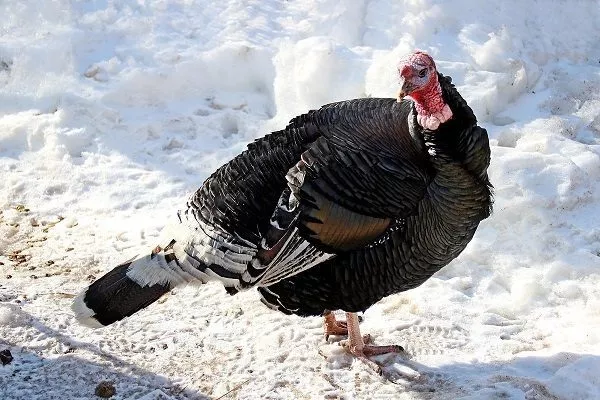
Do turkeys freeze in winter?
Turkeys are native to the Americas, so the lowest temperature they can comfortably tolerate is -1°C. Any lower, and they begin to freeze. Therefore, it's important to properly organize their living quarters.
Features of winter turkey keeping
To prevent birds from freezing and subsequently becoming ill, it's necessary to create special conditions for them. This applies not only to the coop, but also to feeding, walking, lighting, and so on.
Temperature conditions in the poultry house
The room where turkeys are kept should be free of any negative factors that could affect the birds' development, egg production, etc. Temperature is the most important factor. Adhere to the following parameters:
- optimal – from +1 to +3°С;
- If the temperature outside drops to -15-17°C, the temperature in the poultry house can be as low as -4-5°C.
- ✓ The minimum thickness of the bedding for a concrete floor should be at least 15 cm to prevent frostbite of the paws.
- ✓ To maintain optimal humidity in the poultry house, use ventilation with heated air to avoid dampness.
Insulation and bedding preparation
When the outside temperature is between 0 and -10°C, there's no point in insulating the coop, as the temperature inside will remain optimal for the birds. In other cases, experts recommend the following:
- Walls. Line them with plywood, chipboard, fiberboard, foam sheets, drywall, or other materials that retain heat. It's best to do this from the outside, as turkeys can peck at the wall.
- Drafts. To prevent this, seal all cracks in the walls, window and door openings, and any openings (ventilation, etc.).
- Pipes. Large farmers initially provide underfloor heating for their birds, but they do not use expensive systems; instead, they install hot water pipes under the floor covering.
- Heating systems. If winters are rarely harsh, you can use heating devices – heat collectors, oil radiators, blowers, etc. There are other options:
- IR lamp;
- lamp with infrared or ultraviolet radiation;
- heat gun;
- heating radiators;
- wood stove or stove.
Particular attention is paid to the floor covering, especially if it is concrete. To insulate it bedding is used from sawdust, peat, hay, straw. Consider the following factors:
- Change the straw bedding regularly – once every 8-10 days;
- replace sawdust or peat once every 17-20 days;
- If the material is clumped or there is increased dampness, replace it more often;
- The minimum bedding layer is 5-7 cm for a wooden floor, 10-15 cm for a concrete floor.
Alternative method of maintenance
If a farmer is just starting to raise turkeys and lacks a suitable winter poultry house, experienced breeders recommend using a polycarbonate greenhouse. Moreover, many farmers who grow crops already have one.
During the winter, the greenhouses simply stand idle, waiting for spring.
If you don't have a greenhouse like this, you can buy polycarbonate. It's a light-transparent material that retains heat and allows natural light in. When building, be sure to consider the greenhouse's size—one adult plant requires 1-1.5 square meters.
Other features and equipment:
- To prevent wind from blowing in from the bottom, cover the inside and outside with boards, slate or similar material (from the inside, this is necessary to prevent birds from pecking at the polycarbonate during severe frosts, as it becomes brittle);
- cover the floor with boards and bedding;
- place a container with ash and sand for taking baths;
- hang feeders and waterers.
Lighting
Turkeys prefer 14-16 hours of daylight. Insufficient light reduces egg production and growth, and can lead to illness. Therefore, farmers are forced to install additional lighting fixtures—incandescent lamps. The requirement is one lamp per 3 square meters.
To maximize energy savings, experts recommend installing wide windows during poultry house construction. This will eliminate the need to turn on lights during the day, allowing for ample sunlight. For the same purpose, they recommend cleaning the windows more frequently.
Principles of winter feeding rations
In winter, the lack of green fodder reduces the amount of nutrients available to birds, leading to vitamin deficiencies and energy loss, which is particularly rapid in cold weather. For this reason, it's essential to ensure a balanced diet.
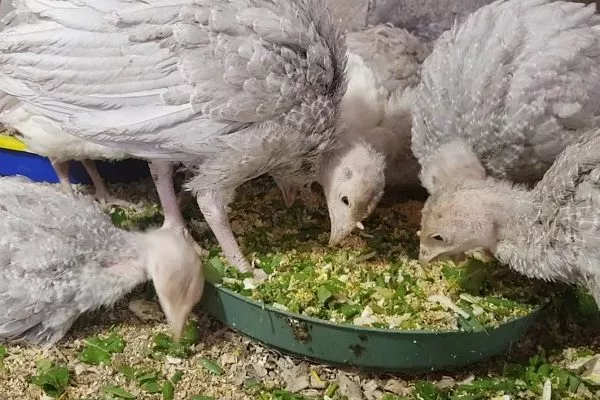
What is the best food to feed turkeys in winter?
- grain – barley, corn, wheat (feed mainly in the evening and morning);
- Compound feed – buy specialized mixtures such as Finisher, Starter, Fegel, Spassky compound feed, etc. (strictly follow the dosages indicated in the instructions on the packaging);
- juicy - instead of grass, turkeys are given vegetables - beets, carrots, cabbage, boiled potatoes (can be in their skins);
- supplements – vitamin-mineral supplements, purchased or homemade (acorn, chestnut, pine needles);
- auxiliary substances for the formation of the musculoskeletal system - ground shells, chalk;
- to saturate with potassium – salt (the daily requirement for 1 turkey is 0.5 g).
Pay attention to the condition and weight of the birds - if the latter indicator is too high, and the former is manifested by apathy and sluggishness, then the bird is excessively overgrown with fat.
Experts have developed a special diet for feeding adult turkeys during the winter. It looks roughly like this:
- grain mixture – 150-160 g (of which wheat 25%, corn 50%, barley 25%);
- root vegetables – 190-210 g (it is important to give different vegetables every day, but especially carrots, which saturate the bird’s body with carotene);
- hay or hay flour – 50-60 g (hay must be soaked);
- bran – 40 g;
- oilcake mixtures – 14-16 g;
- shell or chalk – about 10 g.
The Importance of Ash Baths
Turkeys have thick down and feathers, which often harbor insect parasites. These insects, in turn, cause a great deal of discomfort to the birds—due to the constant itching, they begin to peck at themselves, tearing out their feathers.
This damages the skin, causing wounds and even ulcers in high humidity. The bird becomes weak and suffers severe cold. The further development of events is very tragic: turkeys are prone to cannibalism, so the stronger individuals eat the weaker ones.
To prevent this, it's important to install ash baths in the poultry house. These procedures prevent insects from appearing and eliminate them if present.
There are 2 types of mixtures:
- Simple. Mix equal parts river sand and wood ash. Stir thoroughly to combine all ingredients.
- Improved. Combine sand, wood ash and dry loose clay in equal proportions.
Special recommendations for ash baths:
- choose large containers so that the bird can turn over freely in them;
- Pour in enough of the mixture so that the turkey can completely immerse itself in it; this is the only way that sand and other components will circulate normally between the large and small feathers;
- Do not allow water to enter the basin, so place the bathtubs away from drinking bowls and windows.
Organizing a dog walk
Birds can't function properly without fresh air, so taking them for a walk is essential, even in severe frosts. Depending on the breed, turkeys can easily withstand temperatures from -15 to -17°C. Duration: 60 minutes.
If the temperature drops even lower, the time is reduced. For example, at -20-25°C, the walk is only 30 minutes. To avoid depriving the birds of fresh air, conduct half-hour walks twice a day.
Other features:
- It is forbidden to walk in frosty weather and at the same time strong wind and rain;
- If the dog is walked in an open-air enclosure, it is necessary to clear the yard of snow, dirt, puddles, and be sure to provide thick bedding - otherwise, frostbite on the paws will occur, since they have no feathers;
- The best option for walking is a yard under a canopy.
Is it possible to keep turkeys outside in winter?
Although turkeys are considered frost-hardy birds, unlike chickens and other birds, keeping them in freezing temperatures is prohibited. The reasons for this are:
- if you keep them in -5°C temperatures for more than 3 hours, frostbite occurs;
- Their paws are featherless, so cold from the ground enters through them.
Are there any winter breeds?
| Name | Cold resistance | Egg production | Adult size |
|---|---|---|---|
| Moscow Bronze | High | Average | Large |
| Black Tikhoretskaya | Average | High | Average |
| Kuban | High | Low | Large |
| French turkeys | Low | High | Average |
| Canadian Broad-breasted | High | Average | Very large |
| White Broad-breasted | Average | High | Large |
| Hybrid Converter | High | High | Very large |
| Cross BIG-6 | High | High | Very large |
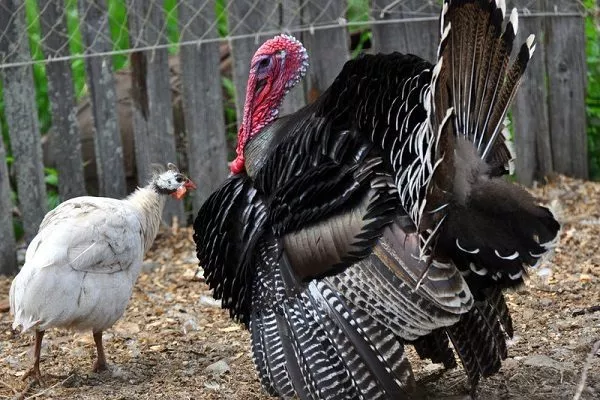
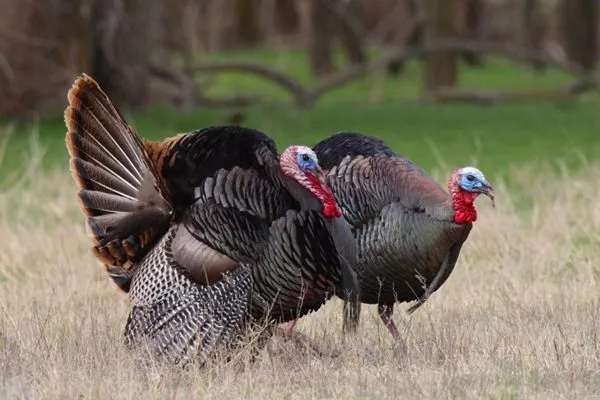
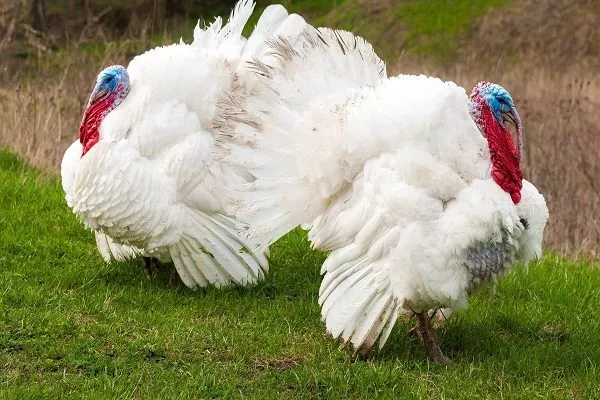
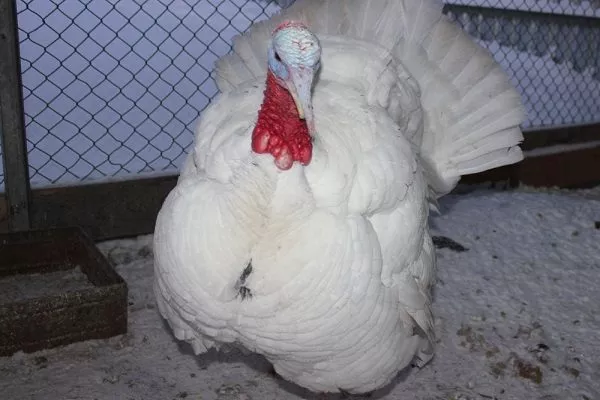
Essentially, all turkey species can withstand short-term frosts. However, there are breeds that are actively raised specifically in the Urals and Siberia:
- Moscow Bronze.

- Black Tikhoretskaya.
- Kuban.
- French turkeys.
- Canadian Broad-breasted.
- White Broad-breasted.
- Hybrid Converter.
- Cross BIG-6.
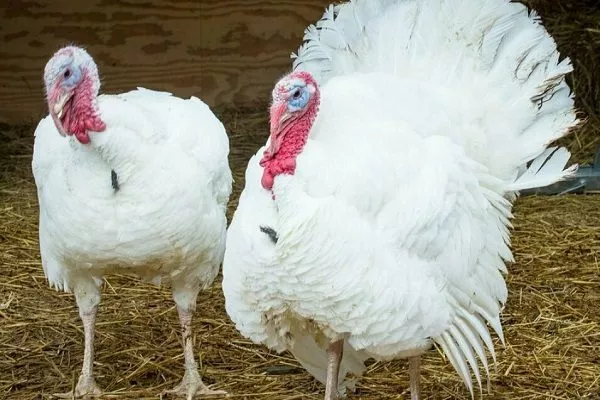
Frostbite in turkeys
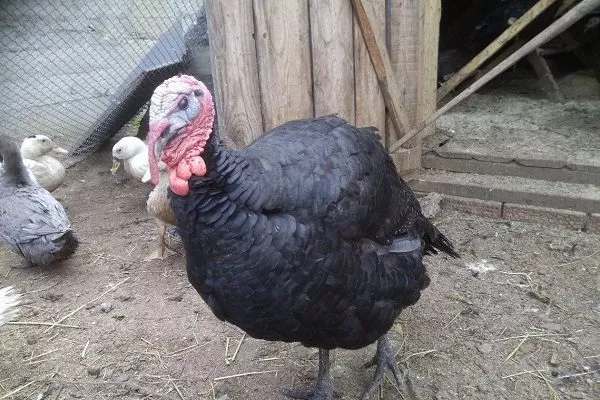
If proper grazing and housing guidelines are not followed during the winter, turkeys can develop frostbite. This only affects two body parts:
- paws;
- beard.
In rare cases, it's the comb. The main cause isn't so much the frost itself, but rather the accompanying high humidity and windy weather. If the poultry house is damp and the birds are brought out into the cold, frostbite is inevitable.
How it manifests itself:
- Beard. The color becomes pale, the structure becomes brittle, and can even chip (if kept outdoors). Later, the edges darken and even turn black.
- Paws. The first sign is lameness. This is followed by hardening of the pads, blisters, deformities, and gout-like growths. Sometimes, toes fall off, resulting in gangrene.
Special ointments and oils with bactericidal and healing properties are used for treatment. Prescribing specific medications is the responsibility of a veterinarian.
Helpful Tips
Experienced turkey breeders advise paying attention to a number of nuances when keeping turkeys in winter. They are as follows:
- especially in winter, the poultry house must be clean, since paws that are wet in excrement are most susceptible to frostbite;
- do not allow dampness in the room - change the bedding more often, provide ventilation (preferably with warm air);
- If the temperature change is too drastic, do not take the birds outside for about 3-5 days, let them adapt to the cold in the poultry house;
- If the female is incubating eggs, place them as high above the floor as possible – at least 50 cm;
- Don't ignore walks, otherwise the birds will get fat.
Problems and difficulties rarely arise when raising turkeys in winter. The key is to heed the advice of experienced farmers and veterinarians, set up the poultry house properly, and limit the number of free-range days. Pay special attention to the birds' diet—they need strong immune systems and plenty of energy.