
If the primary goal of raising turkeys is slaughter, the farmer must focus on the bird's weight. To help the birds reach the desired size more quickly, they need not only regular feeding but also proper feeding. However, many other factors directly influence this indicator.
What does a turkey's weight depend on?
Poultry gain weight quickly, especially when free-ranging during the summer. However, maximum weight gain isn't solely influenced by diet. Other important factors to consider include:
- Breed. This is the most important point, as the bird's specific parameters and structure are genetically determined. As a turkey ages, its body weight slowly increases.
- Floor. Unlike males, females weigh less. Their weights differ by approximately 5 kg on average. Therefore, farmers raise males for slaughter.
- Age. Another important criterion: the bird's age will determine its weight. Most breeds reach their peak weight at six months (provided they are properly fed and cared for), after which weight gain slows or stops altogether.
- Health. Sick chicks will never achieve high-quality weight gain. Therefore, the birds' health should always be a top priority. Vaccinations are essential, as these birds grow much faster due to their good appetite.
- Diet. It's not quantity that matters, but quality. Birds should have free access to fresh water and fine gravel, as it helps their digestive system digest the grains.
All feed given to turkeys must be properly balanced. It's important that the food has the right caloric content and contains sufficient minerals.
- ✓ The optimal protein content in feed should be at least 28% for young animals and 20% for adults.
- ✓ Mandatory inclusion of amino acids such as lysine and methionine in the diet to improve feed absorption.
- ✓ Use of premixes with vitamins A, D, E and group B to prevent vitamin deficiency and improve metabolism.
To ensure proper and rapid growth of turkeys, it is necessary to regularly include special vitamin supplements in their diet.
Average values depending on breed
Average weights will vary significantly depending on the specific breed. Turkey breeds are generally divided into small, medium, and large groups. There are some popular breeds that are in high demand among experienced and novice farmers.
| Name | Average weight of male, kg | Average weight of female, kg | Age at slaughter, months |
|---|---|---|---|
| White broad-breasted | 17 | 7 | 6 |
| White Moscow | 15 | 8 | 12 |
| Bronze standard | 16 | 6 | 12 |
| Uzbek fawn | 12 | 7 | 12 |
| Black Tikhoretskaya | 12 | 6 | 3 |
| Hybrid Converter | 20 | 14 | 5 |
| Maker | 20 | 5 | 3 |
| Broad-breasted Bronze | 15 | 8 | 12 |
| Cross Big-6 | 25 | 11 | 6 |
- ✓ Disease resistance: breeds with high resistance require less veterinary care.
- ✓ Climate adaptability: the choice of breed should take into account the climatic conditions of the region.
- ✓ Rate of weight gain: For commercial production, breeds with rapid weight gain are preferred.
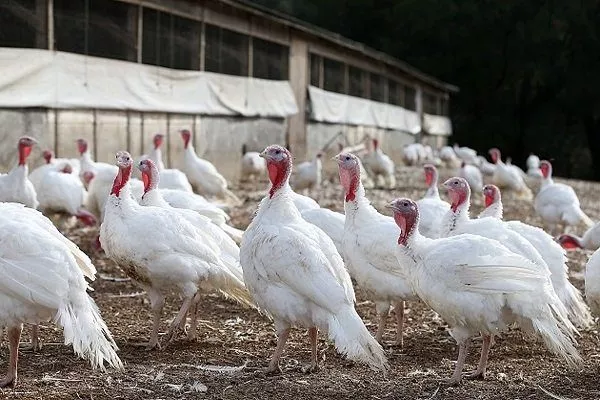
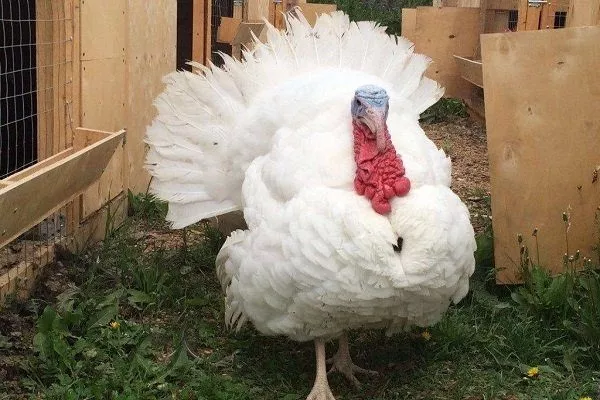
White broad-breasted
This breed was developed relatively recently. It was created by crossing Dutch turkeys with Broad-breasted Bronze turkeys. Farmers quickly recognized the advantages of this bird, as it adapts easily and seamlessly to a wide variety of conditions.
The breed has its own weight classification:
- lightweights – females reach 5 kg, males about 9 kg;
- middle category – females reach 7 kg, and males approximately 17 kg;
- heavyweights – female turkeys grow up to 11 kg, and male turkeys gain 23 kg.
Representatives of this breed are sent to slaughter at the age of 6 months, as they will not gain weight in the future.
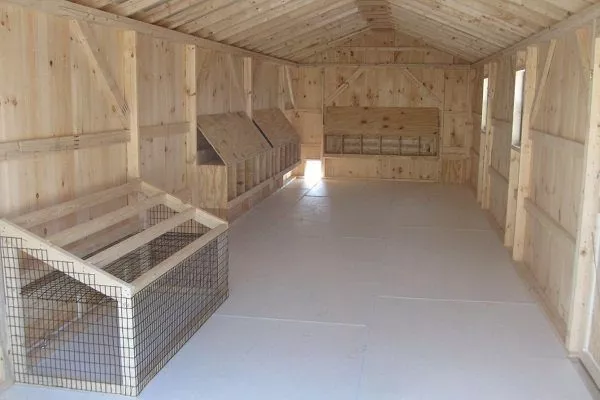
White Moscow
The breed was developed by Russian breeders. The birds gain weight rapidly during their first year of life. Slaughter age is reached quite early.
The breed is characterized by excellent acclimatization and high productivity rates. Representatives of this species not only produce meat but also lay eggs well.
Males reach a maximum weight of 15 kg, but females grow to no more than 8 kg. The breed is in high demand among farmers.
Bronze standard
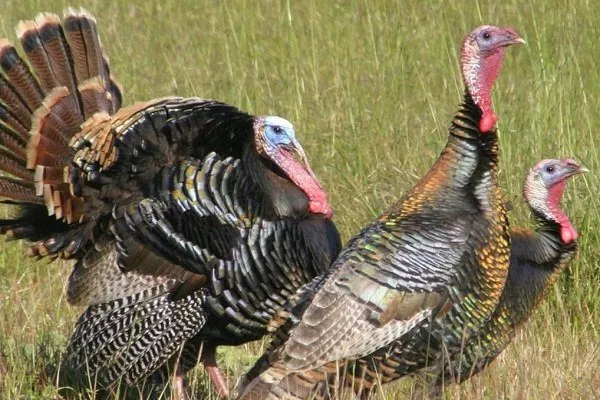
An American-bred breed. Its main characteristics include its large size and excellent adaptability to a wide range of habitats. These cattle are generally healthy and highly productive.
Male turkeys weigh up to 16 kg, while females weigh approximately 6 kg. Turkey hens are known to be excellent mothers and are often used by farmers as brood hens, capable of incubating both their own and other people's eggs.
Uzbek fawn
The breed was developed in Uzbekistan, as its name suggests. Local strains were used in the selection process. Therefore, the birds thrive in Central Asia.
Breed characteristics: Birds grow relatively slowly. In most cases, females weigh no more than 7 kg and males no more than 12 kg.

Black Tikhoretskaya
The selection was conducted in Russia. Local turkeys, as well as representatives of the Broad-Breasted and Bronze breeds, were used. Typical weights for females are 6 kg, and for males, 12 kg.
The meat quality of this breed is considered to be the best. Poults are slaughtered at three months of age and weighing 4 kg. Young turkeys do not exhibit significant growth. To obtain a larger carcass, it is recommended to choose heavier breeds.
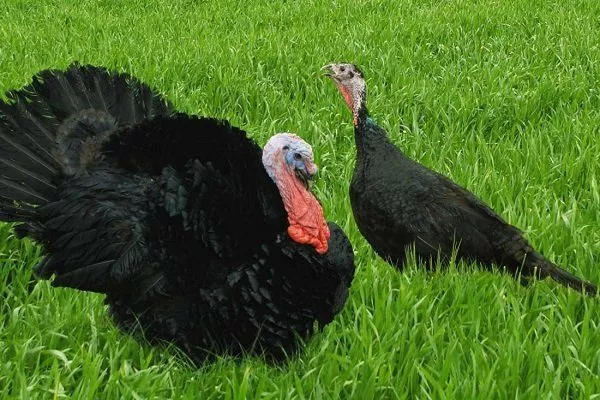
Hybrid Converter
Hybrid belongs to the heavy variety. Turkeys for meat production. At the same time, individuals resemble both in productivity and appearance Big 6The birds are quite large. A mature male weighs 20 kg, while a female weighs about 14 kg.
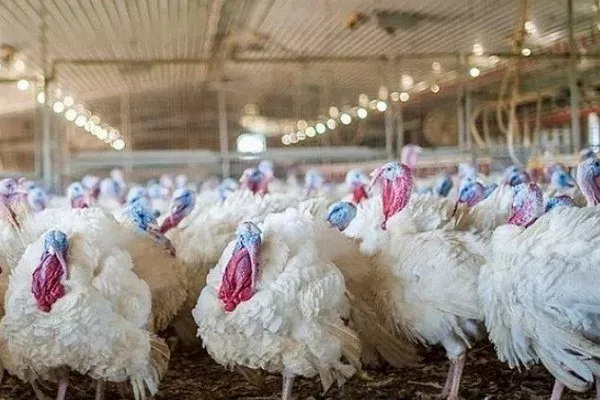
Maker
This is a medium-heavy cross of the broad-breasted variety. It has beautiful, snow-white plumage. The breed's main advantage is its precocity. The birds are ready for slaughter within 80 days of birth.
Initially, an adult bird reaches a weight of 5 kg. Over time, with proper fattening, a turkey can reach a weight of 20 kg. This result is usually achieved after 140 days of intensive fattening.
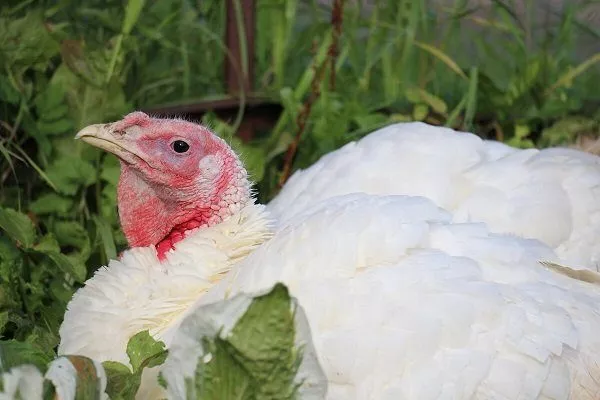
Broad-breasted Bronze
The birds are raised until they reach certain weights. Females reach 8 kg, while males can reach 15 kg. After this point, the birds are slaughtered, as fattening them up is extremely unprofitable, especially financially.
Turkeys require a large amount of feed. Once mature, turkeys produce eggs throughout the year (about 100-120 eggs), and about 75% of these eggs will be fertile.
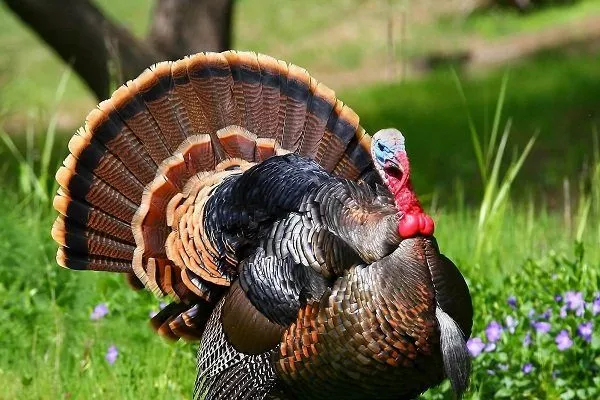
Cross Big-6
The breed is very popular among farmers. Young turkeys are characterized by excellent weight gain. Adult males in the heavy category can reach 25 kg, while females reach around 11 kg. The medium-sized group is slightly smaller, with female turkeys reaching 7 kg and male turkeys reaching approximately 17 kg.
Overall growth rates by month
Every poultry farmer should be aware of how turkey weight gain varies with age. It's important to remember that weight gain is uneven throughout a bird's life. The greatest peak occurs during the first four months of life, and then weight gain slows.
You can study the monthly growth of females and males of medium breeds in the table:
| Age | Turkey weight | Turkey weight |
| At birth | 57 g | 50 g |
| 1 month | 0.6 kg | 0.5 kg |
| 2 months | 1.7 kg | 1.5 kg |
| 3 months | 3.5 kg | 3 kg |
| 4 months | 5.5 kg | 4.2 kg |
| 5 months | 7.2 kg | 5.2 kg |
| 6 months | 9 kg | 6.2 kg |
| 7 months | 11.5 kg | 6.5 kg |
| 8 months | 12.5 kg | 7 kg |
Weight gain indicators for broiler breeds differ slightly:
| Age | Turkey weight | Turkey weight |
| At birth | 60 g | 50 g |
| 1 month | 1.28 kg | 1.16 kg |
| 2 months | 4.84 kg | 4.05 kg |
| 3 months | 10.12 kg | 7.8 kg |
| 4 months | 16 kg | 10.82 kg |
| 5 months | 21.09 kg | 12.35 kg |
| 6 months | 25 kg | 12.75 kg |
The largest turkeys
Male turkeys of the largest breeds can reach a maximum weight of 30 kg, while females can weigh over 15 kg. These breeds are typically raised on poultry farms.
The following breeds are true record holders in terms of weight:
| Breed | Weight of an adult turkey, kg | Weight of an adult turkey, kg |
| Hybrid converter | 30 | 11.5 |
| Grade maker | 20 | 15 |
| Big 6 | 30 | 11 |
| Big 9 | 21.75 | 11.66 |
| Bronze-708 | 28 | 15 |
| Canadian Broad-breasted | 30 | 17 |
| North Caucasian white | 18 | 9 |
How is the weight of a turkey determined?
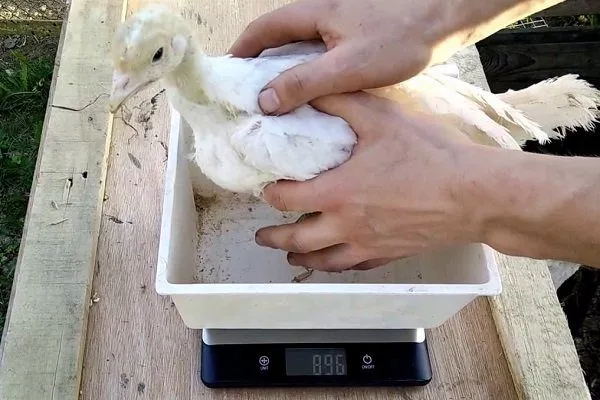
The weight of farm birds is determined by weighing them. To simplify the process, you can use bags, boxes, or any other additional equipment to hold the turkeys.
Electronic hanging scales are ideal for weighing turkeys. Platform models with an additional cage are convenient. If the flock is large, several birds are weighed simultaneously. The average values are then calculated.
A turkey's weight depends directly on the breed. Each species has specific maximum weights, which are genetically determined. If the birds are raised for slaughter, the heaviest breeds should be selected. However, it's important to remember that good weight gain is only possible with proper, high-quality nutrition.