
Keeping turkeys can be a profitable business, depending on how and why they are raised. When purchasing turkeys, it's important to know their average lifespan. This information can help you plan your turkey husbandry accordingly.
How long do turkeys live?
In the wild, the average lifespan of a turkey is 3-5 years, with females typically living 3 years and males 4 years.
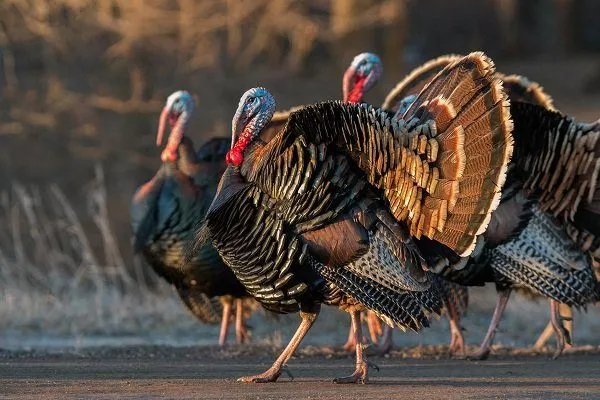
Domesticated turkeys live almost twice as long – on average about 10 years and even more if they are kept in good conditions and feed properlyHowever, the meat of older birds becomes tough and tasteless, so they are usually not kept for long.
Periods of productive maintenance depending on the purpose:
- Turkeys reach their maximum weight at 2 years of age, and further keeping of the birds for meat would be impractical; they are often slaughtered at the age of several months;
- The reproductive age of turkeys lasts up to 7-8 years, therefore, for breeding purposes, birds are kept for no more than 8 years.
The oldest known domesticated turkey in history lived to be 13 years old, but this should be regarded as an exception.
What does life expectancy depend on?
The average lifespan of birds is calculated based on a number of factors. Namely:
- turkey breed;
- conditions of detention;
- floor;
- health;
- nutrition;
- environmental conditions;
- Chicken coop safety.
- ✓ Resistance to local climatic conditions.
- ✓ Rate of weight gain and maximum weight.
- ✓ Level of aggression and compatibility with other birds.
Females may have a shorter lifespan than males, depending on whether they breed every mating season or not.
How to extend the life of a turkey?
Turkeys are considered relatively easy to keep. They are hardy birds and can withstand even harsh weather conditions. However, a number of rules should be followed to ensure proper care, meet their needs, and prolong their lifespan.
The most critical time for turkeys is the first few weeks after birth. The chicks require 24-hour monitoring to ensure they are not affected by predators, cold, or disease. To ensure the young turkeys survive this period, it's important to adhere to certain conditions.
Temperature and humidity
Turkey chicks require a lot of heat, so the temperature in their house should be maintained between 95 and 100 degrees Celsius (205 and 212 degrees Fahrenheit) initially, and then decreased by 5 degrees every week until all the birds' feathers have grown. Afterward, the temperature in the house should be maintained between 12 and 22 degrees Celsius (55 and 72 degrees Fahrenheit).
You can place a heat lamp in the turkey house, but it's important to ensure they have enough space to move to a cooler part of the house if they want to. You can also use a thermometer to monitor the temperature inside.
Humidity in the poultry house should be at least 50 percent. Otherwise, turkeys may experience mucous membrane irritation and breathing difficulties.
Fence for walking
Many farmers allow their turkeys to live outdoors in a fenced pen with a portable perch. Turkeys thrive on short grass, 4 to 6 inches long. A secure fence should be installed to keep out predators, such as:
- foxes;
- raccoons;
- coyotes;
- bears.
Woven wire is best for fencing.
Insulation
There should be no drafts in the poultry house; this is even more important than maintaining a thermal balance, as drafts can lead to the death of turkey poults.
You can lay a thick layer of bed linen on the floor turkey housePine shavings are also an ideal insulation material, as they are inexpensive and readily available. You can also install a protective screen around the coop to keep the poults warm.
Food and water
Don't give birds cold water, as it can kill them. It's important to ensure the water is warm. Turkeys require 28% protein for the first 6-8 weeks, after which they can be fed a diet of 18% protein. They also need greens in their diet as they grow.
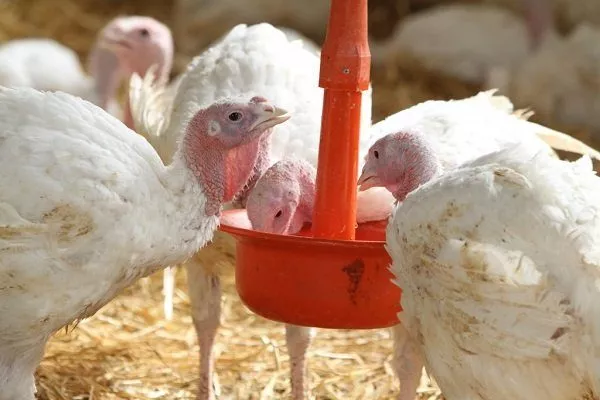
Grains and calcium in poultry food promote egg production. It's best to feed turkeys pellets as the main component of their diet. A special feeder with sufficient capacity should be used for feeding, as adult turkeys will consume approximately 500 g of feed per day.
Along with pellets, consider fruits and vegetables, leaves, weeds, and other wild food sources, such as acorns. Birds can also feed on insects. However, caution is advised, as various bugs can carry harmful pesticides.
Physical activity
Turkeys should be provided with enough space to roam and engage in the physical activity they need. This will also help improve their mental well-being.
Corral
Domestic turkeys can escape or even fly away, so careful thought must be given to the construction of the enclosure. Turkeys should be kept in a location that prevents them from escaping or climbing the fence.
For 3-4 weeks of the turkeys' life, you can relax the control a little, because during this time the birds will understand that they are provided with food and care here, and they will want to stay.
Prevention and treatment of diseases
Once turkeys get through their first few weeks, their lifespan can be affected primarily by diseases.
Some of the most common diseases among domestic turkeys include:
- Histomoniasis. The carrier is a blindworm. When turkeys ingest the eggs of this worm, they develop in the intestine, migrating to the wall of the cecum, causing diarrhea and inflammation. The parasite then travels through the abdominal cavity to the liver, where it causes severe damage, usually leading to sudden death.
- Coccidiosis. This disease is caused by a single-celled parasite that multiplies when it enters the intestinal cells of birds. It continues to destroy the intestinal wall's cell lining, damaging it.
This damage interferes with the intestines' ability to absorb nutrients, inevitably leading to diarrhea and weight loss. Individuals between 2 weeks and 2 months of age are most at risk (they are the most likely to die from this disease). - Mug. Erysipelas is a soil-dwelling bacteria that can enter a bird's bloodstream through a wound. In the worst case, it can lead to sudden death, but more often, it results in slow growth and lameness.
Common signs of bird diseases are:
- weakness;
- malnutrition and dehydration;
- loose stools, sometimes bloody discharge.
To prevent turkeys from becoming ill and avoid a worse outcome, you should immediately give your birds all the necessary vaccinations.
- Carrying out all necessary vaccinations in the first weeks of life.
- Regularly examine birds for signs of disease.
- Isolation of sick individuals to prevent the spread of the disease.
Domestic turkeys can live up to 10 years if properly raised and cared for. However, this average lifespan depends on many factors. Good food, clean water, a balanced temperature in the coop, spacious outdoor areas, exercise, and protection from predators are essential for turkey health.