
Soft, loose bedding not only keeps the turkey house clean and tidy, but also warmer. A variety of materials can be used as bedding, including special bacterial compounds that create heated floors in poultry houses.
On the need for bedding for turkeys
Paul in turkey house The frame is usually made of wood or mesh, with a thick layer of bedding placed on top. This bedding serves several functions and can be made from a variety of materials.
- ✓ Consider the age of the bird: sawdust is prohibited for turkey poults due to the risk of crop blockage.
- ✓ Evaluate the availability of materials in your region: peat and sphagnum moss are not available everywhere.
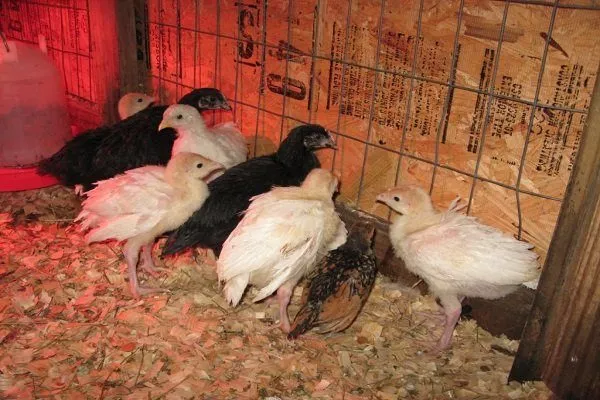
Functions of the litter:
- absorption of moisture and odors;
- floor insulation;
- depreciation;
- protection from injuries;
- prevention of diseases and infections;
- cleanliness and dryness.
It is forbidden to spread sawdust under young turkeys - they may peck at it, which will lead to crop blockage.
There are two types of litter used in poultry houses:
- Thin. It is poured in the summer, then the floor becomes softer for birds' feet, and cleaning is simplified - it is easier to rake the droppings together with the loose material than to scrape them off the bare floor.
- Deep. This is a permanent litter with a depth of at least 20 cm. This option is used in winter and when raising turkeys.
The main requirement for bedding is that it should be dry and loose. Many materials possess these properties, so there are many options for creating a soft layer. Let's take a closer look.
Litter options
Clean and dry litter is essential for keeping poultry. The material used for it must not only have the appropriate physical and chemical properties for the intended purpose but also be accessible and safe.
| Name | Type of bedding | Absorption capacity | Thermal conductivity | Availability |
|---|---|---|---|---|
| Straw | Organic | Average | Low | High |
| Sawdust | Organic | High | Average | Average |
| Wood chips | Organic | High | Average | Low |
| Peat | Organic | Very high | High | Low |
| Sand | Inorganic | Low | High | High |
| Dry leaves | Organic | Average | Low | High |
| Dry moss | Organic | High | Low | Average |
| Needles | Organic | Average | Low | Average |
| Grid floors | Inorganic | Low | High | Average |
Straw
Straw and hay are inexpensive and readily available materials that are easy to prepare for future use. Compared to sawdust, they absorb moisture less effectively. It's recommended to pre-chop the materials used for bedding; this will improve their performance.
Long grass can also be used as a top layer, sprinkled over sawdust to prevent birds from eating the sawdust if they develop such a tendency.
Sawdust
Poultry farmers consider this the best bedding material. It absorbs liquids and odors lingering in the poultry house. As it rots, sawdust generates heat even without the addition of special fermented additives.
Turkeys actively dig through sawdust, loosening the litter and mixing it with their droppings. To encourage the birds to dig even more vigorously, many poultry farmers add a little grain scraps to the litter.
The main disadvantage of sawdust is its high cost. It's only economical if there's a sawmill nearby and access to affordable raw materials. This type of bedding is only used for adult turkeys.
Wood chips
If there's a wood processing plant near your poultry house, you can buy wood chips there. This material is dust-free and absorbs moisture well. Its downside is its limited availability and relatively high cost.
Peat
This material is collected from swamps and is only suitable for areas with peat bogs. It is recommended to add peat to sawdust after drying it first. Under-dried or over-dried material is not suitable for bedding.
Peat's main advantage, unmatched by other materials, is its antiseptic properties. Adding it to other materials can help prevent diseases during the cold season. Its downside is labor-intensive preparation. Peat is extracted from the layer beneath the turf.
Sand
Sand absorbs moisture and odors well, making it a perfect bedding material. It's soft and less dusty than sawdust or wood shavings. It's an inexpensive and readily available material that any bird will enjoy digging in.
Dry leaves
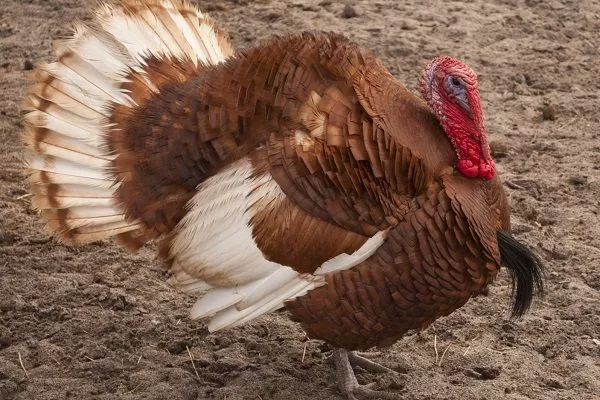
This is a free material that can be raked in unlimited quantities. Fallen leaves are found everywhere where there are shrubs and deciduous trees. Fallen leaves should be collected in September, during dry weather.
The collected leaves are dried and stored in the barn. Before spreading the leaves on the floor of the poultry house, they, like hay, need to be finely chopped. Otherwise, they won't absorb moisture as efficiently as they should. Leaves are seasonal litter; you can't stockpile them for the entire year.
Dry moss
An excellent bedding material is made from crushed, dry sphagnum moss. This plant absorbs water and odors well. This option is suitable where it grows naturally. It can be found in large quantities in marshy areas.
It's recommended to mix moss with sawdust to use it more economically. Also, when collecting moss, be mindful of moderation—avoiding excessive moss removal from bogs can harm their ecosystem.
Needles
This option is suitable for farms near coniferous forests. Needles are collected from pine branches and spruce branches. They are brought home and left to fall. The needles are finely chopped before use to prevent birds from injuring their feet on the sharp ends.
Pine needles contain many volatile substances, including essential oils and phytoncides. By releasing these compounds into the air, crushed needles have a positive effect on bird health.
Grid floors
These plastic floor mats for poultry housing eliminate the need for traditional bedding materials. They have a honeycomb structure, allowing manure to easily fall into the mesh.
The covering protects the birds from contamination and prevents the spread of viruses and other infections. Floors are assembled from modular slats of a specific size, for example, 1 x 1 m.
What is fermentation bedding?
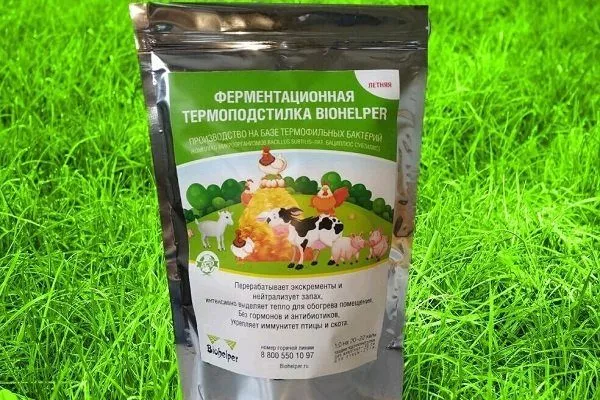
Also known as bacterial bedding, it's a product containing special enzymes. These enzymes are added to the main substrate—a material that will last for the entire lifespan of the enzymes.
The optimal base material is sawdust. It should make up at least 70% of the total bedding volume. The remaining 30% should be chopped straw, sunflower husks, and other plant waste.
What materials are not suitable as a base:
- straw - it has low sorption capacity;
- High-carbohydrate waste - they are fermented under the influence of enzymes.
There are many fermentation preparations available on the market, differing in terms of duration of action, requirements for the floor in the poultry house, and other characteristics.
Popular brands:
- BioGerm. A German product. Birds can be released 2 hours after application. It can be kept at temperatures ranging from -50°C to +40°C. Contains beneficial microorganisms. The product has a shelf life of 2 years.
- Netto-Plast2. A domestic product. Can be used on any floor—wood, concrete, or gravel. Requires regular ventilation—periodic digging is necessary. For indoor use only. Service life: 3 years.
- Bioside3. Another Russian product. It's environmentally friendly, improves bird health, and reduces feed consumption by 10-20%. It has a shelf life of 3 years.
- Baikal EM-14. This inexpensive, domestically produced product reduces ammonia levels. It's for dirt floors only. It lasts for two months.
- ✓ BioGerm: can be used at extreme temperatures from -50° to +40°C.
- ✓ Netto-Plast2: requires regular ventilation and digging.
- ✓ Bioside3: reduces feed consumption by 10-20%.
- ✓ Baikal EM-14: suitable only for earthen floors, service life of only 2 months.
Bacterial bedding is completely safe for birds and humans; no protective equipment is required when spreading it.
Advantages of bio-litter:
- maintain heat in the poultry house;
- absorb ammonia;
- destroy dangerous bacteria;
- quickly process turkey droppings, making cleaning easier, reducing the risk of infection, and promoting cleanliness and order;
- there is no need to have an additional room for collecting bird droppings;
- saves a lot of time - unlike regular bedding, bacterial bedding is designed to last for months and even years;
- can be reused to fertilize the garden and vegetable garden.
Due to the advantages of fermented litter, the productivity of birds increases, they grow better and are less likely to get sick.
Bacterial litter has virtually no downsides. The only thing that might confuse some poultry farmers is the cost. However, the benefits more than justify this. A good product, effective for 2-3 years, costs an average of about 3,000 rubles for 20 square meters of area.
Fermentation bedding must be properly started. This will determine its useful life and effectiveness.
Launch order:
- Rinse the floor and let it dry thoroughly. If possible, warm it up.
- Spread the sawdust over the floor using any convenient method—forks or buckets. Spread the layer 30 cm thick. Over time, the sawdust will compact to the thickness recommended by the manufacturer.
- Sprinkle the fermented powder evenly over the sawdust.
- Water the bedding using a watering can. The water should be clean. Chlorinated tap water is not suitable for this purpose.
- Mix the wet sawdust thoroughly with a shovel to ensure the bacteria are evenly distributed throughout the litter.
When to launch the bird?
If you're using regular litter on the floor, you can introduce the birds into the coop immediately after it's laid. The easiest way to do this is during the day, by turning the turkeys outside.
If the litter is treated with fermented biopreparations, a certain amount of time must be allowed for the bacteria to activate before the turkeys can be released. This can be 2-3 hours or 2-3 days, depending on the type of bacterial preparation.
The birds are released in the quantity specified by the manufacturer - a certain number of heads per 1 square meter.
Maintenance and care
It is recommended to start fermented bedding in September-October. If the process is postponed until winter, the floors should be preheated.
During operation, bio-litter requires certain care, since bacteria need oxygen and nutrition to live and reproduce.
Care activities:
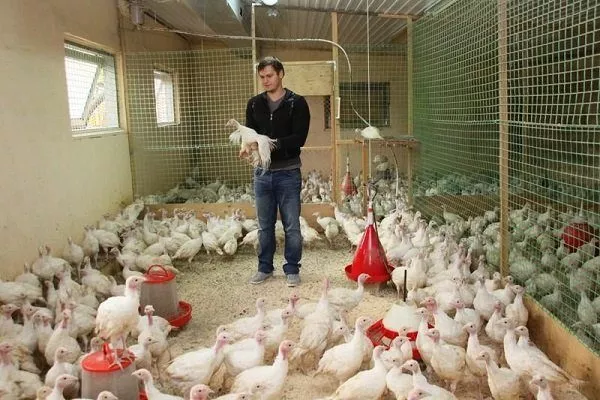
- Loosening. The litter is loosened with a rake every three days. However, this process begins a week after the bacteria have been introduced. If the litter is not loosened, the bacteria will die over time. To encourage the birds to loosen the litter more actively, grain is regularly scattered over it.
- Maintaining microclimate. The poultry house must have high-quality supply ventilation to ensure the litter maintains a normal moisture content of no more than 60%. This is measured using a special device called a psychrometric hygrometer.
If humidity is high, loosen the litter and sprinkle 1 kg of superphosphate per square meter. A layer of sawdust or other material is sprinkled on top. - Top dressing. Bacteria need to be fed periodically. For this purpose, a mixture of sugar and enzymes is used: 1000 g and 20 g, respectively, are diluted in 10-20 liters of water. Let it sit for several hours, and then pour this mixture over the previously loosened litter.
When to change the litter?
If the bedding is standard, it can retain its original qualities for 3-4 weeks. In the summer, the old bedding is removed, and in the winter, a fresh layer can be laid on top—this solution provides additional warmth during the cold season.
Biolitter is a different matter; manufacturers state in their instructions that its service life is 2-3 years. In reality, however, the bacteria's effectiveness weakens gradually, so poultry farmers are forced to regularly add fresh enzymes.
Bio-litter significantly reduces house cleaning time. To achieve all the benefits of bio-litter, it does require some maintenance. However, this requires significantly less time and effort than replacing traditional loose litter.