
Unlike other poultry, the domestic turkey (turkey), gains weight quickly and has an impressive body mass. Stunted growth in young turkeys is a major problem and a major loss for farms raising poultry for slaughter. To successfully resolve this, determine why your turkey isn't growing.
The influence of breed on the weight of a turkey
To find out which one maximum possible mass capable of recruiting young animals, pay attention to the following factors:
- turkey breed;
- sex of individuals;
- age group.
Breed has a significant impact on a bird's weight. Each breed has a specific weight limit. This is genetically determined and varies between males and females. Males weigh, on average, 5 kg more. For this reason, male turkeys, not hens, are bred for slaughter.
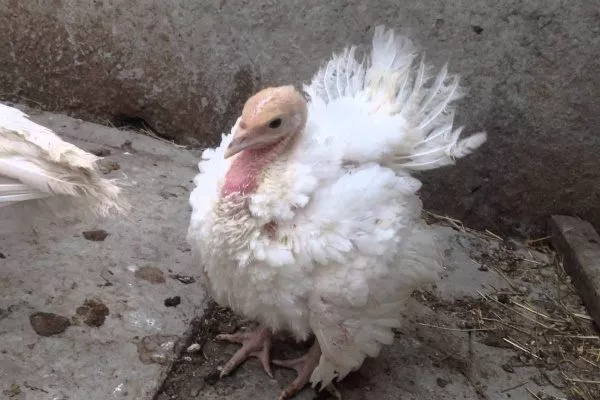
Domestic turkey breeds are typically divided into three categories based on weight. They are:
- small - 7 kg (weight of an adult male), 5 kg (weight of an adult female);
- average - 17 kg, 7 kg;
- large - 30 kg, 10 kg.
A bird's body weight gradually increases as it matures. Growth rates vary among turkey breeds. Large (meat) turkeys typically reach their maximum weight by the age of two. At this age, males often weigh 35 kg, and females 15 kg.
Among domestic turkey breeds, there are record-breaking weight-holders. These include:
- Hybrid Converter - 30 kg (male), 11.5 kg (female);
- Hybrid grade maker - 20 kg, 15 kg;
- Big-6 - 30 kg, 11 kg;
- Bronze-708 - 28 kg, 15 kg;
- Canadian broad-breasted - 30 kg, 17 kg;
- North Caucasian white - 18 kg, 9 kg.
The white broad-breasted breed is also popular with farmers. These animals typically reach their maximum weight at six months of age, after which they stop growing.
Breeders have developed crossbreeds based on certain turkey breeds. Their main characteristics include high growth rates and large body weight.
Crosses by weight are:
- heavy (Hybrid Converter, Big-6);
- medium (Hybrid Converter, BIG-9);
- light (Universal, Victoria).
Crossbreeds are not commonly used for pure breeding. Their offspring rarely inherit the high weights of their sire and dam.
Malnutrition
If your turkey isn't growing well, first ensure it's getting enough nutrients for its age. When planning your poultry's nutrition, it's important to pay attention to the following aspects:
- balanced diet;
- feeding intensity;
- the size of the portion given out.
- ✓ The optimal particle size of feed for turkeys up to a month old is no more than 2 mm.
- ✓ The temperature of drinking water should be between 18-22°C to prevent colds.
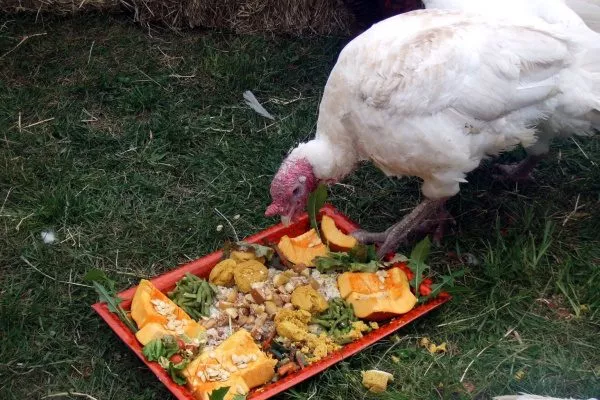
Provide your turkey with free access to clean drinking water. Change the waterer regularly. Stale water can cause intestinal problems.
The feed given to the turkey must be:
- balanced;
- caloric;
- containing minerals in sufficient quantities.
Protein is also essential in your diet—it's the building block for your core muscles. Without it, healthy weight gain is impossible.
It's best to feed your flock (especially during the cold season) with combined feeds. Choose a feed based on the bird's age:
- PC-11 or Purina 10050 - for newborn chicks;
- PC-11-2 - for babies aged 5-13 weeks;
- PC-12-1— for turkeys 14-17 weeks old;
- P-13-1 — for ages from 17 to 30 weeks;
- P-14-1— for breeding young animals.
During the warmer months, it's best to transition poultry to a traditional diet—a grain mixture with succulent feed (fresh herbs, raw vegetables) and other nutritional supplements. In this case, double the portion size.
The turkey diet consists of:
- dairy products;
- crushed chalk;
- boiled eggs;
- wheat flour;
- boiled millet;
- grated carrots;
- green onions;
- bone meal.
Start feeding your turkey crushed grains at two weeks of age, whole grains at one month, and corn at two months. Grains are the foundation of a turkey's diet.
Also watch the video tutorial on how to feed turkey poults:
The daily menu of a bird fed traditionally looks like this:
- wheat, oats, millet, corn - 65%;
- sunflower cake - 13%;
- yeast - 5%;
- fresh greens (grass) - 7%;
- chalk - 3%;
- fish meal - 3%;
- bone meal - 3%;
- salt - 1%.
The daily portion size of such a mixture for an adult turkey depends on body weight and ranges from 260 to 500 g.
Feeding frequency varies for different age groups:
- 1 time every 3 hours - for newborn chicks;
- 4 times a day - for young animals over 1 month old;
- 2-3 times a day - for adults.
A farmer can tell if a turkey is malnourished by the bird's slow or unstable rate of muscle and fat gain, decreased immunity, and susceptibility to viral diseases.
If the diet is selected correctly, taking into account the breed and age of the bird, and the feeding regime is followed, the turkey's weight meets the established norm.
Disease
Lack of appetite, cessation of weight gain and weight loss are the threat to the bird diseasesA turkey will not eat if it is suffering from helminthiasis or if there is an inflammatory process in its body.
Gastrointestinal pathologies
Turkeys are active and inquisitive. They have excellent appetites. However, if they suddenly become lethargic and lose interest in food, immediately palpate their crop. A hard crop is a sign of digestive problems.
Causes of hard goiter:
- the bird consumes too much feed at one time;
- the predominance of coarsely ground grain in the mixture (it is not fully processed by the turkey’s gastrointestinal tract);
- The feeder is not filled with pebbles to help grind the food.
If a grain mixture accumulates in the crop sac, this can lead to blockage, as well as damage to the mucous membrane, putrefactive processes, and poisoning of the bird's body with toxins.
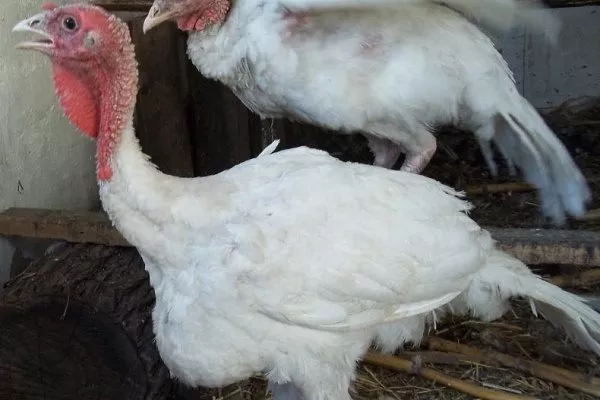
Individuals with gastrointestinal pathologies are identified by the following symptoms:
- lethargy;
- low mobility;
- lack of appetite;
- purulent mucous discharge from the mouth (if the goiter is inflamed).
Helminthiasis
A turkey will not grow if it is infected with worms. Sources of infection include poor-quality feed, water, and bedding.
Symptoms of helminthiasis include:
- loss of interest in food;
- weight loss;
- diarrhea;
- weakened immunity.
Protozoal diseases
Protozoan diseases are caused by the penetration of protozoan single-celled parasites into the bird's body. As a result, the bird becomes ill with:
- histomoniasis;
- mycoplasmosis;
- trichomoniasis;
- ornithosis;
- coccidiosis.
Turkeys most often suffer from histomoniasis, which affects the digestive organs. The following symptoms indicate the disease:
- yellow, foul-smelling diarrhea with a foamy consistency;
- dirty anus (sometimes it becomes blocked);
- the skin on the bird's head turns dark blue;
- refusal to eat;
- lethargy;
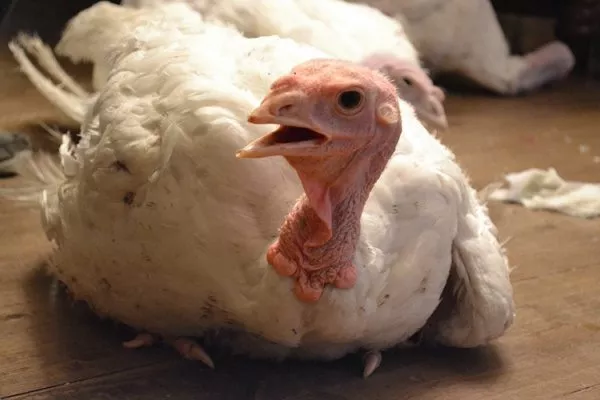
- low mobility (the sick individual sits with his back hunched).
Infectious diseases
Poor living conditions (cold, drafty poultry houses) and poor-quality feed lead to a weakening of the poultry's immune system. They become susceptible to:
- Newcastle disease;
- tuberculosis;
- infectious sinusitis;
- bird flu.
Infectious diseases manifest themselves with the following symptoms:
- copious mucous discharge from the mouth;
- inflammation, swelling under the eyes;
- difficulty breathing, shortness of breath;
- poor appetite;
- weight loss;
- low mobility (the sick individual sits all day, hunched over and with his neck drawn in).
Disease prevention
Preventative measures can help prevent livestock disease and weight gain stagnation:
- ensuring good conditions of detention;
- regular cleaning of the poultry house, feeders and drinkers;
- timely replacement of bedding;
- a balanced diet and adherence to feeding regimen;
- adding antimicrobial and anthelmintic drugs to drinks or food;
- introducing vitamin supplements into the diet to boost immunity;
- vaccination of turkeys against smallpox, tuberculosis, mycoplasmosis, Newcastle disease;
- Conducting comprehensive disinfection measures, including treating the premises and birds from blood-sucking parasites that carry many infections.
- Weekly disinfection of drinking bowls and feeders with a solution of potassium permanganate.
- Monthly treatment of the poultry house with slaked lime to prevent the spread of parasites.
- Quarterly vaccination of livestock against common diseases.
Inconsistency between the conditions of keeping and walking
Unfavorable housing conditions can lead to weight loss in turkeys. Ideally, a poultry house should be:
- clean;
- warm;
- without drafts.
The recommended room temperature is +18ºС, air humidity is 60%.
We also recommend watching a video tutorial on keeping medium and large breed turkeys:
Daylight hours are also important. They should be 14 hours long. If daylight hours are shorter, the birds eat poorly and lose weight. If daylight hours are too long and powerful lamps are used to illuminate the house, the turkey becomes aggressive.
Turkeys need free range to grow and gain weight. During warmer months, it's best to move the flock to pasture. In this case, adjust their feeding schedule:
- In the morning, feed the birds a grain mixture with protein and mineral supplements.
- Turkeys spend all daylight hours outside, feeding on fresh greens.
- In the evening, give them a little more grain.
Turkeys need to be allowed to roam freely even during the colder months. Provide them with a spacious run. Otherwise, a sedentary lifestyle can lead to joint problems. This can cause them to fall on their feet, unable to reach the feeder, losing weight, and eventually dying from exhaustion.
Weight gain standards
Every poultry farmer should monitor the weight gain of their turkeys at different ages. This changes as the bird matures. Average monthly weight gain for domestic meat-breed turkeys is shown in the table:
| Age, months | Body weight of male, kg | Monthly weight gain in males, kg | Body weight of female, kg | Monthly weight gain in females, kg |
| newborn chick | 0.060 | - | 0.050 | - |
| 1 | 1,280 | 1,220 | 1,160 | 1,110 |
| 2 | 4,840 | 3,560 | 4,050 | 2,890 |
| 3 | 10,120 | 5,280 | 7,800 | 3,750 |
| 4 | 16,000 | 8,520 | 10,820 | 3,020 |
| 5 | 21,090 | 5,090 | 12,350 | 1,530 |
| 6 | 25,000 | 3,910 | 12,750 | 0.400 |
If your turkey isn't growing, make sure it's being kept in proper conditions, receiving enough feed, and is healthy. These are the most common reasons why poultry stops gaining weight. Knowing the cause of the problem will help you find the right solutions.
I raised turkeys for two years, but each time their weight fell below the breed's norm. I spent a long time trying to figure out why this was happening. I seemed to be feeding them a normal, balanced diet and maintaining them according to all the rules. Then I came across this article and decided to try feeding them PK feed this year, following your recommendations. I noticed the youngsters began actively gaining muscle mass, and the gains were quite satisfactory. I also started feeding them fine-grained gravel. So, as of late July, I can draw some conclusions. Thank you so much for your help!