
Turkeys are often kept in backyards. These birds are relatively quiet, but sometimes they become overly noisy and constantly make loud noises. Turkeys begin to scream for a variety of reasons, and knowing these can help you avoid this unpleasant situation.
How to understand what birds are “saying”?
| Name | Characteristic 1 | Characteristic 2 | Characteristic 3 |
|---|---|---|---|
| A stranger has appeared! | Loud scream | Aggressive | Hazard alert |
| I'm going to lay an egg now! | Calm sound | Monotone | Event notification |
| Danger is very close! | A ringing sound | Drawn-out | Quiet clucking |
| What is this? | Fast sound | Quiet | Amazement |
| Help! | A plaintive groan | Squat | Report a problem |
| It's time to eat! | A measured squeak | Unceasing | The need for food |
| Do not disturb! | An exciting sound | Voiced | Reluctance to contact |
| Come with me! | A confident cry | Calm | Gathering chicks |
| I will attack! | A quiet sound | Hostile | Ready to attack |
Experienced breeders know exactly what sounds birds make and in what situations. To understand what birds are saying, simply listen to their tones, taking into account their volume and sound.
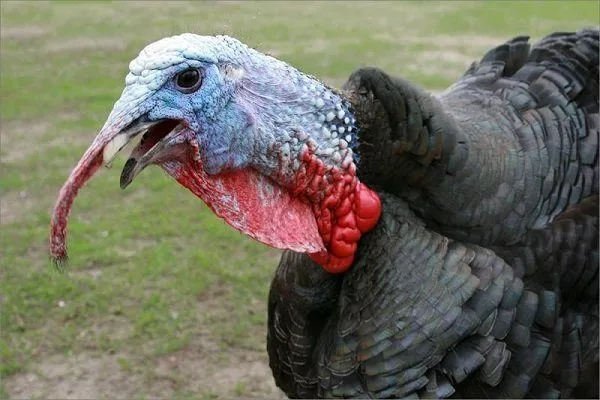
Turkeys can express a wide variety of emotions through their vocalizations. The most common sounds are:
- "A stranger has appeared!" A loud, rather aggressive cry. This is the reaction turkeys give to a stranger wearing brightly colored clothing or emitting an unpleasant, pungent odor. Turkeys are trying to alert their owners to danger.
If the birds become very anxious, they begin to jump high into the air and may even attack the intruder, aiming directly for the head. - "I'm going to lay an egg now!" The birds produce a calm, monotonous sound that is non-aggressive. They announce an event before it occurs.
- "Danger is very close!" A loud, drawn-out sound, followed by a continuous, quiet cackle. The entire flock then tries to quickly disappear or simply freeze in place.
The birds constantly look around, trying to assess the situation. Even when fearing for their own lives, they will continue to gurgle. - "What is this?". The entire flock displays its surprise, emitting a quick but quiet sound. Turkeys can literally surround a new object introduced into the enclosure.
Even a shiny candy wrapper attracts the birds' attention. Turkeys are very curious and can stare at a new object for a long time. - "Help!". If an individual is lost, or if someone's chicks are taken away, or if the bird is cold, it emits a plaintive moan.
This sound can be made by females during the mating season if a male is absent. The turkeys begin squatting, attempting to signal a problem. - "It's time to eat!" A constant, incessant, measured squeak. This sound is most often produced by young chicks who are starving for food.
- "Do not disturb!" If a bird doesn't want to be approached, it begins to make a shrill, agitated sound. Females make this sound when they're incubating their eggs.
- "Come with me!" If the female has given birth to offspring, she makes a confident and calm cry when she gathers her own chicks.
- "I will attack!" A quiet but hostile sound. This is how birds cry when threatened. Often, this reaction is made by a female in the nest, demonstrating her readiness to attack to protect her chicks.
Turkeys scream at any time, even during a simple walk around the enclosure. Even the slightest difficulty can trigger a loud scream from the birds.
An interesting fact is that only males can coo.
Causes of behavioral disorders in birds
Turkeys most often become noisy due to poor conditions, genetic factors, or mental health issues. If the behavioral disturbance is due to the latter two factors, such birds should be disposed of immediately. In other situations, the situation can be corrected.
Poor nutrition
Aggressive and loud behavior causes a lack of vitamins and protein amino acids. As a result, the birds' immunity is weakened, and they often suffer from dangerous microbes, which negatively impacts not only their well-being but also their behavior.
- ✓ Optimal protein content in the diet: 20-22% for adult turkeys, 24-28% for young animals.
- ✓ Vitamin and mineral supplements should include B vitamins, especially B12, to support the nervous system.
Proteins help restore proper metabolism. A deficiency can negatively impact a bird's psyche. During molting in the diet Protein-rich food is essential, otherwise the birds will quickly lose weight and their nervous system will be disrupted.
Excessive protein feeding also negatively impacts the health of birds. When uncomfortable or in pain, turkeys become restless and make loud noises.
The fight for supremacy
The main reason for loud cries and fights among birds is the struggle for leadership in the flock. It is important for the male to defend his own honor and demonstrate his dominance to other members of the flock.
The situation can be corrected by separating the birds by age and sex. Overly aggressive individuals are best kept separately.
Cramped poultry house
Turkeys need a lot of space. Poultry house The flock must be kept free—no more than 2-3 birds per square meter. When birds feel short of space, they make it known with loud noises and incessant attacks on other members of the flock.
It's easy to tell if a coop is overcrowded. If the birds are loud and fight frequently while indoors, but quiet while out for a walk, the problem is cramped quarters.
Air and light
Bird behavior is disrupted by insufficient lighting. Excessive light, especially during egg-laying, causes severe strain on the cloaca, rupturing the blood vessels located behind it. The resulting blood causes other birds to scream loudly and attack the sick female.
Flirting
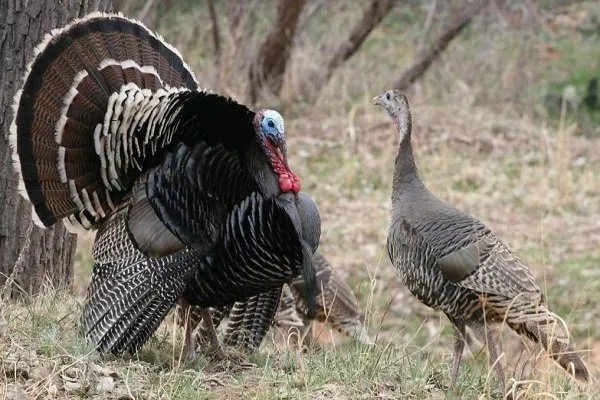
Inappropriate and excessively loud behavior in birds is observed during the mating season. At this time, turkeys begin screaming, pecking at other turkeys, and attacking. This is a manifestation of courtship behavior.
- Isolate aggressive males in a separate enclosure.
- Increase space for birds to reduce competition.
- Provide sufficient number of females for each male (recommended ratio 1:5).
How to stop birds from making noise?
These birds constantly make a variety of sounds. But an experienced breeder can control the noise level by creating optimal living conditions for the turkeys and preventing various stress factors.
Experienced breeders closely monitor their flock, allowing them to quickly identify the cause of their restlessness. Once the disturbance is eliminated, the turkeys calm down and become much quieter.
Understanding why birds start making noise is easy. Most often, it occurs during mating rituals, when they detect a threat, or when they spot something new and interesting. If silence is your top priority, avoid keeping turkeys, as they will become noisy even over the slightest provocation.