
To ensure turkeys gain weight quickly and remain healthy, it's important to feed them properly from the first day of life. A turkey poult's diet should consist of a specific list of easily digestible foods rich in vitamins, minerals, and nutrients.
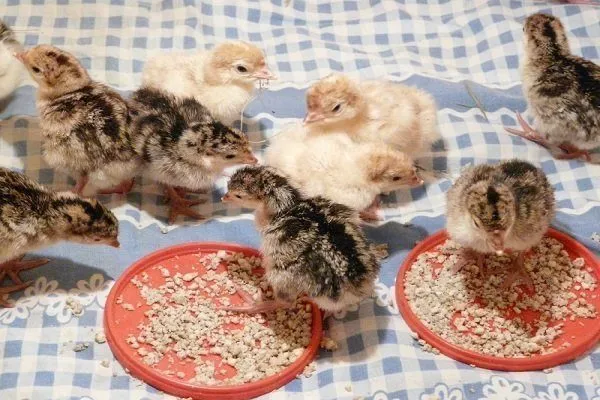
Feeding turkeys depending on their age
From the day they hatch, turkey poults should not suffer from nutritional deficiencies. Food should be fresh. A portion is prepared for each feeding, which the chicks consume within half an hour.
Food should not be allowed to linger in the feeder. In the warm conditions of the poultry house, pathogenic microorganisms can quickly develop in uneaten food, which can cause serious harm to the young. Therefore, feeders in the poultry house must be kept clean.
Below is a table listing feeds and indicating daily consumption rates in grams for turkey poults of different ages:
| Feed | Days from the beginning of life | |||||
| up to 10 | 10-20 | 20-30 | 30-60 | 60-90 | more than 90 | |
| boiled egg | 3 | |||||
| bran | 3 | 5 | 10 | 20 | 20 | 20 |
| crushed grain | 5 | 10 | 15 | 35 | 80 | 110 |
| millet | 5 | 10 | ||||
| crushed wheat | 20 | 35 | 45 | 50 | ||
| meat and bone meal | 1 | 3 | 8 | 15 | 20 | 20 |
| low-fat curdled milk | 30 | 20 | 25 | 40 | 50 | 50 |
| cottage cheese | 8 | 10 | 5 | |||
| green | 10 | 30 | 50 | 50 | 100 | 150 |
| shell rock and chalk | 1 | 1 | 2 | 3 | 5 | |
| salt | 1 | 3 | 5 | |||
Feeding day-old turkey poults
Newly hatched turkeys don't yet have a swallowing reflex; they may be reluctant to eat, refusing offered food. The owner must carefully pry the chick's beak open and place food in its mouth.
Newborn chicks are offered easily digestible, nutritious, high-quality food. They are given a boiled egg, low-fat cottage cheese, and finely chopped greens. The food is given in small portions, every three hours. They are given lukewarm boiled water with a little sugar dissolved in it.
Gradually, the intervals between meals are increased. The diet becomes more varied, including:
- wheat bran;
- boiled millet;
- crushed shell rock or chalk to provide minerals to the body;
- low-fat yogurt and other fermented milk products;
- skim milk.
- ✓ Activity and quick response to sounds.
- ✓ Bright, shiny eyes without discharge.
- ✓ Even breathing, without wheezing.
All of the listed products are added to the diet gradually so that the birds' bodies get used to the new food.
Many farmers who use intensive turkey rearing methods feed their poults commercially prepared feed from the first day they hatch.
The optimal number of feedings in the first days of life is 8-9. Food should be placed on cardboard or thick fabric to prevent the chicks from injuring their fragile beaks on the floor or bottom of the feeder. Only crumbly cooked grain should be given. Sticky gruel entering the digestive tract can cause serious digestive problems.
For information on feeding turkey poults from 0 to 7 days, watch the following video:
Feeding week-old chicks
By the time turkeys reach one week of age, their diet expands significantly. Boiled eggs, fermented milk products, and porridge remain on the menu. Dry grain mix is added to these. It's helpful to diversify their diet with sunflower meal, crushed peas, and boiled potatoes (no more than 10 g in the first few days). Mineral supplements include ground chalk and shell rock.
Yeast and a small amount of bone meal are essential components of the diet. Don't forget about fresh herbs. Turkeys readily eat chopped green onions, but they become very thirsty afterward. Therefore, it's advisable to add onions only to the daytime portion to ensure the birds drink enough water before bedtime.
The larger the turkeys become, the less frequent feedings should be and the larger the portion size should be. At one week of age, young turkeys already respond to the owner's arrival with food and expect to be fed, so it's advisable to establish a feeding schedule and bring food daily at the same time.
The cardboard on which the food was previously placed is no longer needed. The beak has strengthened, and the turkey chick can independently grab food from a wooden or metal feeder.
Feeding turkeys at 2 weeks of age
Two weeks after hatching, boiled eggs are removed from the menu—not because they're harmful to digestion, but because they become unprofitable. As young birds grow, their appetites increase, and eggs are expensive, so the farmer is losing money by continuing to include them in the birds' diet.
The basis of the diet of two-week-old chicks is the following products:
- liquid grain mixtures seasoned with skim milk, yogurt;
- dry mixes based on carefully ground beans, wheat, oats, barley, including sunflower cake and meal;
- medium-chopped greens: dandelion, green onions, nettle;
- a small amount of cottage cheese;
- bran;
- chalk and other sources of minerals.
The menu periodically includes a small amount of pine needles and hay.
What to feed month-old chicks?
Once turkeys reach one month of age, their diet changes. They consume a liquid mixture supplemented with skim milk or water. For greater nutritional value, the mixture is made up of half greens, the other half grain and chopped vegetables.
Salt is added to the food in small quantities. Whole wheat, buckwheat, oatmeal, and barley grains, as well as ground peas, are given during the morning and evening feedings.
Experienced farmers recommend including a specially formulated feed for turkey poults in their daily diet. The packaging should indicate the age of the birds to which this feed can be given.
Cottage cheese is removed from the diet as a staple food, as it becomes uneconomical. Some owners continue to offer it every few days as a treat. Chalk and shell rock are necessary for replenishing minerals and maintaining normal digestion. Pine needles, dried grass, bran, and meal are also continued as additional sources of vitamins and nutrients.
For information on feeding turkeys aged 1-2 months, watch the following video:
Feeding two-month-old turkey poults
Two-month-old turkey poults are fed four times a day. The diet changes slightly, with bran and crushed corn kernels making up a large portion. These products accelerate weight gain and therefore remain in the birds' diet until slaughter. Grain sprouts also promote rapid weight gain.
It's helpful to add shredded carrots, dried nettle leaves, pine needles, and boiled potato peels to your diet. These foods are rich sources of vitamins. Avoid making mixtures based on potato broth.
What to feed chicks at 3 months?
The diet for three-month-old turkey poults remains the same, with only the daily portions changing. Young turkeys should consume sufficient amounts of meat and bone meal, bran, and ground grain. The daily greens intake should also be increased to at least 150 g per turkey. The daily intake of salt and minerals should be increased slightly.
Growing birds' diets should remain high-quality and balanced. Feeding amounts should be increased or decreased gradually to allow the bird's body time to adjust to the changes in nutrition.
Feeding turkeys after 4 months
Four-month-old chicks are fed with standard compound feed, as adultsYoung turkeys readily eat balls cooked in water, made from oatmeal or corn flour, bran, and yeast.
Feeding broiler turkeys
Broiler chicks are fed a separate diet that promotes faster weight gain. The lighter a broiler weighs, the less demanding it is in terms of nutrition.
From the first day of life, broiler turkeys eat a special feed. The best option is PK-6, which is based on peas, corn, and barley.
When the chicks reach three weeks of age, PC-6 is replaced with PC-2. This feed is a blend of natural ingredients essential for the healthy development of broilers.
Some farmers prefer to prepare their own feed rather than buy ready-made ones. For chicks up to 2 weeks old, the following homemade feed is suitable:
- 50% crushed corn grain;
- 15% wheat;
- 8% barley;
- 15% meal;
- 12% fermented milk product.
For adolescent chicks up to 1 month old, the following food is suitable:
- 50% corn grain;
- 20% cake;
- 5% meat and bone meal;
- 13% wheat;
- 5% yeast;
- 3% skim milk;
- 3% greens;
- 1% feed animal fat.
For broilers older than a month, prepare the same mixture, adding chalk to it.
Vitamin and mineral supplements in the diet of turkey poults
Mineral supplements are an essential component of poultry nutrition, essential for replenishing minerals in the bird's body. Growing turkeys require calcium most of all. This mineral is essential for building bone tissue and feathers. Sources of calcium (chalk, shell rock) and other minerals (charcoal, coarse sand, bone meal, table salt) are included in the diet after the young birds reach 10 days of age.
Crushed shell rock should not be mixed with other food. It should be placed in a separate feeder.
From the first days of life, green onions become a source of vitamins for turkey poults. After a few days, the diet is enriched with herbs and chopped vegetables:
- nettle;
- clover;
- dandelion;
- alfalfa;
- plantain;
- wheat and barley sprouts;
- cabbage;
- carrots;
- tops of root vegetables.
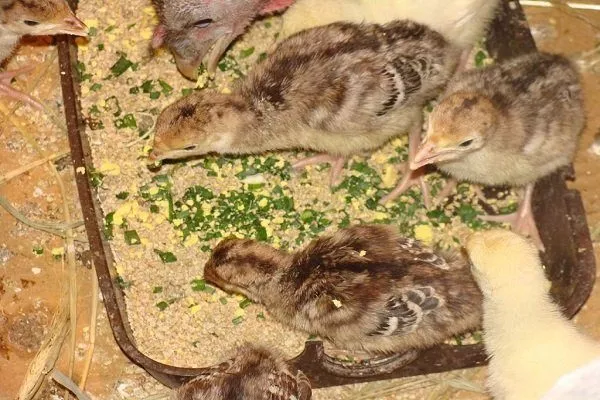
The green portion of the feed increases as the young grow. While a month-old turkey chick requires 50 grams of green material, a six-month-old chick consumes three times more.
To simplify their work, many farmers feed turkey poults with compound feeds containing essential vitamins and minerals. These days, stores sell feeds even for day-old chicks, but buying these isn't the best option. Newborn turkey poults' digestive systems are still weak and don't handle dry, coarse food well.
What shouldn't you feed turkeys?
Turkeys under 10 days of age should not be fed foods high in fiber. Coarse plant fiber can seriously disrupt the digestive system, increasing the risk of death in young turkeys. It's important to monitor the quality and freshness of foods, especially eggs and dairy products.
It is prohibited to give to young animals:
- spoiled, stale food;
- whole grain;
- sweets, flour products;
- a lot of salt;
- heavy cereals (allowed from one month of age);
- poisonous herbs: vekh, belladonna, buttercup, agrostemma, wrestler, hemlock, wild rosemary.
Turkeys' digestive systems only function properly when fed in small portions, so avoid overloading the feeders. This will cause the poults to overeat, which will negatively impact their digestion and intestinal health, and may affect weight gain.
By following the diet for turkeys of different ages suggested in this article, any farmer will easily ensure that the chicks grow into large individuals with good weight and tasty dietary meat.