
Turkeys' diets should be balanced and varied. The birds' diets should be designed to ensure their growth and development are balanced and healthy.
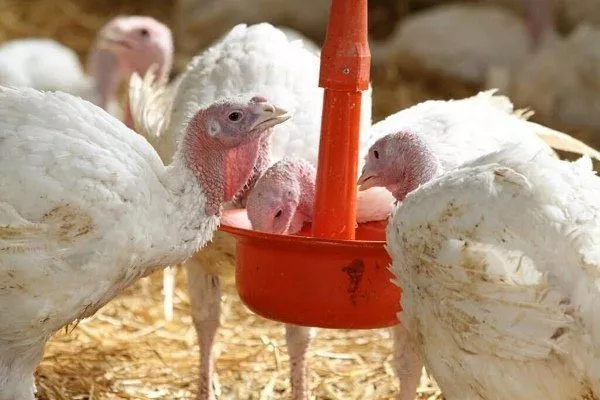
Rules for feeding turkeys at home
It's crucial to monitor your birds' feeding areas, especially for young birds. Feed tends to spoil quickly due to the abundance of greens, dairy products, and wet mash. Feeders should be kept clean and dry. Don't leave uneaten raw feed out for your birds. It spoils quickly and can be harmful to the gastrointestinal tract and overall health of the bird.
- ✓ The optimal water temperature for drinking turkeys should be between 18-22°C to avoid stress and reduced water consumption.
- ✓ The particle size of feed for young animals should not exceed 2-3 mm to ensure good digestibility.
The main criteria for turkey feed, as with other birds, are caloric content and nutrient density. Throughout the bird's growth, it's important to provide feed that contains all the necessary elements, including fiber, as well as macro- and micronutrients.
Adults should be fed three times a day and provided with constant access to clean water. Legumes and grains form the basis of their diet. Wheat, barley, buckwheat, and oats are common. Hay and straw are also beneficial for birds, providing a large amount of fiber, which aids digestion.
- During the first week, replace 10% of the old food with the new food.
- In the second week, increase the proportion of new food to 25%.
- By the end of the third week, completely transfer the bird to the new food.
Along with feeding, it's also important to know how to properly care for turkeys. Therefore, we suggest you read this article.
Homemade food
A complete combined feed must include:
- corn;
- wheat;
- barley;
- peas;
- meal;
- fodder yeast;
- reverse;
- fish meal, meat and bone meal and grass meal;
- feed tricalcium phosphate and impurities.
You can mix foods in different proportions, but be sure to consider the daily intake requirements for specific foods. This will help ensure a balanced diet and avoid deficiencies in certain nutrients, vitamins, and minerals.
Vitamin and mineral supplements
Supplements are an important component of poultry nutrition. These can include premixes, pure dietary supplements, and vitamin and mineral supplements.
Young animals are given such supplements as concentrated medicinal preparations in powder or liquid form. They contain all vitamin groups, trace elements, and minerals. They prevent the development of diseases, replenish deficiencies, and also serve as adjuvant therapy for infectious and parasitic diseases.
Supplements of this type for adult birds can reduce feed costs and improve nutrient digestibility. However, it's important to remember that vitamin and mineral supplements should not be combined with compound feed, and premixes should not be diluted in warm water.
Approximate daily diet
Before formulating a diet for your bird, there are some factors to consider. Age and breed of turkeys They require different food quality and composition. Here's an approximate menu for an average-sized adult:
- Morning: 100 grams of dry feed mix, 60 grams of grain, 30 grams of bran.
- Day: Wet mash, 450 grams of chopped grass feed, 30 grams of grass meal, 12 grams of millet and peas, 12 grams of chalk, 1.5 grams of salt, as well as gravel and shells.
- Evening: 100 grams of dry feed mix, 60 grams of grain, 20 grams of bran.
In addition to all of the above, you also need to give vitamin and mineral supplements and provide the bird with constant access to clean water.
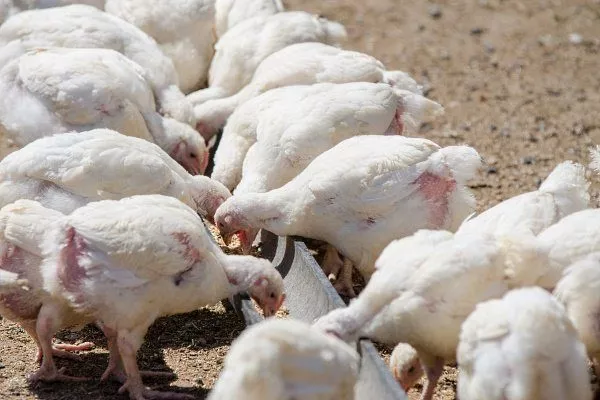
Features of feeding chicks
When a turkey hatches, its weight ranges from 50 to 52 grams. Young turkeys should be fed eight times a day, every two to three hours.
Caloric content is the main criterion for chicks' diet. Low-protein foods will cause an increase in the weight of the stomach and gastrointestinal tract. This process will increase the amount of food consumed, but will reduce its digestibility. Chicks will eat more, but will experience stunted growth.
Equally important is providing chicks with 24-hour access to clean, room-temperature water. In addition to food, turkey poults require plenty of fluids for proper digestion and vital functions.
The first 10 days
For the first 48 hours, turkeys can survive on the remaining nutrients in their stomachs, but don't delay introducing solid foods. It's important to start feeding turkey poults promptly, otherwise a lack of food can impact their growth and development.
On the first day, it is recommended to additionally give fermented baked milk, buttermilk, and low-fat cottage cheese. Dairy products are especially important due to their minimal amounts of glycine and arginine.
The following day, more calorie-rich foods are added to the diet. A classic complementary feeding mixture for day-old turkey poults is grated corn with a boiled egg. Oatmeal or wheat flour is added to this feed in a 1:4 ratio.
Day-old turkey poults are fed a vitamin concentrate. It's made from a mixture of nettle juice, alfalfa, and carrots in equal proportions. On the second day, the amount of flour in the diet can be increased. Barley and wheat flour are commonly used.
On the second day, introduce chopped, succulent greens and continue to feed them. Vitamin-rich foods include cabbage leaves, alfalfa, nettles, clover, and carrot tops.
On the third day, the chicks are given well-cooked porridge with some additives. This can include mashed potatoes or egg and greens. Green onions are especially good as a herbal supplement. Portions should be small to allow the turkey's intestines to adjust to the stress and new feeding.
By the third day of life, the chick's body weight reaches 70 grams. From this point on, the complementary feeding should become more varied. It is recommended to include finely ground shells and chalk in the diet.
Wet mashes are the main complementary feeding. They are made by adding sour milk or meat broth to regular food. To increase the protein level in the diet, gradually add yeast and minced meat and fish scraps without large bone fragments.
The video below explains the diet for feeding turkey poults during their first week of life:
After 30 days of life
Starting at one month of age, it's recommended to add a small amount of salt to the chicks' food. At this stage of development, it's important to gradually introduce mineral-rich feed. Young chicks are fed a mixture of chalk and crushed eggshells.
After 2 months
By this time, the amount of whole grain feed in the diet is increased to 50% of the total grain content of the supplementary feed. Roughage is essential for two-month-old chicks, especially fish meal and green meal.
At this age, it's very beneficial to introduce sprouted grains, grated carrots, rowan berries, and pine needles. Dried nettle and hay flour are also very popular complementary foods.
After 3 months
At this age, the turkey's diet should be supplemented with bran and finely ground corn. Feedings are reduced to four times a day during this period.
The food continues to be salted. As the turkeys grow older, they can gradually be fed coarser food. Wheat bran, bone meal with yeast bread, green grass, and grape leaves are recommended.
At 4 months
Turkey poults are fed adult feed. Bread crumbs are allowed, and sometimes the birds are fed dumplings. The dough for dumplings is made from water, yeast, bran, and corn or oat flour.
Features of feeding young animals
Animal feed should make up 15% of the young birds' diet. Green and succulent feed should be no more than 50 grams. Keep in mind that young chicks are reluctant to peck at food. To attract their attention, use brightly colored feeders, tap the tray before feeding, and sprinkle the food from a low height to engage them.
The breeder shares his experience feeding turkey poults in the video below:
Features of feeding adults
Adults' diets should consist primarily of grain and mixed feed. It's crucial to increase the animal protein content of the diet to 30%.
In the spring-summer period
Due to the heat, birds' feed intake decreases. Consequently, egg production, hatchability, and fertility decline. Feed intake can be increased to normal levels by increasing the amount of green chopped feed and fiber.
In winter
Poultry farmers try to prepare as much hay, silage, and brooms as possible for this period. These provide the basis for important vitamin- and protein-rich feed. Numerous garden crops, such as carrot tops, green alfalfa or clover, and milk-ripe corn cobs, are good silage preparations.
Additional nutrition is provided by a variety of nut-based supplements. For example, a single turkey can consume up to 40 acorns per day, providing additional saturated fat and increasing body weight.
During the laying period
Because the bird's body becomes depleted during egg laying, its diet must be carefully planned. Vitamin and mineral levels should be increased. Amino acids are an important component during this time, and their supply must be sufficient. Protein feed is a source of essential amino acids.
During this period, grain is also sprouted hydroponically and introduced into the diet along with animal proteins. Poultry farmers recommend feeding cottage cheese, yogurt, or adding them to a wet mash.
During the breeding period
During this period, males' food intake decreases, most noticeably during the day. To prevent weight loss, the proportion of legumes and peas in their diet is increased. In the evening, mixed vegetables, finely chopped cheese, and sprouted grains are often given.
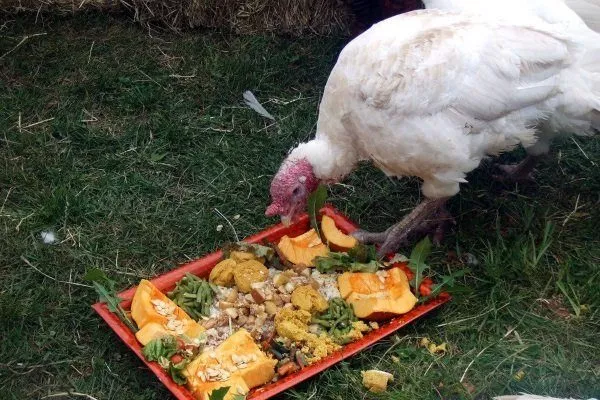
To increase egg production in hens, they are given increased amounts of yeast and feed with concentrated vitamin B during the breeding season. Poultry farmers also feed them sprouted grain and root vegetables.
Fattening for meat before slaughter
Force-feeding is used to increase carcass weight and achieve the desired body condition. Its purpose is to increase the birds' feed intake by 25-30%. This allows for rapid weight gain by increasing the quantity and caloric content of the feed.
What shouldn't you feed turkeys?
- Compound feed for pigs and cattle is prohibited for birds. It contains too much fiber and salt, which can cause loose stools and subsequent death.
- Remember to keep wet food fresh. After 20 minutes, the mash becomes unfit for consumption. It turns sour and can cause poisoning and loose stools.
- Watch for grass-based chopped feeds. In no case should they contain plants such as belladonna, wild rosemary, hemlock and hemlock.
- Don't give birds too much salt. Its content should not exceed 0.5% of the daily feed weight. Sweets are completely prohibited. Any confectionery can cause illness and deterioration in the bird's condition.
By following the tips and recommendations above, you can create the right diet for your turkeys, ensuring their uniform growth and development, and most importantly, maintaining their health.