
If poultry breeders want to raise meat birds for sale, then Big 6 turkeys are a good choice. This breed is renowned for its large body size, attractive appearance, and affordability. These birds can generate a good profit.
Characteristics of birds
The Big 6 turkey cross was developed by crossing two varieties of birds – the Booth 8 and the Big 5. This bird is a meat-producing variety. The Big 6 is a relatively new cross that has recently entered the Russian market, but has already established itself as a reliable breed due to its excellent weight, early maturity, and vitality.
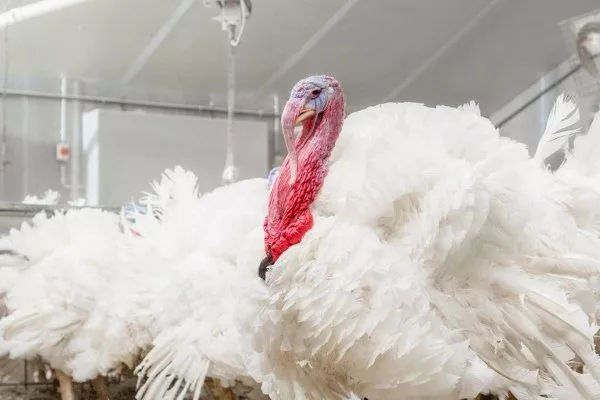
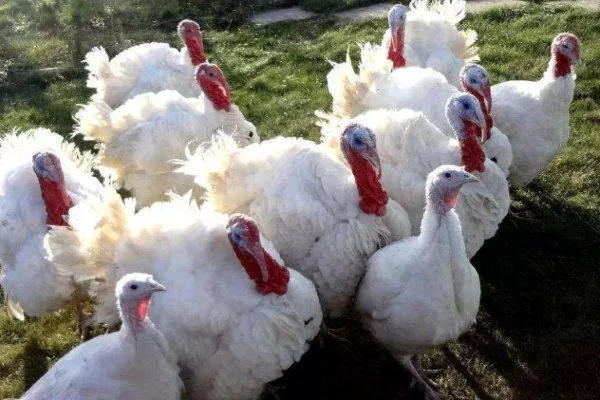
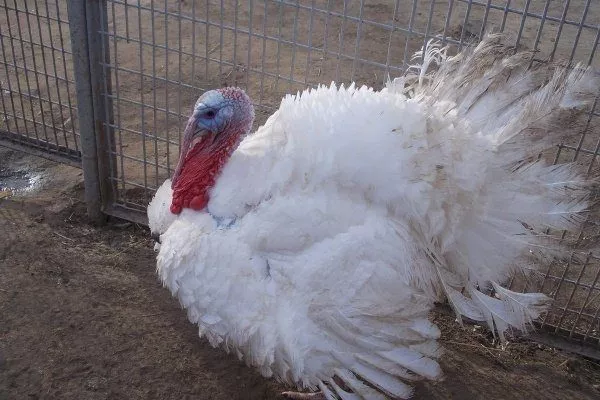
Turkeys are very large and massive. They are farm birds with a stocky body and small head. They are easily distinguished from other species by their fluffy plumage and white tint. A small black spot stands out on the chest – this is the main distinguishing feature of the Big 6. Females are not as fluffy as males. Their plumage is dense and thick, with a characteristic sheen.
Turkey down is highly prized for its softness and lightness, making it used in industry. These birds are distinguished by their smooth, broad backs, large wings, and prominent chest muscles. Big 6 turkeys have large, strong, and sinewy legs. A distinctive feature of this breed is the presence of corals, red folds of skin on the head and neck. On the upper part of the beak is a thin, vertically extending flap of skin; when the bird is excited, this flap can extend up to 12-15 centimeters.
| Parameter | Males | Females |
|---|---|---|
| Live weight (adults) | 22-25 kg | 11-12 kg |
| Meat yield | 80-85% | 75-80% |
| Keel length | 18-20 cm | 15-17 cm |
| Egg production | — | 90-110 eggs/year |
| Time to reach slaughter weight | 20-24 weeks | 16-18 weeks |
Turkeys are attractive due to their lively temperament – they are quite strong and can fend for themselves. As for their relationships with other birds, constant conflicts are possible. Broilers are kept separately and in families.
What should a poultry house be like?
In industrial settings, birds must be kept in specially equipped poultry houses, which are large and windowless. Litter, lighting, and an optimal microclimate are essential. Turkeys are often kept in cages.
Big 6 crossbreeds are bred not only in industrial facilities but also in private farms. The same requirements for keeping other poultry breeds must be followed.
On home farms, it's important to let the birds out for a walk in the summer and only bring them into the barn at night. For turkeys, a solid coop is built: brick walls (or other durable materials can be used) and concrete floors are poured. If the coop has windows, they are opened, but they must be sealed with bars first to ensure the birds don't fly away.
Turkeys don't like cold and damp conditions, so it's essential to insulate the house to avoid huge heating bills during the winter. The Big 6 is a highly productive bird, but only when kept in a dry and warm environment.
A hole is made on the south side of the coop, no more than 15 cm above the floor. Cover the floor of the coop with hay, sawdust, or straw. Because this breed is not known for its friendliness, it is recommended to divide the coop into compartments for larger flocks.
Turkeys need baths filled with sand and ash to help them clean their feathers of pests. Waterers and feeders are essential. High aviaries covered with mesh are also essential to prevent the birds from escaping. Since turkeys are strong fliers, it's best to clip their wings.
Temperature conditions
The most important requirement when raising birds is microclimate control. For the first four weeks, chicks should be kept in specially designed compartments on litter. For seven days, it's important to maintain a temperature in the house of 32-35 degrees Celsius. Over the next seven days, slightly reduce the temperature to 29-32 degrees Celsius. The third ten-day period should begin with a temperature of 27-29 degrees Celsius.
Daylight hours should be 12 hours, and in winter artificial lighting is required.
Temperature chart for young animals
- Days 1-7: 32-35°C
- Days 8-14: 29-32°C
- Days 15-21: 27-29°C
- Days 22-28: 24-26°C
- From the 29th day: 18-20°C
Birds are prohibited from high humidity and drafts.
What to feed birds based on their age?
Feeding young turkeys is fairly easy. But it's important to do it correctly, as their future development depends on it:
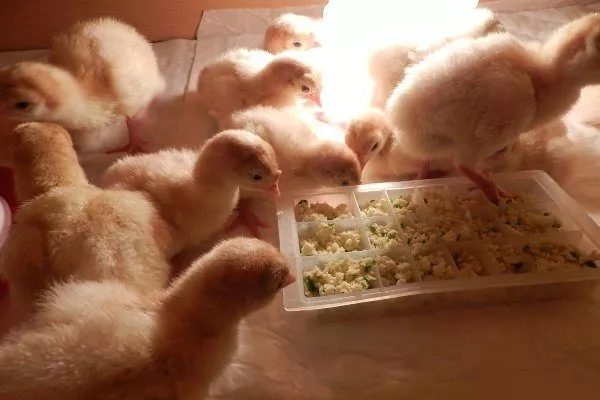
- For the first three days, the chicks' diet includes boiled eggs and grain porridge. Turkey poults require plenty of water. Feed them exclusively fresh feed, with three-hour breaks between meals. Grated carrots and finely chopped greens are added to the feed. Overfeeding is not recommended, but portion sizes should be sufficient to satisfy the chicks. On the fourth day, the poults are fed a milk-based mash with some grass.
- On the 7th day, the birds are given vitamin D, and then again on the 57th day. On the 15th day, Nystatin, a drug that prevents aspergillosis, is added to the feed. For preventative purposes, it is recommended to administer antibiotics to the chicks from the 6th to the 11th day.
- For the first two months of life, chicks should be provided with a complete diet, including dairy products. It's best to feed them sour milk, cottage cheese, skim milk, or buttermilk.
- Include greens in the diet. It's recommended to mix chopped plantain, alfalfa, clover, and dandelion greens into the feed. To prevent intestinal problems, green onions can be added occasionally.
As the birds age, the frequency of feedings decreases. Once the birds are 16 weeks old, they are fed four times a day. It is recommended to make special plywood feeders for feeding chicks, but not metal ones, as this could harm the young birds.
- ✓ Water: temperature 22-24°C for day-old turkeys
- ✓ Greens: no more than 10% of the diet in the first week
- ✓ Sour milk: 5-7 g/head from the 3rd day
- ✓ Cottage cheese: 2-3 g/head from the 5th day
- ✓ Vitamin D₃: 500 IU/head from the 7th day
What food to choose?
It's not advisable to overfeed turkeys, as Big 6 birds are prone to excess weight. In the morning and afternoon, the birds are fed wet mash, which should consist of grains. The evening meal should include dry grains. To provide calcium and phosphorus, blood, fish, and bone meal are added to the birds' diet. Fiber found in straw and hay will help improve digestion. In the summer, the birds are fed grass.
Green fodder, sprouted grain, and animal feed contain large amounts of vitamins A, E, B, and H. Turkeys' diets must be balanced, containing all the necessary elements and vitamins, as a deficiency can lead to slower growth in young birds, and decreased egg production in adults.
| Component | Share in the diet | Critical minimum |
|---|---|---|
| Corn | 30-35% | 25% |
| Wheat | 20-25% | 15% |
| Sunflower meal | 15-18% | 10% |
| Meat and bone meal | 5-7% | 3% |
| Feed yeast | 4-5% | 2% |
Diseases
Big 6 turkeys can be susceptible to various diseases:
- Histomoniasis. This is a disease that affects the liver of young birds. It is often caused by delayed house cleaning and inadequate disinfection. Turkeys experience this condition as foamy, yellow-green diarrhea. The chicks refuse to feed, become weak and thin, and stop preening. Treatment includes Piperazine and Phenothiazine.
- Respiratory mycoplasmosis. When a bird becomes ill, its eyes swell, growth slows, and it begins coughing and wheezing. Mortality in such cases is minimal. To combat the disease, it is recommended to use various medications prescribed by a veterinarian.
- Aspergillotoxicosis. A disease that birds are susceptible to due to consuming low-quality feed. Litter can also be a causative factor. Aspergillotoxicosis manifests itself as lethargy, rapid breathing, inactivity, poor appetite, diarrhea, and growth retardation. It leads to sudden death due to convulsions. At the first sign of symptoms, the feed and litter should be changed and the house disinfected. Fermented milk products should be introduced into the diet.
- Newcastle disease. This disease often affects young birds, resulting in the death of most birds. Symptoms include mucus accumulation in the crop, gray-yellow diarrhea, and paralysis of the limbs. There is no cure, but it can be prevented with timely vaccination.
Advantages and disadvantages of Big 6 turkeys
The breed's positive qualities far outweigh its negatives. Breeding birds requires considering both sides of the coin.
What are the advantages of a bird:
- This is a large bird that can reach up to 25 kg in live weight.
- When compared to other birds, Big 6 has a high egg production rate.
- The birds mature early. The young gain weight quickly, and little expense is spent on feeding.
- They have high-quality plumage and are used in industry and for the production of various products.
Disadvantages of the breed:
- Turkeys do not interact well with each other or with other birds, so they are kept in separate rooms and in families;
- The breed has low resistance to dampness and cold, so it will be necessary to insulate and heat the poultry house in winter, which will be costly.
Big 6 turkeys are meat birds that can be very profitable to raise. With proper feeding, careful housekeeping, and timely disease prevention, you can harvest many pounds of delicious, lean meat in a single season.