
Hybrid turkeys are considered highly productive, heavy-duty crossbreds. These birds gain weight rapidly, are excellent egg producers, and have tender meat. They are raised not only on private farms and farms, but also on large agricultural holdings.
Description of hybrid turkeys
Hybrid breeds, regardless of variety, are considered intelligent birds with a beautiful appearance. They reach their maximum weight at 22 weeks of age, fly to a height of 150-200 cm, and run at speeds of 40-45 km/h. This led farmers to call them "Indo-Ostrichs" (a combination of turkey and ostrich).
Appearance
Hybrid turkeys have a large, heavy frame with a powerful muscular system. Despite this, their body is compact and slightly elongated.
Features of external indicators:
- chest - wide;
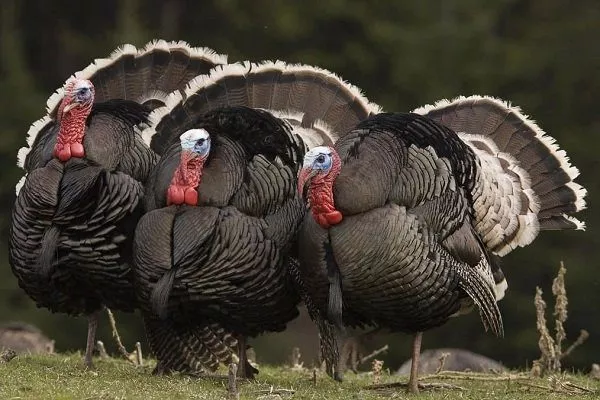
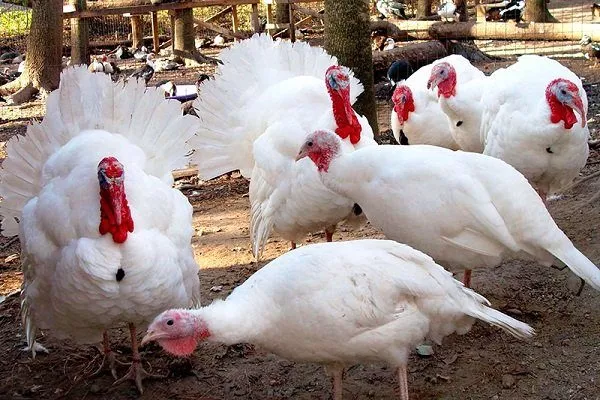
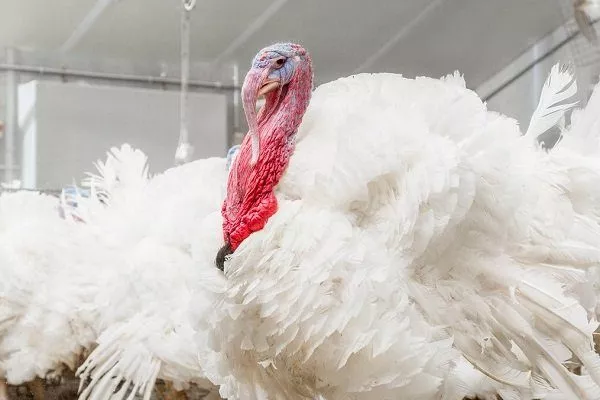
- plumage - white, but with a black “tie” in the center of the chest;
- terry feathers - distinguished by their smoothness and length, reaching the ground surface;
- feather covering - all over the body, but on the head and neck the down is sparse;
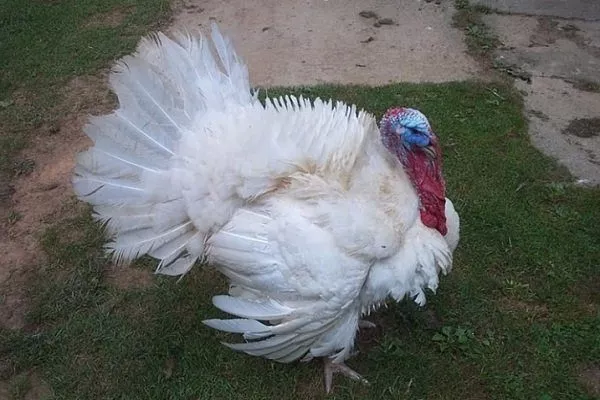
- the tail feathers are capable of forming a fan with a beige and curly edging;
- skin - reddish and light blue;
- the beak is yellow, but the metatarsus is slightly pink, massive in shape, with a red skin growth on the surface;
- neck folds - in the form of bright red circles;
- paws - powerful and strong, completely straight.
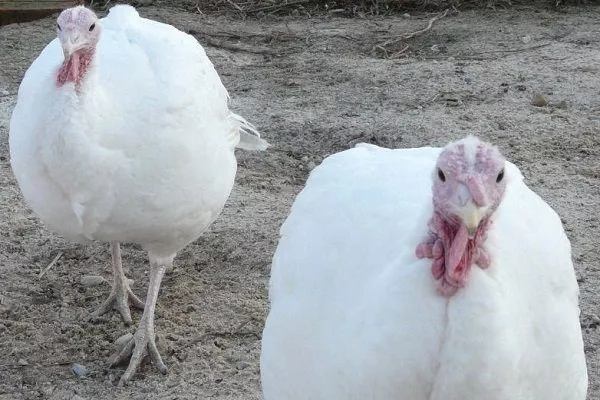
Males differ from females in their tail, which, when opened, forms a fluffy fan.
Size and weight
Hybrid turkeys are a profitable bird because they gain weight in the shortest time possible for turkeys. Moreover, the farmer doesn't need to purchase additional feed (unless they want to increase their body weight by a few kilograms).
The average weight of males is 24 kg, with a maximum of 30 kg. Females weigh slightly less, ranging from 12 to 15 kg.
Weight gain occurs quickly:
| Age in weeks | Male - weight in kg | Female - weight in kg |
| 1-3 | 0.15-0.75 | 0.14-0.71 |
| 4-6 | 1.25-2.76 | 1.15-2.36 |
| 7-10 | 3.75-7.37 | 3.15-5.95 |
| 11-14 | 8.7-13.05 | 6.8-9.45 |
| 15-18 | 14.5-18.7 | 10.15-11.9 |
| 19-20 | 19.9-21.1 | 12.3-12.55 |
| 21 | 22.17 | 12.75 |
| 22 | 23.2 | 13 |
There are factors that influence weight gain:
- feed quality;
- water purity;
- stocking density in the poultry house;
- vaccinations (if they are not carried out in a timely manner, the birds become sick and stop growing).
Behavioral features
Hybrids are known for their calm and friendly nature—they rarely fight among themselves, nor do they share territory or females. They can be aggressive toward other livestock (geese, chickens, ducks, and other turkey breeds). Experienced farmers separate them or install barriers within the same area.
The females deserve special attention—they are the best mothers, as they incubate their young for the full duration. Once the poults hatch, the mothers care for them diligently.
Productivity
Heavy crosses are highly productive birds – after slaughter, the meat yield is 85%, of which 1/3 is breast meat. These excellent results increase the profitability of raising these turkeys. The meat is juicy and tender, with virtually no fat.
Egg production is also high – a turkey lays at least 50 eggs per season. The average is 80. If the farmer improves feeding, egg production increases to 120-150 eggs per year.
Other features:
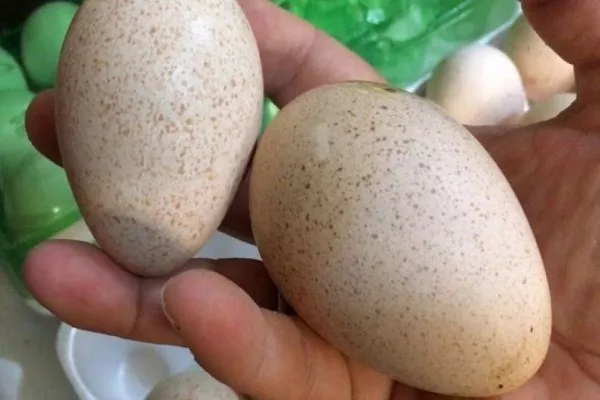
- the weight of one egg is 70-90 g;
- the form is correct;
- the shell is strong and smooth;
- consumption - boiled, fried, raw.
Life expectancy
The lifespan of turkeys, if all the conditions are met, is 8-12 years, but no farmer or backyard owner allows this, since the point of breeding them disappears (the meat is old, the female does not lay eggs, etc.).
In industrial farms, slaughter occurs at 10-12 weeks. Private farmers nurse hybrid turkeys longer, until the end of the growth period, as further nursing only results in losses. On average, this period ranges from 22 to 24 weeks.
History of origin
The turkey breeder is Hendrix Genetics Company of Canada. To create the hybrid, two varieties were used: White Holland and Bronze Broad-Breasted. The hybrids absorbed all the best qualities of their parents, resulting in such beautiful and productive birds.
Advantages and disadvantages
Varieties
| Name | Growth rate | Weight Limit | Plumage color |
|---|---|---|---|
| Hybrid converter | Fast | 30 kg | White |
| Canadian Broad-breasted | Very fast | 15 kg | Snow-white or black and white with a bronze tint |
| Big 6 | Very fast | 20 kg | Absolutely white, but with a black spot on the chest |
| Hidon | Slow | 20 kg | White |
There are several types of hybrid turkeys, each with its own advantages and disadvantages, appearance characteristics, and other characteristics. Before purchasing turkeys, carefully review each breed:
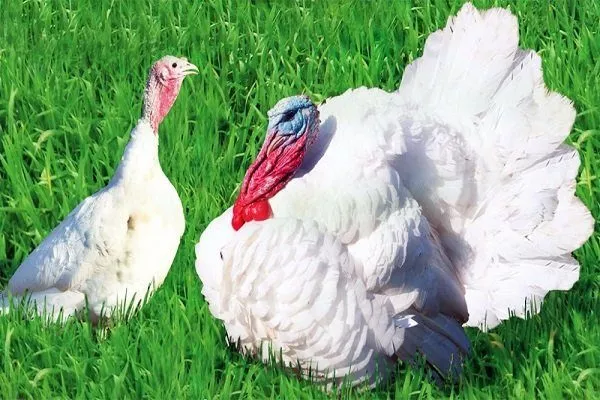
- Hybrid converter. A pure white variety with a beak growth that is not only red but also pink. It fully matches the characteristics of a hybrid.

- Canadian Broad-breasted. These are the fastest-growing specimens, as they can be slaughtered at 6 weeks instead of 10. However, in this case, their body weight is only 5 kg. Maximum weight gain occurs between 12 and 15 weeks. A characteristic feature is that after this period, a rapid weight loss is observed.
The weight is identical to standard hybrids. Color: snow-white or black and white with a bronze tint.
- Big 6. It takes 4-5 weeks to reach 20 kg in weight. Growth stops at 100 days of age. Appearance: They are completely white, but with a black spot on the chest. A distinctive feature is that the female's plumage is less prominent than that of the male.
- Khidon. Weight gain occurs more slowly than in previous species, requiring 30 weeks. The body weight of males and females does not differ significantly. The former reaches a maximum of 20 kg, while the latter reaches 17 kg. A distinctive feature is that they consume less food than other relatives. Their plumage is white.
Breeding hybrid turkeys
Crossbreeds are considered demanding in some respects, particularly when it comes to breeding, as to produce a given hybrid, it is desirable to cross the same parents used by the breeders. This is precisely where the difficulty lies in producing a purebred hybrid.
Selecting eggs for incubation
Due to the difficulty of obtaining the desired hybrid, farmers prefer to buy hybrid eggs from specialized farms that do crossbreeding.
To avoid getting into trouble, learn how to choose the right material:
- inspect the shell for cracks and other damage - there should be none;
- check the integrity of the yolk - slightly unscrew it, placing it under the bright light of a table lamp (the yolk should not move freely);
- determine the location of the air chamber - the correct position is at the bottom;
- Pay attention to where the yolk is located - normally it is almost in the center, but slightly lower (towards the air chamber).
Features of incubation
After purchasing eggs, you should keep them for no more than 7-10 days, but it's best to place them in an incubator immediately. To ensure the embryos survive and hatch on time, follow the incubation schedule:
- Before placing the eggs, turn on the appliance and heat it to 20°C. The material where the eggs are placed should be at the same temperature.
- Fill the incubator. If you're turning the eggs manually, place them horizontally; if you're turning them automatically, place them vertically.
- For the first 8 days, set the temperature to +37.5°C, humidity to 60%.
- From the 9th to the 14th day, thermometer readings should vary from +37.6 to +38.1°C, humidity – from 45 to 50%.
- From the 15th day of incubation until hatching, the temperature inside the device should not exceed +37-37.5°C, the humidity level – 65-70%.
Care in the first days of life
Immediately after the chicks hatch, transfer them to a prepared cardboard box filled with straw. When they are 2-3 days old, transfer them to a cage (available at specialty stores or homemade).
Rules for caring for turkey poults:
- during the first 3 days, maintain the air temperature within 37°C;
- after 7 days, reduce the temperature to 32-34°C;
- by the 15th day of life the temperature regime should be from 24 to 27°C;
- at one month of age, turkey poults should be kept at a temperature of 18 to 20°C;
- There should be no drafts in the room, otherwise the chicks will catch a cold;
- change the bedding 1-3 times a day to keep it dry;
- Feed 7 to 8 times a day;
- Pour the feed into feeders that are hung at the eye level of the young (turkeys have poor vision in the first days);
- Let's drink solutions - 2 g of ascorbic acid and 150 g of glucose per 10 liters of water.
How to choose adult hybrid turkeys?
Many farmers believe that incubating hybrid eggs and caring for week-old chicks is difficult, so they prefer to buy two-week-old or adult birds. Even in these cases, losses sometimes occur, but the cause is often poor quality—the poults may be infected, sick, etc.
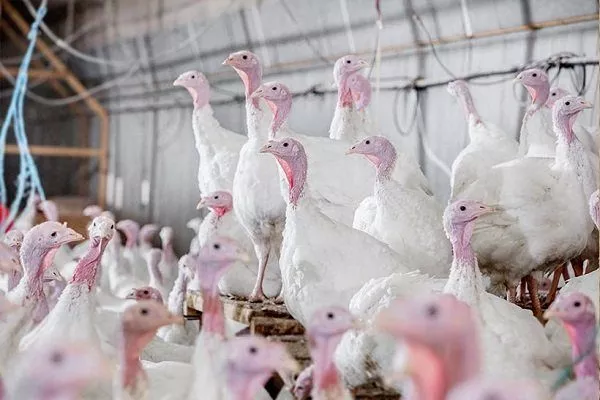
To avoid this situation, pay attention to the following indicators for making the right choice:
- plumage - even, smooth, uniform;
- if it is a chick, the umbilical cord should be tight and dry;
- belly at any age - only soft;
- wings - tightly fitting to the body;
- activity – birds move quickly, run, fly, or try to take off;
- response to sounds, voice – instantaneous;
- gait – stable;
- body weight – must correspond to the age group;
- the anus is clean, the residual yolk is not retracted;
- fluff – soft, pleasant to the touch;
- eyes - no inflammation, tearing, dryness (it’s good when they shine, which is typical for this breed);
- appetite is excellent.
- ✓ The umbilical cord should be completely healed, without signs of inflammation.
- ✓ Eyes should be clear, without discharge.
- ✓ Activity and response to sound are key indicators of health.
Content
Hybrid turkeys require specific temperature and humidity conditions, as these determine the rate of weight gain and the onset of egg production. It's important to consider the timing—warm and cold climates each have their own specific requirements.
Conditions of detention in summer
In the summer, raising turkeys isn't a problem—they spend a lot of time outdoors, grazing on grass if they have the opportunity. If not, add freshly picked vegetation to the run twice a day.
Basic maintenance conditions for the summer season:
- The air temperature should not exceed 30-35°C. If the weather is hotter, cover the windows to prevent direct sunlight from entering the coop.
- Humidity – maximum 65% (hybrids get sick from high humidity).
- Daylight hours – at least 12-14 hours (the breed leads an active lifestyle).
- Bedding – straw or hay (change every 8-10 days).
- Walking - twice a day (after breakfast, which takes place in the poultry house, and after lunch, until dinner).
If you have free pasture, let your turkeys roam. This will allow them to forage for plant food on their own, reducing feed costs and saving you time and effort.
Features of the poultry house
The first thing hybrid turkey breeders pay attention to is providing adequate space. These large, flight-loving turkeys require plenty of space.
Features of the premises:
- Allocate 0.5 square meters per individual.
- Place windows on the southwest or south side (to ensure adequate daylight).
- Make the windows large, with transparent and clean glass.
- Avoid using concrete as a floor covering. Lay down wooden planks, then layer sawdust or straw on top.
- Ventilation is essential, as feces and urine release ammonia compounds (install a ventilation system or make windows that open).
- Perches: height – 80 cm, material – strong beams (remember that adult turkeys reach up to 25-30 kg).
- Hang food and water containers on the wall or install them on the floor with a fixing device.
- Drinking bowls must be such that birds cannot get their paws into them (if the water is dirty, the pets may become infected).
Walking area
Providing a walking area is essential for keeping hybrid turkeys. Design the area so that the height of the enclosure is at least 2-5 meters, allowing the birds to stretch their wings during takeoff.
Peculiarities:
- the area per adult individual should be at least 1-3 sq. m;
- Since the breed loves to fly, provide protection on the enclosure - install a chain-link fence or other mesh material as a roof, otherwise the birds will easily fly over the walls of the walking pen;
- plant grass around the entire perimeter (clover, alfalfa);
- The walking area should be connected to the poultry house entrance.
Wintering
During the cold season, turkeys are rarely allowed outside—for only 2-3 hours—as hybrid turkeys are heat-loving birds. There are some nuances to winter care:
- The air temperature in the poultry house should not fall below 15-17°C. If such conditions cannot be achieved naturally, install heaters.
- Lay down enough straw on the floor so that there is twice as much as in the summer.
- To make the bedding warmer, first lay down peat, then sawdust and straw on top.
- Change the litter once every 2-3 days, as the birds spend little time outside and spend more time in the poultry house.
- Turn on the lights in the evening.
- Clear the walking area of snow.
Feeding
The choice of feed depends on the season and the age of the bird. The diet for adults is very different from that for young birds. Consider this factor, as it affects the profitability of raising birds (different micronutrients are required at different ages to ensure good growth).
Chicks and young
Immediately after hatching, chicks are fed boiled eggs, crushed grains (wheat, buckwheat, corn), and cottage cheese. Until they reach one month of age, they are fed seven times a day; after that, four times a day is sufficient.
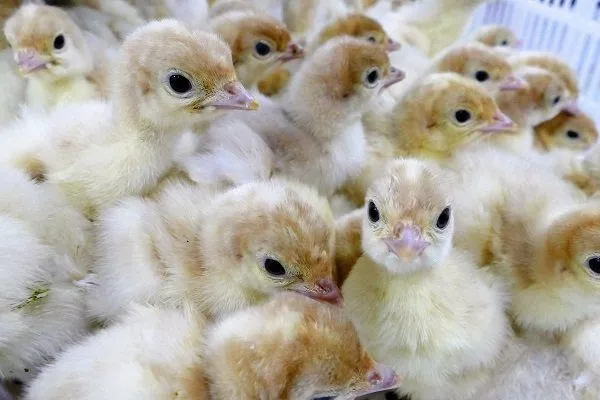
Peculiarities:
- use specialized feeds for a complete diet such as PC;
- give them grated vegetables and fruits - carrots, beets, cabbage, etc.;
- feed them with other vegetation - green onion feathers, carrot tops, young nettles, greens;
- sprouted oat and wheat grains are beneficial for young animals;
- Introduce meat and bone meal, chalk, and eggshells, which helps prevent the development of musculoskeletal diseases.
At 1.5 months, a turkey poult should consume about 2 kg of different feeds.
Adults
The diet of adult turkeys should be based on grain feed—oats, wheat, corn, etc. They also need protein, which turkeys get from meat and bone meal and beans. Experienced farmers prefer a combination diet that includes both dry and wet feed.
What is important to give in summer, besides vegetation:
- corn cobs;
- millet;
- compound feed;
- barley;
- green onions;
- oats.
In winter, be sure to include the following in your diet:
- chestnuts;
- vegetables and fruits;
- acorns;
- compound feed;
- sauerkraut;
- sprouted grains;
- hay;
- nuts;
- coniferous branches.
Be sure to give table salt - 3 g per individual per day is enough. It is also important to add crushed shells, gravel, limestone and chalk to the feeders.
Diseases and their prevention
With proper care and maintenance, hybrid turkeys rarely get sick, as they have a strong immune system. However, there are a number of diseases that affect these turkeys under other conditions.
All of them are manifested by lack of appetite, lethargy and other signs, but there are also individual symptoms that indicate a specific problem.
Diseases:
- Coccidiosis. The cause is parasites. Birds 2-6 weeks old are most susceptible. The main symptom is the bird not producing feces. For treatment, use antibiotics such as Amprolium, Coccidin, Sulfadimezine, etc.
- Colibacillosis. Birds develop diarrhea because the disease develops as a result of an E. coli infection. To combat the infection, use antibacterial medications, as in the previous case.
- Histomoniasis. The infection affects the liver. The skin of the head and neck becomes dark. For treatment, consider medications such as Tinidazole, Aminidazole, and Metronidazole.
- Mycoplasmosis. The main symptom is mucus discharge from the nose. Treat with antibiotics as directed by your veterinarian.
To prevent the development of such pathologies, follow the preventive rules:
- change the water in drinking bowls more often;
- wash feeders every day;
- use only high-quality feed, without signs of spoilage;
- introduce mineral and vitamin supplements into your diet;
- keep the bedding clean;
- disinfect the poultry house and aviary 3-4 times a year, and the tools once a month;
- remove food leftovers – do not leave them overnight;
- Ventilate the room.
Peculiarities of slaughtering hybrid turkeys
Slaughtering turkeys is generally considered problematic. This is largely due to the birds' heavy weight. To make the process easier for farmers, several slaughtering methods have been developed:
- externally - an axe is used, the throat is cut (more suitable for young animals);
- externally – the jugular vein is cut with a knife in the neck area (2-3 cm below the ear);
- one-sidedly – the incision is made on the left side along several arteries and veins;
- two-way – the neck is pierced from left to right, which creates a through hole;
- internally - the veins are cut through the larynx by inserting scissors into the beak.
After the procedure, the bird is hung upside down to drain the blood, after which it is washed, plucked and gutted.
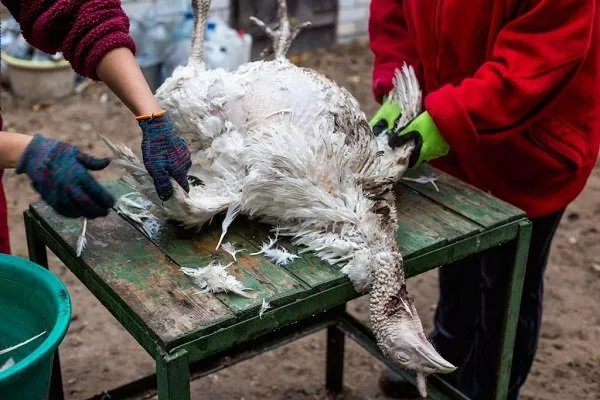
To ensure that the meat does not lose its properties, after gutting it is placed in a refrigerated chamber - young animals for 12 hours, adults - for 24-48 hours, depending on age.
Reviews
Hybrid turkeys are divided into subspecies, but they all share common traits: fast growth, greater body weight, and increased egg production. Raising these birds is considered a profitable business for large farms, small farmers, and backyard owners alike.