
Even a novice poultry farmer can build a turkey house on their own. However, it's important to know the specifics of a poultry house's construction: location, construction rules, tools, and technology. This article discusses the necessary materials and step-by-step instructions for constructing a turkey house.
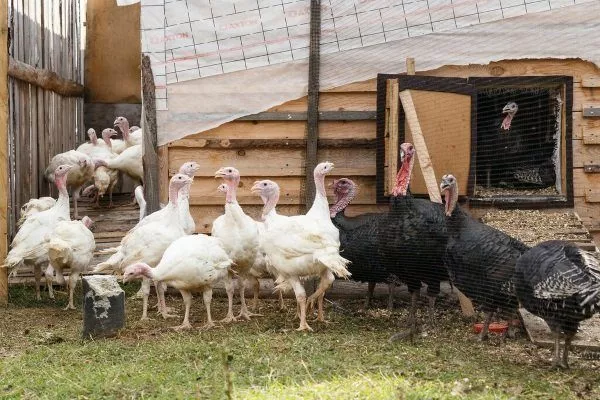
Requirements for a turkey farm
Turkey house space can be secured from existing barns if poultry farming is just beginning. In the future, as the flock grows, more space will be needed to house the turkeys. Therefore, it's best to build a new turkey house that meets the birds' needs and is convenient for the owner's farming needs.
- ✓ The optimal temperature for turkey poults in the first days of life is 34-36°C, with a gradual decrease of 3°C every week.
- ✓ Humidity levels for adult turkeys should not exceed 70% to avoid respiratory diseases.
The following requirements must be met in the room prepared for turkeys:
- Optimal area.One adult bird requires at least 1 square meter of space. Turkey poults require 0.25 square meters per bird.
- Maintaining microclimate.During the coldest winter days, the temperature in the poultry house should not drop below zero degrees Celsius. In regions with harsh climates, additional heating should be considered. In summer, a temperature of 25°C is optimal. Maintain humidity at 65-75%.
- No drafts.Seal all cracks and holes in the building. Drafts are harmful to turkeys.
- Lighting. Additional lighting will make it possible to extend daylight hours when necessary.
- Ventilation. For large areas, a forced gas exchange device will be required.
- Compartment for adults. Prevents conflicts between generations and males.
- Room for chicks.Optimizes survival and maturation of young animals.
- Walking area.Choose a quiet location for the site, preferably adjacent to the main holding area.
In the video below, the breeder shows off a turkey house he built himself and explains how to meet all the requirements for keeping the birds:
Choosing a location
The location where the coop is eventually built determines not only the comfort of the turkeys but also the operational capabilities of the building. Therefore, choose a level site or one on a slight hill. Preferably, choose a sunny or partially shaded location.
The plot area should be large enough to accommodate a turkey house with a run for the birds. Ideally, it should be located away from roads, gathering areas, and human habitation.
Tools and materials
The optimal solution for a poultry house is a wooden structure. This is because wood is an environmentally friendly and readily available material. Wooden structures retain heat better than cinder block or brick structures.
To build a turkey house you will need the following tools and materials:
- screenings or river sand;
- cement;
- metal reinforcement with a diameter of 12 mm;
- knitting wire;
- waterproofing material;
- wood and lumber;
- fasteners;
- slate or metal profile;
- insulation;
- vapor barrier material;
- tape measure and level or regular level;
- drill;
- electric saw and jigsaw;
- angle grinder (“grinder”);
- hammer;
- shovel and other common construction tools.
All tools and materials can be purchased at the building materials market.
The second option is to purchase a ready-made structure and install it in the chosen location. You'll need to build the run yourself. The approximate price for a summer turkey house, designed for 5-10 birds, starts at 53,000 rubles.
Design and drawing up of the drawing
To calculate the amount of material needed, a design and drawing are prepared. A diagram of the turkey house, including all its compartments and run, is drawn on paper. Door and window openings are located.
It's advisable to include a vestibule corridor in the structure to prevent drafts from entering the birds every time the front door opens. This space can be used for storing equipment, bedding, feed, etc.
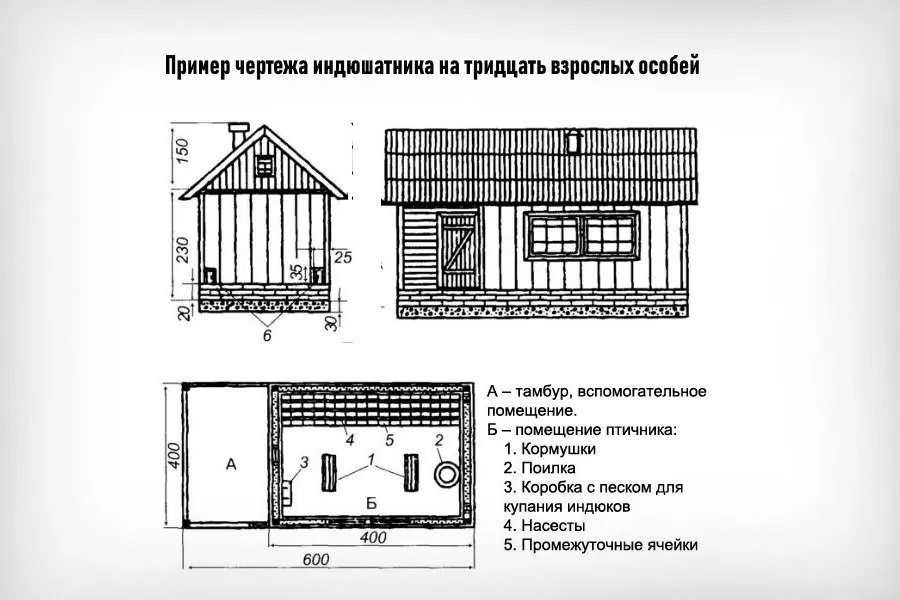
Plan your turkey house with the expectation that your flock will grow. Provide separate space for hens and chicks.
Poultry house for turkey poults
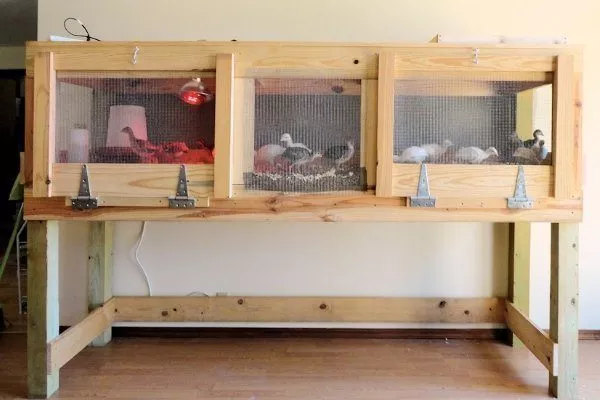
Since the conditions for adult turkeys and their offspring differ, a separate room must be provided for the poults. The youngest chicks should be placed in a brooder—a box that is constantly light and warm. Waterers and a feeder should also be provided there.
Turkey poults require a warmer environment until they are three days old, so install a heater or a powerful incandescent lamp in the brooder. Gradually acclimating them to cooler temperatures will be easier with a thermostat.
Poultry house for adult turkeys
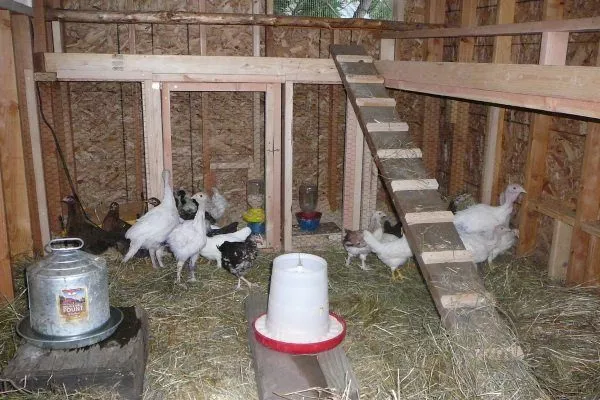
The main construction criterion is sufficient space. Turkeys don't particularly like perches, but they must be built. Consider the placement of feeders and waterers, a box filled with sand or ash for bathing the birds, and nest boxes. Provide access from the common area to the run.
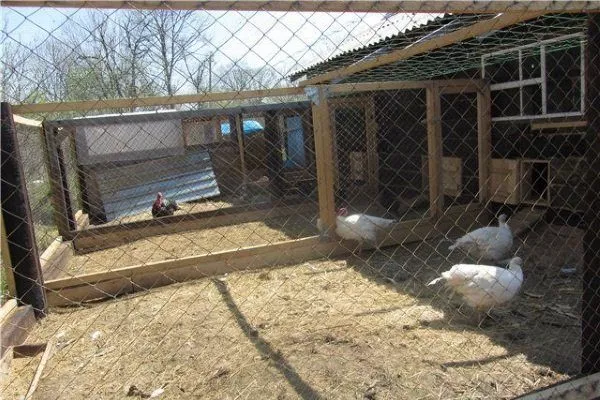
It is often practiced to keep females separately from males.
Stages of building construction
Once you have completed the design and drawing, purchased the necessary materials and chosen a location for construction, you can begin construction work.
Foundation
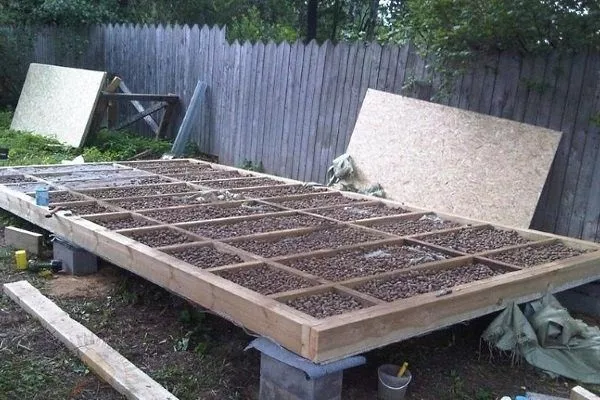
A strip foundation is poured from concrete using a reinforcing frame. A layer of waterproofing material is always placed on top of it.
An alternative is a columnar foundation. It is constructed on a gravel bed by driving columns into the ground at a distance of no more than 1-1.5 meters from each other.
Floor
Three types of flooring can be installed:
- Earthy.It's inexpensive, but quickly deteriorates into a mess of soil, leftover feed, water, and feces. Microorganisms thrive and pose a health risk to the birds. In winter, such a floor is very cold, so it must be covered with straw or sawdust. Cleaning is difficult, and disinfection is virtually impossible.
- Concrete. It doesn't become soggy or absorb moisture, making it easy to clean and maintain, and protecting against moles and rodents. In winter, bedding material should be used.
- Wooden.A smooth, warm wooden surface is comfortable for birds. It's easy to work with and easy to clean. However, it will rot over time due to moisture generated by the birds' activities.
- Clean the floor from debris and remnants of old bedding.
- Apply a layer of slaked lime (0.5 kg per 1 sq.m) for disinfection.
- Lay a layer of straw or sawdust at least 10 cm thick.
Walls
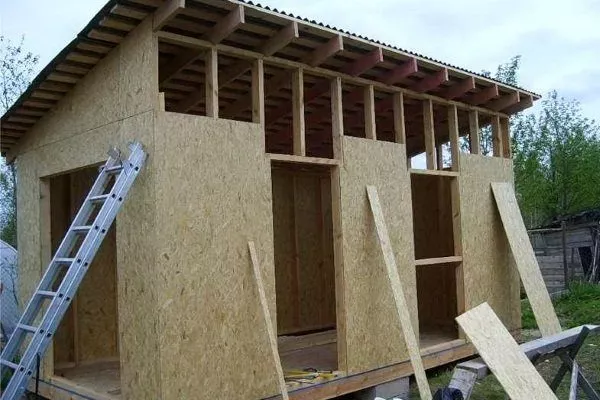
Permanent structures typically use cinder blocks and bricks. However, wood retains heat better indoors, is less time-consuming, and requires no special skills. Wooden poultry houses are insulated with mineral wool, foam, or other similar materials.
| Material | Thermal conductivity (W/m K) | Service life (years) |
|---|---|---|
| Mineral wool | 0.038-0.045 | 10-15 |
| Styrofoam | 0.037-0.043 | 15-20 |
Roof
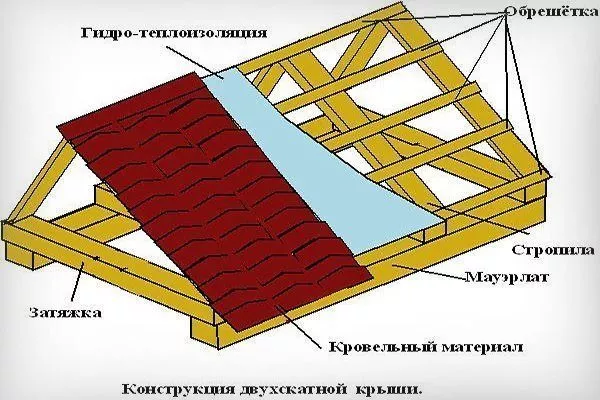
On permanent structures, a gable roof with an attic is installed. For a wooden turkey house, a single-pitched slate roof can be installed. The ceiling should be insulated using a vapor barrier and expanded clay or a clay-straw mixture.
Windows and doors
The number of windows depends on the size of the poultry house. They are installed at least 1 meter above the floor. A window size of 0.5 m by 0.5 m is considered optimal.
With the correct placement of windows, all corners of the turkey house are illuminated by sunlight.
Place access holes under windows, based on the maximum size of the turkeys. It is recommended that doors, windows, and access holes be double-walled. Seal all cracks and gaps.
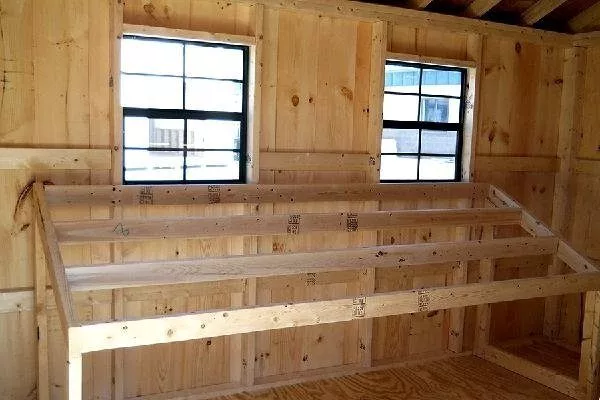
Interior work in a turkey house
Interior work is aimed at creating the conditions necessary for keeping and breeding turkeys. It ensures comfortable living conditions and maintains the indoor microclimate.
Lighting
The ideal daylight period for turkeys is at least 13 hours. During winter and inclement weather, when sunlight is insufficient, artificial lighting can be used. Turn it on from 7 a.m. until full sunrise and at sunset until 7 p.m. Installing 60-watt incandescent bulbs or equivalent energy-saving bulbs is sufficient.
Artificially increased daylight hours in spring increase the quantity of eggs laid by females.
The number of lamps is calculated based on 7 watts of light per square meter of area. Do not turn on artificial lighting in sunny weather.
Ventilation
Ventilation helps remove the ammonia smell and maintain the oxygen to carbon dioxide ratio in the room.
The supply and exhaust ventilation system is installed using 200 mm diameter plastic pipes. To achieve this, place the hood under the ceiling and in the far corner of the room above the floor.
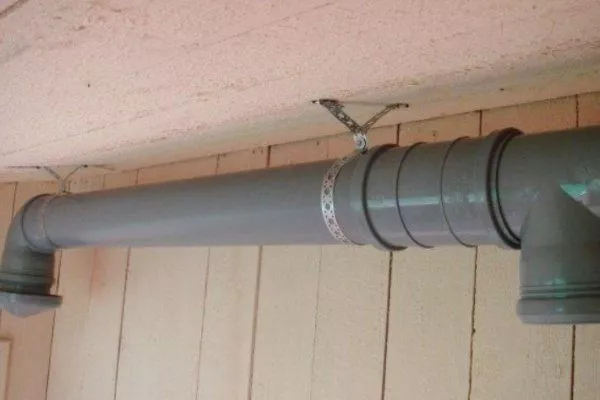
Forced ventilation can be installed, but the main thing is to keep the noise level during operation to a minimum.
In summer, instead of using ventilation systems, ventilation is carried out by opening windows and doors.
Heating
During the winter, a heating system is essential for bird care. This can include fan heaters, electric or infrared heaters, or a heating system using a boiler. The choice depends on the size of the turkey house and the breeder's capabilities.
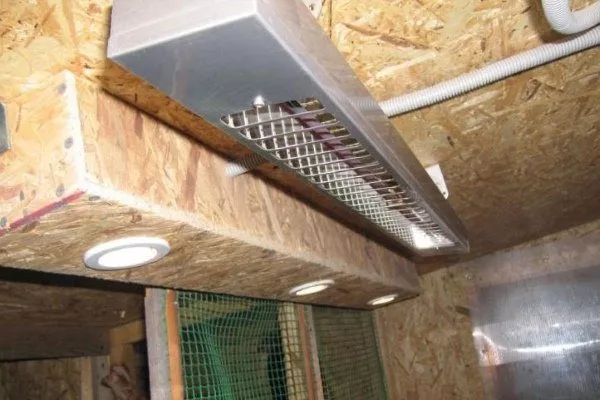
To prevent heat loss through the floor, it is covered with any bedding material in a layer of at least 10 cm.
Arrangement of perches
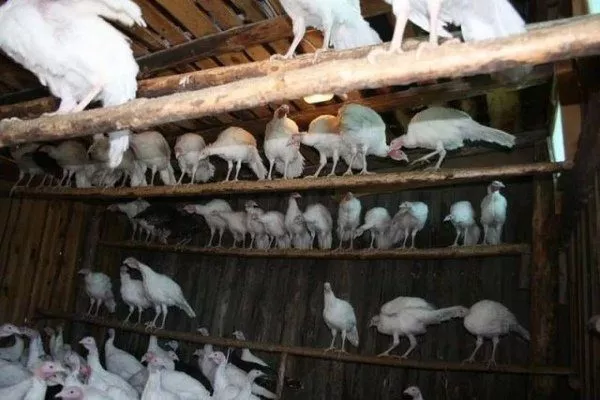
Birds roost and rest on perches. Mount them in a pyramidal wooden structure along the wall in the warmest part of the room. The lower perch should be 80 cm from the floor, and the upper one 0.8 m from the ceiling.
Make sure there are no gaps or splinters in the perches to prevent birds from getting injured.
Calculate the volume of the perch, knowing that each individual takes up about half a meter of the perch.
Nest arrangement
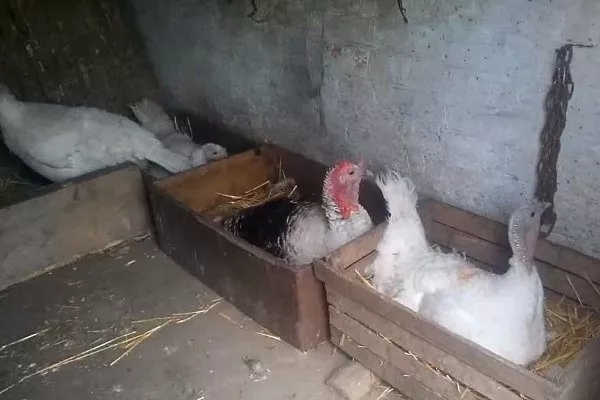
Turkey nests are built from plywood, or wooden boxes and wicker baskets made from branches or vines are used. Line them with straw or hay bedding. The hen should be comfortable and free.
Nesting boxes can be attached to the wall in multiple layers. Then install a ladder to them.
Feeders and drinkers
A turkey house must include waterers and feeders. These are available in specialty stores, but you can also make your own from household items.
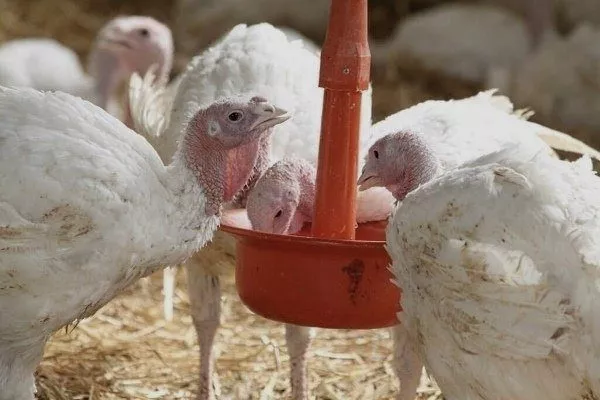
All containers used for water and food should be thoroughly washed twice a day.
Place a jar upside down inside a plate or tray with a small rim. This is the most popular type of feeder/waterer, suitable for chicks and young birds. Make sure the birds don't tip over or break the container.
For adult turkeys, simple troughs are suitable. They should be hung at least 40 cm above the floor to prevent the birds from scattering or trampling the feed. A separate trough should be used for dry feed and mineral-containing mixtures.
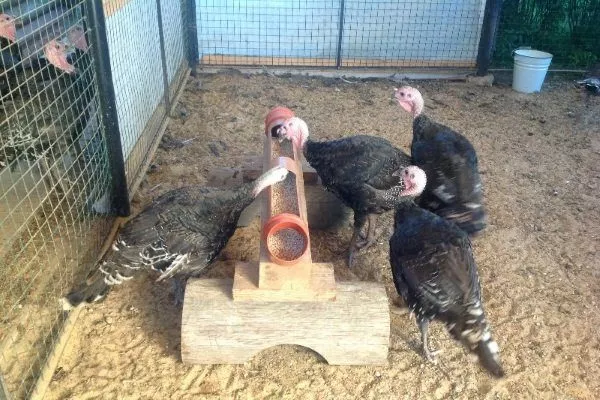
Containers with water are covered with a large-mesh net and suspended at the level of the birds' necks.
Features of arranging a room for turkey poults
Brooders are created and equipped under certain conditions:
- It's recommended to make nesting boxes from wood. This can be thin boards, plywood, or OSB panels.
- The design must include fine mesh inserts to ensure gas exchange.
- Brooders are installed at a height of 15 cm from the floor covered with bedding material.
- Inside the box, the temperature during the first 14 days from the birth of the chicks is regulated at 34 degrees.
- Round drinkers and feeders are installed for the chicks, which saves space in the brooder.
Creating a walking enclosure
The outdoor enclosure should be safe and spacious. Turkeys are fairly winter-hardy birds, so they can be allowed to roam in the enclosure even in winter.
Once you've determined the required enclosure size, dig in timber at the corners of the perimeter. Attach horizontal joists to these timbers using fasteners at three levels: above ground, in the middle, and at the top. Cover the resulting frame with galvanized chain-link fencing.
The enclosure should be high enough, at least 2 meters, because turkeys are strong fliers. It is recommended to also make the ceiling out of mesh. This will prevent other birds and predators from entering.
The floor of the enclosure is cleared of vegetation and covered with sand and sawdust. When installing the enclosure, install doors to allow access for cleaning and other chores.
Additional recommendations
When building and equipping a turkey house, it is advisable to use the following tips:
- Treat all wooden materials with antifungal and water-repellent treatments. This will extend the life of the structure.
- It is advisable to sand the wood to protect birds from splinters and chips.
- If you have a large property, you can let your turkeys graze freely, rather than in a pen. They'll return to their roost in the evening.
- During the construction phase, seal any cracks in the wooden floor with silicone to prevent moisture from penetrating and accumulating inside.
- Don't make the ceiling in a turkey house without a heating system higher than 3 meters. In winter, the birds will freeze because all the heat will accumulate at the top.
Building a turkey house is a serious undertaking, but it's doable. Consult with experts if you have any doubts. It's better to do it right once than to redo it several times. With a responsible approach to construction, the birds will thrive and thrive in comfortable conditions.