
Turkeys always require careful attention. Breeders need to be able to identify sinusitis in its early stages and know how to properly treat the bird. They must also learn preventative measures to prevent the disease from developing.
Causes of the disease
Sinusitis (respiratory mycoplasmosis) is an infectious disease. It belongs to the class of respiratory diseases transmitted by airborne droplets. It affects the respiratory system. This is a serious condition and requires a special approach to both treatment and follow-up.
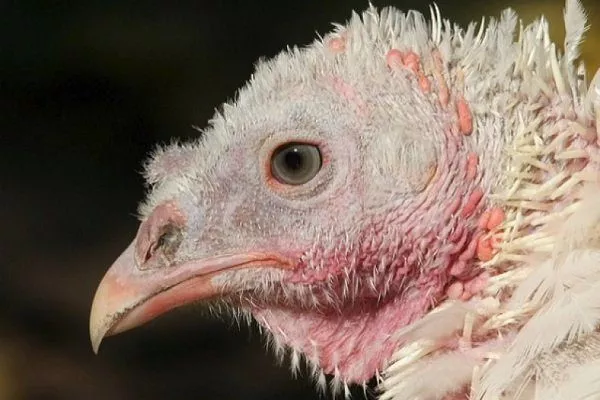
Pathogens
Sinusitis in turkeys is caused by a pathogen that is not a bacterial or viral organism. Mycoplasma galisepticum is a specific single-celled organism, a cross between a virus and a bacterium.
Mycoplasma grows on nutrient media and reproduces by binary fission. It is a single-celled organism:
- actively multiplies, affecting the mucous membrane of the respiratory tract;
- exhausts the bird by parasitizing on it;
- makes its victim vulnerable to any other diseases.
Causes of the pathogen's emergence
The causes of outbreaks of infectious diseases in poultry houses are considered to be violations of sanitary conditions in the premises, for example:
- dirty equipment and inventory;
- stale bedding;
- spoiled food;
- waste decomposition products;
- mustiness in the air.
There are a number of factors that can also be almost as much of a cause as poor sanitation on a poultry farm:
- cold, draft in the poultry house;
- dampness, which allows pathogenic bacteria to grow;
- weak immunity of pets;
- lack of vitamins;
- stress among the inhabitants of the chicken coop.
How is it transmitted?
The infection is highly contagious. Respiratory mycoplasmosis can spread rapidly among birds. If it occurs in the same building as turkeys, it can quickly spread to the entire farm.
Sinusitis is transmitted in several ways:
- from contaminated eggs;
- by direct contact among birds;
- from airborne dust;
- through liquid;
- through contaminated feed;
- through contaminated premises and equipment;
- through the hands of the farmer.
Who is at risk?
Turkey poults under 12 weeks of age and turkey hens during laying are at the highest risk of infection. Young turkeys are severely affected by the disease, especially if the birds are under four weeks old.
They also have a higher risk of complications than adults. This is because young animals' immune systems are not yet sufficiently developed and protected.
Symptoms of the disease
Sinusitis, like most other diseases, has an incubation period (1–3 weeks).
With proper care, the disease does not manifest itself for a long time, but if it is detected and identified at the right time, it can be treated without complications.
It occurs in the following forms:
- acute;
- chronic.
The first is characterized by the following features:
- mucous fluid is released from the nose and eyes;
- difficulty breathing;
- the larynx and surrounding area swell;
- wheezing, whistling;
- sneezing;
- tumors;
- eyes sticking together;
- The young grow and develop much more slowly.
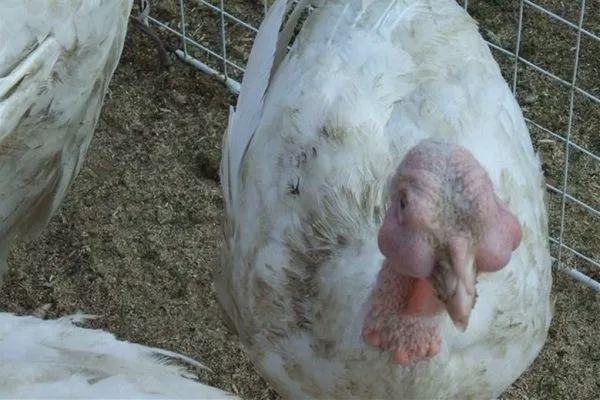
Chronic is characterized by the following symptoms:
- decreased productivity;
- underweight;
- purulent discharge from the eyes and nose;
- photophobia;
- stop in weight gain.
Mechanism and stages of the disease
The peculiarity of sinusitis is that the symptoms in the early stages are practically unnoticeable, and it is very easy to allow the spread of mycoplasma.
How does the body become affected?
Once the bird is infected, the mechanism for the spread of the pathogen throughout the body is launched:
- Onset of the disease. When the infected mycoplasma first enters the mucous membrane, it attaches to the cells.
- The pathogen infects the cell and then begins to divide.
- As a result of the increase in the mass of infected mycoplasma, it ends up in the blood.
- Respiratory mycoplasmosis spreads throughout the body through the blood.
- Intoxication occurs and inflammatory processes are triggered.
Stages of the disease
Veterinary scientists distinguish 4 main stages of the disease:
- It takes 12 to 21 days for antibodies to form. This is the latent stage.
- The next phase lasts from 1 day to 3 weeks. Then, sinusitis affects about one-tenth of all the chicken coop's inhabitants.
- The third stage lasts 7-32 days. By this time, the vast majority of turkeys have developed antibody cells.
- The last stage lasts for about 3 weeks.
Diagnostics
The spectrum of symptoms for this condition is quite broad. Without a thorough examination and biological analysis, it is impossible to determine the presence and stage of the disease.
If you suspect sinusitis:
- Conduct laboratory tests immediately.
- Continue to monitor the bird's condition and the dynamics of symptomatic manifestations.
Laboratory tests take a long time. The sooner you contact a clinic, the better your chances of prompt, appropriate treatment. Choose a reputable, official veterinary clinic that has all the necessary certifications.
Treatment
Veterinarians and experienced farmers take a comprehensive approach to treating sinusitis in turkeys. Based on laboratory test results, be sure to consult a specialist. They will prescribe the necessary medications and provide treatment recommendations, taking into account all the nuances of the disease.
Folk remedies used without special medications are not always effective.
Quarantine
Before attempting to combat a disease affecting your turkeys, be sure to protect healthy birds. Quarantine measures can help prevent further spread of the disease within the poultry house.
If a sinusitis outbreak occurs on your poultry farm, immediately clean and disinfect the common coop after quarantining the sick birds.
Provide sick birds in the quarantine unit with all necessary conditions for recovery. This includes:
- ✓ The temperature in the quarantine room must be maintained at +20-25°C.
- ✓ Daily bedding changes and room disinfection are essential to prevent the spread of disease.
- Mandatory regular ventilation of the premisesThis measure is necessary to ensure access to fresh air and oxygen and to reduce the number of pathogenic microorganisms.
- Maintaining optimal temperature. Maintain the temperature at 20-25°C. Also, carefully check for drafts. If any are detected, eliminate them immediately.
- Maintaining perfect cleanliness. Change the bedding daily and wet-clean the room. This should include thorough disinfection of all areas adjacent to the quarantine compartment.
- Ensure adequate fluid intake. Provide clean water in large quantities. Water should be at room temperature.
- Special diet. Now more than ever, a bird's immune system requires a well-balanced diet. The diet should include vitamins and minerals. Herbal infusions (such as wormwood, chamomile, mint, and nettle) and solutions containing specialized vitamin and mineral complexes are suitable.
Drug treatment
Once a doctor has established an accurate diagnosis, medications are prescribed. These include antibiotics and medications to neutralize the pathogen and strengthen the immune system.
Antibiotics
Tetracycline antibiotics are primarily prescribed. These have proven their effectiveness in practice. These include:
- Pharmazin;
- Tetracycline;
- Typhosine;
- Furalizode.
Antibiotics are introduced into the body by diluting them with drinking water.
In severe cases, the sinuses are cleared of discharge and irrigated with the same water and antibiotic solutions. If fluid pockets remain on the turkey's head or neck 2-3 days after rinsing, remove them with a syringe. Thoroughly rinse the evacuated cavity with chlorhexidine.
Tylosin-200 and Pharmazin-500 are also used. Swelling is effectively reduced with Voltaren or Diclofenac.
Drugs that strengthen the immune system
In addition to antibiotics, birds are given various vitamin and mineral supplements, such as Trivitamin or Chiktonik. These supplements contain the correct amounts of nutrients needed to support the immune system.
It is advisable to carry out such watering of healthy individuals as a preventative measure.
Aftercare
The recovery period after an illness has its own nuances:
- Continue to keep the recovered turkey warm;
- make sure the room is dry;
- Make sure that the bird is not exposed to direct sunlight;
- provide three meals a day;
- Continue to change the litter daily, as disease-causing germs still live in the feces;
- If necessary, continue to give the turkeys medicinal medications for a few more days.
Preventive measures
It's far wiser and more effective to take regular measures to prevent your bird from getting sick than to spend time and money on treatment later. Preventive measures include creating ideal conditions in the poultry house.
Temperature conditions
The regime for maintaining a temperature appropriate for the turkey’s age must be observed as strictly as possible:
- During the first seven days after hatching, turkey poults require an air temperature of +32-34°C;
- during the second week the temperature is reduced to +28-32°C;
- the third week of life should take place at a temperature of +26 to 28°C;
- From the beginning of the fourth week onwards, maintain the air temperature at around +18°C.
Nutrition
The right approach to feeding turkeys helps maintain their health and development at the proper level. Use:
- high-quality special feeds;
- green;
- fresh grass;
- vegetables;
- grains (eg oats, wheat, corn);
- roots;
- legumes.
Keep the water bowl filled with fresh water at all times. Thirst is unacceptable. Occasionally add a small amount of garlic or onion juice or apple cider vinegar to the drinking water.
Don't forget about the irreplaceable natural mineral supplements in the form of small shells, limestone and chalk.
Conditions of detention
There are certain requirements for maintenance procedures. They are an important element of general preventative measures:
- 1 square meter of poultry house space should be occupied by up to 10 turkeys of 8 weeks of age, 5 of 16 weeks of age, and 3 of older age.
- Never keep different types of poultry together.
- Change the bedding regularly. It should consist of high-quality natural material such as straw or sawdust.
- Think over and install a ventilation system.
Take your birds for walks regularly. Young turkeys should be taken for the first time when the ambient temperature is at least +20°C.
Cleaning and disinfection
Cleaning is one of the most important activities. Stages:
- Rinse all adjacent surfaces thoroughly with warm water.
- The room is dried for three days.
- Disinfect all equipment, the ceiling, the floor, the walls, and any objects in the chicken coop with a solution of potassium permanganate or slaked lime.
To ensure effective disease prevention through cleaning and disinfection, perform these activities at least monthly.
Respond promptly to the symptoms of sinusitis in your poultry house. Early detection and treatment of this dangerous disease can prevent bird deaths and save you money.