
When turkeys fall on their feet, it's called "perozem." It's a sign that the birds' ligaments and joints have weakened for some reason. To save your flock, you need to take action promptly by identifying the cause of the problem. There are several possible causes.
Reasons why turkeys fall on their feet
Experienced farmers refer to the term "falling on legs" as the birds' inability to walk on straight legs. Turkeys are domestic animals that require very careful care and protection from illness. Several factors contribute to the development of the disease and explain the mortality rate.
Inappropriate conditions of detention
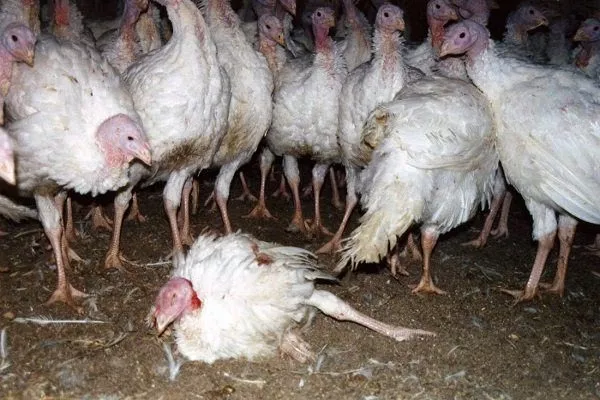
The main reason for bird deaths is cramped pen space and a lack of exercise space. A small pen forces turkeys to lead a sedentary lifestyle. The birds spend most of their time sitting on their feet, which interferes with proper joint development.
More susceptible to damage:
- young individuals whose legs are just forming;
- adults of large breeds.
Many farmers make a grave mistake: they keep around 100 birds on a small plot. As a result, by the time cold weather sets in, losses reach 80%.
Turkey poults quickly gain weight, and their long bones and tendons actively develop. If young turkeys spend most of their time sitting, their muscles become dysfunctional and stop developing. Once they reach a certain age and weight, they have difficulty standing up and reaching food. The birds starve and die of exhaustion.
To avoid problems, provide the birds with more space. Each bird should have at least 1 square meter of space.
- ✓ The minimum area per individual should be at least 1.5 square meters to ensure sufficient mobility.
- ✓ The bedding must be dry and changed at least once every two days to prevent dampness and the development of diseases.
When raising turkeys on an industrial scale, providing sufficient space isn't always possible. Falls can be prevented by intensive feeding and slaughtering the birds at 3-4 months of age. At this age, the turkey's weight reaches 5 kg, but changes in the joints have not yet become apparent.
Farmers just starting to raise turkeys are advised to purchase smaller breeds, as they are less likely to suffer from falling problems. They are also easier to build spacious pens for.
Mechanical causes
Turkeys can fall on their feet not only due to overcrowding, but also for various mechanical reasons. The following are worth mentioning:
- The slippery bottom of the box in which the bird was transported. Young animals may do the splits during transport, injuring their joints. After resettling to their permanent home, the problem resolves if the resulting dislocation is corrected:
- Take a small piece of yarn of any thickness.
- Place the turkey's legs together so that they take a natural position.
- Secure the legs with thread.
In just a few days, the turkey chick will be able to move independently.
When transporting the young animals, place a disposable diaper or cloth napkin on the bottom of the box.
- Leg injury. The floor of the pen should be covered with any material that can protect the birds' feet from protruding nails, sharp corners, etc.
- Damp floor covering. If there is a lot of moisture on the floor, the turkeys' legs begin to crack and scar, which ultimately makes it painful for the birds to move and they spend more time sitting.
Crooked legs or toes
Crooked toes are a problem for many young turkeys, leading to them falling on their feet and unable to move properly. There are several causes for this problem:
- Deficiency of vitamins D, B, manganese and chlorine. Deformation of toes and feet is irreversible. To facilitate the movement of turkeys, use vitamin complexes and premixes. Add them to the water in the proportions indicated on the packaging. The toes of young birds can be carefully bandaged.
- Synovitis. Joint inflammation and dehydration. Individuals 1.5 to 2 months old are at risk. Symptoms:
- swelling of the joints in the legs;
- leisurely walking;
- apathetic state;
- lameness;
- pale skin;
- softening of the joints.
Treat your bird with antibacterial medications at the manufacturer's recommended dosage. However, it won't completely cure the disease.
- Arthritis. A consequence of excess protein in the bird's diet. In advanced stages, the disease can lead to death. Symptoms of the disease:
- swelling of the joints;
- reluctance to move;
- lameness;
- curvature of the limbs.
Treatment: - Include protein and vitamin D in your menu;
- administer antibiotic therapy;
- apply ampicillin;
- Add mumiyo to food.
- Rheumatism. This is an inflammation of the joints. It is caused by turkeys spending long periods on wet floors, drafts in the coop, and improper feeding. Symptoms:
- limping;
- low activity;
- reluctance to move;
- apathy.
Treatment: - bring the conditions of detention back to normal;
- give the bird a warm foot bath;
- Administer a mumiyo solution orally.
- ✓ Synovitis is characterized by softening of the joints and dehydration, which requires immediate intervention.
- ✓ Arthritis in turkeys is often accompanied by swelling of the joints and curvature of the limbs, which distinguishes it from other diseases.
Other causes: infectious diseases
Turkeys are highly susceptible to infectious diseases. Most of these result in collapse and death. Diseases progress rapidly in birds. Therefore, at the first sign of symptoms, even minor lameness, remove your bird to a separate room and begin treatment.
Newcastle disease
The disease is also known as pseudoplague. It's a viral illness that causes birds to die. The virus attacks the nervous and digestive systems. Rodents are carriers of the disease. Turkeys can become infected through bedding, equipment, feed, or by being infected by other birds.
Symptoms:
- reluctance to eat;
- elevated body temperature;
- lethargy;
- low activity;
- discharge from the nasal cavity, eyes and beak;
- coughing and sneezing;
- diarrhea (green stool);
- unsteadiness when moving;
- paralysis of the neck and legs;
- weight loss.
There is no cure for the disease. Prevention is only possible with timely vaccination.
You can learn about vaccination in the following video:
Respiratory mycoplasmosis
A rather dangerous disease that primarily affects the respiratory system. Following this, the following series of symptoms are observed:
- loss of appetite;
- discharge from the nasal cavity;
- conjunctivitis;
- severe wheezing;
- lack of response to external stimuli;
- fall.
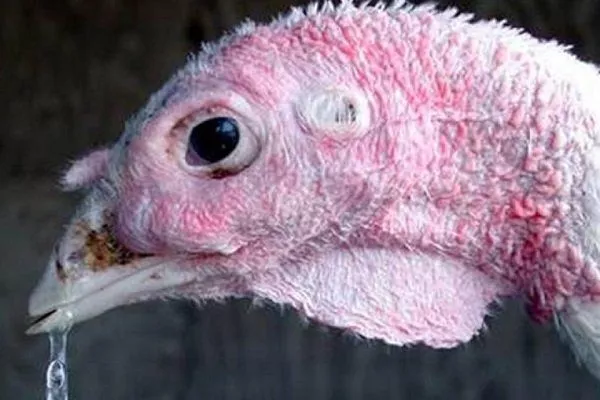
The highest mortality rate occurs in turkey poults under one month of age. The mortality rate in turkeys ranges from 5% to 40% of all cases. The pathogen is a microorganism that is a cross between a virus and a bacterium. It enters the birds' bodies through the respiratory system via direct contact.
Along with treating the disease, implement a range of measures aimed at improving the health of the birds. If the disease affects even one bird, the entire farm is prohibited from being removed from the farm. These restrictions also apply to eggs.
Infectious bursitis
Gumboro disease is a viral infection caused by a pathogen that lives in lymphoid tissue. Inflammatory processes occur in the intestines and joints. The nervous system is affected first, followed by the kidneys.
The disease takes just 7 days to develop. Symptoms:
- diarrhea, watery stool;
- low mobility;
- weight loss;
- ruffled plumage;
- tremor;
- instability (the bird keeps falling);
- itching.
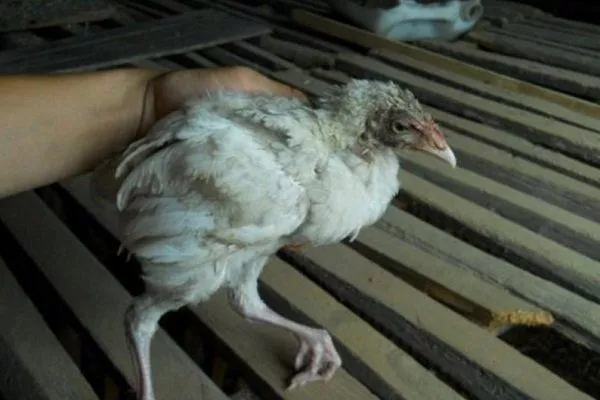
There is no cure as such. If an infection is detected:
- Cull sick turkeys.
- Vaccinate healthy individuals.
Marek's disease
The causative agent is the herpes virus. It attacks the nervous and lymphoid systems. The disease is transmitted exclusively from bird to bird. Symptoms:
- unnatural movement;
- incorrect positioning of paws when walking;
- paresis, paralysis of the legs;
- drooping wings;
- heavy breathing;
- weight loss.
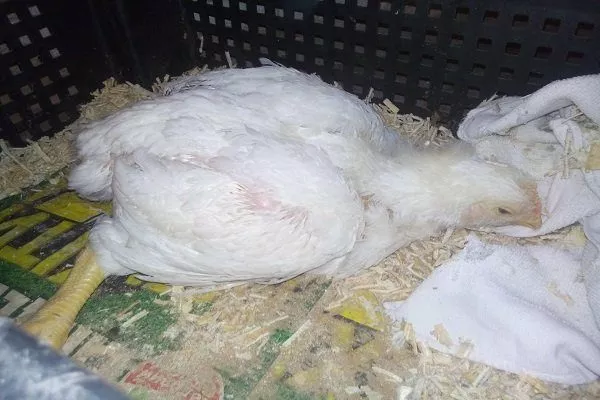
There is no cure for the disease. The virus usually spreads to turkeys from hens. Therefore, avoid keeping turkeys in the same pen. Vaccinate healthy turkeys.
Typhus
Typhus, or pullorum fever, is an acute infectious disease characterized by intestinal damage. In most cases, the disease results in death. 70% of all infected birds die. Survivors are carriers of the virus. Meat and eggs from these birds should not be consumed.
Symptoms:
- diarrhea, white stool;
- apathetic state;
- impaired coordination of movements;
- uncontrollable appetite;
- drooping of wings.
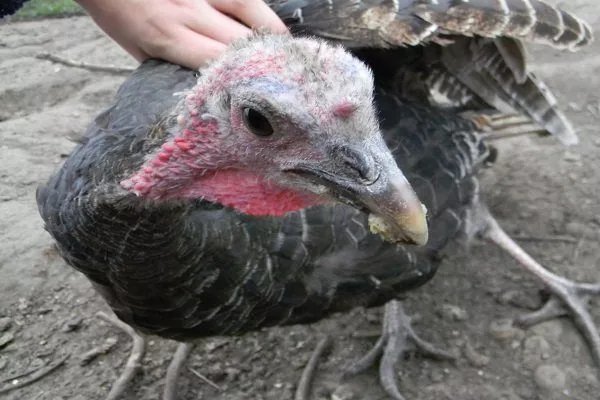
Typhus is incurable. Infected birds must be culled. Birds that have been in contact with an infected bird but are asymptomatic require treatment with tetracycline antibiotics in combination with sulfa drugs.
Also perform preventive measures:
- normalize the turkeys' diet;
- arrange the poultry house in accordance with sanitary and hygienic standards;
- Vaccinate healthy birds.
Coccidiosis
A disease that affects turkey poults under three months of age. The causative agent is a parasitic organism called coccidiosis. It completely destroys the bird's gastrointestinal tract. Turkeys become infected with coccidiosis from dirty waterers and feeders. Hot weather can exacerbate the condition.
If an adult is infected, the disease is asymptomatic. In young animals, symptoms begin to appear 7 days after infection:
- loss of appetite or complete refusal to eat;
- thirst;
- weight loss;
- weakness;
- bloody diarrhea;
- dirty plumage with lumps;
- half-closed eyes;
- drooping wings.
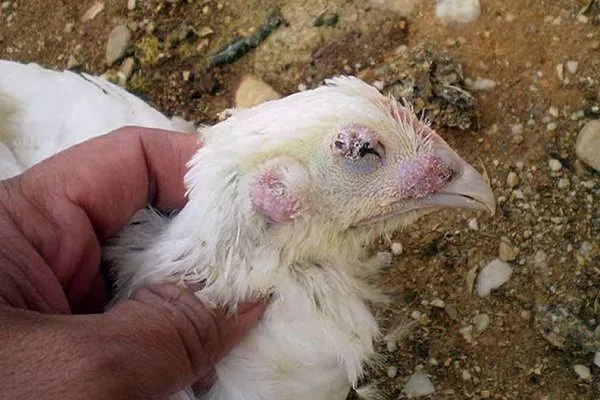
Treatment is with antibiotics, most commonly Baycox, Solicox, and Koksitsan. The dosage is determined by a veterinarian, as the disease is difficult to treat.
How to determine the cause of turkey deaths?
When treating turkeys, it's important to determine why the bird is falling on its feet. There are situations when medication isn't necessary.
To determine the cause of the problem, observe your birds. A sick bird is characterized by:
- lethargic behavior;
- unkempt appearance;
- reluctance to eat and drink.
If the turkey falls on its feet, but eats well and is active, this indicates that the cause of death lies in:
- Improper care. Not enough space for walking, wet floor, improperly selected diet.
- Lack of food. There can be as many feeders as you like in the poultry house, the main thing is that there is no crowding around them during feeding time.
- Vitamin deficiency. Turkeys' food should be varied.
It doesn't matter what exactly caused the fall on the legs; in any case, weak birds and individuals with symptoms of viral diseases should be separated from healthy turkeys.
Does feeding make a difference?
Turkeys' diet is directly related to the problem of falling on their feet. Their diet provides the birds with all the nutrients they need. A lack of vitamins can lead to joint and bone deformities.
Turkeys require the following micronutrients:
- Choline. Strengthens joints and helps you grow faster.
- Nicotinic acid. Has a positive effect on the metatarsal joint.
- Pyridoxine. Thanks to this element, the turkey poults' legs become stronger.
- Manganese. Helps bones develop properly.
- Calcium. Necessary for the normal development of the embryo and hatched chick.
These elements should be included in the diet before perosis (falling on the feet) develops. This will help prevent the problem. All essential vitamins are found in grass-fed foods and sprouted seeds. It is also recommended to add rice or wheat bran and yeast to the diet.
Newly hatched chicks should be fed:
- boiled chicken eggs;
- cottage cheese;
- dairy products.
Poor quality feed can lead to bird mortality. Therefore, farmers are advised to prepare their own food for their birds.
Preventive measures and advice from veterinarians
Preventative measures can help prevent falls, prevent leg crooks, and preserve your poultry farm. These include:
- Use high-quality feed, create a balanced diet to provide the birds with all the necessary microelements and replenish energy expenditure;
- keep the poultry house clean, change the litter regularly, clean the feeders and waterers;
- disinfect the room where the birds live and the equipment;
- Provide an outdoor exercise area with plenty of sunlight;
- do not keep turkeys in close quarters;
- build separate housing for the young turkeys; turkey poults should not live in the same poultry house with adult turkeys;
- Get all the required vaccinations;
- Add vegetable fats to turkeys' feed; they will help strengthen their immune system.
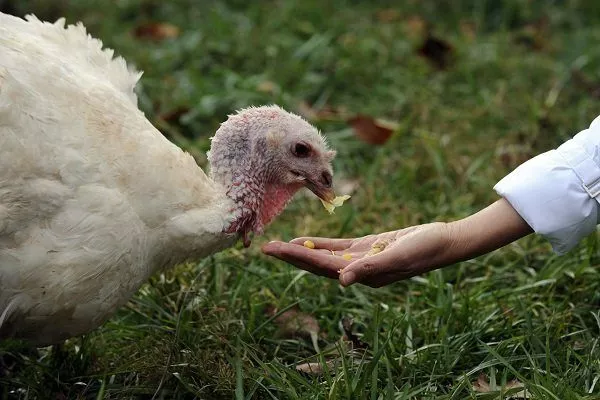
What to do if the turkey poults don't get up?
If preventative measures and normalizing living conditions fail to prevent perosis, the problem lies deeper. Call a veterinarian to determine the cause of the fall. If a disease is identified, the specialist will prescribe treatment (if the condition requires treatment).
Sometimes, falls are unrelated to illness, mechanical injury, or nutrition. Some turkeys have anatomically weak ligaments, causing their legs to splay out in different directions. To avoid this, careful breeding practices are necessary.
Poor nutrition, poor-quality feed, vitamin deficiencies, and overcrowded and darkened poultry houses are all causes of cuts—a condition where turkeys fall on their feet. To maintain the health of both the turkeys and the farm, farmers must correctly and promptly identify the root of the problem.