
Goose is an indispensable guest at a gala dinner. The delicious, tender meat of this bird wins the hearts of even those who aren't fans of chicken or other poultry products. Not all cooks know how to properly butcher a goose for easy cooking.
Preparing for cutting
The goose butchering process begins with careful preparation. From selecting the right tools to ensuring a clean and hygienic work area, every step is essential to obtaining high-quality meat.
Singeing
Any remaining residue on the skin is treated by singeing and removing the stumps with tweezers. The singeing process can be performed in a variety of ways, including using a gas stove or a miniature gas torch.
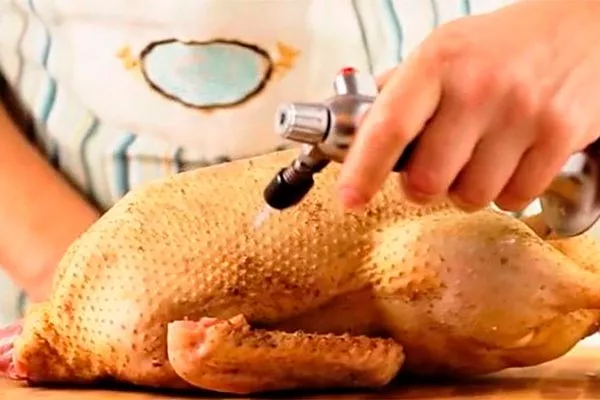
- ✓ Use only dry flour to dust the carcass to avoid uneven singeing.
- ✓ Make sure the burner flame is at medium intensity to avoid damaging the skin.
Before singeing, the carcass is dusted with flour to dry the skin and ensure complete burning of the hairs. After the singeing stage, the residue is removed with a knife or simply washed off.
Video instructions for singeing a goose:
Gutting
After external preparation, proceed to removing unnecessary body parts and viscera. Follow the instructions in this order:
- If the head was not cut off at slaughter, remove it in the area of the second vertebra.
- Cut off the wings at the fold, and the legs at the joint.
- Make an abdominal incision, being careful not to damage the viscera. Move from the cloaca toward the keel.
- Remove the trachea and esophagus by pulling them apart (grasping them at the neck and inside the abdominal cavity), then extract the intestines, gallbladder, and other organs. Discard the intestines and gallbladder, and use the heart, liver, gizzard, and fat as food. Feed all other organs to other animals.
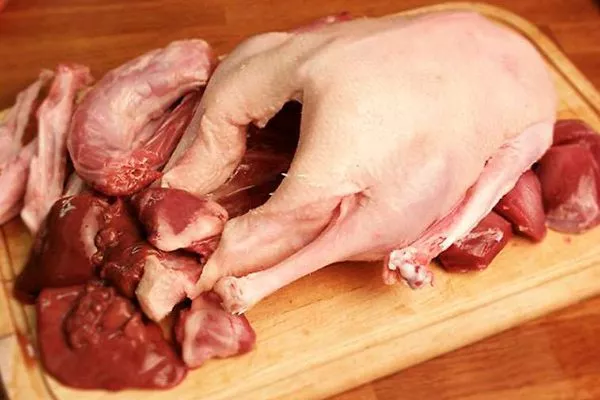
When removing the gallbladder, proceed with caution, as if it is damaged, the bitter bile can spoil the meat.
Recommendations for gutting a goose:
Preparation of offal
Preparing goose giblets is an important step, involving removing membranes, excess fat, and other unsuitable elements. This ensures the giblets are ready for cooking and will add flavor and aroma to your dish. Here are the basic steps for preparing poultry giblets:
- Liver. Separate the liver from the other organs. Rinse thoroughly under cold water. Remove the bile ducts and avoid damaging the gallbladder to avoid bitterness.
- Heart and stomach. Rinse the heart and stomach, removing all inedible parts and food debris. Thoroughly clean the stomach of excess membranes.
- Neck. Clean the neck of any remaining feathers and skin. Trim off any excess fat and membranes.
- Head. Clean the head of feathers, skin, and other unwanted elements. Remove any excess parts, such as the eyes and beak.
- ✓ To remove films from the stomach, use warm water to facilitate the process.
- ✓ Rinse the liver under a gentle stream of water to avoid damaging its structure.
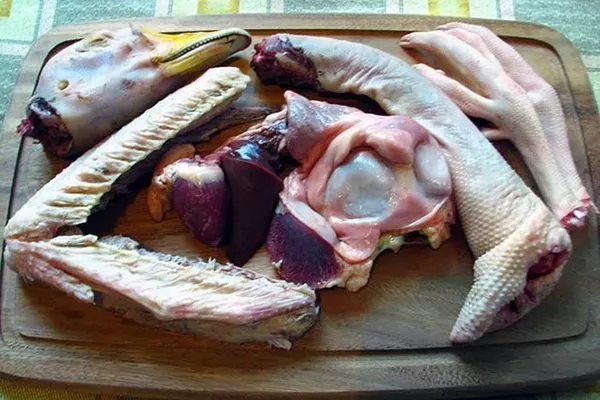
Properly preparing goose offal before cooking will ensure your dish has a clean flavor and the desired texture.
Meat maturation
Immediately after gutting, rinse the carcass thoroughly and dry it with a towel, but don't begin cutting it into pieces right away, as the meat needs to undergo the maturation process. Trim the legs and offal of any membranes and excess fat.
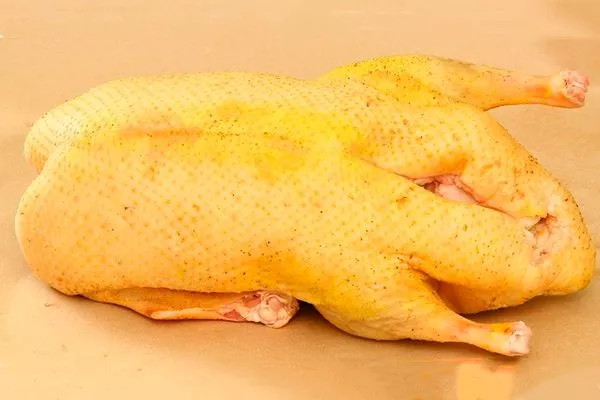
Then place the carcass along with the prepared parts in a large container, cover it with a towel (airtightness is not necessary here), and leave it in the refrigerator or basement for two days to ripen.
Dividing into portions
If you're not roasting the whole bird, cutting it into portions is an essential step, ensuring ease of preparation. You'll need a regular knife and a boning knife for this task.
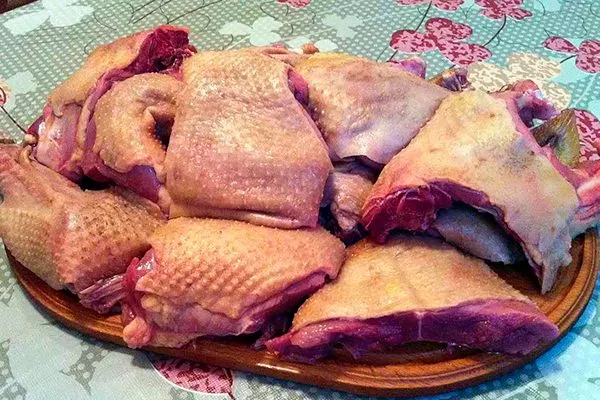
Chronology of actions:
- Cut off the wings, covering part of the breast.
- Along the joint line, highlight the shins, optionally including part of the thigh.
- Cut the carcass along the sternum line, separating the meat from the bones to the spine, then divide it into two breast pieces and two thigh pieces.
- The remaining bones of the skeleton are cut into pieces convenient for storage.
Pack the resulting portions into bags (neck and wings, brisket, thighs, drumsticks, and leftovers separately) and freeze or cook directly. The bones can be used to make a rich broth, while the remaining parts can be stewed, baked, or fried.
Watch an interesting video of cutting a goose into portions:
Rules for further storage
To preserve the freshness and flavor of meat, it's essential to follow proper storage procedures. From the right packaging to the optimal refrigerator temperature, every detail is important for long-term quality preservation.
After slaughtering a goose, certain storage rules must be followed to preserve the freshness and safety of the meat. Here are some basic recommendations:
- Cooling. After slaughtering, cool the poultry. Place the carcass in a refrigerator at a temperature between 0°C and 4°C. This will slow down bacterial growth and maintain the freshness of the meat.
- Package. Pack the goose in a tightly sealed container to prevent air from entering and minimize the risk of oxidation. Using film or vacuum packaging can be effective.
- Store in the freezer. If you don't plan to use the goose immediately, it's best to freeze it. Frozen goose can be stored in the freezer at -18°C or below for extended periods, maintaining the quality of the meat.
Goose butchering is an art form that requires attention to detail and skill in handling meat. By following the steps described above, you'll not only obtain high-quality meat but also enjoy the creative process of preparing a delicious meal for your family and guests.