
Most farmers raise geese, obtaining not only their delicious meat but also valuable materials such as down and feathers. Goose slaughter is a responsible process, and proper execution directly impacts the quality and appearance of the resulting carcasses.
When can geese be slaughtered?
The optimal time for slaughtering birds depends on the farm's objectives and housing conditions. The time period during which slaughter occurs varies depending on the bird breed, the diet used, and the specific housing conditions. Experienced poultry farmers slaughter geese after molting.
When raised for meat
| Name | Ripening period | Disease resistance | Productivity |
|---|---|---|---|
| Late | 180–210 days | High | Average |
| Mid-season | 160–180 days | Average | High |
| Early maturing | 150–160 days | Low | Very high |
Some goose breeds are raised for their down and feathers. Selecting individuals with high egg production and caring hens is beneficial for egg production and breeding purposes. In most cases, geese are slaughtered for meat, aiming for an optimal weight.
Geese's growth rate depends on various factors, including their living conditions, diet, and breed. Based on these factors, the birds are divided into three groups:
- late ones, which are slaughtered at the age of 180–210 days and older;
- mid-season, ready for slaughter in at least 160–180 days;
- early maturing, reaching optimal weight in 150–160 days.
As geese age, the proportion of fat in their meat increases, making slaughtering them later less profitable. Given differences in feed consumption, males and females stop gaining weight over time, making their maintenance less efficient. Geese also experience a decrease in egg production with age.
To determine the end of the molting period, a feather is checked to see if it can be easily removed without bleeding. The smooth surface under the wing should be free of stubs. Geese are traditionally slaughtered in the fall, most often in October or November, although if time is short, it may be postponed until the following year.
When feeding natural food
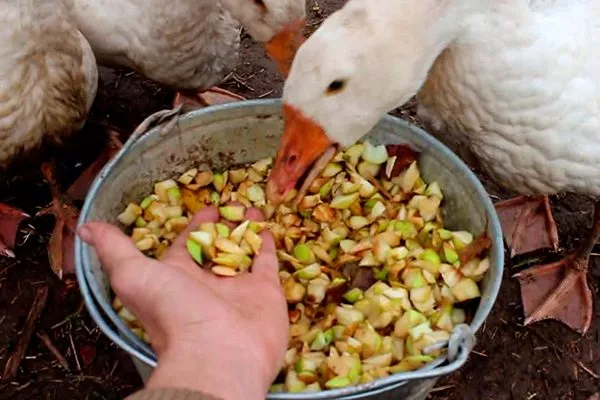
Much depends on what's included in the diet. Geese that consume primarily natural feed and are free-range reach their optimal weight by seven months. Maintaining their diet beyond this point becomes economically unviable, as additional feed purchases are required.
The decision to slaughter geese is made once they have successfully developed and reached the required weight. In some cases, additional time is required. The specific period depends on the breed, the conditions under which they are kept, and the use of supplements in their diet.
When feeding with compound feeds
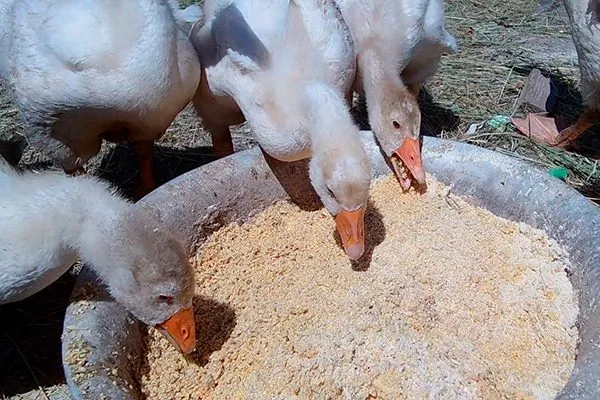
For intensive fattening, preference is given to mixtures of grain and other nutritious products, which helps geese reach their target weight more quickly thanks to compound feed. At 2-3 months of age, geese typically gain 3-4 kg, making this the best time for slaughter.
Slaughtering a goose at 2-3 months is convenient for another reason: the molt is completed around this time. After plucking, the carcass acquires a more attractive marketable appearance, and if the feathers and down are in good condition, they can be sold.
If the bird is not slaughtered at 2-3 months of age, there is no need to wait until the following year. If there is an urgent need for meat, geese can be slaughtered at a later age.
With mixed feeding option
Most farmers prefer the third method, including various types of feed in the geese's diet. To quickly gain the required weight, they include greens and grain-based mash.
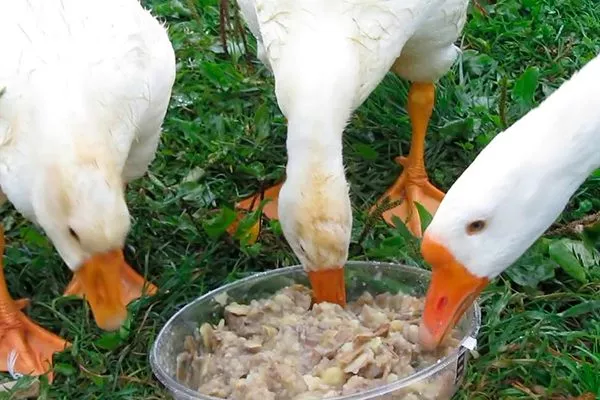
With this approach, geese are typically slaughtered at approximately five months. This is only a guideline. Some farmers prefer to delay slaughter until the second year, which can result in a larger yield of meat.
The decision depends on the goose breed, the farmer's preferences, working conditions, and the specific diet. Another method is intensive fattening, in which the birds are slaughtered at 3-4 months of age.
Preparation for slaughter
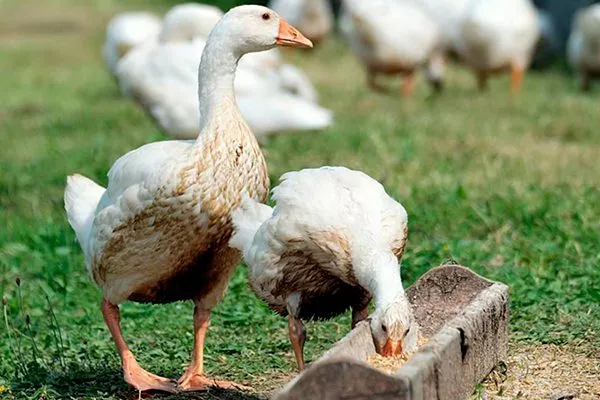
Geese are typically slaughtered in October-November. If feed is scarce or time for flock care is limited, slaughter can begin as early as September, provided the young have gained sufficient weight.
Preparation includes the following steps:
- Three weeks before slaughter, the geese are actively fattened, fed nutritious wet mash morning and evening, and prepared compound feed or barley (corn, peas, and wheat can also be used) during the day. Every day, the geese are provided with fresh, succulent grass, for which the pasture is sown with cereals and legumes.
- Mashed grain is prepared in quantities that the geese can consume in one sitting, as long-term storage of such a mass is not recommended. It is prepared using a crushed grain mixture and liquid (whey, water, skim milk, broth) in a 1:1.5 ratio.
The mixture is left to rest for 6 hours, with the addition of fodder yeast. While the grain absorbs moisture, vegetables (potatoes and carrots) are prepared and then added to the mash along with chopped greens and melons. It is recommended to include bone meal and wheat bran. - Twelve hours before slaughter, the geese are moved to a clean room, deprived of food, and provided only with water supplemented with Glauber's salts (2% laxative concentration). This is necessary to cleanse the intestines, prevent the geese's fat from developing a greenish tint, and prevent the risk of rupturing the esophagus during evisceration.
Slaughter techniques
Before slaughtering a goose, it's recommended to master the relevant theory and explore various methods. Leg binding and wing-retraction techniques are often used to prevent resistance. Other techniques can make slaughtering more convenient.
Beheading
For this method, you'll need a wooden block and a sharp axe. Follow these instructions:
- Place the immobilized bird on a block and then cut off its head with one sharp blow.
- After this, hang the carcass, and after complete bleeding, proceed with further processing.
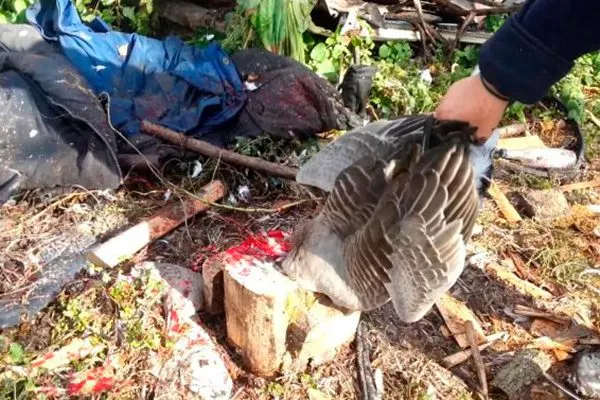
Please note that this method causes the neck cut to darken quickly, which can negatively impact the carcass's marketability. This slaughter method also contributes to faster meat spoilage, as microbes can be transferred from the block to the neck cut and penetrate deep into the tissue.
Watch a video tutorial on slaughtering geese:
Unilateral external method
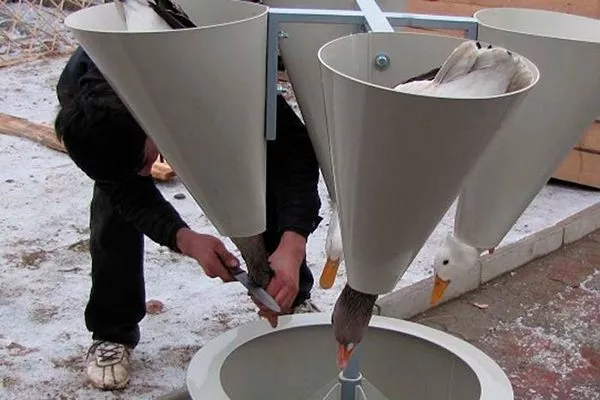
The stunning method used to slaughter the bird is a blow to the head. After this, the bird is either suspended by its legs or placed in a special cone. Using a small, sharp knife, an incision is made 2 cm below the ear, cutting through the skin, carotid artery, and jugular vein. The head is secured by the beak. The incision is 2 cm in size.
Bilateral external method
The preparatory steps are identical to the previous method, but the incision is not made on one side but through the neck. The bird's head is held by the beak, then, piercing the neck 2 cm from the ear, the knife is moved to the right at a depth of approximately 15 mm.
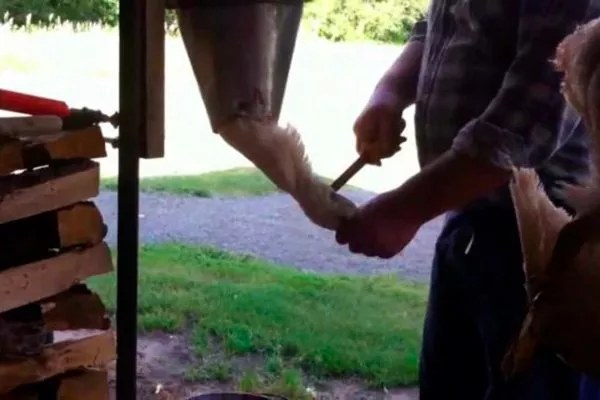
This technique involves cutting the arteries and veins. The knife is then withdrawn from the opposite side of the neck. This ensures a clean cut and allows the blood to drain quickly.
Internal method (in split)
If a special cone is not available, an alternative method is used that allows for quick and efficient internal slaughter, especially for experienced slaughterers. The process of slaughtering a single goose takes only a few seconds. A rope and scissors are prepared for this. The sequence of actions is as follows:
- Tie the bird's legs.
- Tie the ropes to a nail, for example.
- Hang the goose upside down.
- Open your beak.
- Insert the scissors into your mouth.
- With a sharp movement, cut the pontine and jugular veins, which are located almost next to each other.
- Leave the scissors inside. Pierce the roof of the mouth to reach the brain, aiming the scissors toward the base of the skull, where the cerebellum is located.
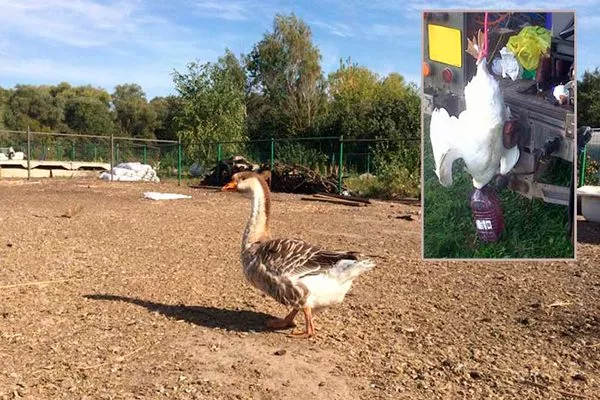
Sometimes, after the cerebellum is punctured, the head is also removed. After this, the rope is not removed immediately, but rather loosened slightly and the blood is allowed to drain, which takes 5 to 20 minutes. A container is placed to collect the blood.
Useful tips for beginners
There are certain rules that simplify the process and improve results. Here are a few tips that might be helpful for beginners:
- Don't forget to monitor their diet. In spring and summer, increase the amount of greens and plant foods, and in autumn, include mash and mixed feed.
- Starting in September, limit your geese's outdoor activities to promote fat accumulation. Keep in mind that exercise and fresh air are important for health, so allow your birds 1-1.5 hours of daily exercise.
- When breeding, select the best producers, giving preference to males with pronounced "leader" characteristics. Both sexes should be well-fed and healthy, and distinct breed characteristics are encouraged, which contributes to the production of strong, large, and tasty offspring.
- After slaughter, do not forget to collect blood, as the quality of the meat depends on it.
- Before slaughtering, study the anatomy of a goose, which will significantly help in the correct execution of the slaughter and cutting process.
- Use sharp tools to ensure a more efficient and precise processing process.
Goose slaughter is a crucial step in agriculture. Proper slaughter, carried out in accordance with all recommendations, not only provides farmers with valuable products but also serves as the foundation for developing a sustainable and responsible approach to poultry farming.