
Geese are naturally long-lived animals, but their exact lifespan depends on their species, living conditions, diet, and health. Let's take a closer look at the lifespans of domestic and wild geese, and learn how to prolong their lives.
Average lifespan of geese
The first factor in determining the lifespan of geese is their lifestyle. Are they free-ranging or kept on a farm? The second factor is the birds' intended purpose. They can be bred for meat and eggs or raised solely for meat.
Homemade
| Name | Average life expectancy | Disease resistance | Productivity |
|---|---|---|---|
| Vladimir geese | 25-30 years old | High | High |
| Javakheti geese | 25-30 years old | Very high | Average |
| Kholmogory geese | 16-18 years old | High | Low |
On average, domestic geese can live for 20-25 years if carefully cared for. In practice, however, the average lifespan is no more than 5 years, as longer lifespans are economically unviable.
In commercial farming, the lifespan of geese is reduced to approximately 3-4 years. Geese are typically kept for up to 8 years. After this age, their peak productivity passes, and they no longer justify their keeping. Older geese are replaced with younger ones. Some poultry species have longer lifespans.
Vladimir geeseFor example, geese live for 25–30 years. This long life is explained by distinctive characteristics obtained through crossbreeding between different species—in particular, their robust skeleton. These geese:
- rarely get injured;
- more resistant to the influence of various environmental factors;
- do not weaken for a long time and remain mobile.
Geese also lay a lot of eggs at first. These eggs are highly prized and therefore kept longer, but they are also quite expensive.
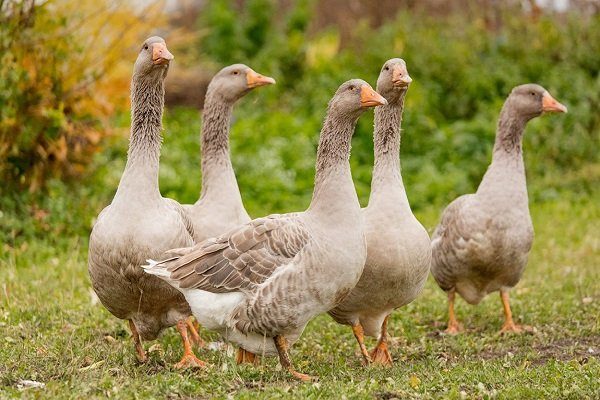
Javakheti geese Their lifespan is virtually identical to that of Vladimir geese. They can live for many years, but you shouldn't wait until they're old, as they stop breeding at 10 years old, and if you use them for meat, the meat will be stale. Javakheti geese are highly adaptable:
- They tolerate sudden temperature changes better than other geese and can therefore live much longer;
- If a Javakheti goose reaches a mature age, then over the course of its life it has developed a strong immune system and is already resistant to infections common among birds.
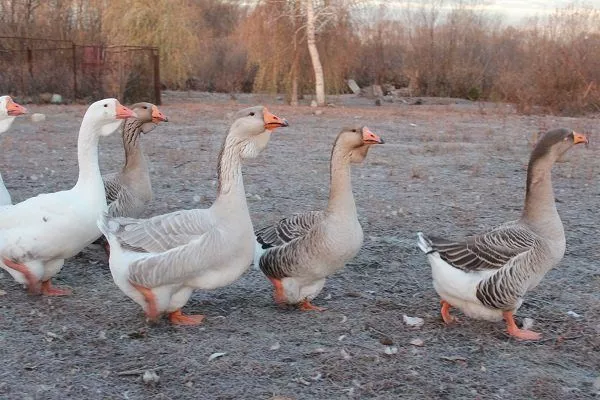
Kholmogory geese Compared to the two breeds described above, they are not long-lived, with a lifespan of only 16–18 years. However, among Kholmogory geese, almost all individuals survive to this age, while for the Vladimir and Javakheti breeds, 25–30 years is uncommon.
Kholmogory geese are resistant to various negative environmental influences – they have fairly robust health and a well-functioning immune system.
Wild
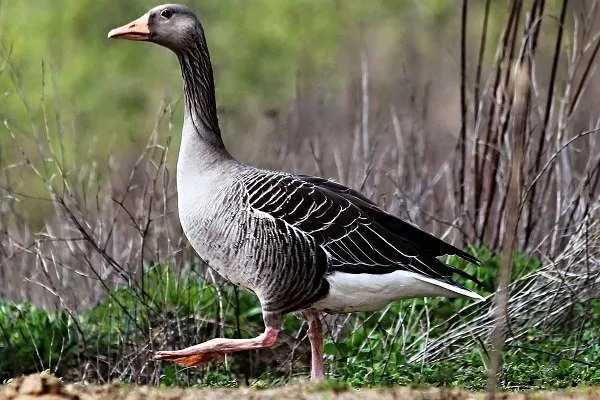
Wild geese live on average about 20 years, but they have tremendous endurance, adaptability, and the ability to survive even in extreme conditions.
Wild geese are considered to be the longest-living birds. However, they only achieve this under favorable living conditions. Many young geese die under the following circumstances:
- As a result of an attack by predators. Most often, geese are attacked by other wild animals and birds.
- As a result of various diseases. Not all birds can withstand long flights to warmer climates and back. They begin to wither and die.
- Wild goose hunting. There are especially many hunters in America and Europe. In Asian countries, wild goose down is also harvested.
Due to all these factors, the life cycle of wild geese is significantly shortened.
Meat and eggs
They typically live up to five years, as keeping them for that long is cost-effective. After that, a goose can still lay eggs, but the cost of feeding it is less justifiable, and if it isn't slaughtered promptly, the meat will be tasteless.
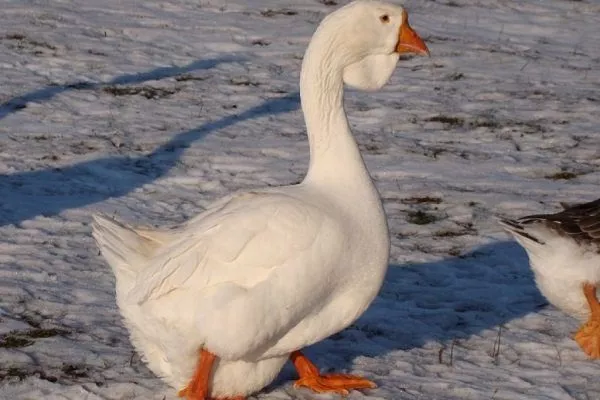
One of the most popular meat and egg breeds of geese is the Linda. It is a cross between Chinese geese and birds of the Adler, Solnechnogorsk, and Arzamas breeds. This breed is distinguished by its snow-white feathers and down.
Linda geese live up to 18–20 years, but are typically not kept for more than five years. Large-scale farms raise the birds for two to three years. In captivity, farmers monitor the characteristics of each individual and determine the goose's lifespan.
Some breeds reach sexual maturity earlier and their bodies wear out faster, while others begin laying eggs later and their peak productivity shifts accordingly.
Meat breeds
The lifespan of meat geese is even shorter. Meat breeds lay very few eggs, so their primary purpose in raising them is meat production. The highest growth rates occur before sexual maturity.
In this case, the breeder's primary goal is to obtain meat immediately after the goose reaches its maximum weight. Young meat-breed birds can gain weight quickly, and thanks to their small initial feed weight, relatively little is spent on fattening them.
When a goose reaches sexual maturity and its weight becomes more than 3/4 of the average, weight gain stops, but the birds need to be fed more.
It depends on:
- dimensions of the bird;
- sexual activity.
Therefore, many farmers even wait until the geese reach full sexual maturity—as soon as they reach this point, they slaughter them immediately. The lifespan of meat-breeding geese is a personal decision. Typically, meat-breeding geese are kept at home for no longer than one year.
Factors that affect the lifespan of geese
The lifespan of wild geese is affected by environmental factors, and in the case of domestic geese, everything depends on their care and living conditions.
Proper nutrition
A suitable diet for geese, regardless of age, ensures good health and longevity. At home, geese are usually fed a natural diet. In summer, their diet is primarily grass, but in winter, this can be replaced with hay or silage.
Geese also need grains in their diet. Wheat, oats, or barley should be included in their diet regularly, regardless of the season. They can be fed crushed or whole, on their own or mixed with vegetables.
Don't forget about vitamins and minerals. Fresh vegetables, for example, are good sources for geese:
- pumpkin;
- carrot;
- potato;
- beets and others.
- ✓ Ensure that the feed contains at least 18% protein to maintain the health and productivity of geese.
- ✓ Check for vitamins A, D3, E and minerals such as calcium and phosphorus to strengthen bones and immunity.
For large numbers of geese, it is beneficial to buy ready-made industrial feed, but it must be of good quality and include all the beneficial additives needed by geese.
Conditions of detention
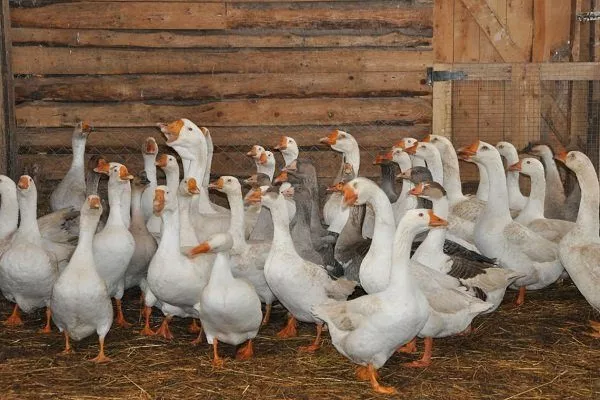
If geese are kept in proper conditions, they are guaranteed to live longer. The birds should be kept in a comfortable environment. The coop should be warm, dry, bright, and well-ventilated, but drafts should be avoided.
In summer, geese should be released into the yard and left there for extended periods of time, with maximum exercise on green pastures and near nearby bodies of water.
In winter, geese should live in a warm and dry place, where lighting is turned on in the mornings and evenings, increasing the length of daylight to 12 hours.
The goal of poultry farmers
Geese live at home for as long as the farmer allows. The birds are specially fattened for meat or kept to lay eggs.
The shortest lifespan of a domestic goose raised for meat is four months or slightly more. Keeping large numbers of geese for longer periods is simply not cost-effective.
Geese have a record lifespan
25 years is a virtually unattainable age for many geese, but many individuals not used for meat could, in theory, reach this age. Some wild individuals, living in ideal conditions, can reach seventy or even eighty years of age.
According to the Guinness Book of World Records, the record holder for longest-lived poultry is George the goose. At the time of his death in 1976, he was 49 years and 8 months old.
How to extend the life of geese?
The main factor that allows a goose to live so long is a balanced diet. In addition to food, a goose's daily diet should include:
- 2 grams of salt, as well as gravel, sand and chalk in small quantities - the digestive system of geese works in such a way that without these additives, food will be poorly digested and absorbed;
- vitamins A, B2 and E.
How else can you prolong the life of birds:
- Geese are aquatic birds, so their diet should consist primarily of food readily available in water. Therefore, geese with free access to water typically have a much longer lifespan.
- The lifespan of geese is affected by their comfortable housing. Such large birds require significant space, so the size of the goose house should be calculated based on the requirement of one square meter per goose.
- The room must be disinfected periodically. Basic hygiene in the goose house is an important criterion for the longevity of geese. Disinfection will prevent the spread of infection.
- Geese aren't afraid of frost—in winter, the temperature in their barn can easily be kept at zero degrees Celsius, but no lower. It's best to make the floor of wood or clay, as these materials are warm enough to keep the geese's feet warm. A layer of sawdust and dry hay provides additional thermal insulation.
- ✓ Activity and good appetite.
- ✓ Clear and bright eyes without discharge.
- ✓ Even breathing without wheezing.
Ornithologists study geese and can almost accurately determine the lifespan of these birds in the wild and in captivity. While the lifespan of wild geese depends on various environmental factors, for domestic geese, the primary consideration is their intended use. The farmer determines how long a given individual will live.