
Although geese are relatively easy-to-care-for poultry, proper feeding and high-quality ingredients are crucial for the normal development of newly hatched chicks, as the first month of life is crucial for their health.
Nutrition from birth
There's a specific feeding schedule, and the amount of nutrients the birds need is carefully calibrated based on their needs. This feeding system is suitable for both incubator-raised and goose-brooded chicks.
There are three different feeding methods for chicks: wet, dry, and mixed. A combination diet, including plant foods such as grass and vegetables (carrots, cabbage, potatoes, rutabaga, and pumpkin), is best for geese. Additionally, the birds are given grain, legumes, fresh fish, skim milk, and whey.
They are given only boiled water, supplemented with vitamin solutions, such as Chiktonik. These are essential for strengthening the immune system and preventing deficiencies in proteins, fats, and other valuable nutrients.
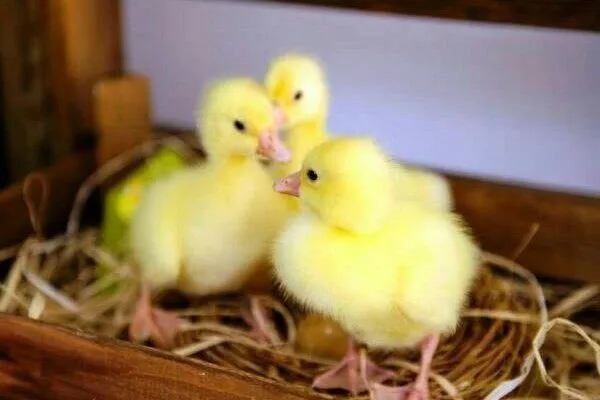
First feeding
The first time the goslings are fed is when they hatch and dry off. This should be done as quickly as possible to prevent their death. To do this, a hard-boiled egg yolk is slightly diluted with water and finely chopped. Keep in mind that large pieces (more than 2-3 mm) may not be swallowed by the gosling. Based on the fact that complementary feedings are given 6 to 8 times a day for about ten days, excluding nighttime, the amount of food should be sufficient for the gosling to digest before the next meal, which is approximately an hour or two.
Some believe that greens, finely ground cornmeal, or grain can be added to the yolk of day-old goslings as early as the first day. Some owners, in good, warm weather, release them into the pen almost immediately, where they can peck at the grass on their own.
Feeding from 2 to 10 days
Starting from the second day, placing the goslings in an open-air cage is entirely appropriate. In addition to eggs, their food includes finely chopped green onions, unpeeled, crushed grain, clover, and dry milk powder. Since goslings can trample the food, the food is poured into a low tray. It is believed that these birds do not need to be offered fermented milk products, as with chickens, but cottage cheese and milk can be included in mixed or wet feeds, providing them with calcium and other essential nutrients. Fresh water should always be available in their drinking bowl.
From the third day, eggs are no longer given. Greens can be added to the feed, including alfalfa, young nettles, cereal and legume grasses, and carrots. From the fourth day, boiled beets and potatoes, cottage cheese, and split peas soaked in water are introduced. Yeast is added to the feed to supplement the vitamins.
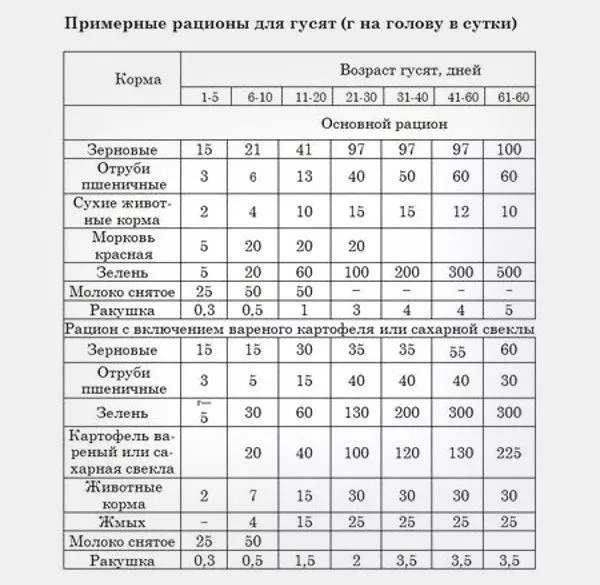
From one day to five days of age, the approximate daily diet for a gosling is:
- grain – 15 g;
- greens – 5 g;
- wheat bran – 3 g;
- carrots – 5 g;
- milk – 25 g;
- lime – 0.3 g;
- dry food – 2 g.
From 6 to 10 days of life, the diet can be supplemented with vegetables, and then the diet will look like this:
- grain – 15 g;
- greens – 30 g;
- wheat bran – 5 g;
- animal feed – 7 g;
- milk – 50 g;
- chalk, crushed shells – 0.5 g;
- raw root vegetable cake – 4 g;
- boiled potatoes, beets – 20 g.
Sunflower meal, or even better, rapeseed meal, should first be soaked and then finely ground. Cooked millet, wheat, and corn porridges can also be included in the birds' diet during this period. Once they reach seven days of age, they are transitioned to six meals a day. This subsequent stage is characterized by rapid growth, and chicks require more protein, and split peas are ideal for this.
Feeding norms by day
| Day | Greens (g) | Grain (g) | Dairy (g) | Supplements |
|---|---|---|---|---|
| 2-3 | 5-7 | 10-12 | 25-30 | Egg, onion |
| 4-5 | 15-20 | 12-15 | 35-40 | Cottage cheese, peas |
| 6-10 | 25-30 | 15-18 | 45-50 | Yeast, cake |
Feeding from 10 to 21 days
After the tenth day, it's important to introduce more calorie-rich foods into the birds' diet, but their amount should not exceed 15% of their main food. Regarding potatoes, it's not recommended to feed them more than 10% of their daily diet.
Beans, kidney beans, and peas are soaked before cooking, then mashed and combined with porridge, ground corn, grated carrots, and bran. Two-week-old chicks are transferred to a five-meal diet, supplemented with specialized compound feed (PK-30) or chicken feed (PK-2 or PK-5).
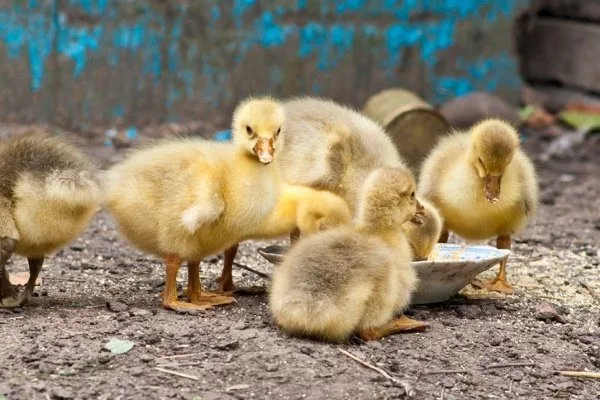
Experience shows that during this period, the best food for young goslings is greens. For a while, the birds can feed in the pen on grass they find themselves, specifically seeking out beneficial plants and roots. Experienced farmers generally stop feeding them during this period, with the exception of mineral supplements and clean water.
Once the pasture's grass dwindles, crushed grain, porridge, and legumes are introduced. Goose weight gain also occurs through root vegetables and pumpkin, which also provide the bird with B vitamins, carotene, and ascorbic acid. Goslings digest raw cereals and grains easily, but they should make up no more than 20% of their regular feed.
Feeding goslings after 21 days
From three weeks of age, birds should be fed no more than four times a day. They require plenty of green food, which makes up to 70% of their daily requirement. This includes dandelion, sorrel, milkweed, sow thistle, alfalfa, knotweed, other plants, and root tops. Each gosling should be fed up to 200 grams of grass per day.
In addition, the gosling's daily diet during this period should include the following products:
- bran – 40 g;
- grain – 35 g;
- vegetables (beets, carrots, potatoes) – 120 g;
- ground shell rock – 3.5 g;
- cake – 25 g
- animal feed in the form of meat and bone meal and fish meal – 30 g.
Young geese are also given a little salt, uneaten food scraps and bread crumbs; of course, these products must be fresh.
For large flocks, purchasing grain waste directly from the mill can be cost-effective. Although quite expensive, this grain contains sufficient flour and calories, allowing the geese to gain weight well.
When feeding grain crops - wheat, barley, millet, the products must contain a minimum amount of harmful impurities, 0.1% chaff, 0.25% cockle and 0.05% ergot are allowed.
For three weeks, young goslings are covered in down, but after just 10 days, you can see their tail feathers begin to grow, and after another week, their wings begin to feather. The birds are fully feathered by three months. It is believed that geese should not be allowed near natural bodies of water until this time.
Optimal composition of the mash
- • Greens: 40% (dandelion, alfalfa)
- • Grain: 25% (crushed corn, wheat)
- • Vegetables: 20% (carrots, pumpkin)
- • Proteins: 10% (cake, flour)
- • Minerals: 5% (shell, salt)
Comparison of feeding types
| Type | The basis of the diet | Frequency of feedings | Recommended age |
|---|---|---|---|
| Wet | Mashed potatoes, greens, vegetables | 6-8 times | 1-10 days |
| Dry | Compound feed, grain | 4-5 times | From 21 days |
| Mixed | Greens + grains + vegetables | 5-6 times | 10-20 days |
Feeding regime
Birds can be fed on a timed schedule, meaning at regular intervals. However, some farmers opt for demand feeding, where the goslings determine when and how much to eat. This essentially means there's no set schedule. The downside of this approach is that the chicks often overeat, leading to obesity.
The appetite of young birds mainly depends on:
- heredity;
- a certain breed;
- health conditions;
- gender - females eat much less than males.
When raising breeding geese, a special feeding regimen yields good results: feeding the chicks greens one day and grains or compound feed the next. During hot weather, three-week-old goslings are given wet feeds in the morning and evening, and grain scraps or crushed grain at night. If the young flock spends most of the day feeding on pasture, supplementary feeding is only given in the evening.
Once a specific feeding schedule for the chicks has been established, it should be maintained consistently, and the feedings should be reduced as the flock grows, gradually shifting the time limits. Proper feeding is the key to ensuring healthy and well-fed geese grow up.
Feeding schedule by age
| Age | Number of feedings | Interval | Night break |
|---|---|---|---|
| 1-5 days | 8 times | 2 hours | 4 hours |
| 6-10 days | 6 times | 3 hours | 6 hours |
| 11-20 days | 5 times | 4 hours | 8 hours |
| 21+ days | 4 times | 5 hours | 10 o'clock |
What is strictly prohibited to feed?
Birds should always have fresh food in their feeders. If any food is left uneaten, it should be removed promptly, as spoiled food can lead to mold growth, which is unacceptable when raising young birds. The grass offered to chicks should also be fresh—they simply won't eat wilted grass, nor will they eat plants with rough, tough leaves or stems.
Feeding goslings only dry food is unacceptable, as it can lead to intestinal obstruction. Also, abruptly switching from one type of feed to another is undesirable; this should only be done gradually.
Birds can be fed a variety of foods, but some foods are dangerous for them:
- low-quality additives of plant and animal origin;
- dubious feed with unclear composition;
- potato tops, its fruits, if the skin on them is green;
- recently harvested rye;
- any moldy food;
- herbs include ragweed, sedge, lily of the valley, hemlock, alchemilla, quinoa and goosefoot.
Until they're a month old, goslings shouldn't be given grass with traces of dew or rain, and they shouldn't be allowed to walk around a wet pen, as the birds have a weak respiratory system and could catch a cold and die. Therefore, even water in their drinking bowls should be provided in a way that prevents splashing their breasts. Bathing is also prohibited for them until they're three weeks old, until their down changes to feathers.
Nursing weak goslings
Despite the unpretentiousness of this domestic bird, the mortality rate of broods can be quite high. Some chicks eat poorly and stand unsteadily on their feet, which is cause for alarm and urgent care for weak goslings. This condition can be caused by an improper diet, poisoning, parasites, and other factors. Such individuals require especially careful care and a special diet, and they should also be placed in a separate aviary.
The following remedy will help get your baby back on his feet:
- a special mixture is prepared from 120 ml of milk, to which 1/4 of a small spoon of granulated sugar and a fresh egg yolk are added;
- After thoroughly mixing the mixture, add biomycin or penicillin to it.
During treatment, sick birds require a temperature of at least +28 degrees; if the chick has reached one week of age, it is reduced to +22-23 degrees.
Many beginning farmers wonder if it's necessary to use fish oil for young geese. Should it be added to their food? Giving it to chicks is essential, as it contains essential vitamins. It should be added to their diet starting at ten days old.
A healthy brood can be determined if the goslings have a good appetite, drink plenty of water, and spend most of their time at the feeder. Occasionally, the goslings may rest on the bedding, but they don't curl up or huddle together.
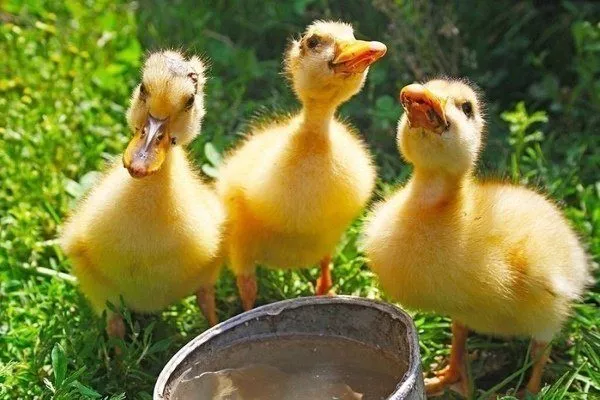
Proper care affects appetite
In addition to a varied menu, which includes specific food components and is scheduled literally by the day, corresponding to the gosling's age, it is important for the babies to meet other requirements related to their health and full development:
- For ten days after hatching, they are kept indoors, as they can quickly die outdoors, as their bodies are not yet able to retain heat. Therefore, the temperature will need to be artificially maintained at 28-30 degrees Celsius for the first three days.
When heating is properly provided, the birds exhibit a good appetite and move freely around the aviary. The temperature is gradually reduced over the three weeks from birth to 18-20 degrees Celsius. In colder temperatures, the chicks tend to huddle together, which can cause suffocation and death. If the aviary is too hot, the birds will become lethargic, lose their appetite, and, as a result, their growth rate will significantly slow. - Lighting is equally important, so for the first seven days, the goslings are provided with constant lighting. Dimming is done only at night to ensure the young can easily access food and water. A week later, a 15-hour daylight period is established in the house, but this is done gradually, with the lighting time decreasing daily.
Read more about: How to breed geese at home.
Age-specific maintenance parameters
| Age | Temperature (°C) | Humidity (%) | Lighting (h) |
|---|---|---|---|
| 1-3 days | 28-30 | 65-70 | 24 |
| 4-7 days | 25-28 | 60-65 | 20 |
| 8-14 days | 22-25 | 60-65 | 18 |
| 15-21 days | 18-22 | 55-60 | 16 |
Helpful tips
When feeding goslings, you should pay attention to the following points:
- When mixing different ingredients into the feed, you need to monitor its consistency - it should be juicy, moist, and crumbly, but not sticky, as sticky food gets clogged in the nasal cavities of goslings, which later leads to illness;
- Only clean water is provided for the chicks; it can be taken from the tap, but it is better to filter it;
- Next to the feeder, you need to keep an additional tray with chalk, sand, dry ground bones, shells or gravel, since goslings need minerals; some owners add these ingredients directly to the feed;
- It is very important to understand the taste preferences of the bird and take these features into account when preparing a combined mash;
- The cleanliness of the room and the dishes from which the goslings eat is extremely important; in addition, their bedding needs to be changed every two days;
- To prevent digestive disorders and diseases, add a little potassium permanganate to the water in the drinking bowl;
- The weakest and sickest individuals are given a mixture of milk (100 ml) with yolk and biomycin to strengthen the body and promote recovery.
If geese are choking and coughing, it may indicate that their feed is too dry and mealy, and they should be given some water or damp sand. However, the chicks should be fed a diet of hard plant matter throughout the day; this is usually enough time for them to clear their esophagus.
You can tell if the chicks are feeding properly and healthy by how they look and behave. If they are active and developing well, this indicates that their digestive system is functioning normally, so you can continue to maintain the same feeding schedule and menu.
This is a really detailed article – every detail is covered. For example, feeding methods, routine, and weekly diet. It's simply superb! I followed your recommendations this year and haven't had any problems with the goslings at all. I was especially pleased with the section on what's not allowed. I never thought before that you can't feed them tough or slightly wilted grass. And I was wondering why they weren't eating well... Thank you so much for the detailed information!