
Governor's geese are a relatively new breed, developed by crossing the Shadrinsk and Italian varieties. They were bred at the Makhalov breeding farm. These birds are noted for their early maturity, good weight, fertility, and survival rate.
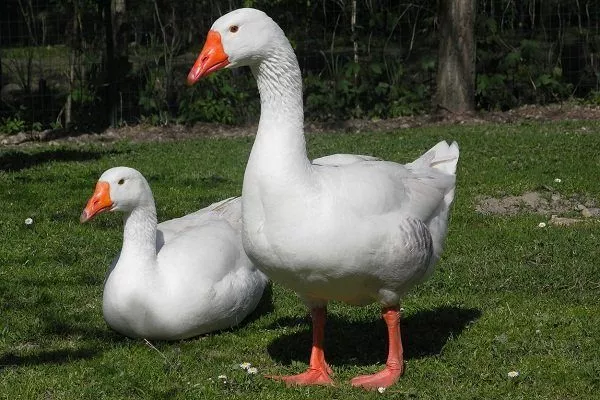
Governor's geese
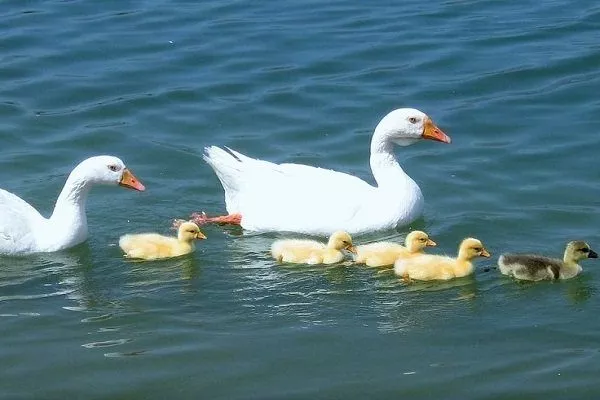
Governor's Geese must have open access to water.
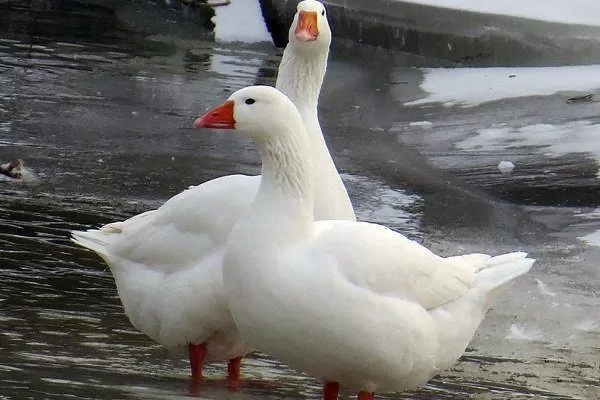
Governor's geese tolerate any climate well.
The origin of the Gubernatorial geese
The Governor's breed of geese was developed by a team of scientists from the Institute of Poultry Farming, the T.S. Maltsev Agricultural Academy, and livestock specialists from the Makhalov plant over the course of 11 years.
As a result, in 2011, amazing results were achieved – the breed turned out to be surprisingly resilient, productive, and cold-resistant, making it suitable for even the most spartan living conditions.
Description of the breed and distinctive features
The Governor's goose, although a cross between two breeds, is more similar to the Italian variety, which is why many poultry farmers often confuse them. It is a mid-range breed, a meat and egg producer, with a maximum weight of 6 kg.
Appearance
Features of appearance indicators:
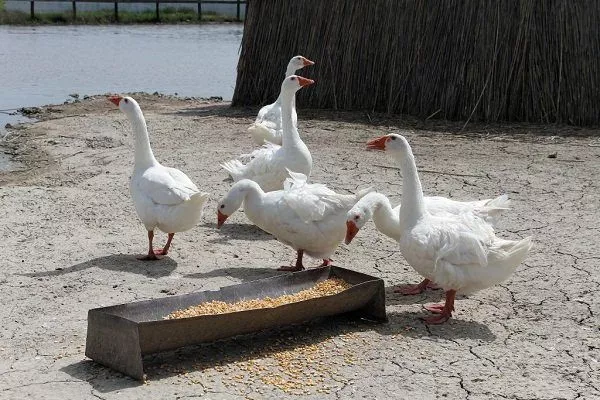
- plumage - predominantly white;
- head – small in size, oblong in shape;
- beak - shortened, orange-red in color;
- neck – medium length;
- body type – compact;
- fluff of branched structure;
- small tail process;
- the chest is quite strong;
- the paws are reddish-brown in color;
- the fold under the beak is absent;
- there is no forehead bump.
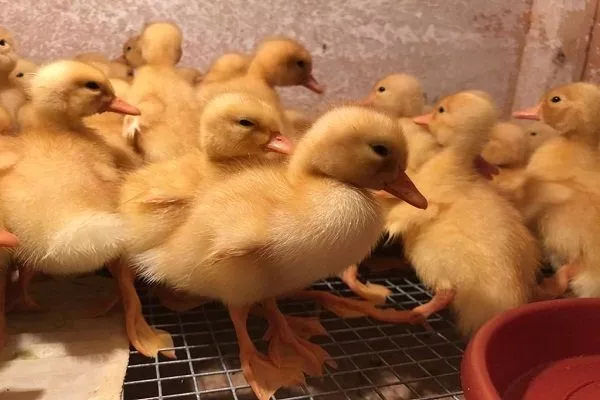
When young, goslings differ in appearance from adults—their down contains gray flecks. As they grow, they molt, turning their plumage pure white.
Character
These are relatively peaceful birds, distinguished by their majestic posture and dignified gait. Despite their leisurely demeanor, they actively engage in combat when danger approaches.
Egg-laying period and average annual egg production
The laying period for a female goose is 4-4.5 months. During this period, she can lay an average of 43-46 eggs. The average annual egg production is 98-100 eggs per female, so when raising a large flock, there's enough production for absolutely everything—consumption, sale, and breeding.
Individual weight, maturity rate
Governor's geese mature relatively early, although they are small for their species (averaging 5-6 kg). By nine weeks, a male gander weighs at least 4.3 kg, while a female goose weighs 300-400 grams less. By three months of age, a goose already weighs a full 5 kg as a dressed carcass, and this is with a feed consumption of 3 kg per 1 kg of live weight gain.
Maintenance and care
The Governor's breed is easy to care for and maintain, so it is raised on both large and small farms. The sexes of the geese can be distinguished immediately after birth, so at this stage, the females are separated from the males.
This breed can be kept in any climate, as it is frost-resistant. Birds tolerate transportation well, and illnesses do not occur afterward, although productivity is slightly reduced (during the adaptation period).
Requirements for the premises
Geese are birds that create moisture (splashing water, bathing), so there are special requirements for the premises:
- It's best to pour concrete on the floor and install a wooden deck. If this isn't possible, it's important to backfill the floor with wood chips, sawdust, straw, or hay. It's essential to replace the material if it gets wet.
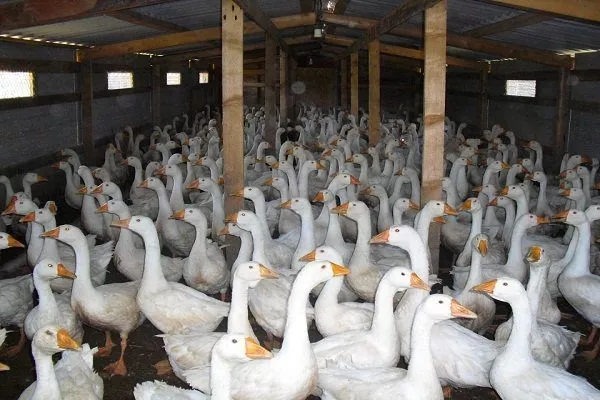
- Geese require a spacious enclosure, but it should be divided into sections, with 50 birds per section. The partition is constructed from standard metal mesh 1.3-1.5 meters high. This is necessary to prevent the birds from flying over.
- Ventilation is essential, as is artificial lighting, especially in cloudy weather.
- Winter insulation is provided from the inside and outside. Any available material can be used.
- Drafts are completely excluded, otherwise the livestock will get sick.
Pasture area for walking
Geese's agility requires movement, so they need a place to roam. To achieve this, the coop must be provided with a free exit to a pasture, which can be open or enclosed. Since the birds can fly over obstacles, the fence should be at least one and a half meters high. A wire mesh aviary is the best option.
Pasture requirements:
- it is possible to create an artificial reservoir (a trough, a ditch, etc.);
- lots of greenery (grass);
- You can use land where cereals and other crops grew (geese will peck out the remaining grains);
- absence of dry grass (mow if necessary).
Access to water
Governor's geese drink constantly, so access to water must be readily available. Artificial ponds or drinking bowls are used for this purpose. The latter are sold in specialty stores, but you can also make your own. The main requirement for a drinking bowl is the shape of the trough.
To prevent illness, experts recommend placing containers not only with clean water but also with herbal infusions (chamomile, etc.). Drinking these medicinal drinks daily isn't necessary; three times a week is sufficient.
Feeders, drinking bowls and a trough with sand
How to properly set up the necessary equipment for geese:
- Feeder The feeder should be accessible to all geese in the flock, and at the same time. This is because geese are constantly eating and nibbling. Feeders should be long (at least 2 meters). The size is calculated based on requirements: 25-30 cm is required for one individual. For the birds' comfort, it's best to hang the feeders 15-20 cm above the floor.
- Drinking bowls The geese should always have a clear view of the water. These birds splash water while drinking and bathing, so it's common practice to install special trays under the equipment to collect the water (which will prevent excessive humidity in the room). It's essential to change the water as it gets dirty. Failure to do so can cause the birds to become infected.
- Container with sand This is essential because geese need mineral supplements to provide their bodies with nutrients. This helps speed up digestion of food entering the esophagus (the sand granules grind up the coarse feed). You can use: river sand, fine crushed stone, chalk, eggshells, and shells.
In winter, the water freezes, so it is necessary to periodically add heated liquid or install heating equipment.
Disease prevention
This breed of goose is relatively resistant to disease, especially when properly maintained and cared for. This is due to their strong immune system. Therefore, unlike other breeds of geese, Governor's geese are not susceptible to inflammatory processes in the visual apparatus. However, these factors do not justify ignoring veterinary requirements for vaccinating young birds against parasites.
Infection usually occurs from one bird to another, but transmission is also possible through other means (drinkers, feeders, water, food, etc.). Therefore, preventative measures are required:
- disinfect the premises;
- treat feeders, drinking bowls, and cleaning tools with antiseptics;
- clean the room from excrement;
- maintain the required level of humidity (remove wet bedding);
- carry out vaccinations in a timely manner;
- ventilate the poultry house;
- release the birds to pasture;
- do not allow other animals (cats, dogs, chickens, etc.) near the geese;
- change the water frequently (use only clean water);
- purchase high-quality feed;
- eliminate the risk of mice and rats getting into the food, which can spread infection.
Feeding Features
Governor's geese do not eat much food, but their diet should be balanced, especially gosling nutrition After birth, they should be given not only specialized feed but also chopped boiled eggs. Goslings are transitioned to compound feed at 2-3 days of age. After a week, chopped carrots and greens are introduced into the diet. After about a month, the birds can be fed adult food. Feed consumption depending on age:
| Age category | Consumption per individual in grams |
| 7 days | 190-200 |
| 14 days | 300-350 |
| 21 days | 700-800 |
| 28 days | 1400-1500 |
| 35 days | 1700-1750 |
| 42 days | 2200-2230 |
| 49 days | 2900-2930 |
Diet in winter
During winter, Governor's geese should be fed a diet of mixed feed and mash. The former should contain the following components:
- wheat;
- peas;
- lentils;
- corn;
- barley;
- other types of grain and legumes.
The mash consists of the following ingredients:
- hay dust;
- pumpkin crops;
- potato;
- nettle leaves;
- fresh beets;
- turnip;
- silage.
Mineral and vitamin supplements purchased in specialized stores are required.
Diet in the summer
In summer, it's advisable to feed geese on pasture, which will significantly reduce costs. However, in the evening and morning, they should be given additional feed and mash.
Diet during the reproductive period
During egg-laying season, geese require especially careful feeding, as egg production depends on it. It is recommended to introduce supplemental feed 28-30 days before the expected reproductive period.
What you need:
- all types of grain crops;
- vitamins and minerals;
- fresh grass;
- alfalfa;
- cottage cheese;
- eggshells;
- sour milk;
- fish mince or oil.
The nuances of breeding
During egg-laying season, nests are built for the geese. These are typically made from wooden boxes (minimum height 8-10 cm, width 40-50 cm, length 60-70 cm). A separate nest for each geese is not mandatory, as geese can incubate eggs together in groups of 2-3. The bottom of the box is lined with hay bedding, and goose down is sprinkled on top.
- ✓ Optimal stocking density: no more than 3 heads per 1 m² to ensure sufficient space.
- ✓ Temperature regime in the first days of goslings’ life: not lower than 28-30°C with a gradual decrease of 2°C every week.
Temperature and humidity in the incubator
To breed a large number of geese, it is necessary to use special incubators that must meet the following requirements:
- on the 1st day of incubation, the temperature should be 36-38 degrees, the humidity level – a maximum of 70%;
- from 2 the eggs are artificially cooled twice a day for 15-20 minutes to a temperature of +33 degrees;
- On the 28th day, the eggs are transferred to a special incubator for hatching, where the temperature inside should not exceed 37 degrees, and the humidity – 75%.
For incubation, use eggs from geese up to four years old. Before placing them in the incubator, warm them (at 38°C) for four hours. On the fifth day, treat the eggs with a weak solution of potassium permanganate and mist them with water regularly before hatching.
Why do goslings die?
The Governor's breed is known for its exceptional resilience, but goslings can occasionally die. The main reasons are:
- improper care and maintenance of "parents";
- failure to comply with the rules for keeping goslings;
- food poisoning;
- poor quality feed;
- paratyphoid fever (salmonellosis);
- viral enteritis;
- renal coccidiosis;
- hymenolepiasis;
- avitaminosis.
The advantages and disadvantages of the Governor's goose breed
The Governor's goose species has a truly vast array of advantages, among which the following are worth noting:
- high level of productivity and egg laying;
- Excellent down properties, especially thermal insulation;
- growth rate;
- good survival rate;
- polygamy (the male does not look for a specific female), which increases egg production;
- the possibility of hatching in an incubator without losses (95%);
- tolerance to cold and any climate.
Among the disadvantages we can note the following:
- geese are not good brood hens and leave their nests;
- Based on the previous point, an incubator is absolutely required.
Profitability
The Governor's goose breed does not grow to gigantic sizes, but the speed of growth allows for quick profits with minimal costs (the price of one gosling is approximately 650-750 rubles).
Moreover, their excellent egg production allows for the establishment of an entire farm within a short period of time. Based on this, it can be concluded that the return on investment for Governor's geese is quite high.
Reviews
The Governor's goose offers highly valuable meat, numerous advantages, and very few disadvantages. This breed has become popular among Russian farmers for its rapid growth, ease of care and maintenance, and profitability. The bird is easy to raise on a home farm, as long as you adhere to the basic rules and requirements.