
Today, there are many varieties of geese. Before you start breeding them, it's important to understand which geese are considered the best. This article examines the best breeds to help you make your choice.
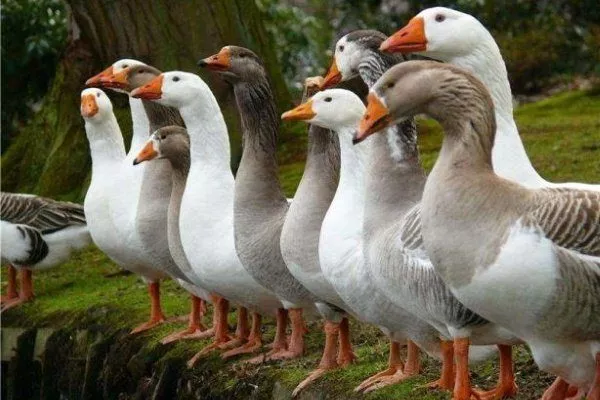
Kholmogory geese
This breed is exclusively for farming purposes. The bird is not practical. It is bred solely for ornamental purposes, as the difficulty of breeding it makes it very expensive to maintain.
Kholmogory geese reach sexual maturity at three years of age and live for approximately 17 years. To ensure profitable breeding, hygienic practices are essential, as otherwise the birds may simply die.
The disadvantage of the breed is its low egg production – they produce 10-15 eggs per year.
| Parameter | Indicator |
|---|---|
| Productive life | 10-12 years |
| Weight of an adult goose | 8-12 kg |
| Goose weight | 7-9 kg |
| Requirements for the reservoir | Required |
| Recommended planting density | 1 head/1.5 m² |
They also have a low offspring survival rate—up to 50%. Although these qualities are valued in animals.
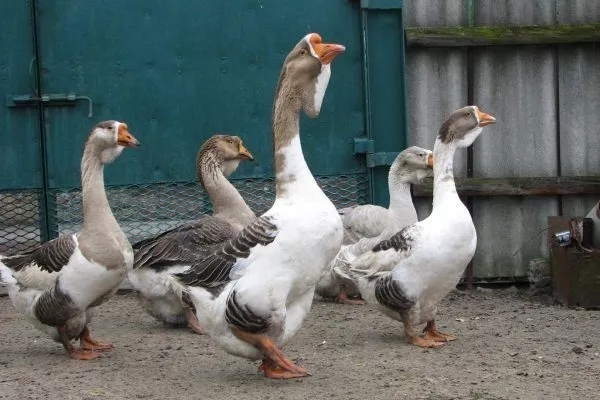
Large grey (Ukrainian) breed of geese
This bird species is attractive due to its unique appearance. Geese fatten quickly, are easy to care for and feed, have a large body, a calm disposition, and are robust in health.
Adult geese can gain weight up to 7 kg, sometimes up to 9 kg.
Females can lay up to 60 eggs per year, with a hatchability rate of 70%. This is an excellent bird for fattening and producing fatty liver.
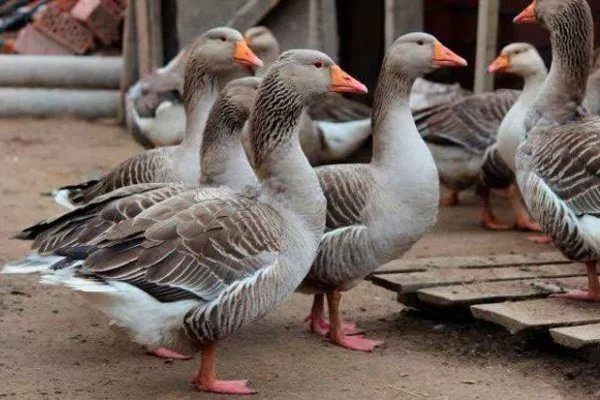
Toulouse breed of geese
This animal has French roots. This black bird weighs up to 12 kg, while a goose weighs around 7 kg. The liver is also in demand, weighing up to 0.5 kg per piece.
This goose is renowned for its rapid growth, excellent weight gain, and ease of feeding. Toulousians are prized for their rapid fat accumulation and the quality of their down.
The purpose of keeping this bird is to obtain meat, down, and liver for making pâté. This bird is recommended for roasting with apples during Christmas. A disadvantage of Toulouse geese is their harsh living conditions. The poultry house should be kept at least 20 degrees Celsius, and drafts should be avoided. Maintaining humidity is essential.
Disadvantages of the breed: low egg production and offspring survival rate, sensitivity to temperature changes, drafts, high humidity, lack of maternal instinct.
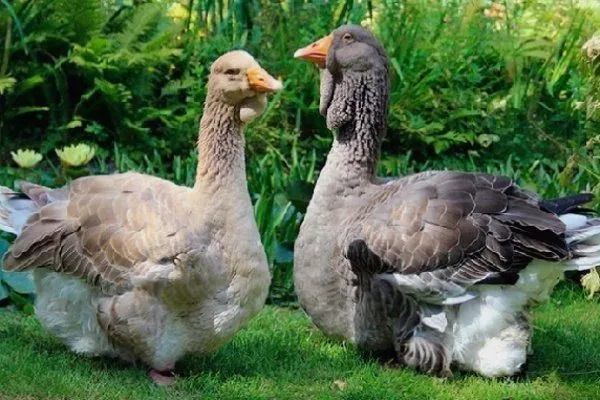
Italian White breed
This variety originates from sunny Italy. These birds are accustomed to warm climates, but they adapt well to any urban environment. They are distinguished by their blue eyes, snow-white plumage, and bright orange beak and feet.
The Italian White goose is distinguished by its long neck, wings, and tail. This breed is characterized by its harmonious build. The Italian White goose is a medium-sized bird. By 16 weeks, it reaches a weight of up to 4 kg. At this point, the geese are ready for slaughter. Adult birds can reach up to 6 kg. This breed is popular for smoked meat, as geese do not tend to accumulate excess fat.
They lay up to 50 eggs per year, but sometimes up to 90 can be collected, as the breed quickly reaches sexual maturity and begins laying eggs early. Eggs can be collected twice a year. About 90% of all eggs hatch.
| Age | Weight | Feeding |
|---|---|---|
| 0-4 weeks | 1.2-1.8 kg | Starter feed (22% protein) |
| 5-12 weeks | 2.5-3.5 kg | Sprouted feed (18% protein) |
| 13-16 weeks | 4-4.5 kg | Finishing compound feed (16% protein) |
| Adults | 5-6 kg | 120 g grains + greens |
most of whom can boast of excellent health.
The breed is also popular for making liver pâté and harvesting down and feathers. The downsides of this breed include a complete lack of maternal instinct. Raising this breed without an incubator is unlikely.
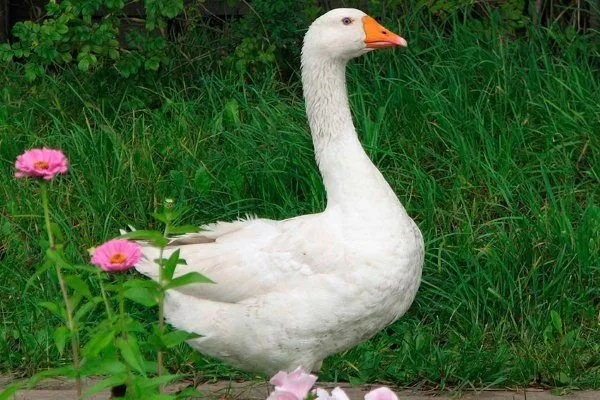
Legart of Denmark
Animals are often bred for their down. A single bird can yield up to 0.5 kg of down per year.
Down collection schedule
- First haircut: 12 months
- Repeated procedures: every 6 weeks
- Preparation: Wash and dry the feather.
- Tool: sharp scissors
- Storage: in linen bags
Starting from the age of 12 months, the down is trimmed, repeating the procedure every one and a half months.
The Legard is an affectionate and sensitive bird that requires warmth and good care. Feeding the bird a uniform diet year-round is possible. Temperature requirements can also be consistent.
Disadvantages of the breed: low egg production, minimal survival rate of offspring, the need to raise birds in an incubator.
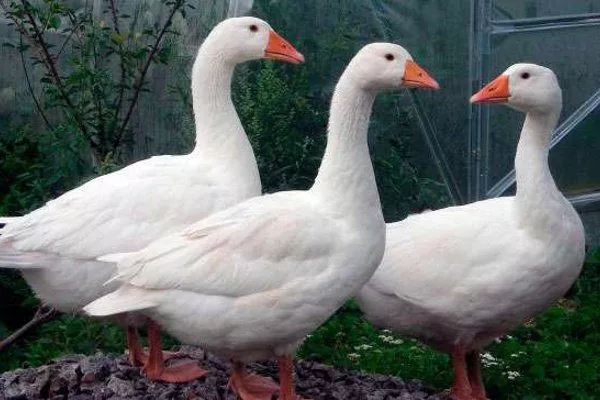
Governor's geese
This is a fresh breed developed by crossing Italian and Shadrinsk geese. Adult males reach 4-5 kg live weight, while females reach 3.5-4 kg. A hen lays up to 45 eggs per year. Governor's geese are known for their excellent hatchability and survival rate—over 95%.
| Indicator | Governor's | Average by breed |
|---|---|---|
| Survival rate of young animals | 95-98% | 75-85% |
| Feed conversion | 3.2 kg/1 kg weight gain | 3.8-4.5 kg |
| Meat yield | 68-70% | 62-65% |
| Fattening period | 4 months | 5-6 months |
The breed has excellent egg production rates and high meat quality.
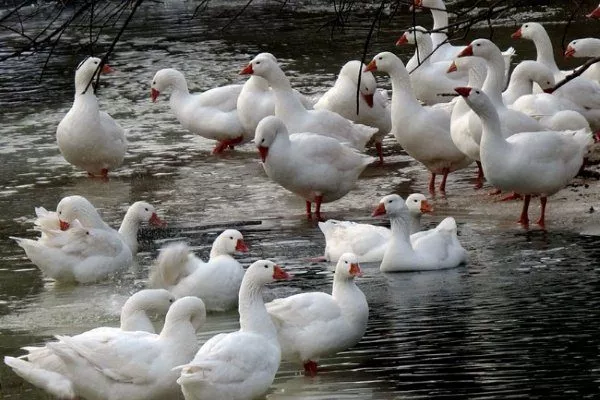
Chinese geese
A popular breed prized for its high egg production. A single goose can lay up to 100 eggs per year.
Furthermore, Chinese geese are prized for their high-quality meat. However, breeding them for meat is not very profitable, as an adult male weighs only about 4-5 kg.
The breed's weaknesses include a weak maternal instinct and aggressiveness during the egg-laying season. Close monitoring is essential.
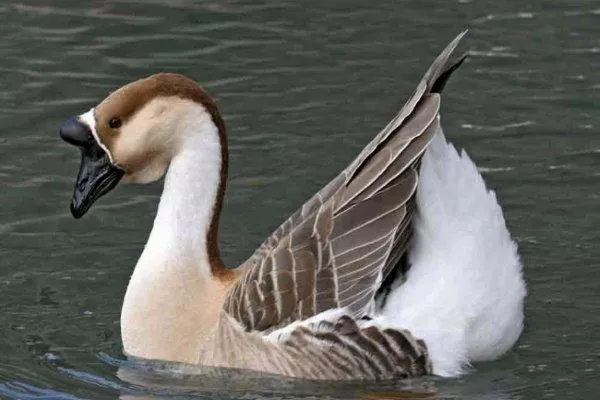
Mamut
A breed brought from Denmark. Breeding these birds is profitable for their meat; males can weigh over 13 kg, while females can weigh up to 9 kg. A significant advantage of these birds is their good egg production—around 50 eggs per year. Geese of this breed have a good survival rate and are resilient. Disadvantages include a weak maternal instinct and difficulty coping with the absence of a body of water.
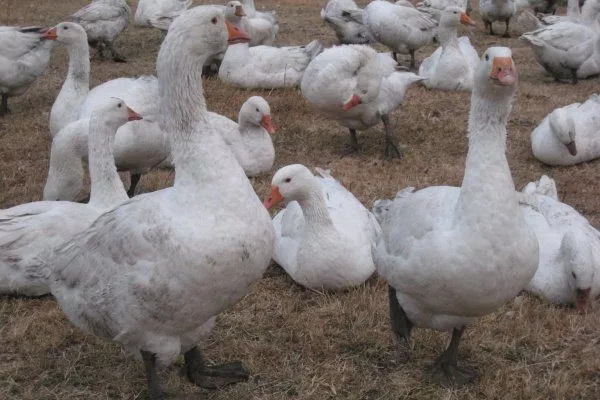
Ural white geese
This bird has a strong immune system and tolerates various weather and climate conditions well, which is passed on to its offspring. A female lays up to 50 eggs per year, with a hatch rate of over 80%. Ural white geese are not very heavy, with adults reaching around 5-6 kg.
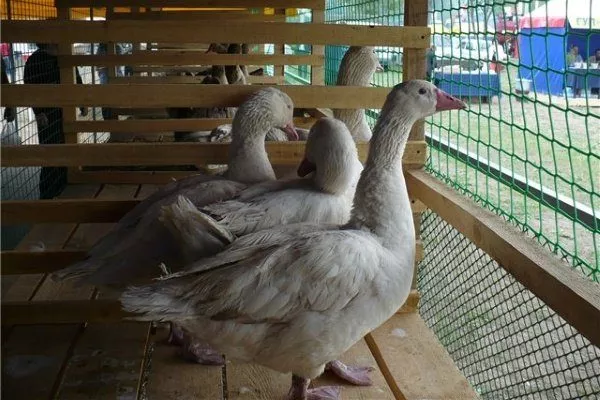
Shadrinsk geese
It's hard to call this bird frost-resistant, but it's important to provide warm and dry floors in the poultry house. The optimal temperature for this breed is 18 degrees Celsius. A characteristic of this bird is its undemanding nature. When raising geese, farmers focus on meat production, as they weigh around 6 kg. Shadrinsk geese produce delicious and nutritious meat. Their down is very coarse and not particularly sought after.
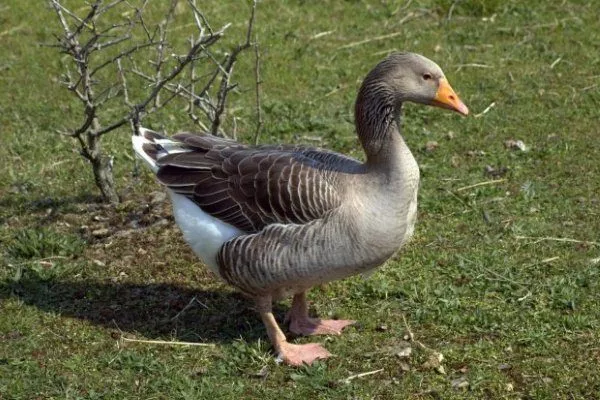
The liver of the Shadrinsk goose reaches 400 g, which is why the birds are highly valued among breeders.
Tula bird
This breed has a low egg production rate, and geese weigh up to 6 kg. However, Tula geese are prized for their fighting qualities. They are easy to breed, as they can withstand not only severe frosts but also intense heat. They tolerate all conditions well, but their diet must be carefully monitored; excess weight can cause them to lose their fighting form.
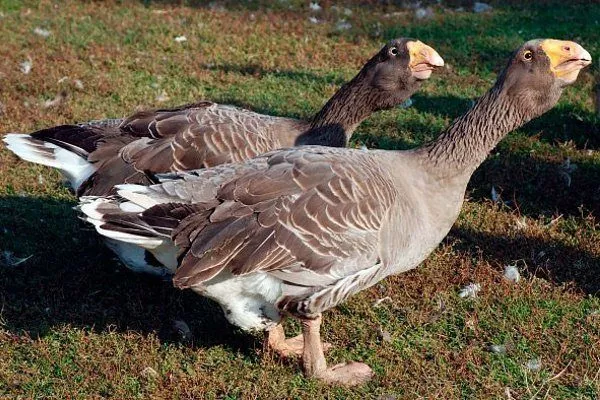
Kuban gray geese
This breed was developed by crossing Chinese and Gorky geese. The bird is prized not so much for its meat (a goose weighs around 5-6 kg), but for its egg production: a hen lays up to 90 eggs per year, of which approximately 85% hatch. The breed's advantage is its high chick survival rate. Its drawbacks include a lack of maternal instinct and a reluctance to incubate eggs and raise chicks.
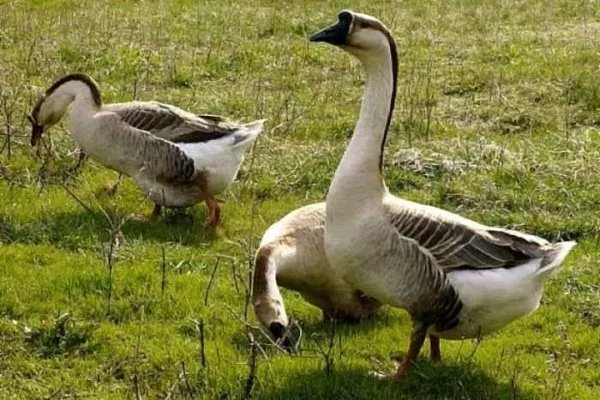
Linda
Linda geese are prized for their rapid weight gain, reaching 7-8 kg. They reach sexual maturity at 8 months. They are average egg producers, with a hen laying 45-80 eggs per year. Their down is also valuable.
This is a good start for a budding farmer. The Linda breed is noted for its low feeding and low maintenance requirements, and its ability to quickly adapt to various weather conditions. With simple care, 100% profitability can be achieved.
| Period | Diet | Norm |
|---|---|---|
| 0-3 weeks | Compound feed PK-31 | 120 g/head/day |
| 4-8 weeks | Compound feed PK-32 | 250 g/head/day |
| 9-16 weeks | Grain mixture + greens | 400 g/head/day |
| Adults | Grain + root vegetables | 180 g/head/day |
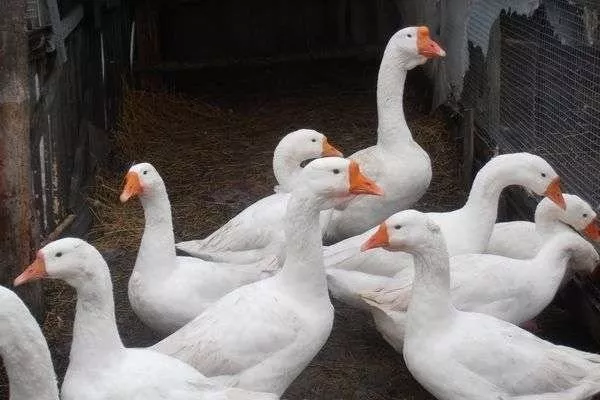
To ensure geese's well-being, it's essential to ensure their drinking bowls are always well-stocked with water. Because geese prefer solitude, it's recommended to provide them with secluded, shaded areas.
Depending on the purpose of raising geese—whether for egg collection or meat marketing—a poultry farmer must carefully select the right breed. However, it's important to remember that only proper care can produce high-quality meat and large eggs for sale.