
Chinese geese are one of the most prolific and easy-to-care-for breeds. These small, strong, and hardy geese thrive on green fodder, producing high-quality, tasty, and tender meat. Let's learn how to breed and care for this breed, and how to hatch and raise goslings.
History of origin
The ancestors of Chinese geese are waterfowl from the duck family, known as swan gooses. The latter were domesticated in Manchuria. From China, these birds were brought to Europe and Russia.
To borrow the best qualities of the "Chinese" geese, our breeders actively used them to create new breeds. Using Chinese geese, they developed the famous Kholmogory, Pereyaslav, Kuban, and Gorky breeds.
Description of the Chinese breed
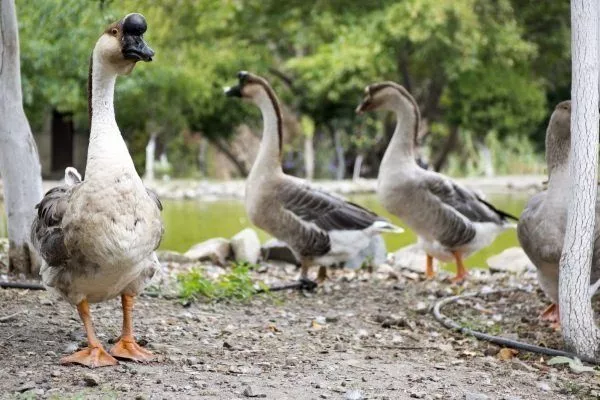
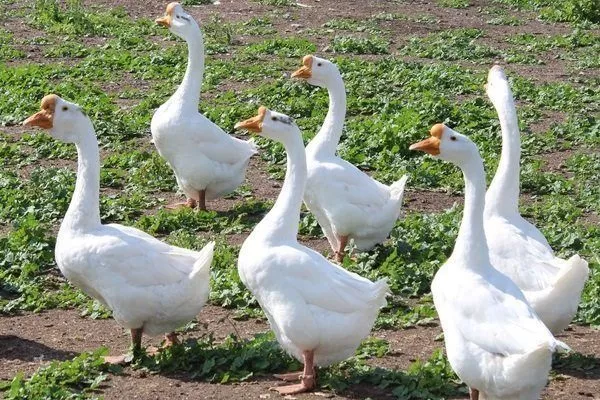
Chinese geese are stately and slender. Characteristic features of the breed:
- The body is medium-sized, slightly elongated, and the front part is slightly raised.
- The neck is long, strongly curved – similar to the neck of a swan.
- The head is elongated. There is a bump on the forehead—this characteristic feature makes it easy to distinguish the breed.
- The chest is rounded and flows smoothly into a powerful belly.
- The beak is small. The color is bright orange or dark brown, sometimes almost black.
- The tail is short.
- The paws are strong and set apart.
- The plumage is thick and dense.
Some birds may have a small leather pouch above their beak. Their voice is resonant and high-pitched.
Vices
Defects are rare in the breed. Possible congenital defects:
- too thick neck;
- underdeveloped lump;
- sagging abdominal folds.
Subspecies
Based on their color, Chinese geese are divided into two subspecies: gray and white. The body standards for white and gray Chinese geese are the same: the body, paws, beak, neck, and other body parts correspond to the characteristics described above.
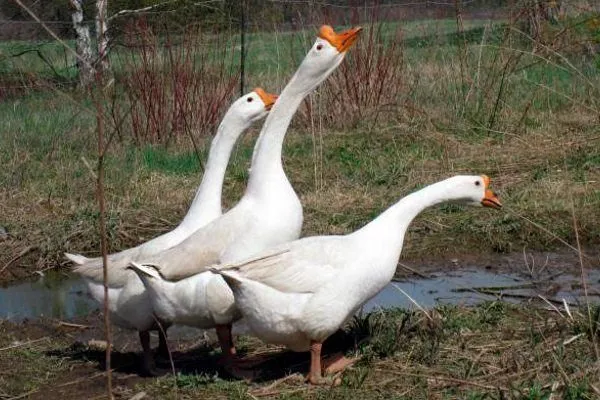
White Chinese geese
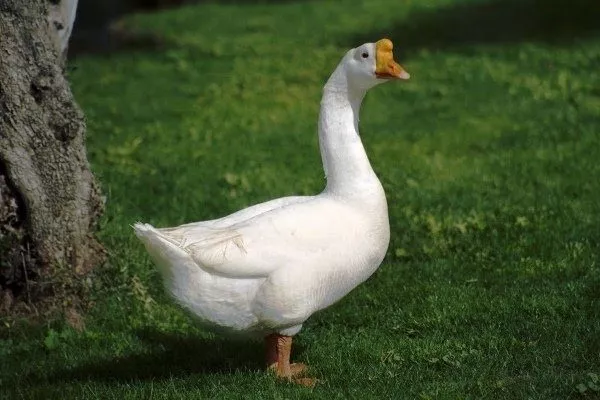
The white subspecies of Chinese geese emerged from the domestication of the knobby Chinese goose. White "Chinese" geese were bred for a long time during the Soviet era and remain popular today. The description of the white subspecies matches the general exterior characteristics of Chinese geese. The only distinguishing feature is the white plumage. The beak, feet, forehead knob, and tarsi are bright orange.
The white subspecies attracts farmers with its high reproductive rates—70-80%—and the high viability of goslings—up to 99%. A drawback of the white "Chinese" geese is their aggressive behavior, which is observed during certain periods.
Gray Chinese geese
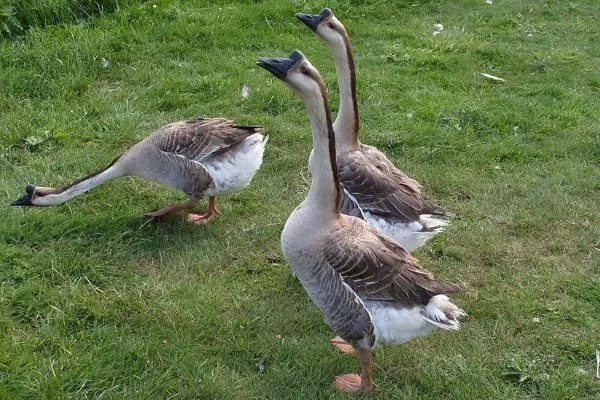
The gray subspecies shares the same ancestors as the white. Gray "Chinese" cattle have been actively bred in Russia since the 18th century, and are frequently crossed with other breeds to improve their meat qualities.
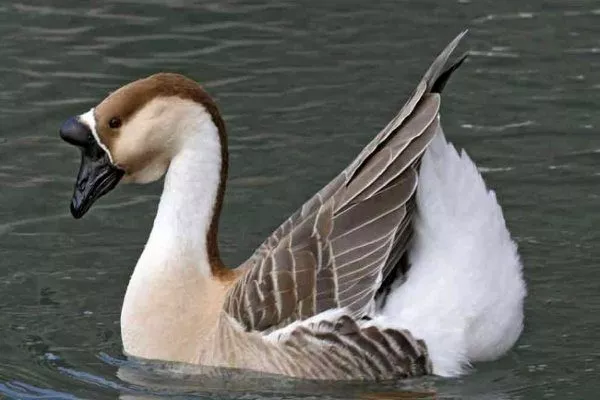
The difference between the grey subspecies, like the white one, is only in the colour of the plumage:
- The birds are generally greyish-brown in colour.
- There is a white stripe along the edges of the wings, shoulders and shins.
- The color of the thoracic region is pale brown.
- A dark stripe runs along the top of the neck, from the head to the shoulders.
- The beak and frontal cone are black.
Characteristics
Chinese geese are popular with farmers and small private farms due to their excellent characteristics. This breed is hardy, undemanding, productive, and reproduces well.
Climate and distribution
Chinese geese originate from the northeastern regions of China. They are undemanding in terms of living conditions, but they cannot always adapt to extreme cold. The breed is widespread, but thrives best in regions free of extreme conditions, such as severe frosts and extreme heat.
They thrive in temperate climates. The key is to provide them with a warm house during periods of severe frost.
Productivity
This is a small breed raised for its eggs and meat. Goslings gain weight quickly, weighing 3 kg at nine weeks. Goose egg laying, starting in December, lasts six months. Key performance indicators are shown in Table 1.
Table 1
| Productivity indicator | Meaning |
| Goose weight, kg | 4-4.5 |
| Weight of goose, kg | 5-6 |
| Maximum number of eggs per year, pieces | 120 |
| Number of eggs per laying in white/gray geese, pieces | 65-70/45-60 |
| Weight at 2.5 months, kg | 3-3.5 |
Sexual maturity in males and females occurs at 9-10 months of age.
Maternal instinct
Geese have weak maternal and brooding instincts. Adult geese and ganders often fail to recognize their brood and protect it from predators and danger. Farmers are forced to ensure the safety of their young.
Bird's disposition
All geese are active and energetic, but Chinese geese can be aggressive. This is why Chinese geese are kept separately from other birds and goose breeds. They are especially aggressive during egg-laying season. Chinese geese are vocal, often demonstrating their vocal abilities.
Pros and cons
Advantages of the Chinese breed:
- high egg production;
- rapid growth of young animals;
- undemanding in terms of care and nutrition;
- good taste of meat;
- high-quality fluff;
- excellent incubation characteristics of eggs;
- high survival rate of chicks;
- disease resistance.
Flaws:
- inferior to other species in terms of carcass weight;
- problems of survival in a harsh climate;
- The parental instinct is poorly developed in males and females – few geese are capable of incubating eggs.
Content Features
One of the breed's key advantages is its undemanding nature. Caring for Chinese geese involves standard care that even a novice poultry farmer can handle. The key is to provide the birds with a good coop, ample run space, and adequate nutrition.
- ✓ Optimum temperature in the poultry house for egg laying: +16°C.
- ✓ The need for 24-hour access to water: up to 2 liters per bird per day.
Requirements for the premises
Chinese geese absolutely require a coop. They won't survive the winter without an insulated building. If there's severe frost outside, it's not recommended to take the birds out at all, as they can get frostbite on their feet. Geese are kept indoors throughout the cold season, and in good weather, they're let out for a walk outside.
Requirements for the poultry house:
- The room should be warm and dry, without drafts, but with effective ventilation, preferably with supply and exhaust.
- The height of the building is from 2 m.
- The area is calculated based on the number of birds and the housing standard – 2 square meters per goose.
- Lighting is natural and artificial. Minimum daylight hours are 14 hours.
- The optimal humidity in the room is 70%.
- The barn floor is covered with hay, straw, or sawdust bedding, which is periodically refreshed.
- Nests are equipped in the poultry house at the rate of 2-3 geese per nest.
Geese gain weight well and eat with gusto at 16°C. To monitor the temperature in the coop, it is recommended to hang a thermometer inside.
Drinking bowls, feeders and other equipment
Birds must have 24-hour access to water and food. Waterers and feeders must be cleaned and washed regularly, removing any food residue or debris that may fall into them.
Two feeders are installed in the poultry house and the run. One is filled with feed, the other with river sand, shell rock, and gravel. The feeders are made of boards, plywood, or other materials. They are installed 20 cm above the floor.
Above the main feeders, 10 cm higher, hang feeders with additional food for ganders.
Drinking bowls should be convenient; they can be homemade or purchased ready-made. There are special waterers for poultry that prevent debris from collecting. Each bird should have a 15 cm (6 in) waterer. In winter, the waterers are heated to prevent freezing.
Walking
Geese need a run to grow and develop properly. In a fenced area, the birds graze, browse, and simply enjoy the fresh air. Waterers and feeders are provided here, just like in the coop. The opening for the birds to exit is located on the south or southeast side.
The run is enclosed with a 1.3-meter-high net. A canopy is installed to protect the geese from getting wet during rains and from the scorching sun. In the run, Chinese geese can graze until the frost sets in. The longer the geese graze, the more fat they will gain for the winter, and the more feed will be saved.
If there's a body of water nearby, geese can find food there. Furthermore, swimming has a positive effect on the growth and health of waterfowl, which includes geese.
Feeding
Geese's diet differs somewhat from that of other poultry. Geese gain weight without consuming grain feed—it's usually used as a supplement to greens.
Diet
The main ingredient in the Chinese geese's diet is greens. If the birds are regularly allowed to graze in the open air and feed in a pond, they grow strong and healthy. However, in winter, they will need additional nutrition.
What do Chinese geese eat?
- In winter, the following is introduced into the geese’s diet:
- mash - they are steamed from potatoes, carrots, beets;
- whole grain – wheat, barley, oats;
- mineral and vitamin components - they are mixed into food;
- fish and bone meal;
- salt and chalk.
- Chinese geese are always given root vegetables, garden tops, grain mixtures with bone meal, and vitamin and mineral supplements.
- In summer, geese eat plant matter, particularly plantain, clover, yarrow, dandelion, and other plants. At ponds, they enjoy eating cattails and reeds.
- Geese need plenty of water. A bird can drink up to 2 liters per day. A water shortage leads to a critical drop in egg production, which is difficult to restore.
During the fall and winter and during the end of egg-laying, geese are fed grain. If the birds are losing weight, the grain ration is increased, and soybean or sunflower meal and cake are added to the wheat, corn, and barley.
Feeding standards
In summer, the birds graze on the range, eating food as needed. In winter, geese are fed twice a day, at the same time. Feeding requirements for adult Chinese geese are listed in Table 2.
Table 2
| Feed | Weight, g |
| Carrot | 100 |
| Boiled potatoes | 100 |
| Cabbage | 50 |
| Grain mix | 50 |
| Salt | 0.5 |
| Chalk | 5 |
Recommended feeding regimen with two meals a day:
- in the morning - mash;
- at night - cereals.
Breeding
When breeding "Chinese" geese, the breed is crossed with heavier geese to produce more meat. Large meat breeds such as Kholmogory or Toulouse are usually used for crossbreeding. This selective breeding results in geese with a high meat yield and a moderate fat content.
Crossbreeds and hybrids resulting from crossing Chinese geese with meat breeds are in high demand among farmers. They are raised on a domestic and commercial scale.
Hatching chicks
Chinese geese of both subspecies are extremely prolific, but are reluctant to brood. Because of this, goslings are often hatched in an incubator. About 80% of eggs laid in an incubator produce viable offspring.
Natural incubation
A goose ready to lay eggs is restless. Characteristics of natural brooding:
- Females sit on the eggs between February and May, usually around the beginning of April.
- One goose can incubate up to 13 eggs; it is difficult for her to keep more warm.
- The nest is built away from the flock; it should be dry and quiet, with a temperature of 15°C.
- If there are several hens at once, they are separated from each other by partitions.
- The hens are fed the best grain.
- The incubation period is 28-30 days.
After the specified period, the eggs are placed in a box and illuminated with a lamp. When the chicks begin to hatch, they are returned to the goose. The best option is to leave the goslings with the goose. If this is not possible, the chicks are placed in a separate, warm and dry enclosure.
If one of the eggs breaks during incubation, it is removed from the nest and the remaining eggs are wiped off.
It happens that a goose, having left the nest, does not return for more than 20 minutes; in this case, she is forced to return – probably her brooding instinct is poorly developed.
Through an incubator
If the maternal instinct is insufficient and the geese refuse to incubate their eggs, an artificial method of hatching chicks must be used.
- Check the eggs with an ovoscope before placing them in the incubator.
- Preheat the incubator to 39°C 4 hours before laying the eggs.
- Maintain humidity at 60-65% during the first days of incubation.
To artificially hatch goslings you will need:
- incubator;
- A brooder is a device for warming chicks;
- An ovoscope is a device for candling eggs.
A good hatching result for an incubator is 70%, but it can be higher.
Incubation stages:
- The eggs are selected. The maximum age for eggs is 10 days. They are chosen to be smooth, healthy-looking, and of perfect shape. They are not washed, only sprayed with potassium permanganate to kill germs.
- Four hours before laying the eggs, the incubator is heated to 39°C. Humidity is maintained at 60-65%.
- The eggs are placed in an incubator and the temperature is set at 38°C for 4-5 hours. The temperature is then reduced to 37.8°C, and two days before removing the eggs from the incubator, the temperature is lowered to 37.5°C.
- If the incubator does not have automatic turning, the eggs are turned manually up to 8 times a day to ensure uniform heating.
- After 15 days of incubation, the incubator is periodically ventilated for 10 minutes.
- On days 11 and 27, the eggs are inspected; if there is no embryo spot, they are rejected. If a solid dark clot is visible during the second inspection, the embryo has died.
Offspring
Goslings need proper care from the first days of life – this is when their immunity is formed and their further development depends.
Conditions for keeping goslings
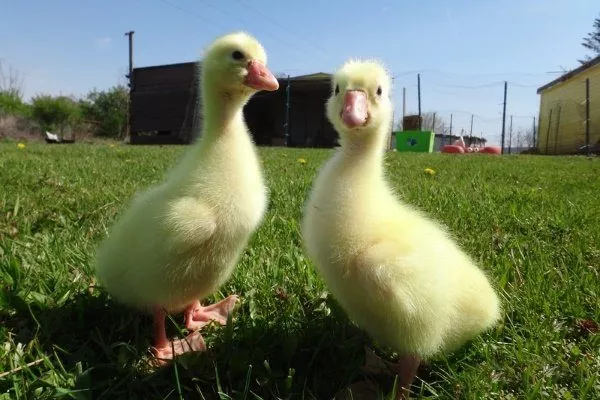
The goslings' enclosure is kept warm, dry, and clean. Housing conditions:
- Temperature. The temperature in the brooding room is maintained at 28-30°C. If the goslings are uncomfortable, they become inactive:
- when overheated, the chicks open their beaks and drink frequently;
- When frozen, the goslings huddle together and practically do not eat.
- Humidity. It shouldn't exceed 75%. Excessive humidity increases the incidence of disease in livestock. Infrequent bedding changes and poor ventilation worsen the situation.
- Ventilation. This is essential from the goslings' first days of life. During the warmer months, 24-hour ventilation is recommended.
- Bedding. Thickness – 3-5 cm. Update – every other day.
- Lighting. For the first seven days, the chicks' home should be illuminated around the clock—the length of daylight affects the goslings' development, health, and weight gain. However, there should still be a separation between day and night, with the lighting dimmed at night. After a week, the daylight hours are reduced to 16-17 hours. This is done gradually, shortening the "day" by 30-40 minutes each day.
From hatching until the goslings are fully feathered, it takes 75-80 days.
Feeding goslings
Goslings need a balanced diet to ensure they grow large and healthy. A specific diet is needed for each period:
- For the first 5-7 days, they are fed boiled egg yolks. They are supplemented with greens, such as finely chopped green onions. For the first 2 days, the goslings are fed 7-8 times a day.
- Various herbs are gradually introduced into the diet—in addition to onions, goslings are fed clover and alfalfa. Avoid feeding too many greens at once.
- After 10 days, they are fed either fattening feed or mash. The first mash is made from eggs, crushed corn, wheat and barley groats, with a little semolina added for crumbliness. Tricalcium phosphate is added to the mash to prevent "feet falling."
- After 5 days, instead of eggs, cottage cheese, mashed boiled potatoes, sunflower cake and greens are added to the mash.
The goslings are given Tetravit and Chiktonik vitamins. They are added to their water. Feeders filled with fine gravel or crushed shells are placed within easy reach. Sand is not given to the young.
After 20 minutes of feeding, the remains of the mash are removed to prevent the perishable components from decomposing and causing poisoning to the chicks.
Diseases and prevention
Chinese geese are disease-resistant and rarely get sick, especially if their living conditions are maintained properly. Key disease prevention measures include:
- maintaining cleanliness in the poultry house;
- scheduled vaccination;
- compliance with area standards.
Before introducing young birds into the poultry house, it must be disinfected. The house is also treated with:
- the walls are whitewashed;
- the bedding is changed;
- goslings are given a weak solution of potassium permanganate and glucose (on the second day of life) to strengthen their immunity;
- To prevent salmonellosis, the drug "Tilan" is given.
Geese are susceptible to infectious diseases, including viral enteritis and salmonellosis, as well as non-infectious diseases. The former are associated with poor sanitation, while the latter are usually caused by improper husbandry and feeding practices.
Geese nurseries and prices
Prices for white and gray Chinese geese start at 1,100 and 1,500 rubles, respectively. Breeding geese, young birds, and hatching eggs are available from private owners, breeders, and poultry farms.
For example, Moscow-based Ecofazenda offers Chinese geese. Hatching eggs can be purchased on the UPFERM.RU website (Moscow, 46 Ivana Franko St., Bldg. 3) or by calling +7 (965) 196-29-39.
Reviews of the Chinese breed
The main advantage of Chinese geese is their ease of care and upkeep. Goslings grow by leaps and bounds and don't require expensive feed. While the birds are lightweight, they compensate for this with excellent egg production and delicious meat.