
Italian geese are graceful creatures. If you're interested in poultry farming, this article is for you. What's special about the breed's appearance, how to care for and maintain them, and how they are bred? You'll find answers to these and other questions. Real-life reviews will help you out.
The history of the Italian breed of geese
The breed's origins date back to the 19th century. Italian breeders had considerable experience in their field, and their plan was to cross native white birds with geese imported from China.
When the Chinese breed was added to the breed, it was greatly improved, and from there the Italian goose breed originated.
This country is well-known and, by tradition, is frequently visited. Tourists brought geese from Italy to neighboring countries—France and Austria. After people welcomed them with open arms, they spread throughout the world. Now they have firmly established themselves in our land, bred on small plots of land and on huge poultry farms.
Description of the breed
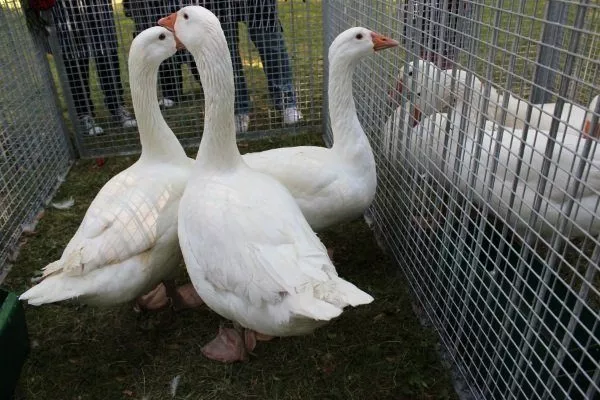
Italian geese are a seemingly ordinary breed of goose. They are unadorned, their coloring is unremarkable, and their bodies lack any beautiful plumage—everything is standard. Once you've imagined this, you'll understand—it's an Italian goose.
Appearance
Below is a detailed description of the appearance of Italian geese.
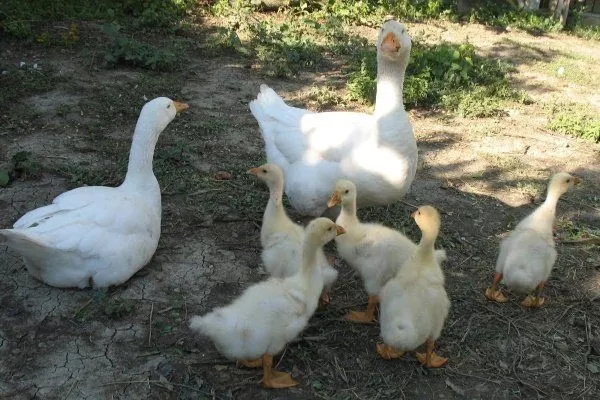
As mentioned, geese are unremarkable, but even this doesn't turn people off them. Their bodies, proportionate to the rest of their bodies, are slightly elongated and raised at the front—the belly. The belly itself, incidentally, is rounded and lacks any folds of fat. The wings are held tightly to the body, long and high. The tail is also held close to the body, short, and almost invisible. Geese of this breed have powerful, strong legs.
The back is slightly arched, developed, and slopes slightly downwards toward the tail. From there, a graceful, not very long neck extends. The head is standard, though geese sometimes have a crest. The long, flat bill is light orange. It lacks the characteristic protuberances that distinguish geese by sex and breed. The eyes are usually dark blue, and the eyelids are orange.
The plumage is stiff and not very thick, with a very thin down layer. The coat is entirely white, but gray feathers are occasionally seen—this is considered a drawback, albeit a minor one.
Any deviation from these characteristics is a defect and a marriage.
They do not have an outstanding appearance, but they still look attractive due to their grace and physique.
Character
Italian geese are very active, which explains their complete lack of fat and their robust build. They are also completely independent of humans and are true protectors of their families. They are very protective of their family, striving to preserve it with all their might. They can easily quarrel with geese of other breeds, and this is what most conflicts stem from.
This aggressiveness of geese is considered a breed flaw. Under such conditions, it's impossible to keep the two breeds close together.
Egg production
Geese begin laying eggs around the age of one year. Unlike other breeds, Italian geese have only one laying season. Although there are ways to create more periods and lay more eggs, they generally lay only one.
They lay up to 50-60 eggs per year, large (150 g), pure white, matching the color of their coat.
There are ways to arrange a second period in the fall, but the goose will only hatch eggs in the spring. Therefore, an incubator is needed for this second period. With one, a goose can lay up to 90 eggs per year! Eight to ten years is how long a goose can lay eggs successfully, after which some problems may arise.
Egg fertility can reach up to 75%. If they are hatched in a good incubator, it's 100%.
Meat productivity
| Name | Male weight (kg) | Female weight (kg) | Egg production (pieces/year) |
|---|---|---|---|
| Italian geese | 9 | 7 | 50-60 |
Geese are prized by farmers for their excellent weight and growth characteristics. You can learn more about them below:
- Males up to 9 kg.
- Females up to 7 kg.
Geese typically reach their final weight by 5-6 months, so for purely economic reasons, they are sold at this age. Marketable size is reached by 9 weeks of age.
The meat is delicious and has many other qualities, such as being fattened by fatty liver. The famous dish foie gras is excellently prepared from the livers of Italian geese.
Fattening can yield up to 600 grams of liver. This is very little compared to the goose's full weight. However, remember that fattening should only begin when the goose reaches 4.5 kg, whether it's a young goose or an adult goose.
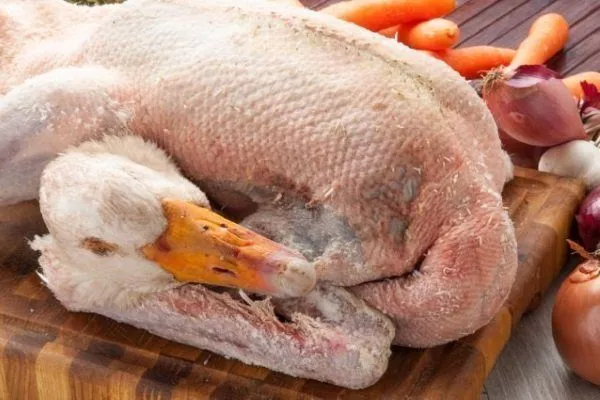
To obtain larger carcasses, geese are also mated with heavier breeds. However, this method is rarely used because the fertility rate is very low and nowhere near the level of Italian geese. Even so, the method is valued and is certainly considered one of the breed's strengths.
Maintenance and care
Another positive quality is their complete unpretentiousness. Geese only require a prepared environment, regular cleaning, and vaccinations against diseases.
Requirements for the premises
The required space is 1.5 square meters per bird. You can add a little extra, as geese are very active and may need a little more space. It's not recommended to house them near other poultry or other breeds of geese. For example, Italian geese require high humidity. Not that they need it, but they love to splash around in water, hence the moisture. In general, they need complete isolation from other birds.
Regarding lighting, geese get enough natural room light and don't need supplemental lighting like chickens do. If there's a window in the room, it shouldn't be more than 15% of the floor area. Obviously, it shouldn't be too bright.
Also, the room should be free of drafts and wind. The space should be protected from pests, rodents, and communicable diseases. If pests are already present, be sure to carry out sanitation procedures.
The air humidity should be 70%. The room should be frequently ventilated to remove harmful bacteria.
The bedding in the room serves a hygienic purpose, removing dirt and absorbing it. It also serves as insulation. In summer, it should be very thin, and pine needles are ideal. In winter, it should be thicker—15 cm thick. Peat or straw bedding, made sure it's dry, works well.
Regarding temperature, geese don't care. Whether they live in cold or hot temperatures, it doesn't matter; they're not at risk of frost-related illnesses. But if you're planning to fatten them up, keep the temperature between 10 and 15 degrees Celsius. This is the range where geese will eat more food, as their appetite will be increased.
Yard for walking
Italian geese need regular exercise, and sitting indoors for long periods isn't their nature. They are highly retentive animals, and their bodies constantly expend enormous amounts of energy.
Therefore, the yard must be large enough to accommodate the entire herd, taking into account their energetic movements.
Access to water
Geese of this breed can do just fine without a pond; they practically don't need one. This further demonstrates their complete unpretentiousness. Ponds should only be used for washing, which should be done daily.
There's another reason why water is needed. Water has a buoyant effect, and geese swimming in it feel lighter and freer, which is very helpful before mating. Geese also soak their eggs in it before laying them.
Geese's love of water is definitely one of the breed's strengths; not everyone has a pond on their property. This greatly simplifies their maintenance.
Feeders
The most common and standard feeders, either oblong or rectangular, will do. You don't need to spend money on something expensive; it's easy to make your own by nailing a couple of planks together. Waterers will look similar. Just make sure to use high-quality boards and never use contaminated ones.
Preventive vaccinations
From various diseases of geese Vaccinations are given at 4-6 days of age, and also at 10 days. Yes, vaccinations are given once, and at an early age, to ensure health. They will protect young geese, who are vulnerable to attack and are very weak at that age. And these procedures will prevent adult geese from contracting the same diseases that affect young birds.
Don't use the vaccine if the goose is already unhealthy, as the vaccine is a weak virus. If the organism is already sick, there are almost no treatment options. Most treatments are completely inhumane—they slaughter the goose with sticks and burn it, thoroughly destroying all viral residue.
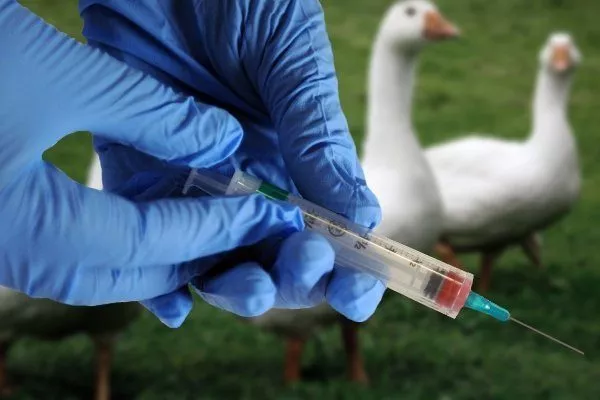
Vaccination should only be performed by a specialist. Once the entire herd has been vaccinated, there's virtually no risk to them, and the temporary danger has been eliminated.
Feeding
Goose nutrition consists of a very specific diet system. There are even several of them. Below, we'll describe the specifics of this diet, its composition, tips, and much more.
Diet of geese
The goose's diet is exactly the same as that of young and adult birds. Italian geese are unpretentious in many ways, including their diet. They don't require much from their owners. Vegetables, minerals, animal products, nutritious feed, and greens—all of this makes up their diet.
Only during egg-laying can there be exceptions. Then, the goose needs more vitamins and nutrients to produce high-quality offspring. You can use more greens and a little more chalk—it also contains minerals. During this same period, the goose is less active and will sometimes consume less food.
Meat diet
Naturally, to produce more meat, geese need to be fed more. And given their hyperactivity, they require significantly more food. There's a method called "fatty liver fattening." It's used specifically to produce a delicacy of greater weight. For example, a 7 kg goose requires 600 g of liver.
Unfortunately, this method is not suitable for Italian geese, so let's look at others.
Fresh, clean water should always be part of your diet. A highly balanced food list is available below:
- Fresh seaweed, grass and herbs.
- Leftover vegetables, root vegetables, vegetable tops.
- Balanced food (dry, wet).
- Chalk as an additive.
- Cereals (rice, corn, oats).
- Bran.
Eggs and other animal products can and should also be added to the diet. Dairy products are also acceptable. Remember that geese should always have unlimited access to drinking water.
As for grass, regular greens, you don't have to feed it to your goose when your yard is littered with it. When it needs it, the animal will find its own portion.
Diet of young animals
Farmers often overload chicks with food immediately after hatching. This is a mistake, and you should never repeat it. After hatching, the chick's stomach still contains some nutrients, which will provide for it for some time. Additional food will be a burden. Therefore, delay the first feeding for 8-9 hours.
Feeding is carried out according to the chick's age, and then the goose's. Generally speaking, it will be similar to the normal diet of adults. The diet will include:
- Bran.
- Dry animal feed.
- Corn.
- Dairy products.
- Carrot.
Each week, the amount of food will approximately double until it reaches 60 days. Then, you should begin adding adult food to the diet. After these days, reduce the protein and fat content, as by then the chick will have gained weight, and the remaining food consumed will be converted to fat. This will definitely not improve the quality of the bird's body.
More information about feeding goslings can be found in next article.
Breeding
Subject to all breeding rulesWith some help, the offspring's survival rate can be as high as 100%. Italian geese are among the strongest breeds.
Temperature and humidity in the incubator
You'll need eggs that are no more than a week old, maybe 10 days at most. Select the best quality ones, clean, free of cracks and other damage. Carefully clean them and place them in an incubator, where you'll need to set the correct temperature.
The incubation period lasts a month, which means the temperature will need to be adjusted several times. Sometimes it needs to be lower, sometimes higher. These are the rules that will significantly increase survival.
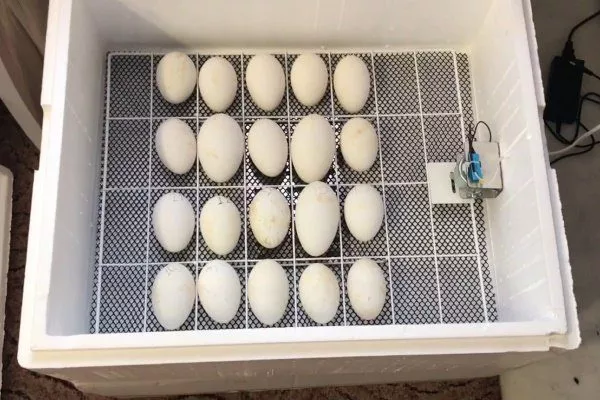
- ✓ The optimal temperature in the incubator during the first 16 days should be strictly 38 degrees, without fluctuations.
- ✓ After 16 days, it is necessary to cool the eggs daily and spray them with warm water to maintain the necessary humidity.
During the first 16 days, the temperature will be approximately 38 degrees Celsius (at this time, turn off the turning function). For the remaining 16 days, the eggs should be cooled and lightly sprayed with warm water, leaving the hatch (door) open for 10 minutes. Over time, you can leave the hatch open for up to 20 minutes.
Formation of breeding stock
If you're interested in producing eggs, you need to collect breeding stock. How do you do this?
Three geese per gander form a relationship once and for all. For this, it's important to choose the very best geese—those that are already mature, have plenty of meat, and are in excellent health. Avoid bullies, as they won't mate.
When keeping breeding stock, the same rules apply as for creating a habitable space. Perhaps a little lighting will be needed.
Caring for young animals
Immediately after birth, allow the gosling to dry off and avoid handling it beforehand. After 8 hours, the first portion of food is introduced. Below you can find step-by-step instructions for a certain period of care:
- After one day, it will be easy to count the number of females and males in the flock. This will be very useful, as it will become much more difficult later. In addition to the distinctive yellow down, males will also have a yellow spot on their back. Females, on the other hand, are generally grayish in color and lack yellow spots on their backs.
- The chicks are placed in a cardboard box lined with a few centimeters of soft, compacted hay underneath. Only 15 chicks per square meter should be kept, no more; they won't fit together. They should be kept under a brooder lamp at all times. Maintain a consistent temperature regime: keep the temperature up to 32 degrees Celsius during the first week, then gradually lower it to 18 degrees Celsius by the 20th day.
- For 15 days, the lamp remains on, and the room temperature remains within the normal range. Feeding is provided eight times a day; you can read about the nutritional requirements above.
- During the rearing period, various vaccinations are administered to the young. One of the most important is the salmonella vaccine, administered four days after hatching. In the third week, you can provide the family with protection against enteritis and cholera. However, remember that vaccinations should only be administered under the supervision of a specialist. Or under their supervision.
Advantages and disadvantages
Before summing up, it's worth summing up the information presented above and finally considering the advantages of Italian geese. And what are their disadvantages?
Among the advantages:
- Fertilization rate, ease and efficiency of the incubation period and, of course, excellent survival rate of the young.
- The ability to mate a female with other breeds of geese to produce a larger and plumper carcass.
- Rapid weight gain.
- High quality meat.
- High quality down.
- Unpretentiousness.
- Egg production.
- The presence of a body of water near the house is not mandatory.
- Attractiveness and beauty in appearance.
If you look at the list of pros and compare it with the cons, it's easy to see that the pros outweigh the cons. Below are the cons:
- The survival instinct in geese has a relatively weak influence.
- Gander are aggressive towards geese of other breeds. Their character is incompatible with cohabitation with other breeds or birds.
After reading the two lists, it is easy to draw a conclusion about Italian geese.
Reviews of Italian Geese
Read some real people's reviews of the breed to get a complete understanding of the breed.
Now that you know almost everything about Italian geese, it's time to sum it up. This breed offers excellent care and productivity. They are very low-maintenance and don't require much maintenance. Egg production is astounding, reaching 100%. The young survive well and are preserved. And their precocity and weight gain are truly remarkable.