
Wild geese are cautious and prudent birds, preferring to live in flocks. Although many species have already been domesticated, there are still many individuals surviving in the wild and successfully coping with the harsh cold climate. Their unique lifestyle attracts the attention of ecologists, biologists, and ordinary people around the world.
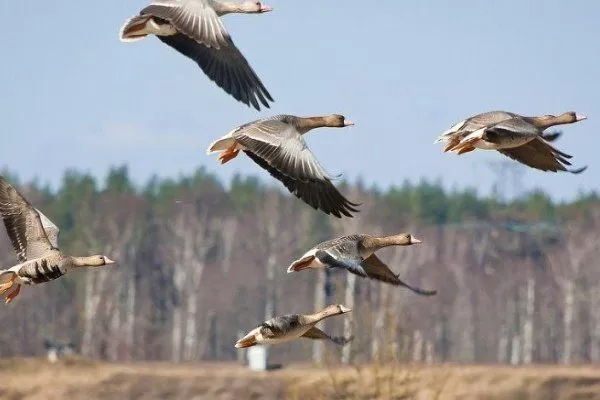
The history of domestication of wild geese
The wild goose is believed to have been the first domesticated bird. Because this waterfowl has an excellent appetite and is easily fattened, it is relatively easy to wean it from the need to travel long distances.
- ✓ The temperature in the incubator should be maintained at 37.5°C with humidity of 60-65% for the first 10 days, then reduced to 37.2°C and increased to 70-75% humidity.
- ✓ For the first two days after hatching, chicks should be kept in a room with a temperature of at least 30°C, with a gradual decrease of 2°C every week.
Wild goose chicks taken for taming, after two generations, become domesticated and accustomed to humans. Today goose breeding is a profitable activity in many regions of Russia.
Description of the wild goose
The wild goose is a massive and fairly large bird that makes long migrations to warmer climates for the winter. Their ability to swim and dive to great depths allows them to escape danger in the water.
Appearance
The wild goose is much smaller than the swan. The bird has a relatively light body and a short neck. The goose's bill, compared to the duck's, is longer, narrower, and set high.
- ✓ The male greylag goose has a more massive neck and is larger than the female, which is a key feature for determining sex.
- ✓ In the Arctic goose, males and females have the same coloring, but the male makes more muffled sounds compared to the female.
Males and females have the same coloring. The most common feather shades are:
- white:
- ashen;
- black;
- brown tint.
Voice
Most individuals have a clear, high-pitched voice. Birds communicate loudly among themselves. Males can be identified by their slightly muffled cackling.
When full or resting, the bird may mutter softly under its breath. However, if alarmed or frightened, its vocal cords emit a long, loud cry.
Habits
Regardless of species, wild geese build nests on land or near water. Some species prefer to nest alone, while others nest in pairs or colonies.
Not many people know, but the wild goose is very devoted to its partner.
A gosling bonds with its human companions (its mother, siblings, and other animals). When hatching chicks in an incubator, the gosling bonds with its human companion.
Types of wild geese
The diversity of wild goose species can be astounding. Individuals differ not only visually (feather color, beak size, etc.), but also in their food preferences and habitat. To date, 12 species of wild goose have been recorded, each of which has been extensively studied.
| Name | Weight (kg) | Carcass length (cm) | Wingspan (cm) |
|---|---|---|---|
| Greylag Goose | 5 | 90 | 170 |
| Bean geese | 2-5 | 80 | 160 |
| Snowy or Arctic goose | 3 | 80 | 150 |
| Sukhonos | 6 | 120 | 180 |
| Bar-headed goose | 3 | 90 | 170 |
| Chicken goose | 7 | 80-110 | 160 |
| Nile or Egyptian goose | 3 | 75 | 150 |
| Andean goose | 3 | 80 | 160 |
| Magellanic goose | 3.5 | 85 | 165 |
| Bar-headed goose | 3 | 80 | 160 |
Greylag Goose
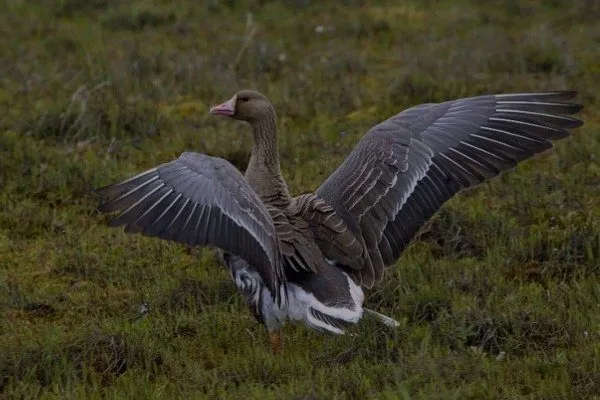
Individuals of this species have a massive neck, a large pinkish bill, and ash-gray feathers. The wingspan is 170 cm.
There are no distinctive differences between males and females. The only indicator of sex is size. Males are slightly larger than females.
They feed primarily on tree buds, berries, leaves, and acorns. Greylag geese can weigh up to 5 kg and reach up to 90 cm in length.
Bean geese
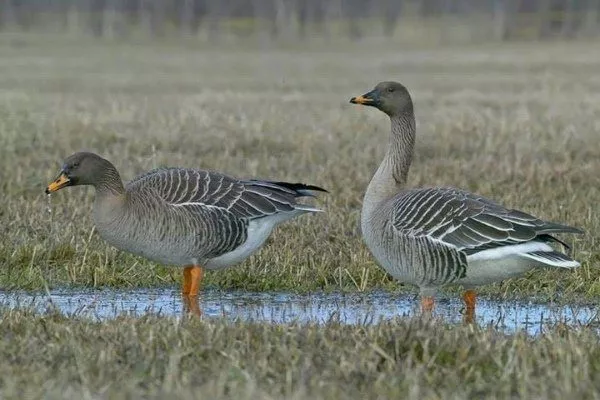
Individuals of this species are characterized by gray feathers with a black beak. Birds weigh between 2 and 5 kg and reach a body length of just 80 cm.
During the winter, the bean goose migrates to Western European countries. Its diet consists primarily of cereals and vegetables. Preferred habitat:
- swamps;
- rivers;
- closed bodies of water.
Snowy or Arctic goose
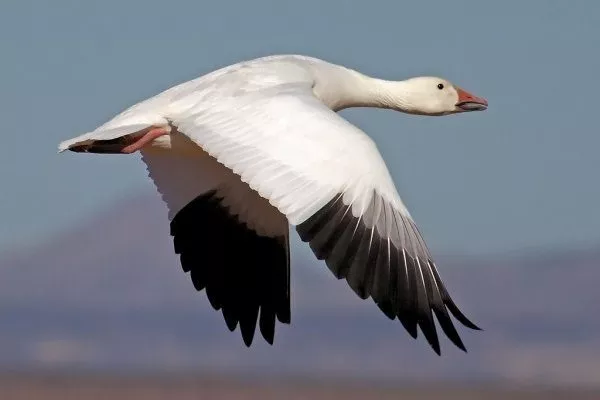
This species' natural habitat is the cold Canadian and Siberian regions. However, in winter, the snow goose makes a long migration to the Gulf of Mexico.
Due to their striking appearance, white feathers edged in black, snow geese have been subject to brutal human persecution. They are the most socially advanced group of all species and prefer to live in flocks of thousands.
The basis of nutrition is cereals, lichens and leaf shoots.
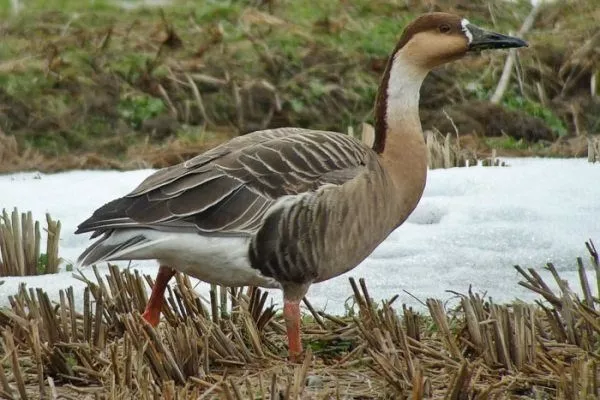
Sukhonos
The distinctive characteristic of the swan goose is its large size. The body length reaches 120 cm, the wingspan is 180 cm, and the adult weighs up to 6 kg.
They live on land. When threatened by humans or animals, swan gooses camouflage themselves in tall grass. They are capable of diving to great depths. They feed primarily on sedges, leaves, and wild berries.
Bar-headed goose
Individuals of this species are widespread in the mountains of southern Asia. In winter, they migrate closer to India and Pakistan.
The mountain goose is characterized by dark stripes symmetrically arranged on the crown of its head. Individuals reach just 90 cm in length, with a wingspan of up to 170 cm. Their weight does not exceed 3 kg.
In addition to plant food, the diet of mountain geese also includes animal food (worms with larvae, small insects).
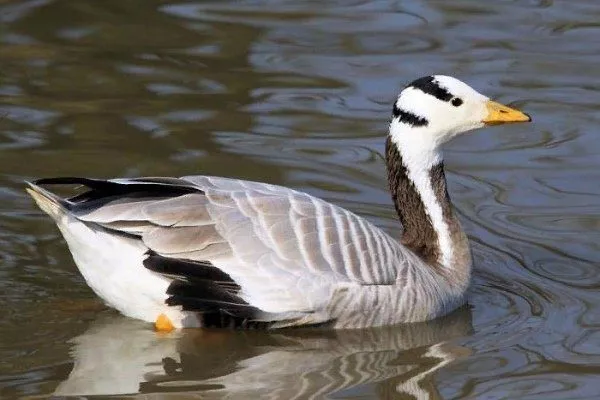
This species of goose is the only one capable of rising to altitudes greater than 11,000 meters.
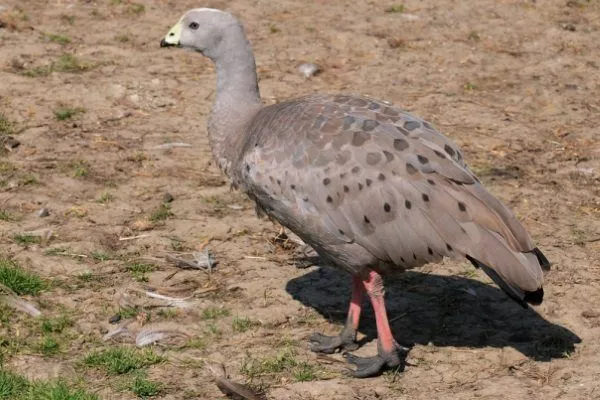
Chicken goose
For Russians, the ground goose may seem exotic, as these birds are found primarily in Australia. Their main distinguishing features from other species are their tiny beak, small head, and red feet.
The bird weighs no more than 7 kg, with a body length ranging from 80 to 110 cm. Because the chicken goose is not adapted to swimming, it spends most of its time on land. Its diet consists primarily of worm larvae, mollusks, roots, and cereals.
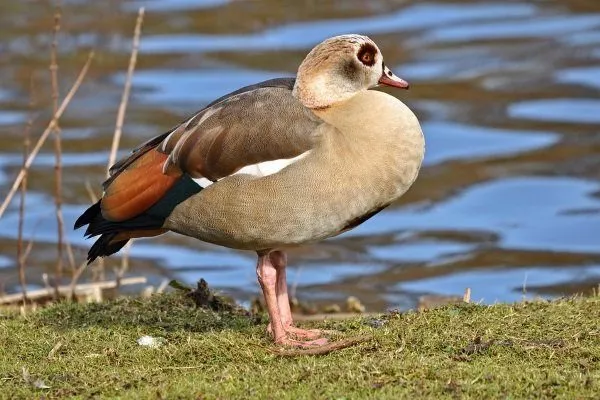
Nile or Egyptian goose
The birds got their name from their origins. They were first imported to European lands approximately 300 years ago.
The Nile goose has a distinctive coloration, featuring shades of white, gray, and brown. Individuals are tiny, barely reaching a weight of 3 kg.
The wingspan is small, up to one and a half meters. Egyptian geese feed on grass, plant seeds, and small insects.
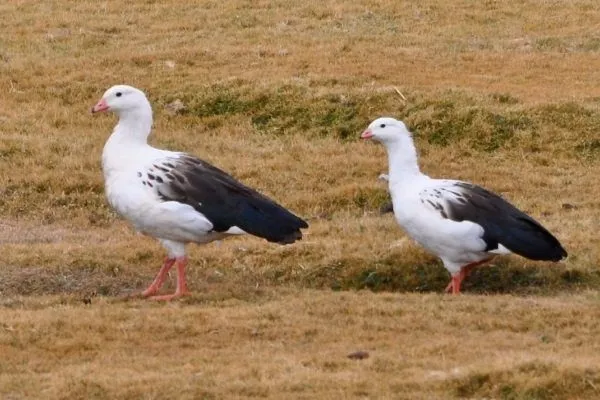
Andean goose
Due to its body structure, the Andean goose prefers to remain on land, entering the water only when threatened. The female is smaller than the male.
The bird weighs no more than 3 kg and is 80 cm long. Individuals of this species prefer to spend time in open areas, in the mountains, and in meadows near pastures. Their diet consists primarily of grass, small insects, and grains.
Magellanic goose
This species can be found in the southern lands of America, Chile, and Argentina. The preferred habitat for Magellanic geese is plains and mountain slopes, as well as meadows with tall grass.
Coloration varies depending on gender. For example, females have brown feathers, while males are pure white. Lifespan, under favorable conditions, reaches 25 years.
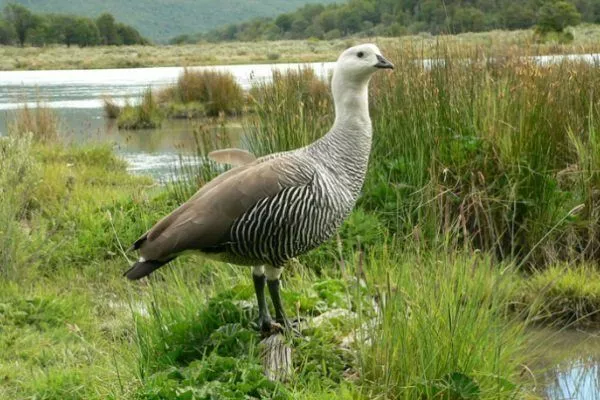
They can cause serious problems for farmers, as they are capable of consuming a large part of planted cereal crops.
Bar-headed goose
Like snow geese, snow geese thrive in the cold climates of Canada and parts of Alaska. Individuals reach a weight of just 3 kg and a length of 80 cm.
Their diet consists primarily of plant foods. This goose species has a relatively short lifespan of 6 years.
Geese
The brant geese visually resemble a wild goose, but are smaller. They are not very good at making the cackling call typical of geese. Their sounds are more reminiscent of a dog's howl.
Today, there are a huge number of subspecies of geese. The most common ones are listed below.
| Name | Weight (kg) | Carcass length (cm) | Wingspan (cm) |
|---|---|---|---|
| Canadian | 4 | 90 | 170 |
| Red-breasted | 2.5 | 75 | 150 |
| Black | 3 | 80 | 160 |
| White-cheeked | 3.5 | 85 | 165 |
| Hawaiian | 2 | 70 | 140 |
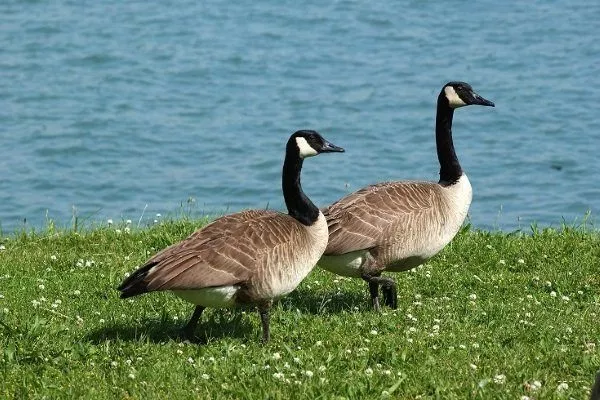
Canadian
Perhaps the most popular species of geese, these individuals can be found in some regions of Canada and Alaska. The Canada goose's feathers are a deep brown, with only the neck being a jet-black shade.
Although the bird prefers harsh, cold climates, it can still be found in small numbers in England and some Scandinavian countries.
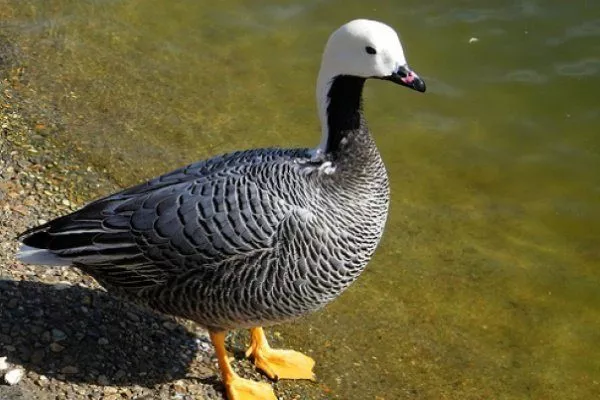
Red-breasted
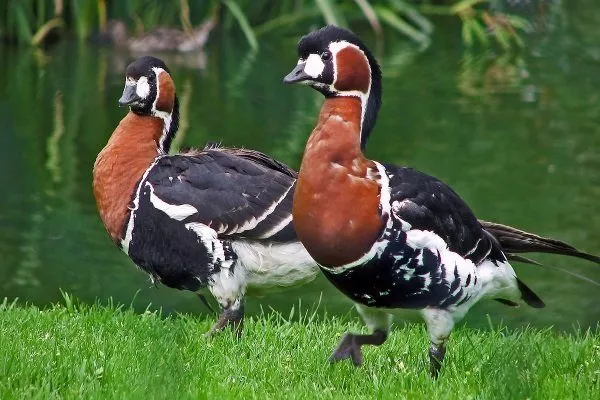
One of the most visually arresting species, the red-breasted goose's body is a beautiful chocolate brown. Its back and wings are covered in black and white feathers, creating stunning patterns.
Individuals of this species have been successfully domesticated. Due to their small size, they are rarely used as pets. The bird is typically bred in zoos.
Black
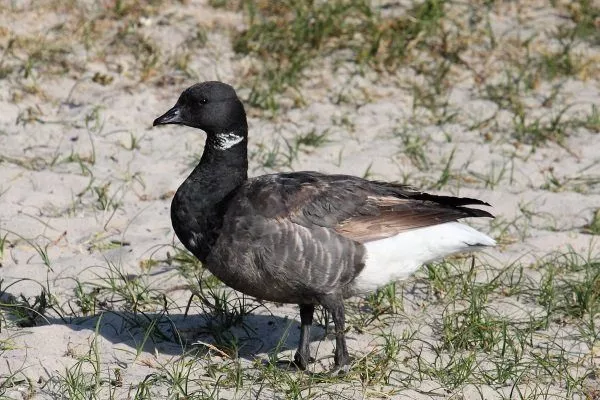
The black goose is a rare wild goose species. Its preferred habitat is the tundra. While encountering black goose in the wild is quite rare, it is possible in northern regions of countries such as Canada and the United States.
The basis of the diet consists of plants and grass.
White-cheeked
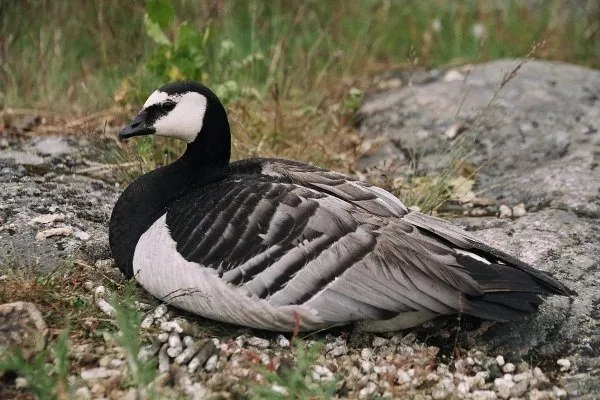
Visually, the barnacle goose resembles the Canada goose, but is distinguished by its gray and black coloring. It nests primarily in mountainous or open areas and can be found in many European countries.
Hawaiian
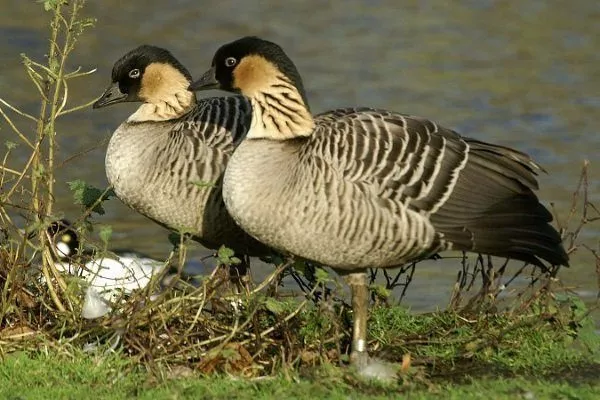
The name itself suggests this species' habitat: Hawaii. It's a rare species that ecologists and biologists have been working hard to save from extinction in recent years.
The diet consists mainly of plants, cereal crops and small insects.
The range and habitat of the goose
Most wild goose species prefer open areas with tall grass and access to a pond or river. This choice is driven by the birds' plant-based diet. Dense grass also allows geese to hide from potential danger. Some populations nest in mountains and on cliffs.
Nutrition
As mentioned earlier, wild geese feed primarily on plant matter, including berries, grass, certain plant species, cereals, and vegetables. However, many species also enjoy animal sources. Their ability to swim allows wild geese to hunt small fish and insects.
Nesting
Depending on the species, nesting can occur:
- in open areas (in the tundra, in meadows and fields);
- in closed areas (on rocks, in the mountains);
- near a body of water or river.
Geese prefer to nest in colonies, but when building a nest, a pair tries to occupy an area that they carefully protect from neighboring pairs.
Wintering of birds
Wild geese migrate twice a year, beginning in mid-autumn. The birds cover vast distances. By late spring, the geese return to their original habitat.
In some European countries, there are individuals that are adapted to cold climates and can afford to lead a sedentary lifestyle.
Dangers and Enemies
When a dangerous or threatening situation arises, the goose stretches out its neck and begins to closely examine its surroundings, emitting a long and loud cackling sound.
Wild geese's main predators are members of the mustelid family, including ferrets, foxes, and martens. Sometimes goslings may fall prey to other birds, such as crows. The geese's open habitats make hunting easier for predators.
Features of keeping and breeding wild birds in captivity
Since the goose is a fairly unpretentious bird, given its diet and adaptability to cold climates, keeping and breeding this bird is a profitable business.
The only thing worth noting is a large enclosure and access to open ground where the geese can graze. This is due to the goose's wild nature—they love space.
Reproduction and offspring of the wild goose
Features of breeding birds at home:
- To ensure successful breeding of geese in captivity, it's essential to increase daylight hours. This can be achieved by installing artificial lighting in the coop during the winter.
- Wild geese need 13 hours of daylight per day in winter. To protect their offspring, it's recommended to build nests yourself, at least 60 cm in size, with a rim no higher than 15 cm.
- Geese reach sexual maturity in their third year. It is during this period that they begin to find a mate and begin building a nest for future incubation.
- To keep the nest warm, it's advisable to add additional bedding made of down or feathers. A female can produce 50 to 70 eggs in a single season.
Status and commercial value
Being a wild bird, geese are often hunted, not only for breeding and maintenance, but also for their tasty meat. Humans have long studied the characteristic habits of this bird, and hunting wild geese, thanks to well-established strategies and traps, is usually successful.
In most cases, birds are shot for meat. Although populations of most species are abundant, some are still vulnerable to extinction.

Nutritional qualities of wild goose
Wild goose meat has a dark color and a fatty texture. Due to the bird's predominantly natural plant-based diet, the meat has a unique aroma with a sweet flavor.
For many years, chefs have been creating a wide variety of dishes with goose. It's perfect for making rich broths, baking, and roasting.
Goose meat has great nutritional value due to its impressive content of high-quality protein. Goose meat also contains essential vitamins (A and C) and minerals for the healthy development of the human body. Goose meat promotes bile production and strengthens blood vessel walls.
There are many species of wild geese. Each is unique, and our article will help you understand their habitat, diet, and nesting habits in more detail. Helpful tips will also help you domesticate these birds properly.