
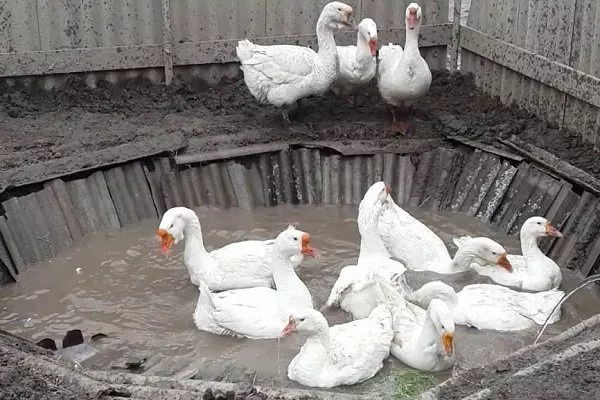
Geese are naturally aquatic birds. Therefore, to maintain the health of adults and ensure rapid growth of chicks, breeders strive to create living conditions as close to natural as possible. The lack of water near pastures is compensated for by constructing artificial ponds and pools.
Why do geese need to swim?
Splashing in water is a comfortable pastime for birds in hot weather. Furthermore, swimming is beneficial for the geese's appearance and health.
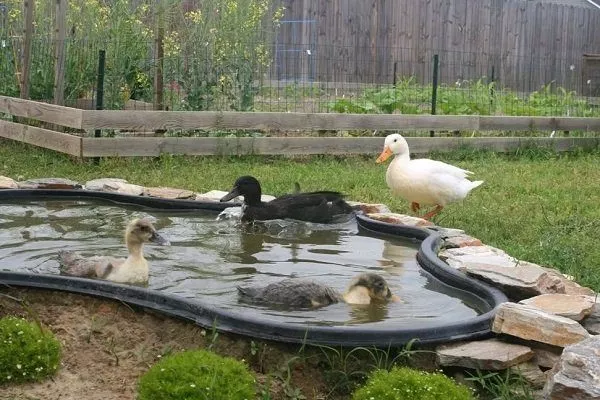
The importance of the aquatic environment for birds:
- promotes better absorption of nutrients;
- plays a significant role in laying eggs;
- without the opportunity to swim, daily weight gain decreases by 30%;
- water promotes even distribution of fat over the plumage;
- the goose is in active motion, which prevents it from becoming covered in fat;
- The risk of infestation with feather mites (an insect that damages the feathers and skin of geese) is reduced.
A pond plays a special role for birds during dry summers. Geese become lethargic, move little, and eat little. Males refuse to mate. A shallow reservoir of water under a bush is sufficient for a goose brood to thrive.
A pond is essential for goslings to acclimate them to natural conditions. Without bathing, fledglings don't develop the instinct to grease their feathers. They can't swim.
Pros and cons of keeping a pond for birds
An artificial pond on a goose pasture, in the absence of a natural body of water, has numerous advantages. However, there are some disadvantages.
Advantages:
- maintaining the health of birds (in addition to protecting against pests, swimming helps strengthen the immune system);
- creation of natural living conditions;
- activation of weight gain (increased humidity around the bath contributes to the growth of lush greenery and attracts insects);
- eliminates the need to purchase sippy cups;
- The financial costs of keeping birds are reduced (less purchased feed is required).
In any case, poultry farmers with man-made ponds will face difficulties:
- requires constant maintenance (water quickly becomes dirty);
- In hot weather, water evaporates quickly (if there is no source nearby, you will have to manually replenish the volume of liquid or build a system for delivering water to the reservoir, which is an additional expense).
What to do if there is no body of water?
If there's no natural body of water near your goose's grazing area, you can easily build a pond yourself. Building a simple reservoir without the need for specialized equipment or labor is minimally expensive.
Besides building, there are other options for constructing a birdbath. The simplest method is to adapt large containers.
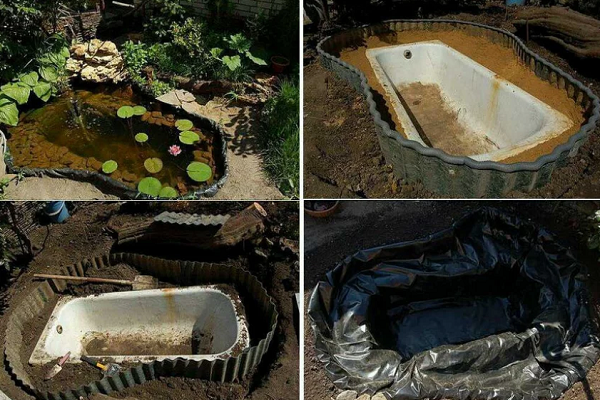
If you have a small flock of geese, an old bathtub will do. The drawback of this design is the high rise. The solution is to install boards as a lift.
It's easy to give your bathroom a more aesthetically pleasing look:
- Measure the dimensions of the bowl. Dig a pit with an allowance. Lower the container into it.
- Cover with PVC film. Fill with water.
- Finish the edges.
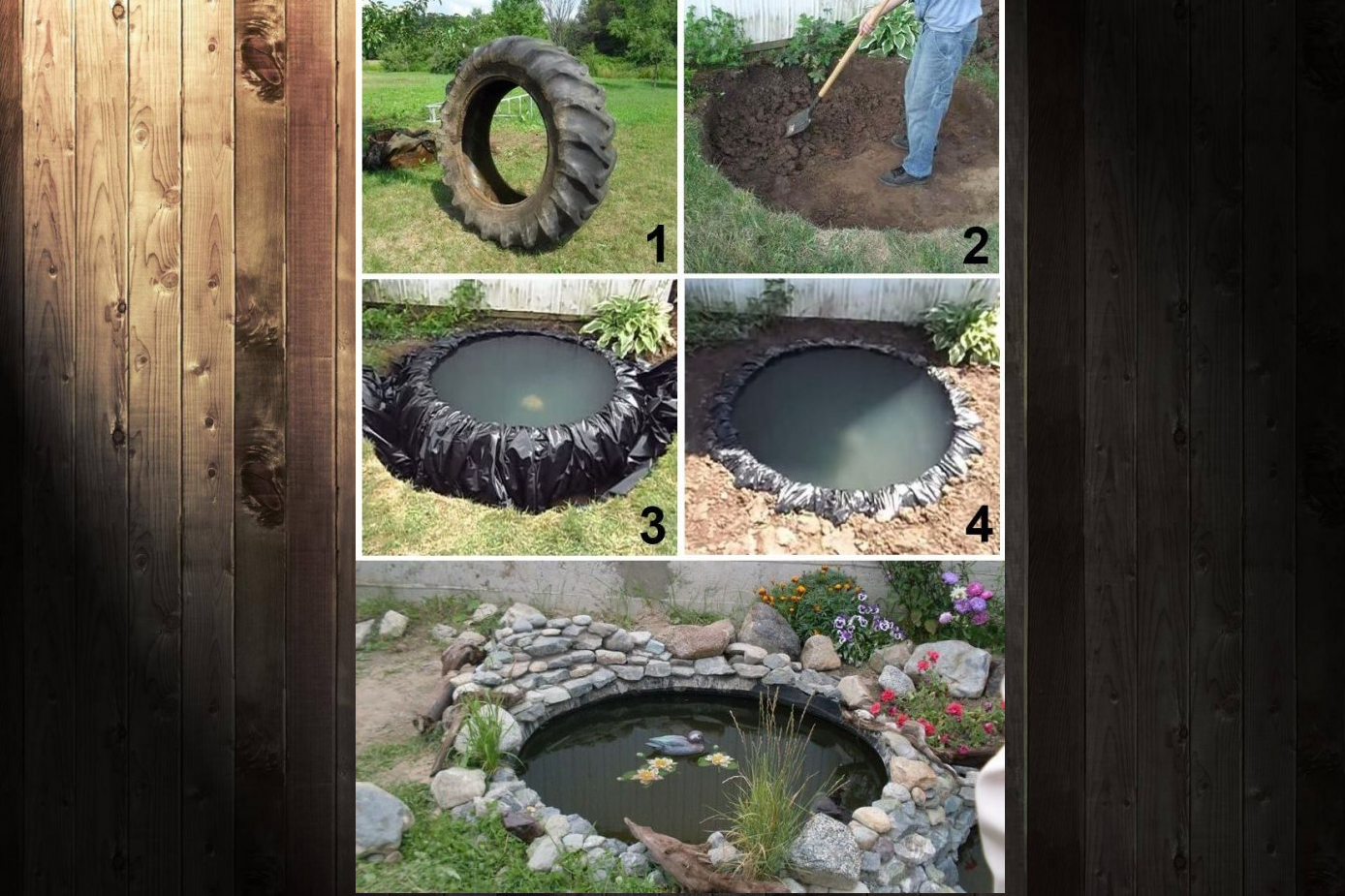
Got a large tire lying around in your garage? It would make a great base for a small pond:
- Dig a hole diagonally slightly larger than the tire's diameter. Place the tire in the hole.
- Cover with film. Fill any excess material with stones.
- Cover the edges with soil and press it down.
- Fill with water.
- Decorate.
It's important to think through the drainage system. The water in a small pool is stagnant, so it will need to be changed frequently.
Bushes should be grown near the pond, under which the geese will hide from the bright rays of the sun.
Construction of a pond
The above methods for creating a bathing area are designed for a small number of geese. For a larger flock, such reservoirs are insufficient. Here, you'll need to put in the effort and create a full-fledged artificial pond.
Below are some examples of building a "lake" for geese. Before starting, some preliminary work is required.
Determining the location and size of the pond
It's preferable to locate the man-made pond close to the poultry house—the birds won't need to travel far from their habitat. An area shaded by shrubs with soft, loose soil is ideal for construction. Natural depressions (holes) will make the pond's construction much easier.
The second selection criterion is proximity to a water supply or other water source. It's also important to consider the need for a drainage ditch.
The third criterion is that the pond's size should correspond to the number of geese on the farm. If there are many birds, a pond measuring 3 x 2 meters is optimal. The depth is determined at your discretion, but should not be less than 0.5 meters.
What tools and materials should be prepared?
Different variations of the pond require a larger or smaller set of tools and materials.
The main (general) ones are:
- bayonet and shovel for preparing a pit;
- slate for fencing the perimeter of the pit to prevent the possibility of soil collapse, cement;
- PVC film;
- bricks, sand, gravel, etc.
Step-by-step instructions for building a simple slate pond
A common pond shape is a square. This makes it easier to arrange the slate sheets. However, round pools are also permitted.
Algorithm of actions:
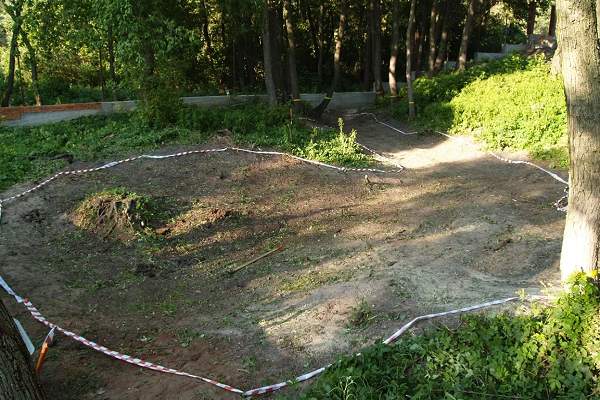
- Outline the outline of the reservoir.

- Remove the top layer of soil—the hole should be as deep as the width of the slate. Dig a pit for the drainage pit (the same size as the main pit).
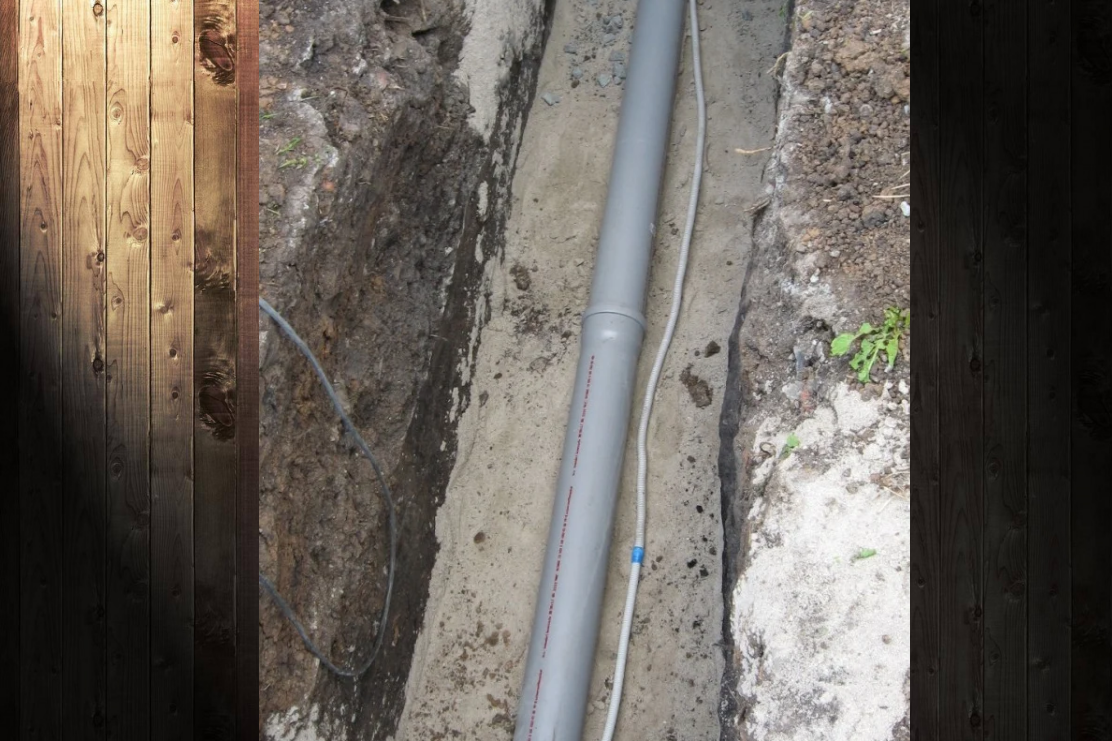
- Dig a pit for the drainage pit (the same size as the main pit) at some distance from the pond. Create a connecting ditch for the drain pipe (with a slope and a shut-off valve).
- Level the bottom of the bath, install the slate sheets vertically and secure them.
- Lay a layer of plastic film over the structure, making sure the sides of the hole are level. This will ensure the film stays in place.
- Place clay and stones on the bottom. Cover the edges of the film with soil and compact it.
- If necessary, decorate the exterior with stones, pebbles, etc.
Step-by-step instructions for building a spacious pond with a cemented foundation
This design option will last for a long time.
Algorithm of actions:
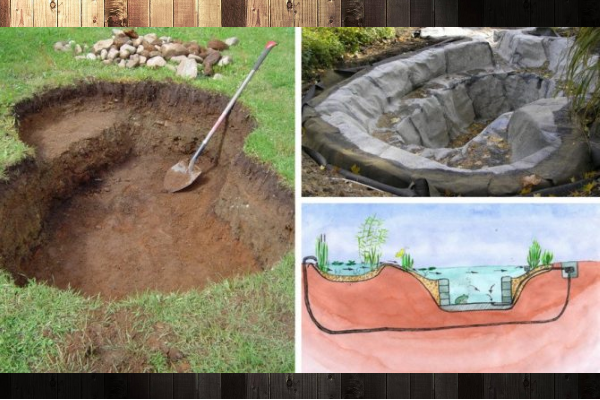
- Mark the construction site. Clear it.
- Dig a pit 4 m long, 3 m wide, and 0.5 m deep. Don't make the bottom level. It should be higher at one end to create a gentle slope into the water.
- Lay the PVC film in 3 layers, completely covering the hole and capturing the edges.
- Place broken bricks, stones, slate fragments, etc. on the bottom.
- Fill with cement mortar.
- Prime the dried layer (to extend the service life).
- Cover the edges of the film with soil. To reduce the amount of dirt carried into the water, cement the immediate area (30 cm - 40 cm) around the pond.
Step-by-step instructions for building a large pond
These ponds are typically built for farms with over 300 poultry. Sizes vary. In this example, it's 6 x 8 m. This pond can easily accommodate a large number of birds.
A cesspool isn't suitable for a large pond—it entails additional financial costs. To pump out the water, you'll need:
- pump;
- hoses.
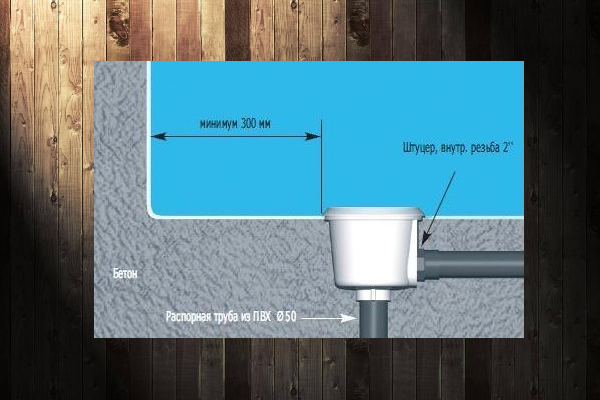
Algorithm of actions:
- Dig a multi-level pit.
- Lay down the PVC film. Place gravel and broken bricks on the bottom.
- Cement the bottom of the pond.
- Seal the sides: lay reinforcement; cement.
- Decorate the edges of the pond. Fill with water.
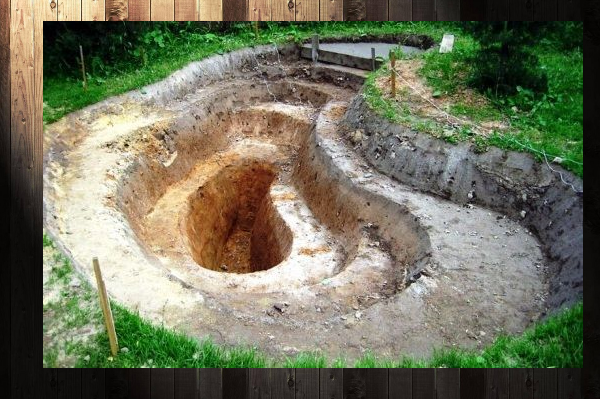
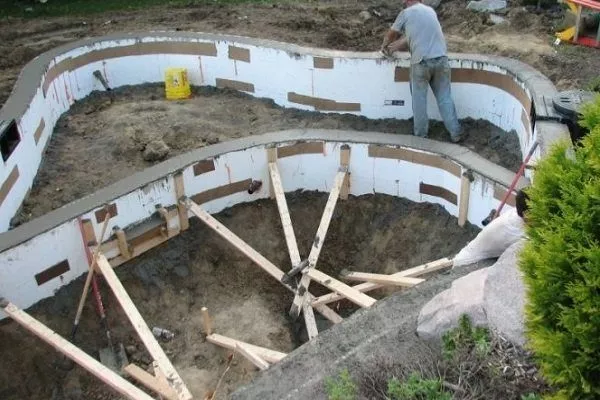
Plant the surrounding area with plants:
- northern part - trees;
- In the southern part there are low shrub crops.
- ✓ Choose plants with a fast growth rate to quickly create shade.
- ✓ Species that do not require frequent maintenance and are resistant to trampling are preferred.
- ✓ Consider the ability of plants to naturally purify water.
You can see the construction of a goose bath in the video:
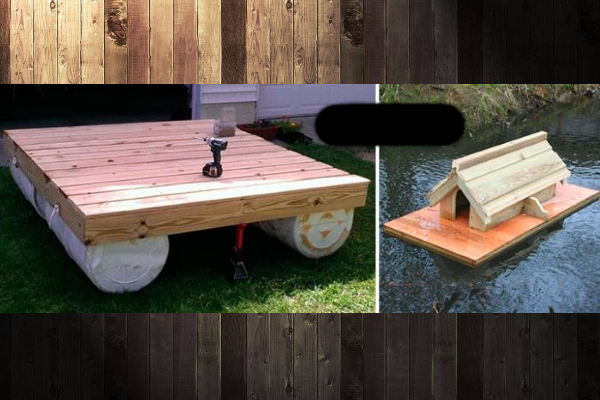
How to make a house for geese on the water?
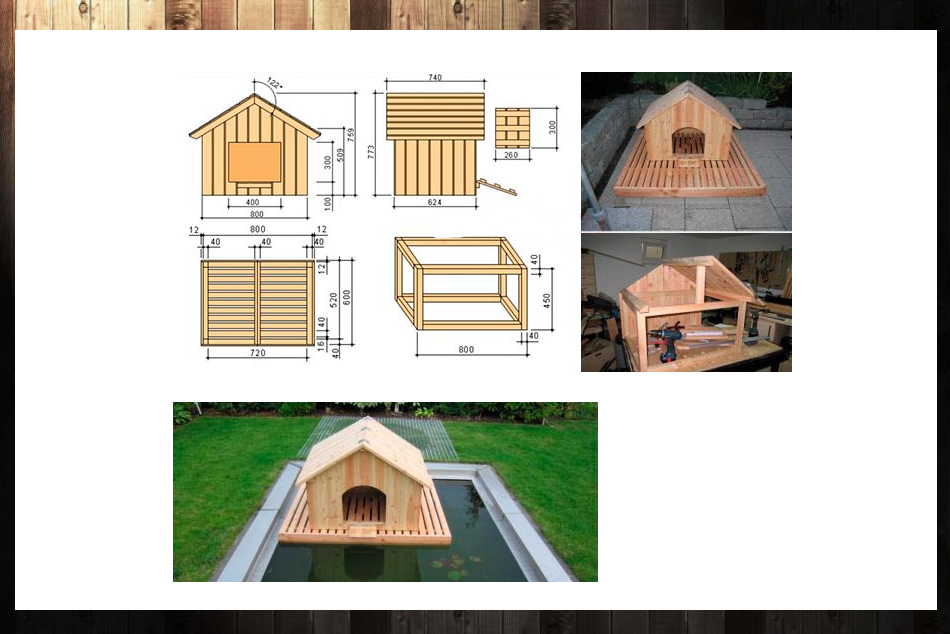
Floating houses are primarily built for ducks, but geese also enjoy the shady shelter during hot weather. Installation is only possible in a larger pool.
To build a house you will need:
- Tools: screwdriver, self-tapping screws.
- Materials: pallet (used), scraps of boards (plywood is not suitable for construction, it swells in water), beam (frame), roofing felt, slate (leftovers), plastic bottle (5 l) - 4 pcs., corner - 4 pcs., twine (anchor), brick.
Algorithm of actions:
- Assemble the structure according to the drawing.
- Attach 4 bottles to the edges of the pallet. This will create a floating platform.
- Place the house in the center of the pallet and secure it. Leave a lip along the edge of the raft. This is where the birds will emerge from the water.
We are thinking about pond hygiene
Stagnant pond water quickly becomes dirty—birds throw debris and soil into it, causing mold, turbidity, and odor. This is due to the decomposition of organic matter, so it's important to keep the pond clean.
To ensure that the bird uses the pond, it is necessary to drain the water regularly:
- small bodies of water - with a hose, pump (daily);
- in large pools - an aerator pump (every week).
If the unpleasant odor persists even after changing the water, add a chlorine-containing solution to the water. The pungent odor dissipates quickly.
Pond maintenance
In addition to regular maintenance, additional care is required. This will allow for long-term maintenance of the swimming pool and reduce the risk of water contamination.
Care consists of the following:
- Monitor the water level in the bath.
- Ensure fluid circulation.
- Clean the water from fallen leaves (nearby bushes and trees constantly shed old leaf blades).
- To maintain the purity of water, use oxygen-generating plants that promote natural purification and oxygenation.
- During the winter, remove water and thoroughly clean the pit.
- Check the bottom for damage; if there is even the slightest violation of integrity, restore it.
- Keep an eye on the adjacent land area. Birds can tear the film with their feet. Plants, as they grow, can damage the film with their roots.
An artificial pond is essential for the healthy growth of geese. Various types of ponds are available. The perfect option can be found for any plot of land. Construction doesn't take much time or effort. The breeder's efforts will be rewarded with delicious, moderately fatty poultry.
We started raising geese this year. Thanks for the advice—the article offers so many options. If it weren't for you, our geese would be swimming in who knows what. We made structures out of large combine tires, buried five of them at once, and it turned out great!
We used to have an old bathtub, but there were so many geese, it wasn't enough for everyone. We decided to build a large pond using the recommendations in this article and pouring cement. My husband says it wasn't that hard to do. And now all our geese are swimming!