
Various devices are used as waterers for geese. Some farmers use bowls, cracked dishes, basins, or even make their own from scrap materials. Others buy store-bought ones. In any case, the containers must meet basic requirements: they must be safe for the birds, clean, always filled with water, and easy to handle.
Types of drinkers for geese
There are many different types of goose waterers. Each type has its own advantages and disadvantages, features, sizes, and ease or difficulty of making one yourself. This is an important factor, as store-bought options (depending on the size of the flock) can be quite expensive.
| Name | Type of construction | Material | Bird-friendly |
|---|---|---|---|
| One-sided | Floor-standing | Plastic, glass | Low |
| Grooved | Wall-mounted | Metal, plastic | Average |
| Nipple | Floor/wall | Plastic, metal | High |
| Cup-shaped | Floor/wall | Plastic | High |
| Vacuum | Floor-standing | Plastic | Average |
| Combined | Floor/wall | Plastic, metal | High |
| Capacitive, with a divided drinking front | Floor-standing | Plastic, metal | Average |
| Winter drinkers for geese | Floor-standing | Metal | High |
One-sided
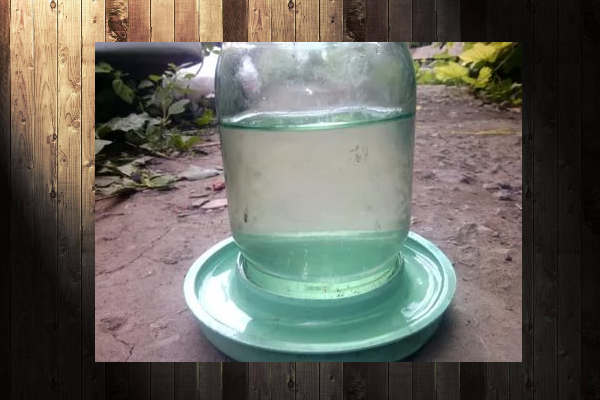
Single-sided drinkers are devices designed for birds to drink from only one side. This prevents geese from interfering with each other by touching beaks and foreheads.
The simplest manufacturing option:
- take a deep plate and a glass jar;
- pour water into the jar;
- cover with a bowl and turn over.
The downside of this design is that it's located on the floor. Birds easily step on it with their feet, spreading dirt and excrement.
Grooved
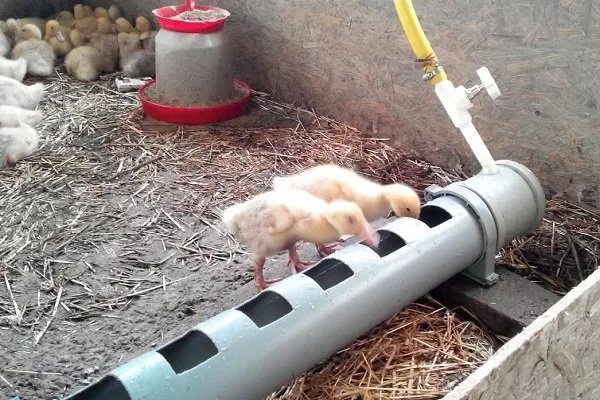
Trough-type structures are used when raising geese in cages, as the waterer is attached to the mesh wall with staples. These devices are found in industrial and small farms, and less commonly in home settings.
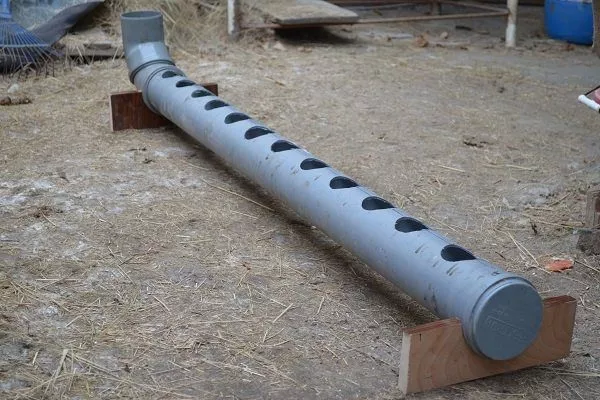
A trough tank consists of a rectangular or round tin trough with special brackets for mounting. When making your own, use a plastic pipe with plugs on both ends.
A mandatory requirement is to create several openings along the entire horizontal length at the top, allowing the bird to lower its beak and drink without contaminating the water. It's advisable to install an adapter to allow for convenient delivery of liquid.
Advantages:
- water efficiency;
- purity;
- no splashes (especially important in cold weather);
- scalability - when increasing the number of geese, it is enough to attach one or more more pipes.
Flaws:
- difficulties with cleaning the system from the inside;
- the need for alignment during installation - otherwise the water will flow to one side.
Nipple
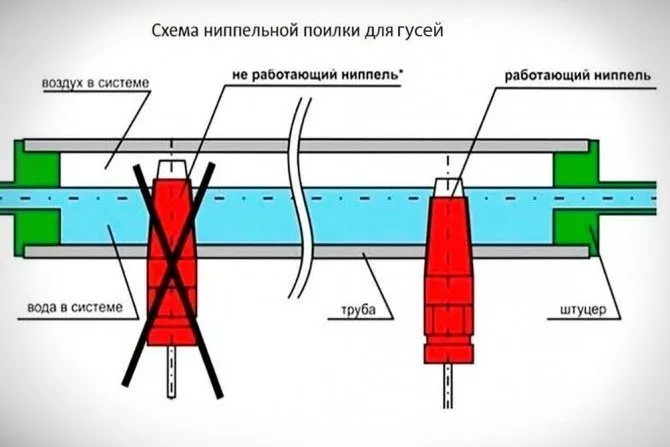
These are considered the most common due to their low cost. They are used on the floor, starting with goslings at three weeks of age. They are considered an automatic system, as they operate under water pressure or at a specific liquid level.
The nipple consists of a metal rod with a diameter of at least 1.5 mm and no more than 2 mm. The upper end is always fitted with a rubber seal. There is a main body, made of plastic, steel, or aluminum. A plastic pipe with protruding nipples is attached to it.
Main advantages:
- used for all types of poultry;
- reasonable price;
- the ability to set it to the required height (depending on the age of the geese);
- there is no need to fill it often, as the body is voluminous;
- complete purity of water;
- economical use of liquid;
- no splashes.
Main disadvantages:
- Purchased options often contain defects, so it is necessary to choose the right manufacturer;
- If sand and other small particles get into the nipple, it starts to leak;
- difficulties with independent production;
- the need for an accurate calculation of the number of “nipples” - at least 1 nipple is needed for 10 birds.
Cup-shaped
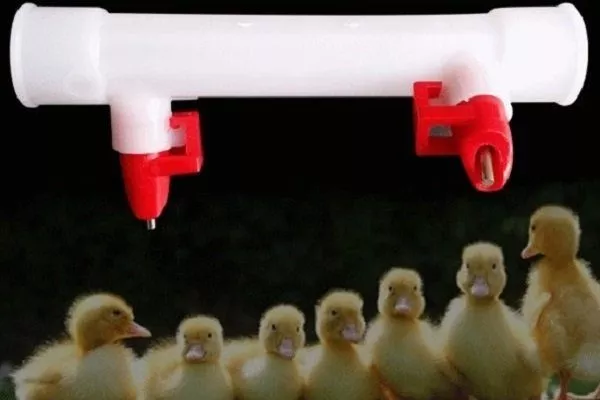
This structure consists of a bowl suspended from a wall or placed on the floor. For large flocks, a system consisting of several containers is required. They are attached to a single plastic pipe.
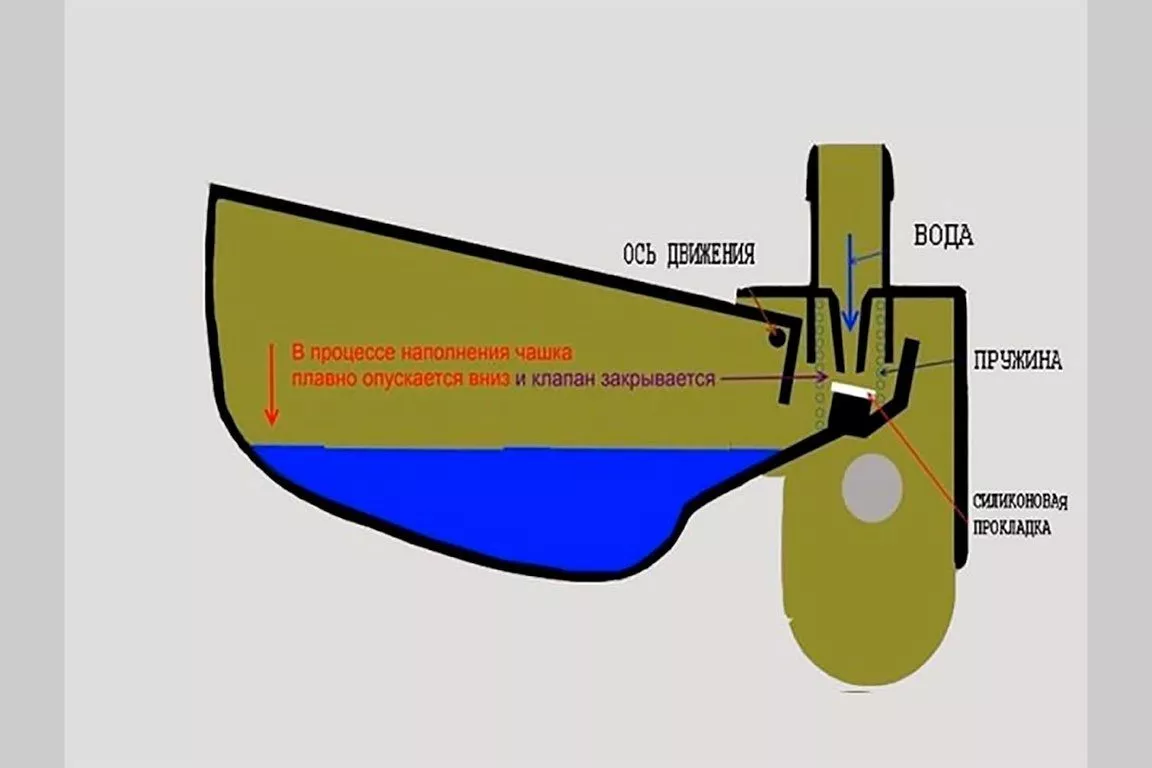
The diameter of the semicircular bowls is from 6 to 8 cm. The drinker works as follows:
- the bowl is attached to a base with a spring, a movement axis, a silicone gasket and a valve;
- until liquid enters the container, the valve remains in the open position;
- when water is supplied, as it fills, the cup drops on one side;
- After filling the tank to a fixed level, under the action of water pressure, the valve closes and the liquid stops flowing;
- When the amount of water in the bowl becomes less, it is raised, the valve opens again, and water is poured into the drinking bowl again.
Advantages:
- convenience for birds;
- no need to control the filling level of the container;
- low cost;
- ease of installation of the purchased model.
There's only one drawback: If debris gets into the system, the rubber valve fails.
Vacuum
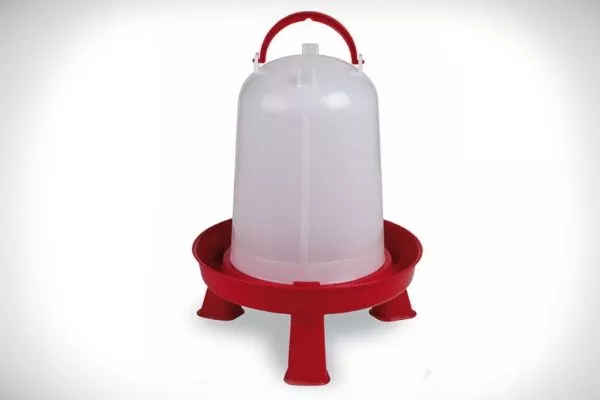
These devices are designed for young animals up to 3 weeks old. The vacuum model consists of a single plastic container (minimum 2 liters) and a stand-plate with a semicircular ring trough.
How to use:
- water is poured into the base;
- covered with a stand on top;
- turns upside down;
- when the liquid is consumed, the radial channel becomes air-filled;
- The penetration of air into the container promotes the refilling of the plate with water.
This model can be suspended. The base has grooves. After 3-4 flushes, the water collector fits snugly into the basin. This feature prevents liquid from leaking out.
Advantages:
- no need to fill the tank with water frequently;
- continuous supply of liquid without human control;
- the bulk of the water in the container is not contaminated.
Flaws:
- the smaller the tank, the more often you have to add water (it is better to choose a container of 5–6 liters);
- It is necessary to connect both parts tightly, otherwise the structure will tip over or all the water will leak out.
Combined
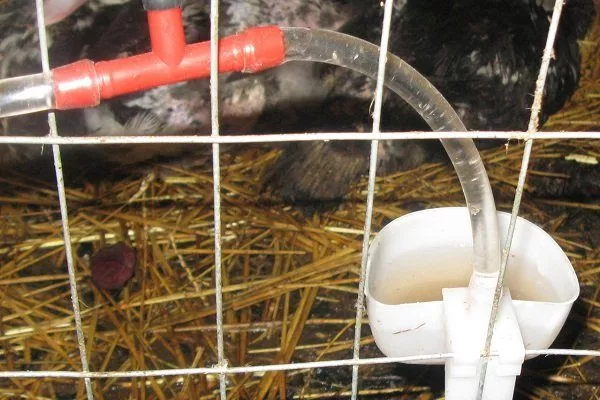
There are many variations of combined drinking systems. Most commonly, they consist of a pipe and trough/cup-shaped containers under a stem with a nipple water supply.
Automatic waterers are also included in this category. These are versatile products that require no supervision from the farmer. Simply connect a plastic pipe or flexible tube, turn on the faucet, and water will flow into the waterer as needed. The watering system can be either nipple or cup-type.
Pros:
- versatility;
- automation;
- saving water consumption.
Flaws:
- water splashes;
- It is difficult to construct the structure yourself.
Capacitive, with a divided drinking front
A convenient and very simple design. Easy to make yourself. All you need is a large container and a tall mesh cone placed over a bowl of water. This allows the geese to drink in a separate space and not interfere with each other.
Another advantage is that the water stays relatively clean, as birds can't reach into the bowl with their feet (dirt is only introduced by their beaks). Furthermore, the bowl is easy to clean, and water is simply poured into it.
The only downside is that you'll have to constantly monitor the pelvis's fullness. See how this watering system works in reality in the video:
One of the variations with a separate compartment is the tray-type waterer. The difference is that a rectangular plastic or metal tray is used as the container. The main advantage is that if the tray is longer than 2–4 m, it can be used for larger flocks.
Winter drinkers for geese
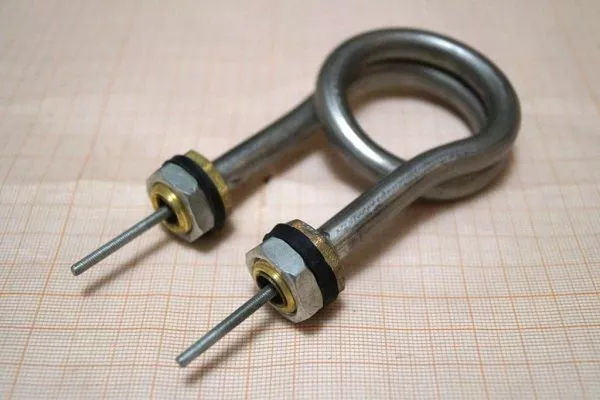
During the cold season, giving geese cold, let alone ice-cold, water is strictly prohibited. Farmers use special devices. To make them, you need a heating element (1.5 kW is sufficient) and any large container (30–50 liters).
For example, use a metal canister. A heating element connected to an electrical outlet is placed inside. It is also recommended to install a thermostat (the ideal temperature range is between 5 and 10ºC). It should be turned on 3-4 times a day.
This system has the following advantages:
- the water is constantly warm;
- there is no need to add liquid too often;
- low power consumption.
Among the disadvantages it is worth noting:
- difficulty of self-production (experience with welding and electricity required);
- The heating element often burns out if there is no automatic refill of the tank with water.
- ✓ Water temperature should be maintained in the range of +5 to +10°C to prevent freezing and ensure the comfort of the birds.
- ✓ The use of a thermostat is mandatory to automatically maintain the temperature.
Choosing a drinking bowl depending on the age of the geese
Not every type of waterer is suitable for all ages of geese. It's a good idea to consult the recommendations of experts and experienced farmers regarding the best choice:
- Goslings up to 3 weeks oldOnly vacuum models made of plastic (metal is not acceptable) are suitable for them. The water temperature in the small container is maintained at an optimal level.
Vacuum-sealed products help prevent the death of small pets. They won't choke on water or drown. - Goslings from 3 to 6 weeks. The best option is a nipple system. By this age, goslings already understand how to drink from a nipple. The drinkers can be easily raised as they grow (for their comfort).
- Adult stock. While any device can be used, nipple-type devices are preferred. This is due to hygiene requirements for breeding geese.
Sizes depending on the number of birds
The waterer's parameters must be taken into account. This is done based on the age of the birds and the number of birds in the flock.
Compliance with the indicators allows:
- create comfortable conditions for geese;
- Provide all pets with water (if there are not enough devices, birds that are not leaders will be left without water, which will lead to dehydration and subsequent death).
Dimensions in length, based on age per bird:
- from birth to 2 weeks - 4–5 cm;
- from 2 to 4 weeks - 6–8 cm;
- from 1 month to 3 months - 9–14 cm;
- from 3 to 4 months - 15–17 cm;
- adults - 20–22 cm.
The process of making a drinking bowl with your own hands
Purchasing a large number of goose waterers from the store is expensive. Farmers prefer homemade designs. There are simpler options available, easily made by novice poultry farmers.
Tools and materials
Before you build a waterer, decide what kind of system you want and can build. The choice will determine the material you'll need (a plastic bottle and bowl will easily suffice for a vacuum system, while a trough system will require sewer pipe, adapters, and so on).
The type of waterer determines the choice of tools. However, in all cases, a tape measure, pencil, or marker are necessary.
Step-by-step instructions for assembling various drinking bowls
Craftsmen have adapted to making drinking bowls from scraps of construction materials, plumbing fixtures, and other readily available materials. Below are some easy-to-make options.
Option #1 – grooved. One of the simplest designs. You'll need the following materials and tools:
- a plastic pipe with a diameter of at least 20–30 cm (length is selected individually);
- plugs - 2 units;
- corner adapters - 1-2 pieces;
- jigsaw, grinder or hacksaw;
- sandpaper.
How to make a trough drinker:
- Cut off the required piece of pipe using a hacksaw.
- Use a grinder to make holes (round, square, or rectangular) in the intended top section. The diameter of the holes should match the size of the goose's head. The bird should be able to easily stick its head through and reach the water.
- Sand the cut edges to prevent birds from getting hurt.
- Insert an adapter into one end (this will serve as a reservoir for storing water). If necessary, install an adapter on the other end (with the opening facing up). Water is poured through this adapter.
- Close the pipe on both sides with plugs.
- Install it so that the pipe does not tip over (attach it to the mesh with staples, place it on wooden spacers, or simply prop it up with bricks on different sides).
Option #2: Vacuum. For this, use a 5-liter plastic bottle. You'll also need:
- plastic/metal container as a drinking bowl (diameter wider than the bottom of the bottle, height 10–14 cm);
- nail / awl.
Manufacturing process:
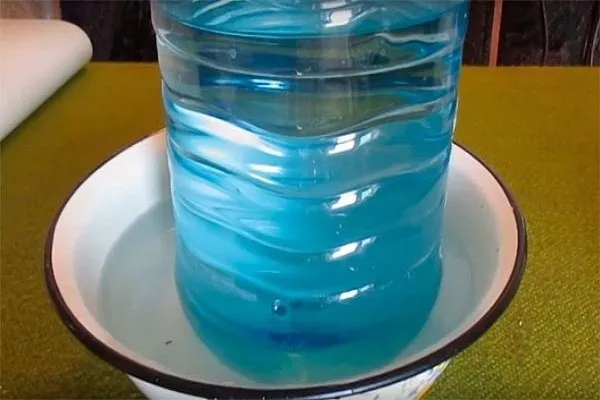
- Using a hot awl or nail, make a 1–1.5 cm diameter hole on the side at the bottom of the bottle. The hole should be 2–4 cm below the sides of the sippy cup itself.
- Place the empty bottle in the tray.
- Pour in water.
Option #3 – nipple. You will need:
- plastic bucket of at least 5 liters;
- drill;
- thread cutting tap;
- Teflon thread - 1 m;
- nipples - 4 pieces.
Step-by-step instructions for making:
- Turn the bucket upside down.
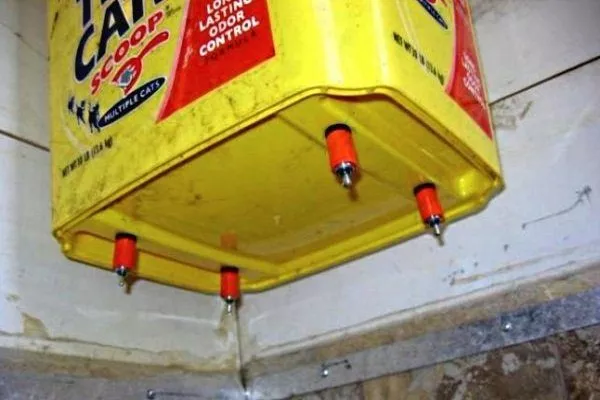
- Use a drill to drill holes with a diameter of 9 mm.
- Use a tap to make a thread.
- Screw in the nipples. To make the process easier, seal them with Teflon thread.
- Fill the bucket with water and hang it up. Keep in mind that the "nipples" should be at eye level with the geese.
Mistakes that can be made when making a drinking bowl
No one is immune to mistakes, even experienced professionals. When it comes to waterers, novice farmers often make the following mistakes:
- The devices are made of wood. This material is unacceptable because the wood swells and rots. This can lead to leaks and bird infection (rot is caused by a pathogenic fungus).
- Connect a drain pipe to the main drinking bowl. This type of manipulation is undesirable. Geese often try to climb onto the gutter, which can result in the structure breaking or tipping over.
- Fix the products "tightly". The positive side of this design is the stability of the drinking bowl. However, this does make cleaning the bowl difficult and less effective.
- Do not process cuts or sharp corners. This is strictly prohibited. Birds can injure heads and necks.
Where can I buy drinking bowls and how much do they cost?
Goose waterers are available at specialized farm supply stores. They're also easy to purchase online, but choosing a reputable manufacturer is key. The longevity and health of the birds depend on the quality of the product.
The price varies depending on the size, type of waterer, and manufacturer. The average price is as follows:
- nipple models — from 70 rubles for a small section of pipe with a nipple and up to 800 rubles for a complete system;
- vacuum — from 6–10 rubles for one bowl and up to 500 rubles for a complete structure;
- cup-shaped — from 75 rubles for an automated cup and up to 1200 rubles for sets.
How to care for a drinking bowl?
Maintaining poultry equipment is crucial, as contamination can lead to bird mortality due to infection with pathogenic bacteria. Waterer maintenance guidelines:
- rinse under running water daily;
- thoroughly clean with brushes, brushes and sponges to remove plaque, sand, grass and other debris;
- disinfect at least twice a week - use a light pink solution of potassium permanganate;
- If you use detergents, rinse with plenty of water afterwards (the chemical components of the solutions have a negative effect on the birds’ bodies).
A watering hole is an essential component for successful goose breeding. Drinking bowls have specific requirements, including cleanliness, fresh water, and ease of drinking by the birds. Each of the designs described has its own merits. The choice is ultimately up to the poultry farmer, based on the number and age of the geese, their budget, and their personal preferences.