
The goose is an unpretentious and hardy bird. However, no animal, including geese, is immune to various diseases. These birds can also contract diseases that are dangerous not only to the geese themselves but also to humans.
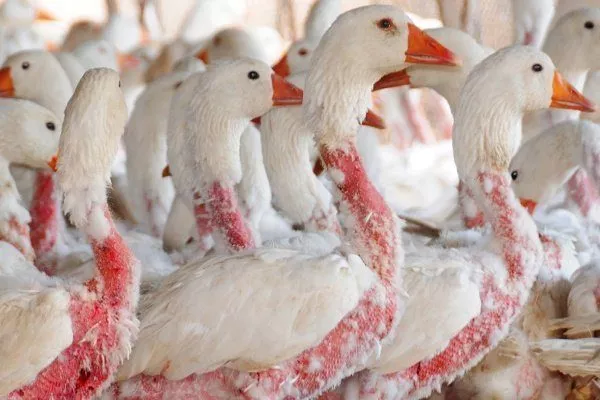
What diseases can be dangerous for both geese and humans?
The well-being and survival of birds depend on the development of their immune system, which is weakened by hypothermia and overheating, dryness or dampness, drafts, and a host of other factors. Poultry farmers should be aware that geese can suffer from both non-infectious and contagious diseases.
Comparison of infectious diseases of geese
| Disease | Age at risk | Main symptoms | Mortality |
|---|---|---|---|
| Viral enteritis | 1-3 weeks | Bloody diarrhea, dermatitis | Up to 70% |
| Salmonellosis | Up to 1 month | White diarrhea, paralysis | Up to 100% |
| Pasteurellosis | Young animals | Green diarrhea with blood | Up to 90% |
| Coccidiosis | Up to 3 months | Bloody diarrhea | 80% |
| Aspergillosis | All ages | Respiratory failure | 50-100% |
Contagious diseases include worms, viral enteritis, infectious cloacitis, colibacillosis, and coccidiosis. Geese can contract salmonellosis, aspergillosis, and pasteurellosis. To differentiate between these diseases, each should be considered separately. This will help in taking immediate action in the future.
Viral enteritis
The disease affects young chicks aged 1-3 weeks. Geese that recover from the disease become lifelong carriers of the virus. The disease develops and spreads due to poor hygiene. Geese kept indoors often suffer from enteritis in early spring. The disease is transmitted primarily from an infected mother.
It is accompanied by nasal discharge and conjunctivitis. Goslings may develop bloody diarrhea. Goslings that survive the illness may experience a protruding abdomen and developmental delays. Because the chicks begin to huddle together, they develop dermatitis, and feathers on their backs begin to fall out.
It's important to identify the cause of the goose's illness as soon as possible and begin treatment. A specific serum is injected subcutaneously to suppress secondary microflora. Antibiotics and nitrofurans, such as Baytril and Furazolidone, are recommended. As a preventative measure, immunization of chicks in the first days of life is recommended.
The bird is revaccinated at 3-4 weeks.
Salmonellosis
Goslings are often susceptible to this disease during the first month after birth. This period is especially dangerous for other chicks. The disease can cause white diarrhea caused by salmonella. Once the disease spreads, it is difficult to control—it can destroy the entire flock. When does salmonellosis occur?
- overheating of birds;
- avitaminosis due to an unbalanced diet;
- cramped space.
Pathogens can be carried by rodents and people suffering from salmonellosis. Adult geese can be considered lifelong carriers of the bacteria. The microbe is particularly resilient and can remain viable for years, even in frozen goose carcasses.
There are several forms of the disease, ranging from acute to chronic. With salmonellosis, geese become lethargic and thirsty. The disease is accompanied by paralysis, depression, joint swelling, and conjunctivitis. Geese suffer from cloacitis and yolk peritonitis.
The disease can be treated with antibiotics, nitrofurans, or sulfonamides. Tromexin is recommended.
Colibacillosis
The disease is caused by a bacterium that permanently resides in the intestines. The illness develops due to a weakened immune system due to poor hygiene. Birds aged two to three months are susceptible to colibacillosis. They are constantly thirsty, their movements are slow and labored, and they appear depressed and lethargic. Therefore, it is recommended to treat the disease with an antibiotic solution instead of water.
To prevent colibacillosis, farmers thoroughly disinfect the premises. Goslings aged 3 to 6 days are vaccinated to prevent death.
Pasteurellosis
Young geese are often susceptible to the disease, which occurs in early spring. It manifests as sepsis and has a high mortality rate. The disease is transmitted through food, drink, and contact with wild birds, for example, if sparrows fly in, peck at the feed, and introduce pasteurella.
During the disease, geese become depressed, develop green, bloody diarrhea, and begin to limp, with drooping wings. In the fulminant form of the disease, birds die immediately without apparent cause. Tromexin, a sulfonamide-antimicrobial drug, is the recommended treatment for Paterellosis.
Chicks are immunized for prevention. It's important to carefully monitor the birds' hygiene and nutrition.
Treatment regimen for pasteurellosis
| Preparation | Dosage | Well |
|---|---|---|
| Tromexin | 2 g/1 l of water | 3-5 days |
| Levomycetin | 30 mg/kg | 7 days |
| Sulfadimezine | 0.5 g/head | 5 days |
Coccidiosis
A disease caused by protozoan parasites. Chicks under 3 months of age are most susceptible. Goslings develop diarrhea, and die in 80% of cases. The disease is caused by inadequate housing conditions. With coccidiosis, geese become inactive and lethargic, and develop anemia. The litter becomes sticky, the goslings feel cold, and mucous diarrhea, often with blood, develops.
Initially, it's necessary to address feeding issues, tidy up the geese's living quarters, and ensure the birds are kept clean. The use of coccidiostatics, antibacterial agents, and antibiotics is recommended. The parasite develops due to synergistic microflora. Eliminating the associated bacteria can help the chick's body overcome the disease.
Effective coccidiostats
- • Amprolium 25%: 1.25 g/kg feed
- • Salinomycin: 60 mg/kg feed
- • Toltrazuril: 7 mg/kg body weight
- • Diclazuril: 1 mg/kg body weight
Aspergillosis
The disease is caused by a pathogenic fungus, which primarily affects goslings when their living conditions are poor. Microbes actively multiply in litter that has not been changed for a long time, leading to infection. The respiratory organs of the geese are primarily affected. Suspected hens are isolated and slaughtered, while healthier ones are recommended to be treated with antifungal agents or aerosol sprays of iodine monochloride.
The room must be sealed by pouring the solution into a glass or ceramic container and leaving it for half an hour. This promotes the release of a violet gas. Microbes are not resistant to iodine and are immediately killed. A disadvantage of this procedure is the high corrosiveness of halogen.
Infectious cloacitis (neisseriosis)
A disease caused by diplococci and aggravated by secondary microflora. Adult geese are susceptible to the disease during the mating season. Signs of the disease include:
- the bird is losing a lot of weight;
- hyperemia of the cloacal mucosa;
- geese are faced with penile curvature and prolapse;
- erosions and fibrinous scabs appear;
- the eggs are not fertilized.
Geese are treated with a single intramuscular injection of Bicillin-5. Then, Levomycetin or Tetracycline is administered twice daily for five days. If necessary, antibiotic therapy is repeated after a seven-day break, using a different medication.
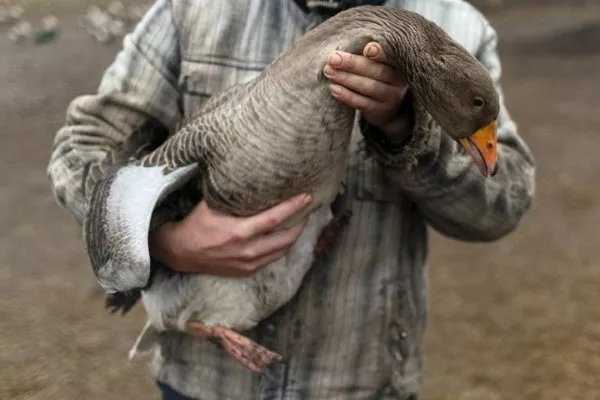
As a preventative measure, during the breeding season, birds are inspected—suspicious or sick birds are culled, and the remaining birds are given a course of antibiotics. Disinfection of the run area, the goose house, and equipment is essential.
Worms
Chicks are the most susceptible to worms. Worms develop because geese can consume a lot of grass, which is often infected with parasitic worm eggs. Preventive deworming is necessary at 2-3 weeks. Clinical goslings experience diarrhea and developmental delays.
The process will need to be repeated when the goslings are one month old, with a third deworming treatment at six months. Breeding flocks should be dewormed twice a year – in the fall and spring. Levamisose, Tetramisole, or Albendazole are recommended, added to the morning feed. To prevent the worms from becoming resistant to the medications, they are replaced annually.
Deworming schedule
| Age | Preparation | Dosage |
|---|---|---|
| 2-3 weeks | Albendazole | 10 mg/kg |
| 1 month | Levamisole | 7.5 mg/kg |
| 6 months | Tetramisole | 5 mg/kg |
| Adults | Fenbendazole | 15 mg/kg |
To prevent the spread of infections, it is necessary to try to keep geese of different ages in separate rooms.
What diseases are not dangerous?
To prevent further spread, poultry farmers need to be aware of the following diseases that are not dangerous to humans:
Vitamin D deficiency
The pathology develops due to vitamin deficiency and ultraviolet radiation deficiency. This disease, called rickets, is characterized by impaired bone growth, curvature, and growth retardation.
Avitaminosis is a disease that affects not only chicks but also geese. It occurs because hens lack calcium. Accompanying the condition is a soft beak, and hens lay eggs with thinned shells or even no shells at all.
When fed compound feed, premixes, or vitamin-mineral complexes, geese are less likely to experience vitamin deficiency or other problems. This condition can be managed by supplementing their diet with vitamin supplements, particularly fat-soluble ones, such as Tretravit, Trivitamin, and others. Vitamin D deficiency in geese can be treated not only with vitamins but also by adding calcium to their diet. Crushed shells can also be fed to laying hens.
Calcium and vitamin D standards
| Category | Calcium (g/head/day) | Vitamin D (IU/kg) |
|---|---|---|
| Goslings | 1.2-1.8 | 1500 |
| Adults | 4.5-5.5 | 2000 |
| Layers | 6.0-7.0 | 2500 |
Stomatitis
Adult geese suffer from this problem. It manifests itself in the off-season, when a lack of sunlight and vitamins causes the geese's tongue to protrude from their jaws. This is also accompanied by inflammation of the mucous membrane. This is a chronic condition that is extremely difficult to treat.
The condition develops when poultry farmers neglect to supplement their poultry with micronutrient-rich feed. Stomatitis becomes chronic and progressively worsens: the mucous membranes become red and inflamed, followed by swelling and pain, which leads to excessive salivation and mucus production. The birds have difficulty eating, leading to weight loss. In geese, egg production decreases, and diverticula develop.
Birds exhibiting such symptoms are slaughtered. However, treatment can be attempted by treating the bird's mouth with potassium permanganate. The purse can also be stitched at the site of the protrusion. After surgery, the walls fuse, and the remaining portion dies and falls off. As a preventative measure, it's important to formulate a diet that provides a full range of nutrients and minerals.
Diarrhea
It's important to determine the cause of diarrhea in goslings, as it can be caused by poor hygiene or infection. In any case, treatment should begin with improving hygiene.
Goslings suffer most from dehydration, so immediate action is needed. Traditional medicine recommends adding wheat bran to geese's feed, as this product not only absorbs moisture but also helps thicken the droppings. This will only help if the goslings continue to eat.
You can try giving the geese water using Furacilin, Tromexin or any other product designed to combat microbes.
Cannibalism
When a poultry house is very cramped, damp, and poorly ventilated, along with excessive lighting and a large number of birds, this disease can develop. It can also be caused by a protein deficiency, particularly affecting the development of chicks, as their rapid growth can trigger a protein deficiency.
Birds constantly preen their ruffled feathers, smearing them with oil. This causes them to become brittle, and the down on their backs is lost, causing severe wounds. Chicks can pluck feathers and down from their fellows, and weaker ones can die. Avoid having too many birds in the coop. Also, avoid dampness and excessive dryness, and regularly take the birds outside to allow them to splash in water.
If pecked individuals are identified, they must be placed separately from healthy birds.
As a preventative measure, it is recommended to feed young animals with bran, grass, milk, eggs, whey, mineral supplements, and cottage cheese.
Esophageal obstruction
This occurs due to feeding dry formula and not drinking enough fluids. This leads to shortness of breath, a constantly open beak, and an unsteady gait. The solution is simple: pour 40-60 ml of vegetable oil into the beak and try to squeeze the contents out.
Non-infectious cloacitis
This disease is caused by severe feeding problems (vitamin and mineral imbalances) or fighting. Symptoms are similar to infectious cloacitis. When the disease affects laying hens, it can lead to yolk peritonitis or oviduct prolapse.
The goose can be treated by flushing the vent with antiseptics. The oviduct can be repositioned, and any feeding deficiencies can be corrected.
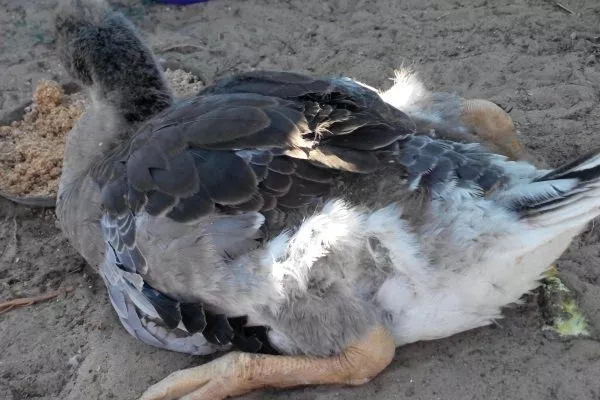
Diseases of the genital organs of geese
There are several problems with the reproductive organs of birds. It's important to know the causes and how to deal with them. Which reproductive diseases can harm geese?
Prolapse of the oviduct
This occurs when the goose lays eggs that are too large, suffers from frequent diarrhea or constipation, or has inflammation of the cloaca or oviducts. To address this, the prolapsed organ is washed with cool water, then treated with a potassium permanganate solution and reinserted into the anus. Afterward, a small piece of ice is placed in the anus.
It's important to keep an eye on the hen, as she may have difficulty laying an egg and will need assistance. The egg removal process should be performed with clean hands, lubricated with Vaseline.
Yolk peritonitis
This problem only affects geese during the egg-laying period. When yolk enters the intestines, inflammation develops. This leads to severe pain, abdominal distension, and a rise in body temperature.
This condition occurs due to peritoneal inflammation caused by the following factors: vitamin deficiency, excess protein in the diet, a blow, or a frightened geese. Treating this condition is very difficult, as there are many possible causes. To eliminate the triggers, it is recommended to keep the coop clean, feed the birds well with high-quality feed, and avoid crowding the geese.
If you decide to breed geese, be sure to consider the fact that these birds are susceptible to a variety of diseases, which often leads to loss of flocks. Therefore, it's crucial to practice disease prevention, maintain hygiene, and feed the birds well.